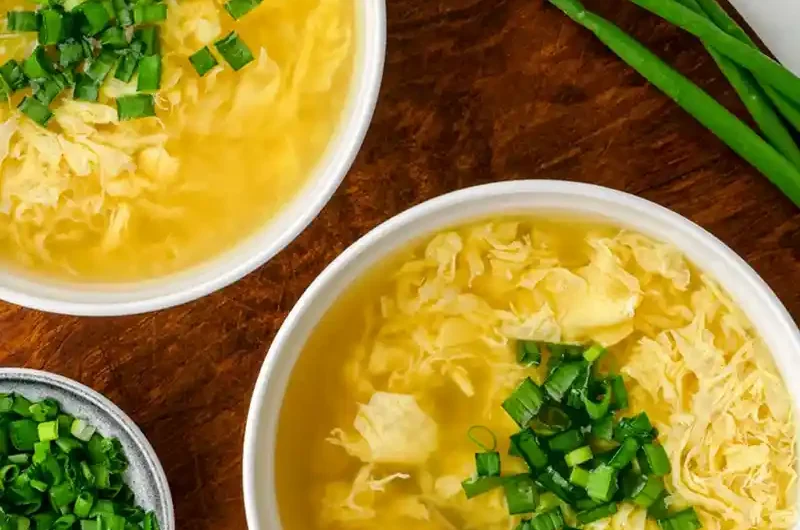
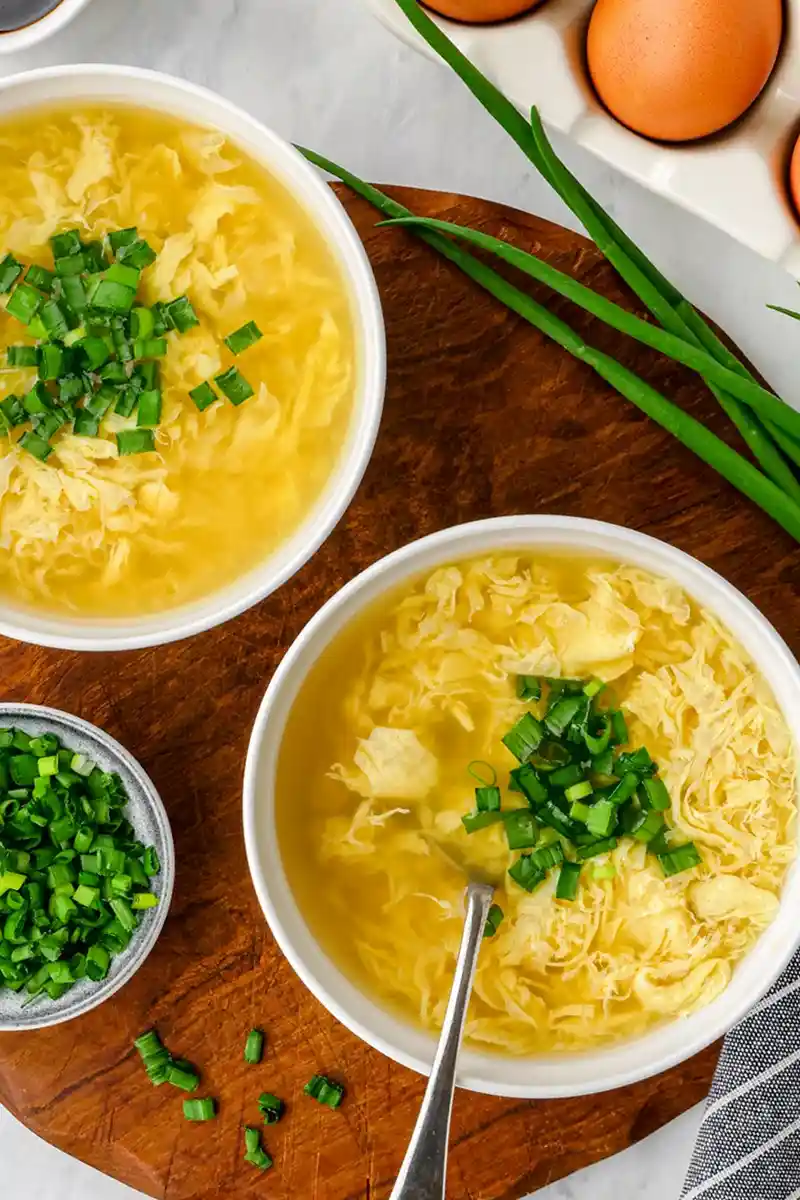
This traditional Chinese-inspired egg drop soup is a restaurant favorite that takes only minutes to prepare at home. It is a light, savory, and comforting dish that relies on simple pantry staples to create beautiful silky ribbons of egg in a flavorful, seasoned broth. Perfect as a quick appetizer or a soothing light meal, this soup is as versatile as it is fast to assemble.
List of ingredients
- 4 cups chicken broth
- 1 teaspoon soy sauce
- 1/2 teaspoon sesame oil
- 1 teaspoon cornstarch
- 2 teaspoons water
- 3 eggs, beaten
- 1 Tablespoon green onions or chopped fresh chives
- 1/2 teaspoon ground white pepper
step-by-step instructions
- Step: In a small saucepan, combine the chicken broth, soy sauce and sesame oil.
- Step: Bring to a boil.
- Step: In a small bowl combine cornstarch and water together stirring to make a slurry.
- Step: Pour cornstarch slurry into the boiling broth.
- Step: In a small bowl, beat 3 eggs, then gradually add the beaten eggs to your boiling broth, stirring continuously to get the egg ribbons.
- Step: Remove from heat, taste, season with salt and pepper as desired.
- Step: Garnish with fresh chives.
Essential Preparation Techniques
Mastering the Perfect Ribbon Consistency
The key to achieving those signature restaurant-style ribbons lies in the temperature of the broth and the speed of your motion. Ensure the broth is at a steady, soft boil when adding the eggs, as a lukewarm broth will result in cloudy streaks rather than defined ribbons. Pour the beaten eggs in a very thin, slow stream while stirring the soup gently in one direction to maintain the structure of the egg strands.
Achieving the Ideal Mouthfeel
The cornstarch slurry is responsible for the signature velvety texture of this soup. It is vital to mix the cornstarch with cold water thoroughly before incorporating it into the hot liquid to prevent floury pockets from forming. If the soup is not thick enough for your preference after the first addition, prepare a second batch of slurry separately before adding it in small increments to avoid over-thickening.
Customizing Your Flavor Profile
Enhancing the Soup with Fresh Aromatics
While the classic version focuses on simplicity, you can elevate the aromatic complexity by adding freshly minced ginger or a small amount of garlic powder to the broth during the boiling stage. These additions provide a sharp, earthy undertone that complements the sesame oil beautifully. Remember to strain out any large ginger chunks before adding the eggs if you prefer a perfectly clear soup texture.
Adding Hearty Textures and Proteins
If you intend to turn this appetizer into a substantial meal, consider adding small pieces of cubed silken tofu, finely shredded carrots, or blanched bok choy. These additions should be added to the broth and cooked until tender before you incorporate the egg ribbons. Thinly sliced mushrooms, such as shiitake or wood ear, also add an excellent chewiness that pairs well with the soft, cooked egg.
Serving and Hosting Suggestions
Pairing for a Complete Asian-Style Menu
This soup serves as an excellent opening course for a variety of Asian-inspired dishes. It pairs wonderfully with steamed jasmine rice, vegetable stir-fries, or glazed tofu dishes. The light, neutral nature of the soup acts as a refreshing palate cleanser when served alongside rich, savory main courses like ginger-soy chicken or crispy vegetable tempura.
Presentation Tips for Guests
For a professional presentation, serve the soup in traditional ceramic bowls to retain heat. Using a colorful garnish like finely sliced chives or even a drizzle of toasted sesame seeds adds visual interest to the dish. Serving it immediately after the eggs are set ensures the texture remains light and the garnish remains vibrant and crisp.
Practical Storage and Reheating
Managing Leftover Soup
This dish is specifically designed to be enjoyed fresh, as the delicate texture of the egg can change after storage. If you must store leftovers, place them in an airtight glass container in the refrigerator for no longer than twenty-four hours. Be aware that the cornstarch-thickened broth may lose some of its viscosity over time and the egg ribbons may become firmer.
Gentle Reheating Strategies
When reheating, do so on the stovetop over low heat to avoid overcooking the eggs, which can result in a rubbery texture. Add a tablespoon or two of water to the pot while heating to restore the original consistency if the soup has thickened too much in the fridge. Avoid using the microwave if possible, as it tends to heat unevenly and can make the egg texture tough.
Frequently Asked Questions
Why did my eggs turn into large clumps instead of ribbons?
This usually happens if the eggs were poured in too quickly or the soup was not being stirred during the process. Ensure you are using a fork or whisk to create a gentle vortex in the broth as you add the egg in a slow, steady stream. Keeping the broth at a gentle, simmering temperature rather than a violent rolling boil also helps in forming more delicate strands.
Can I make this soup ahead of time?
It is not recommended to fully assemble the soup ahead of time because the egg ribbons lose their ideal texture upon cooling and reheating. A better strategy for meal planning is to prepare the seasoned, thickened broth base in advance and store it in the refrigerator. When you are ready to eat, simply bring the broth back to a boil and add the beaten eggs in the final moments before serving.
What is the purpose of white pepper?
White pepper is a staple in many Chinese-style soups because it provides a sharper, more immediate heat than black pepper while maintaining a cleaner look in the broth. It has an earthy, slightly floral quality that complements the chicken broth without adding dark specks. You can substitute it with black pepper if necessary, though the flavor profile and appearance of the final dish will be slightly different.
How can I make this dish vegetarian?
Simply swap the chicken broth for a high-quality vegetable stock or mushroom-based bouillon to easily convert this recipe. Ensure the vegetable broth has a rich, savory profile to compensate for the absence of poultry stock, as the broth is the primary foundation for the entire dish’s flavor. Adding a small amount of extra soy sauce or a splash of rice vinegar can help bridge the flavor gap when using vegetable broth.
Print
Classic Egg Drop Soup
- Total Time: 10 minutes
- Yield: 4 servings 1x
- Diet: Low calorie
Description
Creamy, flavorful egg drop soup, a Chinese restaurant classic that is loaded with flavor and can be on the table in under 15 minutes.
Ingredients
- 4 cups chicken broth
- 1 teaspoon soy sauce
- 1/2 teaspoon sesame oil
- 1 teaspoon cornstarch
- 2 teaspoons water
- 3 eggs, beaten
- 1 Tablespoon green onions or chopped fresh chives
- 1/2 teaspoon ground white pepper
Instructions
- Step: In a small saucepan, combine the chicken broth, soy sauce and sesame oil.
- Step: Bring to a boil.
- Step: In a small bowl combine cornstarch and water together stirring to make a slurry.
- Step: Pour cornstarch slurry into the boiling broth.
- Step: In a small bowl, beat 3 eggs, then gradually add the beaten eggs to your boiling broth, stirring continuously to get the egg ribbons.
- Step: Remove from heat, taste, season with salt and pepper as desired.
- Step: Garnish with fresh chives.
Notes
Best eaten immediately. You can add tofu or cooked vegetables to make it a heartier meal. Ensure you use gluten-free soy sauce or tamari if needed.
- Prep Time: 5 minutes
- Cook Time: 5 minutes
- Category: Soup
- Method: Boiling
- Cuisine: Chinese
Nutrition
- Serving Size: 1 serving
- Calories: 67 kcal
- Sugar: 1 g
- Sodium: 991 mg
- Fat: 4 g
- Saturated Fat: 1 g
- Unsaturated Fat: 3 g
- Trans Fat: 0 g
- Carbohydrates: 2 g
- Fiber: 1 g
- Protein: 5 g
- Cholesterol: 123 mg
Keywords: egg drop soup, egg flower soup, soup, quick dinner, Chinese, appetizer