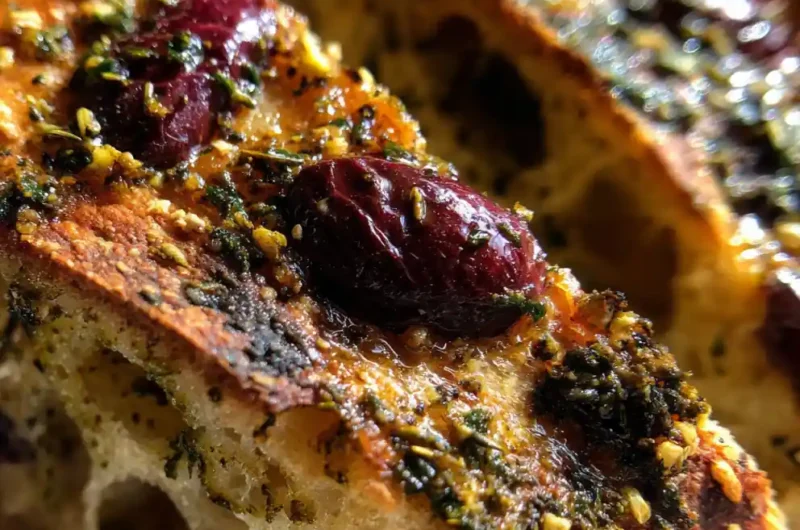
I love the feeling of a warm, crusty loaf fresh from the oven, and this ballerina farm sourdough recipe delivers that magic every time. You’ll adore the crackling sound of its golden crust and the inviting aroma filling your kitchen. This wholesome, family-friendly bread is surprisingly easy to make, fitting perfectly into our busy home schedule for healthy eating. Get ready to bake a nourishing loaf that will become a new favorite for your family’s table.
Ingredient List with Smart Choices
Crafting this delightful ballerina farm sourdough recipe begins with a few simple, quality ingredients. Each component plays a vital role in achieving that perfect texture and flavor we all crave for easy dinner ideas and family meals.
- Active Sourdough Starter: 100 g (0.22 lb). This is the heart of your loaf, providing the rise and tangy flavor. Make sure it’s bubbly and active!
- Bread Flour: 500 g (3.9 cups). High-protein flour is essential for developing strong gluten, giving your bread its characteristic chew and structure.
- Water: 375 g (1 1/2 cups + 1 tbsp). Use lukewarm water to help activate your starter and ensure proper hydration.
- Fine Sea Salt: 10 g (1.5 tsp). Crucial for flavor and also helps to strengthen the dough structure. (I’ve also used kosher salt in a pinch, just adjust the amount slightly as it’s less dense.)
- Za’atar Spice Blend: 20 g (2 tbsp + 1 tsp). This fragrant blend of dried thyme, sumac, and sesame seeds brings a wonderful Mediterranean twist.
- Kalamata Olives: 120 g (approx. 3/4 cup), pitted and roughly chopped. These briny, purple-black olives add bursts of savory flavor and beautiful color. (You can swap for green olives if that’s what you have, but Kalamatas truly shine here.)
- Extra Virgin Olive Oil: 15 mL (1 tbsp), divided. Used for brushing the crust to achieve a rich gloss and for serving.
- Fresh Za’atar Blend: 5 g (1 tsp), for garnish. Adds a vibrant green pop and extra aroma when serving.
For those mindful of healthy eating, consider incorporating up to 50g of whole wheat flour into your bread flour blend for added fiber. While this specific ballerina farm sourdough recipe is not gluten-free, you could experiment with a specialized gluten-free bread flour blend, though results will vary. Opt for organic ingredients when possible for enhanced flavor in your wholesome sourdough.
Easy Step-by-Step Cooking Directions
Making your own ballerina farm sourdough recipe might seem complex, but I promise it’s a rewarding process. Follow these clear steps for a delicious loaf that’s perfect for quick meals or a leisurely weekend brunch. The bulk of the time is hands-off, making it ideal for meal prep recipes.
- Autolyse the Flour (30 minutes): In a large mixing bowl, combine 500 g (3.9 cups) bread flour and 375 g (1 1/2 cups + 1 tbsp) water. Mix until all dry flour disappears and the mixture forms a shaggy dough; it will feel sticky. Cover the bowl with a tea towel and let it rest at room temperature for 30 minutes. This step helps the flour hydrate fully.
- Incorporate Starter & Flavors (2-3 minutes): Add 100 g (0.22 lb) active sourdough starter to your dough. With wet hands, gently mix until the starter is fully incorporated, feeling the dough become slightly more pliable. Sprinkle 10 g (1.5 tsp) fine sea salt and 20 g (2 tbsp + 1 tsp) za’atar spice blend evenly over the dough. Knead gently for 2-3 minutes; the dough should start to feel cohesive and the flavors will be distributed.
- Bulk Fermentation & Folds (2 hours + rest): Cover the bowl and let the dough rest for 30 minutes. Begin bulk fermentation, performing 4 sets of stretch and folds over 2 hours, resting 30 minutes between each set. For the second stretch and fold, gently flatten the dough and evenly distribute 120 g (approx. 3/4 cup) roughly chopped Kalamata olives across the surface before folding. Continue with two more sets. If your dough feels too tight during a fold, give it an extra 10-15 minutes to relax before proceeding.
- Preshaping & Resting (20-30 minutes): After the final stretch and fold, let the dough rest for 30 minutes. Gently turn the dough out onto a lightly floured surface. Preshape it into a round or square, aiming for a taut surface. Cover with a tea towel and let rest for 20-30 minutes; it will relax slightly.
- Final Shaping & Cold Proof (12-18 hours): Lightly flour a banneton or a large bowl lined with a floured tea towel. Shape the dough into a tight boule or batard, using tension to create a smooth surface; you’ll feel it tighten up. Place the shaped dough seam-side up into the prepared banneton. Cover the banneton with plastic wrap or a shower cap and refrigerate for 12-18 hours for the cold proof. This extended cold proof is a great shortcut for busy cooks, allowing you to bake the next day at your convenience.
- Preheat & Bake (45-50 minutes): Preheat your oven to 245°C (475°F) with your Dutch oven inside for at least 45 minutes to an hour; it must be fully preheated to get that perfect crust. Carefully remove the hot Dutch oven. Invert the cold dough into the hot Dutch oven. Score the top of the dough with a sharp lame or razor blade in your desired pattern (a cross or single deep slash looks beautiful). Brush the surface lightly with 5 mL (1 tsp) extra virgin olive oil for a richer, glossier crust. Cover and bake for 25 minutes; you’ll smell the initial browning.
- Uncovered Bake & Cool (20-25 minutes): Remove the lid from the Dutch oven. Reduce oven temperature to 230°C (450°F) and continue baking for another 20-25 minutes, or until the crust is deeply golden brown and the internal temperature reaches 96-99°C (205-210°F). Carefully remove the loaf from the Dutch oven and transfer it to a wire rack. Let cool completely for at least 2-3 hours before slicing to allow the crumb to set properly; it will sound hollow when tapped.
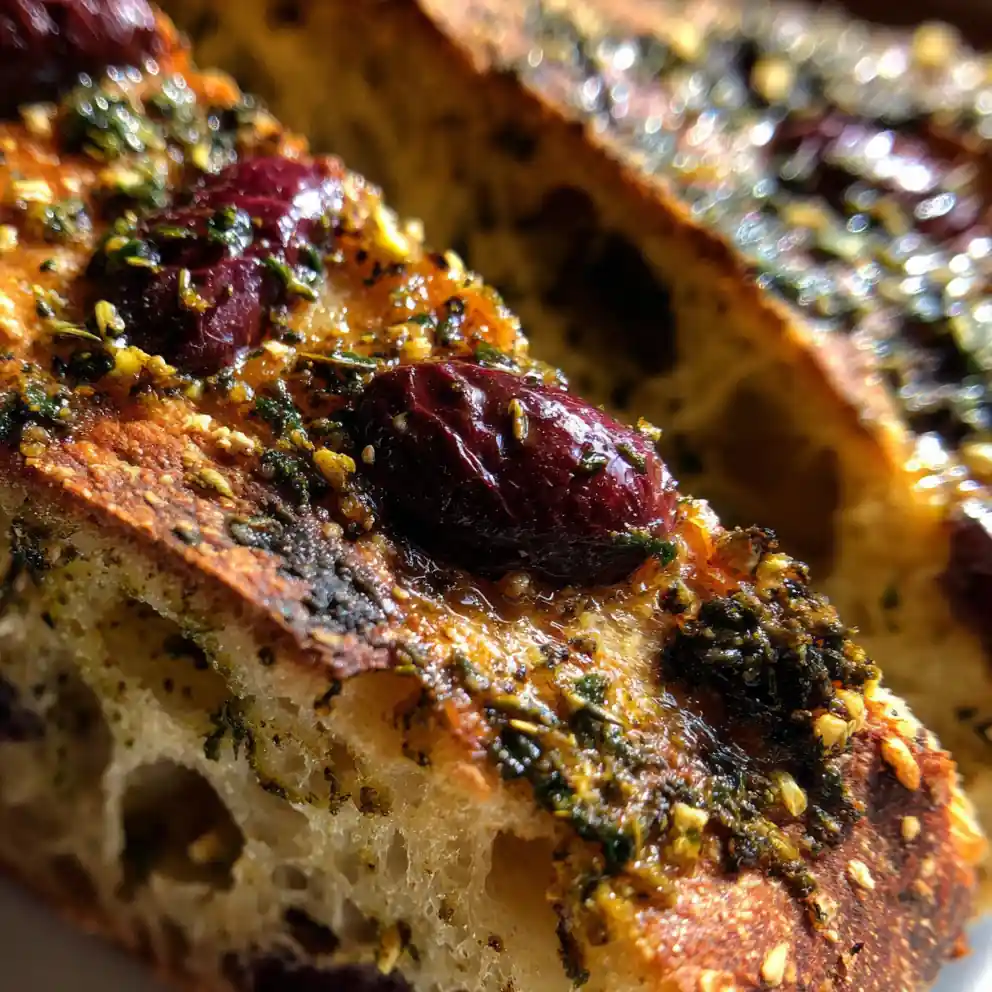
- Serving Suggestion: To serve, place the rustic loaf on a cutting board. Slice generously, revealing the contrasting purple-black olive pieces and green za’atar flecks within the airy crumb. Drizzle the remaining 10 mL (2 tsp) extra virgin olive oil onto a small dish and lightly dust the loaf with 5 g (1 tsp) fresh za’atar blend for a vibrant pop and aromatic flourish. The olive oil is perfect for dipping, making this a healthy option for any table.
For a healthier twist on this ballerina farm sourdough recipe, you might add a tablespoon of sesame or flax seeds during the second mix. This adds nutrients and a lovely nutty flavor. Using a stand mixer with a dough hook for the initial mix and incorporation can also save your arms on a busy weeknight.
Ideal Uses and Serving Suggestions
Once you’ve mastered this simple ballerina farm sourdough recipe, you’ll find endless ways to enjoy your homemade loaf. It’s perfect for satisfying weeknight dinners or a robust side for family gatherings. Serve thick slices as toast for breakfast, build hearty sandwiches for kid lunches, or enjoy it alongside your favorite soup.
- Classic Pairings: Try it with a rich beef stew, a vibrant olive oil and balsamic dip, or simply slathered with butter and jam. Its complex flavor enhances any meal.
- Leftover Love: Store your cooled bread in a bread bag or wrapped in a clean tea towel at room temperature for 2-3 days. For longer enjoyment, slice and freeze the bread, then pull out individual slices as needed.
- Reheating Tip: To bring back that bakery-fresh crispness, spritz frozen or day-old slices with a little water and bake in a 350°F oven for 5-10 minutes. This makes for excellent easy dinner ideas.

Everyday Benefits of Cooking with Ballerina Farm Sourdough Recipe
Embracing the ballerina farm sourdough recipe offers a host of practical wins for your home kitchen. Baking your own bread is far more budget-friendly than consistently buying artisan loaves, allowing you to control ingredients and quality. It’s a truly nourishing staple that supports a healthy eating lifestyle.
- Balanced Lifestyle: This versatile bread helps with meal prep recipes, providing a wholesome base for family-friendly breakfasts, lunches, and quick dinner ideas.
- Nutrient-Rich: Sourdough fermentation can improve nutrient availability and digestibility, making it a great choice for nutritious snacks when paired with healthy toppings.
Tips, Variations, and Dietary Adjustments
To improve your baking, always ensure you’re starting with an active, bubbly sourdough starter for the best rise and texture. Properly scoring your dough just before baking helps create that beautiful ‘ear’ and allows for even expansion.
- Flavor Tweaks: For an Italian twist, knead in roasted garlic and fresh rosemary. My kids love when I add a cup of shredded cheddar and finely diced jalapeños to the dough during the final folds for a savory treat.
- Whole Grains: Incorporate up to 25% whole wheat flour for added fiber and a nuttier flavor, adjusting water slightly as needed.
- Dietary Notes: While not truly gluten-free, some with mild gluten sensitivities find sourdough easier to digest due to fermentation. For plant-based loaves, ensure your starter is maintained with water and flour only.
Frequently Asked Questions
How can I make the Ballerina Farm sourdough recipe fit my busy schedule?
The beauty of this ballerina farm sourdough recipe lies in its flexibility. Utilize the overnight cold proof in the fridge for 8-12 hours, or even up to 24 hours. This allows you to bake the loaf whenever it’s most convenient for you the next day, making it perfect for busy weeknights or weekend baking.
Is this Ballerina Farm sourdough recipe suitable for gluten-free diets?
This traditional recipe uses wheat flour. While sourdough fermentation can sometimes break down some gluten, it’s not truly gluten-free. For a specific gluten-free bread, you would need to use a dedicated gluten-free flour blend, swapping 1:1 for the bread flour, which would change the process and texture significantly.
What’s the best way to store homemade Ballerina Farm sourdough?
To maintain freshness, store your cooled loaf in a linen bread bag or wrapped in a clean tea towel at room temperature for 2-3 days. For longer storage, I often slice my loaf and freeze it in an airtight container for up to 3 months. This is a great tip for meal prep recipes!
How can I get a really crispy crust on my Ballerina Farm sourdough?
The key to a super crispy crust is high heat and steam. Preheat your Dutch oven to 450°F for at least 30 minutes before baking. For extra crispness, spritz the dough with water before placing it in the hot Dutch oven and bake covered initially to trap steam.
Can I make this Ballerina Farm sourdough recipe without a Dutch oven?
Absolutely! If you don’t have a Dutch oven, you can still achieve a great crust. Bake your loaf on a preheated baking stone or a heavy baking sheet. Create steam by placing a pan of boiling water on the bottom rack of your oven during the initial baking phase.
What kind of starter is best for this Ballerina Farm sourdough recipe?
An active, well-fed sourdough starter is crucial for a successful loaf. Look for one that’s bubbly, smells faintly sweet and tangy, and doubles in size a few hours after feeding. This vitality ensures proper rise and the characteristic flavor of a rustic loaf.
Embrace the joy and flavor of homemade bread with this approachable ballerina farm sourdough recipe. You’ll love bringing this healthy, family-friendly staple to your table, I know I do! Save this quick meals recipe to your Pinterest board for future baking inspiration.
Print
ballerina farm sourdough recipe
- Total Time: 1140 minutes
- Yield: 1 loaf 1x
- Diet: General
Description
This wholesome, family-friendly sourdough bread recipe yields a warm, crusty loaf with a golden crackling crust and an inviting aroma, featuring Mediterranean flavors from za’atar and Kalamata olives. It is surprisingly easy to make and fits perfectly into a busy home schedule for healthy eating.
Ingredients
- 100 g active sourdough starter
- 500 g bread flour
- 375 g water
- 10 g fine sea salt
- 20 g za’atar spice blend
- 120 g Kalamata olives, pitted and roughly chopped
- 15 mL extra virgin olive oil, divided
- 5 g fresh za’atar blend, for garnish
Instructions
- Autolyse the Flour: In a large mixing bowl, combine 500 g (3.9 cups) bread flour and 375 g (1 1/2 cups + 1 tbsp) water. Mix until all dry flour disappears and the mixture forms a shaggy dough; it will feel sticky. Cover the bowl with a tea towel and let it rest at room temperature for 30 minutes. This step helps the flour hydrate fully.
- Incorporate Starter & Flavors: Add 100 g (0.22 lb) active sourdough starter to your dough. With wet hands, gently mix until the starter is fully incorporated, feeling the dough become slightly more pliable. Sprinkle 10 g (1.5 tsp) fine sea salt and 20 g (2 tbsp + 1 tsp) za’atar spice blend evenly over the dough. Knead gently for 2-3 minutes; the dough should start to feel cohesive and the flavors will be distributed.
- Bulk Fermentation & Folds: Cover the bowl and let the dough rest for 30 minutes. Begin bulk fermentation, performing 4 sets of stretch and folds over 2 hours, resting 30 minutes between each set. For the second stretch and fold, gently flatten the dough and evenly distribute 120 g (approx. 3/4 cup) roughly chopped Kalamata olives across the surface before folding. Continue with two more sets. (If your dough feels too tight during a fold, give it an extra 10-15 minutes to relax before proceeding.)
- Preshaping & Resting: After the final stretch and fold, let the dough rest for 30 minutes. Gently turn the dough out onto a lightly floured surface. Preshape it into a round or square, aiming for a taut surface. Cover with a tea towel and let rest for 20-30 minutes; it will relax slightly.
- Final Shaping & Cold Proof: Lightly flour a banneton or a large bowl lined with a floured tea towel. Shape the dough into a tight boule or batard, using tension to create a smooth surface; you’ll feel it tighten up. Place the shaped dough seam-side up into the prepared banneton. Cover the banneton with plastic wrap or a shower cap and refrigerate for 12-18 hours for the cold proof. This extended cold proof is a great shortcut for busy cooks, allowing you to bake the next day at your convenience.
- Preheat & Bake: Preheat your oven to 245 degrees C (475 degrees F) with your Dutch oven inside for at least 45 minutes to an hour; it must be fully preheated to get that perfect crust. Carefully remove the hot Dutch oven. Invert the cold dough into the hot Dutch oven. Score the top of the dough with a sharp lame or razor blade in your desired pattern (a cross or single deep slash looks beautiful). Brush the surface lightly with 5 mL (1 tsp) extra virgin olive oil for a richer, glossier crust. Cover and bake for 25 minutes; you’ll smell the initial browning.
- Uncovered Bake & Cool: Remove the lid from the Dutch oven. Reduce oven temperature to 230 degrees C (450 degrees F) and continue baking for another 20-25 minutes, or until the crust is deeply golden brown and the internal temperature reaches 96-99 degrees C (205-210 degrees F). Carefully remove the loaf from the Dutch oven and transfer it to a wire rack. Let cool completely for at least 2-3 hours before slicing to allow the crumb to set properly; it will sound hollow when tapped.
- Serving Suggestion: To serve, place the rustic loaf on a cutting board. Slice generously, revealing the contrasting purple-black olive pieces and green za’atar flecks within the airy crumb. Drizzle the remaining 10 mL (2 tsp) extra virgin olive oil onto a small dish and lightly dust the loaf with 5 g (1 tsp) fresh za’atar blend for a vibrant pop and aromatic flourish. The olive oil is perfect for dipping, making this a healthy option for any table.
Notes
Adjust kosher salt if swapping for fine sea salt. Green olives can be substituted for Kalamata olives but may alter flavor. If dough is too tight during folds, allow extra rest. The cold proof allows for convenient next-day baking. Cool completely (2-3 hours) on a wire rack before slicing to set crumb. Consider adding sesame or flax seeds for extra nutrients. A stand mixer can assist with initial mixing.
- Prep Time: 30 minutes
- Cook Time: 50 minutes
- Category: Bread
- Method: Baking
- Cuisine: Mediterranean
Nutrition
- Serving Size: 1 slice (100 g)
- Calories: 350 calories
- Sugar: 2 g
- Sodium: 400 mg
- Fat: 15 g
- Saturated Fat: 2 g
- Unsaturated Fat: 10 g
- Trans Fat: 0 g
- Carbohydrates: 60 g
- Fiber: 4 g
- Protein: 10 g
- Cholesterol: 0 mg
Keywords: sourdough, bread, easy, wholesome, family, Mediterranean, olives, za’atar, baking, Dutch oven
FREE PRINTABLE RECIPE
Get the Printable Recipe PDF (Free)
Enter your email and we’ll send you the ingredients + step-by-step instructions as a clean PDF you can save to your phone.
- ✅ Printable PDF (ingredients + steps)
- ✅ Save it to your phone (no long scrolling)
- ✅ Includes cook time + servings
- ✅ Easy to follow
FAQ
Where’s the full recipe?
It’s delivered as a printable PDF so you can save it and cook without scrolling.
I didn’t get the email.
Check Spam/Promotions and search your inbox for your site name. Then click Confirm to receive the PDF.