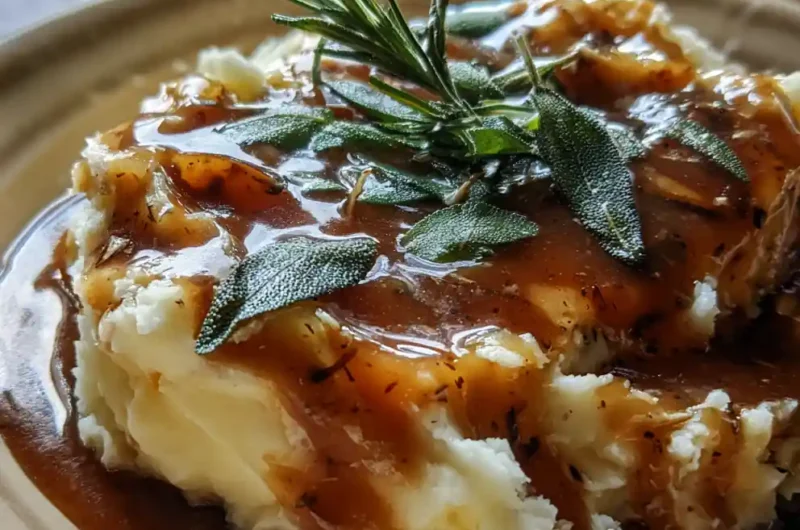
I’ve always felt that the gravy makes or breaks a holiday dinner, so I’m particular about getting it right. Say goodbye to bland, pre-packaged gravy and hello to a rich, deeply savory sauce that will transform your next family dinner or holiday meal. This recipe for the best brown gravy recipe takes a little extra time but delivers huge on flavor, thanks to a few simple techniques that make all the difference. The secret ingredient here isn’t beef drippings; it’s slow-roasted garlic and fresh sage, which infuse this best brown gravy recipe with a complex, sweet, and aromatic depth. It’s the perfect finishing touch for everything from roasted chicken and mashed potatoes to hearty pot roasts.
Ingredients
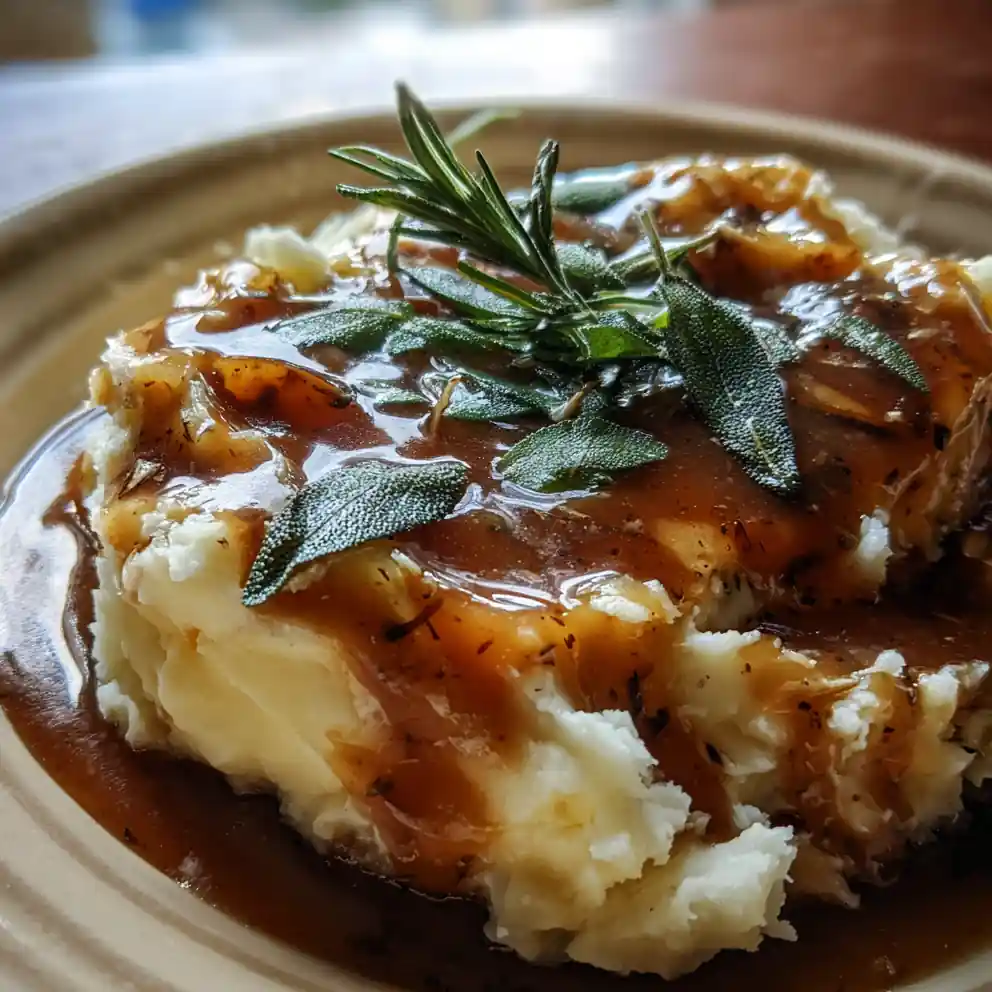
Making the best brown gravy recipe requires a few key components to create that rich, savory flavor base. This recipe relies on a classic roux technique and fresh aromatics for a complex flavor.
- 1 whole head garlic: Roasting transforms garlic from sharp to sweet and creamy; provides the deep, savory backbone of this gravy.
- 15 g (about 15-20) fresh sage leaves, divided: Offers a fragrant, woodsy, and aromatic note; divided use for infusion and crispy garnish.
- 60 ml (1/4 cup) vegetable oil, plus extra for roasting garlic and frying sage: Provides the fat base for the roux; neutral oil like canola or sunflower oil works best.
- 45 g (1/4 cup) all-purpose flour: Standard thickening agent for a classic roux; can use a gluten-free flour blend as a swap, though results may vary.
- 80 g (1/2 small) yellow onion, finely diced: Adds a subtle sweetness and aromatic base; diced small so it blends smoothly into the final gravy.
- 720 ml (3 cups) vegetable stock: Forms the liquid base of the gravy; for a beefier flavor, substitute with beef broth or stock.
- 2.5 g (1/2 teaspoon) fine sea salt: Enhances the overall flavor profile; helps balance the sweetness of the roasted garlic.
- 2 g (1 teaspoon) freshly ground black pepper, plus extra for garnish: Adds a necessary peppery kick to balance the rich flavors; grinding fresh pepper ensures maximum aroma.
Instructions
Let’s make this best brown gravy recipe. Following these steps ensures a smooth consistency and maximum flavor extraction from the aromatics.
- Prepare the roasted garlic: Preheat oven to 400°F (200°C) and slice off the top 1/4 inch of the garlic head. Drizzle with a tiny bit of vegetable oil, wrap tightly in aluminum foil, and roast for 35-45 minutes, or until cloves are very soft and golden brown. Let cool slightly, then squeeze out the pulp and mash with a fork. This step brings out the natural sweetness in the garlic and creates a tender, buttery texture for blending in this best brown gravy recipe.
- Infuse the oil and prepare crispy sage: While the garlic roasts, heat 1/4 cup vegetable oil in a medium saucepan over medium heat. Add 10-12 fresh sage leaves; fry for 1-2 minutes until they become crisp and vibrant green. Carefully remove the crispy sage leaves with a slotted spoon, transfer them to a paper towel-lined plate, and lightly salt. Reserve these leaves for garnish.
- Build the roux: Reduce the heat to medium-low. Add the remaining 5-8 fresh sage leaves to the oil in the saucepan and cook for 1-2 minutes until fragrant but not crispy; remove and discard these infused sage leaves. Add the all-purpose flour to the infused oil, whisking constantly for 3-5 minutes until a rich, deep golden-brown roux forms. The long cook time for the roux is critical to remove the raw flour taste and create a nutty, deep flavor base for this best brown gravy recipe.
- Sauté aromatics: Add the finely diced yellow onion to the roux and cook for 3-4 minutes until softened. Stir in the mashed roasted garlic pulp and cook for another minute, stirring frequently until fragrant. Ensure the onions are fully softened before moving to the next step; this creates a smooth texture in the final gravy.
- Create the gravy: Gradually whisk in the vegetable stock, adding only a small amount at a time and ensuring no lumps form before adding more liquid. Bring the mixture to a simmer over medium heat, whisking occasionally, until the gravy thickens to your desired consistency, about 8-10 minutes. If lumps form when adding the stock, don’t worry—just switch to an immersion blender to quickly purée the gravy in the pan until smooth. The gradual addition prevents lumps from forming and allows you to control the thickness of this best brown gravy recipe.
- Season and finish: Remove from heat. Stir in the salt and 1 teaspoon of freshly ground black pepper. Taste and adjust the seasoning if necessary. This will ensure you have the very best brown gravy recipe.
Tips for the Smoothest Brown Gravy Every Time
- Whisking Technique: When adding the stock, pour it slowly in a thin stream while continuously whisking in the center of the pan. This technique helps ensure the flour mixture dissolves evenly and prevents lumps from forming in this best brown gravy recipe.
- Temperature Control: The secret to truly smooth gravy is the contrast between temperatures. A hot roux combined with cold stock or broth prevents lumps from forming more effectively than adding warm liquid.
- Troubleshooting Lumps: If lumps do form, don’t panic! Pour the gravy through a fine-mesh sieve to catch any clumps before serving. For a faster fix, use an immersion blender right in the pan to quickly purée the gravy until smooth.
- Adjusting Consistency: If your gravy isn’t thickening enough during the simmer, create a cornstarch slurry by whisking 1 tablespoon of cornstarch with 2 tablespoons of cold water. Add this mixture to the simmering gravy and whisk continuously for 1-2 minutes until it reaches your desired consistency.
Make-Ahead and Storage Tips
- Reheating: Gravy tends to thicken considerably when cold. To reheat this brown gravy recipe, warm it gently over low heat, whisking in additional stock or water until it returns to your desired consistency.
- Make-Ahead: This savory brown gravy can be fully prepared 2-3 days in advance and stored in an airtight container in the refrigerator. I make a double batch of this best brown gravy recipe during meal prep and portion it out for quick dinners during the week.
- Freezer Storage: For longer storage (up to 3 months), cool completely before transferring to a freezer-safe container. Thaw overnight in the refrigerator before reheating.
Frequently Asked Questions
Can I make this with beef broth instead of vegetable stock?
Yes, absolutely. Using beef broth (or even beef drippings if you have them) will result in a deeper, more traditional beef-forward gravy. The roasted garlic and sage will still provide a delicious complexity, making it a wonderful accompaniment to pot roast or mashed potatoes.
Can I make this recipe gluten-free?
Yes, you can substitute the all-purpose flour for a cup-for-cup gluten-free flour blend. When forming the roux, whisk continuously as the blend cooks to achieve the proper consistency for this brown gravy recipe.
Why do you fry the sage leaves and then discard them?
The first set of leaves are fried for a crispy garnish; the second set are cooked briefly in the oil and discarded because they infuse the oil with flavor without adding extra texture to the final gravy. This ensures the best brown gravy recipe has a smooth consistency while still retaining the sage flavor.
My gravy isn’t thick enough. How can I fix it?
If you’ve simmered for 10 minutes and it’s still too thin, create a simple slurry by whisking 1 tablespoon of cornstarch with 2 tablespoons of cold water. Add this to the simmering gravy and whisk continuously for 1-2 minutes until it thickens. For a smooth finish, I always use a small wire whisk to incorporate the slurry completely.
Conclusion
This best brown gravy recipe is the perfect way to elevate your cooking for special occasions or just a really good family-friendly Sunday dinner. The combination of slow-roasted garlic and crispy sage creates a flavor profile that is both complex and comforting, making this a truly memorable brown gravy.
Save this recipe on Pinterest so you can find this amazing brown gravy anytime you need a delicious finishing touch for your healthy family meals.
Print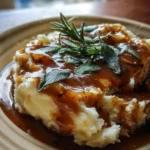
best brown gravy recipe
- Total Time: 45 minutes
- Yield: 10 servings 1x
- Diet: general
Description
This rich, savory brown gravy recipe features slow-roasted garlic and fresh sage, offering a complex flavor profile that elevates holiday meals and Sunday dinners. It’s a flavorful alternative to pre-packaged gravy, thickened with a classic roux technique.
Ingredients
- 1 head garlic
- 15 fresh sage leaves, divided
- 1/4 cup vegetable oil, plus extra for roasting and frying sage
- 1/4 cup all-purpose flour
- 1/2 small yellow onion, finely diced
- 3 cups vegetable stock (or beef broth)
- 1/2 teaspoon fine sea salt
- 1 teaspoon freshly ground black pepper
Instructions
- Roast Garlic: Preheat oven to 400°F (200°C). Slice off the top of the garlic head, drizzle with oil, wrap tightly in foil, and roast for 35-45 minutes until very soft. Squeeze out the pulp and mash with a fork.
- Prepare Crispy Sage Garnish: While garlic roasts, heat 1/4 cup vegetable oil in a medium saucepan over medium heat. Fry 10-12 sage leaves for 1-2 minutes until crisp. Remove leaves with a slotted spoon and set aside on a paper towel-lined plate.
- Build Roux Base: Reduce heat to medium-low. Add remaining 5-8 sage leaves to the oil and cook for 1-2 minutes until fragrant, then remove and discard them. Whisk in flour and cook for 3-5 minutes until a deep golden-brown roux forms.
- Sauté Aromatics: Add diced onion to the roux and cook for 3-4 minutes until softened. Stir in the mashed roasted garlic pulp and cook for another minute until fragrant.
- Simmer Gravy: Gradually whisk in the vegetable stock, adding small amounts at a time to prevent lumps. Bring mixture to a simmer over medium heat and continue whisking occasionally until thickened to desired consistency (about 8-10 minutes). If lumps form, use an immersion blender to smooth the gravy.
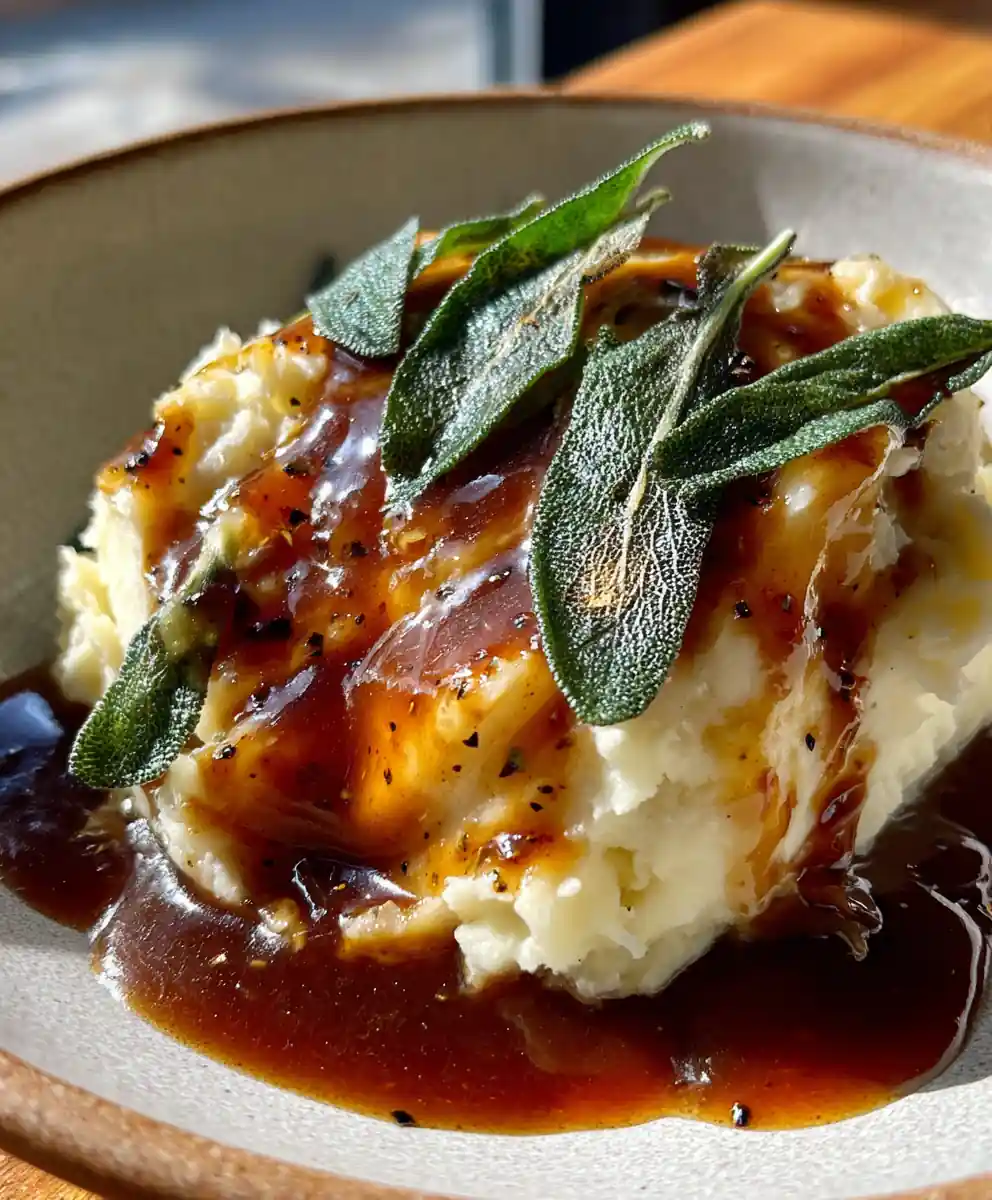
- Season and Finish: Remove from heat and stir in salt and pepper. Adjust seasoning to taste and serve immediately, garnished with crispy sage leaves.
Notes
To reheat this gravy, gently warm over low heat, whisking in additional stock or water to restore the desired consistency. The gravy can be stored in the refrigerator for 2-3 days or frozen for up to 3 months. When preparing the gravy, using cold stock combined with the hot roux helps prevent lumps from forming. If the gravy is too thin, create a slurry by whisking 1 tablespoon of cornstarch with 2 tablespoons of cold water and add it to the simmering gravy until it thickens.
- Prep Time: 15 minutes
- Cook Time: 30 minutes
- Category: sauce, side dish
- Method: stovetop, roasting
- Cuisine: american
Nutrition
- Serving Size: 1/4 cup (60 ml)
- Calories: 90 calories
- Sugar: 1 g
- Sodium: 250 mg
- Fat: 8 g
- Saturated Fat: 1 g
- Unsaturated Fat: 7 g
- Trans Fat: 0 g
- Carbohydrates: 5 g
- Fiber: 1 g
- Protein: 1 g
- Cholesterol: 0 mg
Keywords: brown gravy, homemade gravy, roasted garlic, sage, holiday, sauce, side dish, vegetarian gravy, beef gravy, roux
FREE PRINTABLE RECIPE
Get the Printable Recipe PDF (Free)
Enter your email and we’ll send you the ingredients + step-by-step instructions as a clean PDF you can save to your phone.
- ✅ Printable PDF (ingredients + steps)
- ✅ Save it to your phone (no long scrolling)
- ✅ Includes cook time + servings
- ✅ Easy to follow
FAQ
Where’s the full recipe?
It’s delivered as a printable PDF so you can save it and cook without scrolling.
I didn’t get the email.
Check Spam/Promotions and search your inbox for your site name. Then click Confirm to receive the PDF.