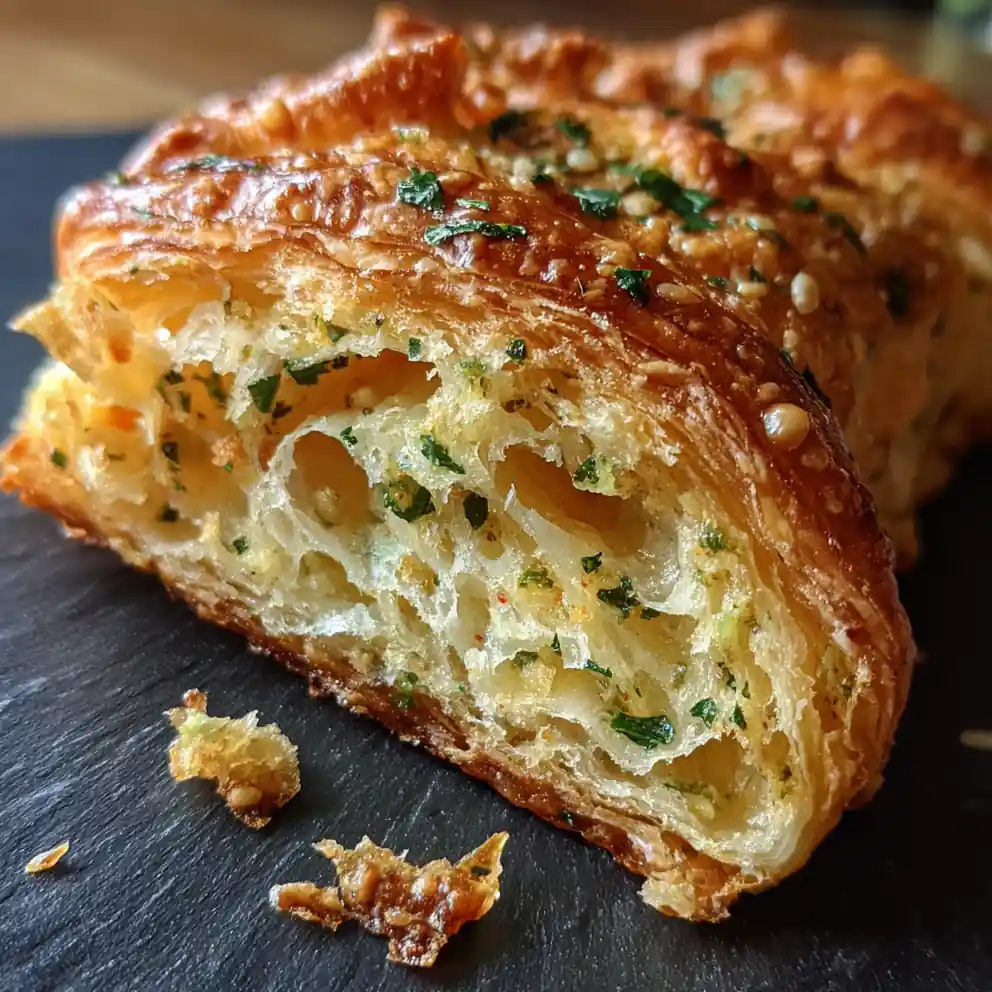
I truly believe that making a homemade puff pastry dough is one of the most rewarding kitchen projects you can undertake. Store-bought dough offers convenience, but it can’t match the incredible flavor and texture of a freshly made batch, where crispy layers hold a savory, herbaceous secret. This specific puff pastry dough recipe takes the classic lamination method and elevates it with a savory Mediterranean herb butter layer—think parsley, chives, garlic, and a touch of Aleppo pepper. The result is a richer, more flavorful pastry that adds an extra dimension to family dinners, perfect for sausage rolls, savory tarts, and quick appetizers. While it takes time for chilling, the active steps are simple, making this a rewarding project for home cooks looking to upgrade their baking. This puff pastry dough recipe ensures a light, airy, and buttery result every single time you need a savory foundation for your meals.
Ingredients
- 300 g (2 ¼ cups) all-purpose flour
Use standard all-purpose flour for building structure in the detrempe (dough base). For best results, weigh your flour rather than measuring by volume to ensure accuracy. Extra flour will be needed for dusting during the rolling process. - 5 g (1 teaspoon) fine sea salt
This small amount of salt enhances the flavor of the detrempe and helps regulate fermentation if chilling longer. Ensure it is fully incorporated into the flour before adding the water. - 150 ml (⅔ cup) ice water
The cold water is essential for creating a firm dough that won’t absorb the butter block too quickly. Keep a small bowl of ice cubes in water and measure out the water just before use to ensure it’s very cold. - 20 g (1 ½ tablespoons) unsalted butter, melted and cooled
This melted butter adds richness and pliability to the initial puff pastry dough before lamination begins. Make sure it is fully cooled before adding to the dough mixture to avoid heating the ice water. - 250 g (1 cup + 2 tablespoons) unsalted butter, at room temperature
This butter forms the beurrage (butter block) layer that creates the flaky layers. It must be softened enough to be pliable (room temperature) but not melted or greasy. Ensure you use unsalted butter to control the overall salt level of the recipe. - 15 g (2 tablespoons) fresh parsley, finely minced
Finely mincing the parsley ensures even distribution within the butter block and prevents tearing of the dough layers during rolling. Fresh herbs are key; avoid dried herbs for this recipe. - 10 g (1 ½ tablespoons) fresh chives, finely minced
Chives add a mild onion flavor that complements the garlic and parsley. Mince finely to match the parsley texture. - 5 g (1 ½ teaspoons) garlic, minced very finely
Use fresh garlic and mince it extremely finely so that there are no chunks that could tear the dough. A microplane or garlic press works best for this. - 2 g (1 teaspoon) Aleppo pepper flakes
Aleppo pepper adds a mild, fruity heat and a beautiful red color to the layers. If unavailable, use a small amount of sweet paprika as a substitute for color. - 2 g (½ teaspoon) fine sea salt (for herb butter)
This salt seasons the butter block directly, ensuring flavor throughout the layers. Use fine sea salt to dissolve quickly into the soft butter.
Instructions
- Prepare the Detrempe Dough
In a large mixing bowl, combine 300g all-purpose flour and 5g fine sea salt.
Add 150ml ice water and 20g melted, cooled butter, mixing with a spatula until a shaggy dough forms.
Turn out onto a lightly floured surface and gently knead for 2-3 minutes until just combined and smooth enough to form a ball; avoid over-kneading, which prevents flakiness later.
Flatten the dough into a 15 cm (6 inch) square, wrap tightly in plastic film, and refrigerate for at least 30 minutes, up to 2 hours. - Prepare the Herb Butter Block (Beurrage)
In a medium bowl, combine 250g softened unsalted butter with the finely minced parsley, chives, garlic, Aleppo pepper flakes, and 2g fine sea salt.
Mix thoroughly until the herbs and spices are evenly distributed throughout the butter.
Scrape the mixture onto a piece of parchment paper and form it into a 15 cm (6 inch) square, using the paper and a ruler to ensure sharp edges and an even thickness (about 1.5 cm or ⅗ inch thick).
Wrap tightly in plastic film and refrigerate for 30 minutes to firm up slightly; it should be pliable but not rock hard, matching the consistency of the chilled dough. - Enclose the Butter Block (First Turn)
On a lightly floured surface, roll the chilled detrempe dough into a 25 cm (10 inch) square.
Place the chilled herb butter block diagonally in the center of the dough square.
Bring the four corners of the dough up and over the butter block, pinching the seams firmly together in the center to completely encase the butter; ensure no butter is exposed. - Roll and Fold (Single Turn)
Gently tap the dough package with a rolling pin to evenly distribute the butter within the dough.
Roll the dough into a long rectangle, approximately 20 cm x 60 cm (8 inches x 24 inches), keeping the thickness even across the length.
Brush off any excess flour, then fold the dough into thirds like a business letter: bring one short end to the center, then fold the other short end over it.
This completes one single turn of the puff pastry dough; rotate the dough 90 degrees clockwise, wrap in plastic film, and refrigerate for 30 minutes. If your butter starts to break through the dough during rolling, stop immediately, wrap the dough, and chill it for 15-20 minutes to firm everything up before continuing. - Repeat Remaining Turns and Chill
Repeat step 4 three more times for a total of four single turns.
Before each turn, ensure the dough is rotated 90 degrees clockwise and chilled for 30 minutes between turns to prevent the butter from melting.
After the fourth turn, wrap the puff pastry dough securely and refrigerate for at least 2 hours, or preferably overnight, before use.
The finished puff pastry dough will have visible flecks of herbs and spices within its layers when you roll it out.
Quick Meal Ideas for Savory Herb Puff Pastry
- Sausage Rolls: Roll out the dough, cut into strips, wrap around cooked sausages (or vegetarian links), brush with egg wash, and bake for a quick and hearty family dinner.
- Savory Tarts: Use a sheet of the dough as a base for a free-form tart topped with caramelized onions, goat cheese, and fresh tomatoes for a lovely family meal.
- Hand Pies and Calzones: Fill small squares of the puff pastry dough with leftover shredded chicken, cheese, or vegetables, crimp the edges, and bake for individual, portable meals.
Tips for Achieving Flaky Layers in Homemade Puff Pastry Dough
Control Temperature: The key to lamination is maintaining a similar consistency between the detrempe dough and the butter block. Both should be cold and firm, but pliable enough to roll without tearing. If the butter feels too hard during rolling, let the dough sit for 5 minutes at room temperature before continuing.
Use Consistent Pressure: When rolling out the dough, maintain consistent, even pressure to prevent the butter from squeezing out the sides. If butter starts to escape, stop, wrap the dough, and chill it immediately for 15 minutes before continuing.
Avoid Over-Kneading the Detrempe: Over-kneading develops too much gluten, which makes the dough tough and prevents the light, airy layers from forming during baking. The initial kneading step is just to bring the ingredients together, not to develop elasticity in this puff pastry dough recipe.

Make-Ahead and Storage Tips for Your Homemade Puff Pastry
Refrigerator Storage: Tightly wrapped in plastic film, the finished dough can be stored in the refrigerator for up to 3 days. Store on a flat surface to maintain its shape and avoid denting the layers.
Freezing Instructions: For longer storage, freeze the wrapped dough in a large zip-top bag for up to 3 months. To thaw, move it to the refrigerator overnight before use, avoiding thawing at room temperature.
Pre-portioned Freezing: Before freezing, divide the finished puff pastry dough into two or four smaller blocks, wrapped individually, for quick access to smaller portions for single-batch recipes and easy dinner ideas.
FAQs about Making Puff Pastry Dough Recipe
Q: Can I substitute dried herbs for fresh herbs in the butter block?
A: Fresh herbs are essential here for flavor and moisture; dried herbs will give a muted flavor and potentially tear the dough layers. The moisture in fresh herbs helps the butter remain pliable during lamination.
Q: My butter started to tear through the dough; what should I do?
A: This usually means the dough or butter block got too warm. Wrap the dough immediately and chill it in the refrigerator for at least 20 minutes to firm everything up before continuing. I always recommend working quickly and in a cool kitchen environment when making puff pastry dough.
Q: Can I make this with less butter?
A: No, the high proportion of butter is essential for achieving the light, flaky layers of classic puff pastry dough; reducing it changes the structure entirely and prevents proper lamination. This specific puff pastry dough recipe relies on the ratio of butter to flour for success.
Q: What if I don’t have Aleppo pepper?
A: You can omit it entirely, or replace it with a pinch of sweet paprika for a mild, smoky flavor and visual appeal. Paprika provides a similar color without adding significant heat.
Q: How long does it take to make this recipe?
A: The total process involves about 30–40 minutes of active work, but requires several hours (at least 3 hours) of intermittent chilling time, so plan ahead for a slow day at home. The puff pastry dough recipe is best made when you have time for chilling intervals.
Q: Can I use a stand mixer to make the detrempe dough?
A: Yes, but only for the initial mixing. Use the dough hook attachment on low speed for 1-2 minutes until just combined; avoid developing too much gluten, which prevents flakiness later in the process.
Conclusion
Making homemade puff pastry dough from scratch is a rewarding process, and this specific herb-infused version elevates your results even further. The savory Mediterranean flavors baked into every layer add a sophisticated touch to simple meals and make entertaining easy.
Take the time to try this puff pastry dough recipe this week for an elevated family dinner—you’ll be glad you did, and be sure to save this recipe for later on Pinterest!
Print
puff pastry dough recipe
- Total Time: 305 minutes
- Yield: 1 large dough block 1x
- Diet: General
Description
This puff pastry recipe uses a classic lamination method enhanced with a savory Mediterranean herb butter layer, featuring parsley, chives, and garlic. The result is a richer, flakier dough perfect for savory tarts and sausage rolls, requiring active work and several chilling intervals.
Ingredients
- 300 grams (2 1/4 cups) all-purpose flour
- 5 grams (1 teaspoon) fine sea salt
- 150 milliliters (2/3 cup) ice water
- 20 grams (1 1/2 tablespoons) unsalted butter, melted and cooled
- 250 grams (1 cup plus 2 tablespoons) unsalted butter, softened
- 15 grams (2 tablespoons) fresh parsley, minced
- 10 grams (1 1/2 tablespoons) fresh chives, minced
- 5 grams (1 1/2 teaspoons) garlic, minced finely
- 2 grams (1 teaspoon) Aleppo pepper flakes
- 2 grams (1/2 teaspoon) fine sea salt (for herb butter)
Instructions
- Create Detrempe Dough: Combine flour and salt. Add ice water and cooled melted butter, mixing until a shaggy dough forms. Gently knead for 2-3 minutes to form a smooth ball, then flatten into a 6-inch square. Wrap and refrigerate for 30 minutes to 2 hours.
- Prepare Herb Butter Block: Combine softened unsalted butter with parsley, chives, garlic, Aleppo pepper, and salt. Form the mixture into a 6-inch square on parchment paper. Wrap and refrigerate for 30 minutes to firm slightly.
- Enclose Butter Block: Roll the chilled detrempe dough into a 10-inch square. Place the herb butter block diagonally on the detrempe, then fold the four corners of the dough over the butter, pinching to seal all edges.
- Perform Lamination Turn: Tap the dough package gently and roll into a long, even rectangle (approx. 20 cm x 60 cm). Fold the dough into thirds like a business letter. Wrap the dough, rotate 90 degrees clockwise, and refrigerate for 30 minutes.
- Complete Remaining Turns: Repeat the rolling and folding process from Step 4 three additional times, ensuring a 30-minute chill between each turn. After the final (fourth) turn, chill the puff pastry dough for at least 2 hours or overnight before use.
Notes
Work quickly in a cool kitchen environment to prevent the butter from melting. If the butter breaks through the dough during rolling, stop, wrap, and chill immediately for 15-20 minutes to firm up before continuing. Store wrapped dough in the refrigerator for up to 3 days, or freeze for up to 3 months.
- Prep Time: 35 minutes
- Cook Time: 0 minutes
- Category: Appetizer
- Method: Lamination, baking
- Cuisine: Mediterranean
Nutrition
- Serving Size: 1 serving
- Calories: 370 kcal
- Sugar: 0 g
- Sodium: 1000 mg
- Fat: 28 g
- Saturated Fat: 17 g
- Unsaturated Fat: 10 g
- Trans Fat: 0 g
- Carbohydrates: 28 g
- Fiber: 1 g
- Protein: 4 g
- Cholesterol: 75 mg
Keywords: homemade, puff pastry, savory, herbs, lamination, Mediterranean, baking, dough, appetizer, from scratch
FREE PRINTABLE RECIPE
Get the Printable Recipe PDF (Free)
Enter your email and we’ll send you the ingredients + step-by-step instructions as a clean PDF you can save to your phone.
- ✅ Printable PDF (ingredients + steps)
- ✅ Save it to your phone (no long scrolling)
- ✅ Includes cook time + servings
- ✅ Easy to follow
FAQ
Where’s the full recipe?
It’s delivered as a printable PDF so you can save it and cook without scrolling.
I didn’t get the email.
Check Spam/Promotions and search your inbox for your site name. Then click Confirm to receive the PDF.