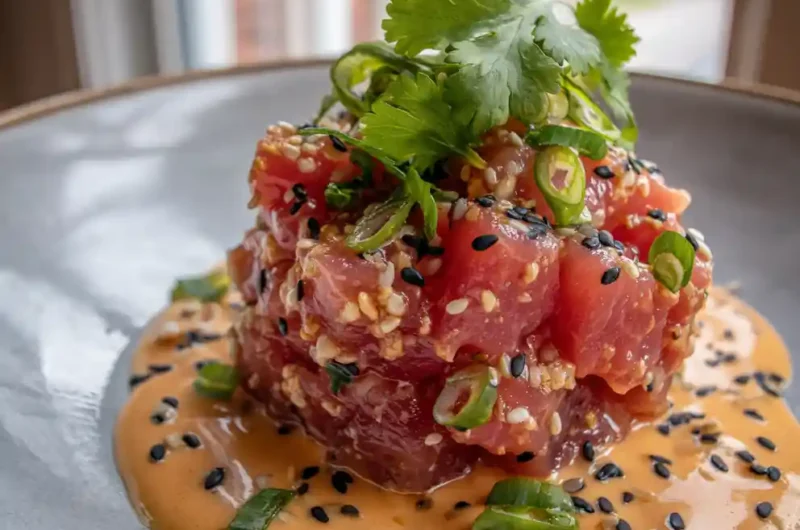
I’ve found a new go-to for quick weeknight dinners that feels like a splurge. This vibrant spicy tuna recipe is a game-changer because it takes less than 15 minutes to assemble and requires zero cooking. The secret lies in the creamy, spicy Gochujang-Lime aioli, which creates a truly irresistible flavor profile. My family loves how fresh and satisfying this spicy tuna recipe is, especially when served over rice for a healthy meal. It’s a fantastic solution for those busy evenings when you want something flavorful without resorting to takeout.
Ingredients
- Sushi-Grade Ahi Tuna (300g / 10.6 oz): Finely diced into 1 cm (0.4 inch) cubes for best texture. Ensure it is fresh and specifically labeled as “sushi-grade” or “sashimi-grade” for safe consumption raw; ask your fishmonger if unsure.
- Mayonnaise (60g / 1/4 cup): Use a vegetable oil-based mayonnaise for a smooth and neutral base that allows the Gochujang flavor to shine through. Avoid light or full-fat mayonnaise with strong egg flavors, as they can overpower the delicate tuna.
- Gochujang (Korean Chili Paste) (30g / 2 tablespoons): This is the foundational ingredient for heat and umami. Look for Gochujang in the international or Asian food aisle; adjust the quantity to control the spice level.
- Fresh Lime Juice (15ml / 1 tablespoon): Use freshly squeezed lime juice for a vibrant, acidic kick to balance the rich mayonnaise and sweet heat of the Gochujang. Avoid bottled lime juice, as the flavor profile won’t be as bright.
- Toasted Sesame Oil (5ml / 1 teaspoon): Adds a crucial nutty and aromatic note that defines the Asian flavor profile. Ensure it is toasted sesame oil for maximum aroma.
- Minced Garlic (1 medium clove): Use one fresh garlic clove, very finely minced. Garlic adds depth and pungency to the aioli; do not substitute with garlic powder if possible.
- Gochugaru (Korean Chili Flakes) or Red Pepper Flakes (2g / 1/2 teaspoon): Adds extra heat and a vibrant red flecked appearance. Gochugaru is traditionally used for a milder heat, but standard red pepper flakes work just fine if that’s what you have.
- Spring Onions (Scallions) (2 medium): Thinly slice both the white and light green parts; keep white and green separated for different uses. The white parts go into the mixture, and the green parts are used for garnish.
- Black Sesame Seeds (5g / 1 teaspoon): Used for garnishing; adds a visual contrast and subtle nutty flavor. Can be swapped for white sesame seeds if preferred.
- Fresh Cilantro Leaves (5g / 1/4 cup): Roughly chopped for garnish; adds a fresh, herbaceous element that cuts through the richness. If you dislike cilantro, use thinly sliced chives as an alternative.
- Pinch of Sea Salt: Used to enhance and bring out the flavors of the final mixture.
Instructions
1. Prepare the Gochujang-Lime Aioli Base
In a medium bowl, whisk together the mayonnaise, Gochujang, fresh lime juice, toasted sesame oil, minced garlic, and gochugaru (or red pepper flakes) until completely smooth. Ensure there are no streaks of mayonnaise remaining before moving on; this ensures the flavor is evenly distributed when folding in the tuna.
2. Reserve Aioli for Drizzling
Spoon out about 15g (1 tablespoon) of the prepared aioli into a separate small bowl and set aside; this reserved portion will be used later for the final presentation drizzle. This step ensures you have a clean-looking topping without disturbing the spicy tuna mixture itself.
3. Fold in the Tuna and Aromatics
Add the finely diced sushi-grade tuna to the bowl with the main aioli mixture. Add the white and light green parts of the sliced spring onions. Gently fold the tuna and spring onions into the aioli mixture using a large spatula until the tuna is evenly coated; avoid overmixing to maintain the tuna’s texture. I find this goes fastest if I pre-chop all my ingredients while making this spicy tuna recipe.
4. Chill and Meld Flavors
Cover the bowl tightly and refrigerate the spicy tuna mixture for at least 15 minutes to allow the flavors to meld and the tuna to chill properly. Chilling also helps firm up the tuna texture and makes it more pleasant to eat when serving. If you need to make this immediately, you can skip this step, but the flavors won’t be quite as developed.
5. Plate and Garnish
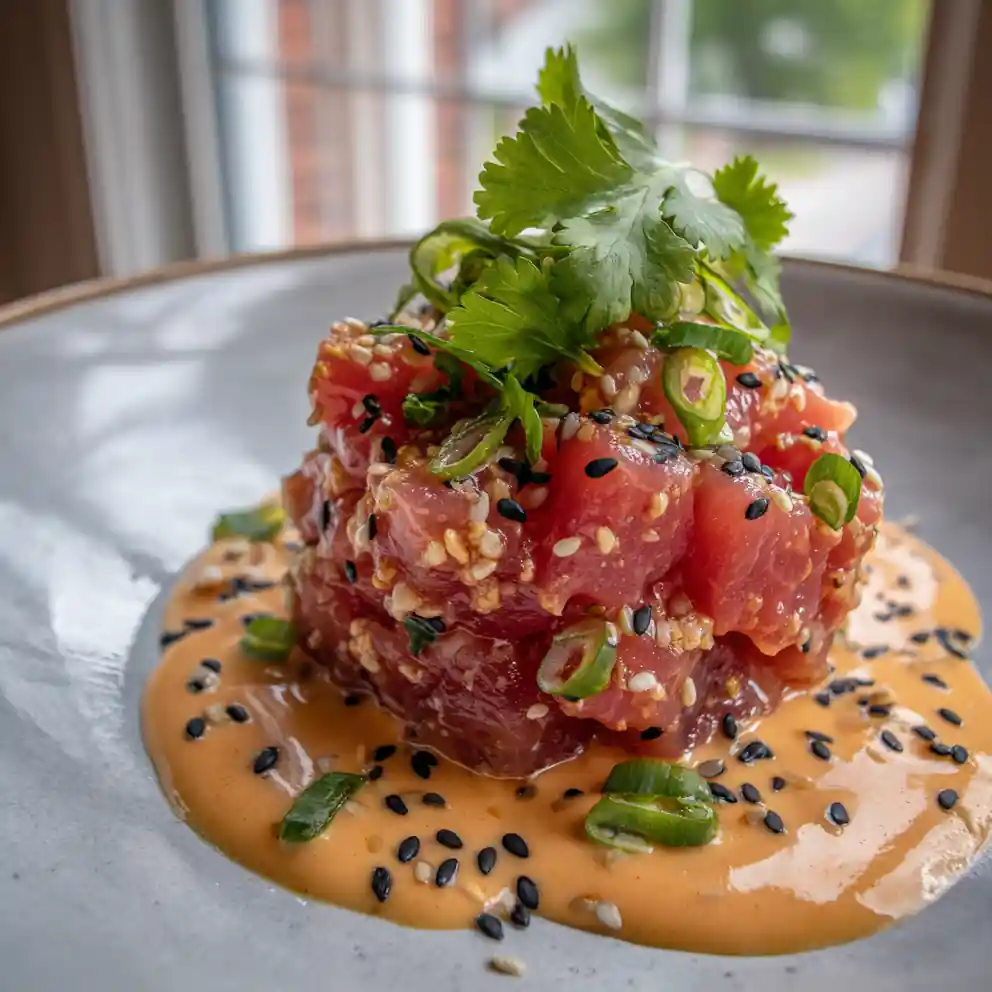
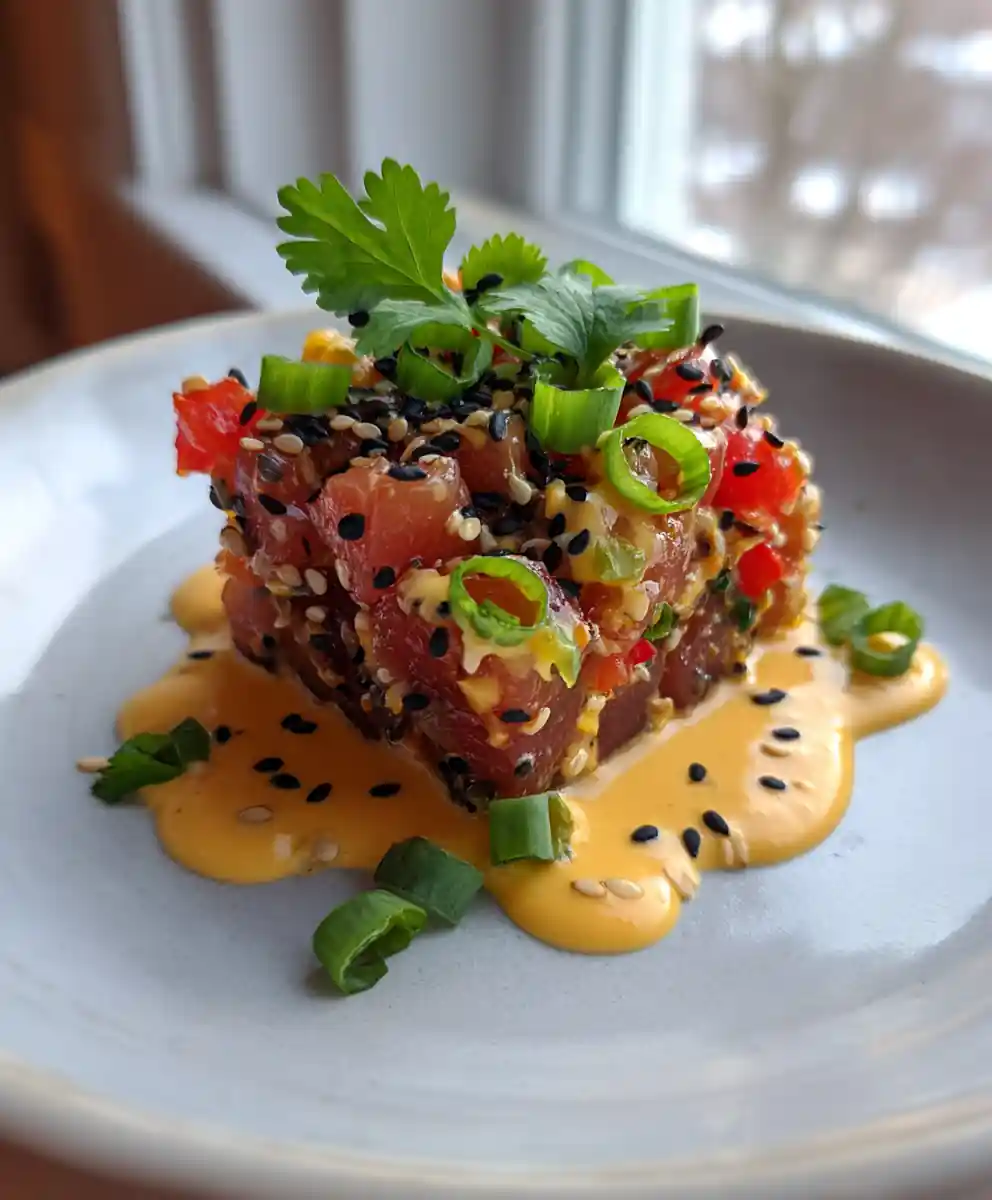
To serve, use a spoon to arrange the spicy tuna mixture into an appealing mound on a clean plate or shallow bowl. Take the reserved 15g (1 tablespoon) of Gochujang-Lime Aioli and drizzle it generously over the mounded tuna mixture in a visible, swirling pattern. Sprinkle evenly with black sesame seeds and the roughly chopped fresh cilantro leaves for contrasting color and freshness.
Quick Ways to Serve Your Gochujang Spicy Tuna
This spicy tuna recipe is incredibly versatile and can be adapted for appetizers, lunches, or family dinners. The vibrant Gochujang-Lime aioli pairs well with many different textures, from crisp crackers to soft rice.
- Serve as a vibrant appetizer with crackers or cucumber rounds: Use sturdy crackers or slices of crisp cucumber for a low-carb option. I find that serving this spicy tuna recipe over crispy rice cakes makes for a great high-protein snack.
- Create a spicy tuna bowl: Serve over steamed rice (try sushi rice or jasmine rice) with toppings like avocado, edamame, and crispy seaweed for a quick and easy dinner idea.
- Make spicy tuna sandwiches or wraps: Spread generously on a croissant or wrap in a tortilla with fresh lettuce for a unique lunch. This spicy tuna recipe makes a fantastic filling for quick meals.
Meal Prep Tips for Spicy Tuna
- Best consumed fresh: For optimal quality and texture, this spicy tuna recipe should be prepared and eaten within 24 hours of assembly, as raw fish texture deteriorates quickly.
- Store properly: Keep the prepared tuna in an airtight container in the coldest part of your refrigerator for safety.
- Use canned tuna for make-ahead convenience: If you want to prepare a high-protein meal several days in advance for meal prep, use high-quality canned tuna instead of raw sushi-grade tuna.
Recipe FAQs
Is it safe to eat raw tuna?
Yes, as long as you use high-quality sushi-grade or sashimi-grade tuna that has been handled properly and frozen to kill parasites. Ask your fishmonger for assurance when purchasing the fish for this spicy tuna recipe.
Can I use canned tuna instead of fresh?
Yes, for a budget-friendly and fully cooked option, substitute one large can of high-quality tuna packed in oil (drained) for the fresh tuna. The texture will be different, but for family dinners or quick meal prep, I’ve used canned tuna for this spicy tuna recipe many times.
What if I don’t like cilantro?
You can easily substitute the fresh cilantro with chopped chives or thinly sliced spring onion greens for a similar fresh element. Chives work particularly well for a more subtle flavor that doesn’t overwhelm the spicy tuna.
How do I adjust the spice level?
To increase the heat, add more gochugaru (Korean chili flakes) or a dash of hot sauce like sriracha. To decrease the heat, use less gochugaru or reduce the amount of Gochujang slightly in the spicy tuna mixture.
How long does the spicy tuna keep in the fridge?
Raw spicy tuna is best eaten within 24 hours. If using canned tuna, it can be stored safely for 3-4 days in an airtight container in the refrigerator. This easy spicy tuna mixture is great for healthy eating lunch prep.
Conclusion
This easy spicy tuna recipe proves that fresh, flavorful meals don’t require hours of cooking, making it perfect for healthy eating on busy weeknights. Save this recipe on Pinterest so you can quickly find it again for your next high-protein snack or meal prep idea.
Print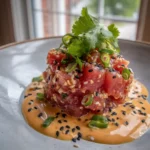
spicy tuna recipe
- Total Time: 30 minutes
- Yield: 2 servings 1x
- Diet: General
Description
A quick, no-cook recipe for spicy tuna featuring a creamy Gochujang-Lime aioli, perfect for a fast weeknight meal when served over rice.
Ingredients
- 10.6 oz sushi-grade ahi tuna
- 0.25 cup mayonnaise
- 2 tablespoons Gochujang (Korean chili paste)
- 1 tablespoon fresh lime juice
- 1 teaspoon toasted sesame oil
- 1 medium clove minced garlic
- 0.5 teaspoon Gochugaru or red pepper flakes
- 2 medium spring onions (scallions), sliced, whites and greens separated
- 1 teaspoon black sesame seeds
- 0.25 cup fresh cilantro leaves, chopped
- Pinch sea salt
Instructions
- Prepare Aioli Base: In a medium bowl, whisk together the mayonnaise, Gochujang, fresh lime juice, toasted sesame oil, minced garlic, and gochugaru (or red pepper flakes) until completely smooth.
- Reserve Aioli for Drizzle: Spoon out about 1 tablespoon of the prepared aioli into a separate small bowl and set aside for final presentation.
- Combine Tuna and Aromatics: Add the finely diced sushi-grade tuna and the white and light green parts of the sliced spring onions to the main aioli mixture. Gently fold until the tuna is evenly coated, avoiding overmixing to maintain texture.
- Chill Flavors: Cover the bowl tightly and refrigerate the mixture for at least 15 minutes to allow the flavors to meld and the tuna to chill properly.
- Plate and Garnish: Arrange the spicy tuna mixture on a plate, drizzle with the reserved aioli, and sprinkle with black sesame seeds and fresh cilantro leaves.
Notes
Use only sushi-grade tuna for safe consumption. For best flavor development, chill for at least 15 minutes, although it can be served immediately if needed. Avoid overmixing the tuna to maintain its texture.
- Prep Time: 15 minutes
- Cook Time: 0 minutes
- Category: Main Course
- Method: No-cook
- Cuisine: Asian
Nutrition
- Serving Size: 1 serving (approx. 8 oz / 225g)
- Calories: 395 calories
- Sugar: 5 g
- Sodium: 740 mg
- Fat: 23 g
- Saturated Fat: 4 g
- Unsaturated Fat: 19 g
- Trans Fat: 0 g
- Carbohydrates: 5 g
- Fiber: 1 g
- Protein: 36 g
- Cholesterol: 65 mg
Keywords: Spicy tuna, Gochujang, no-cook, weeknight dinner, easy recipe, raw tuna, Asian fusion, healthy meal
FREE PRINTABLE RECIPE
Get the Printable Recipe PDF (Free)
Enter your email and we’ll send you the ingredients + step-by-step instructions as a clean PDF you can save to your phone.
- ✅ Printable PDF (ingredients + steps)
- ✅ Save it to your phone (no long scrolling)
- ✅ Includes cook time + servings
- ✅ Easy to follow
FAQ
Where’s the full recipe?
It’s delivered as a printable PDF so you can save it and cook without scrolling.
I didn’t get the email.
Check Spam/Promotions and search your inbox for your site name. Then click Confirm to receive the PDF.