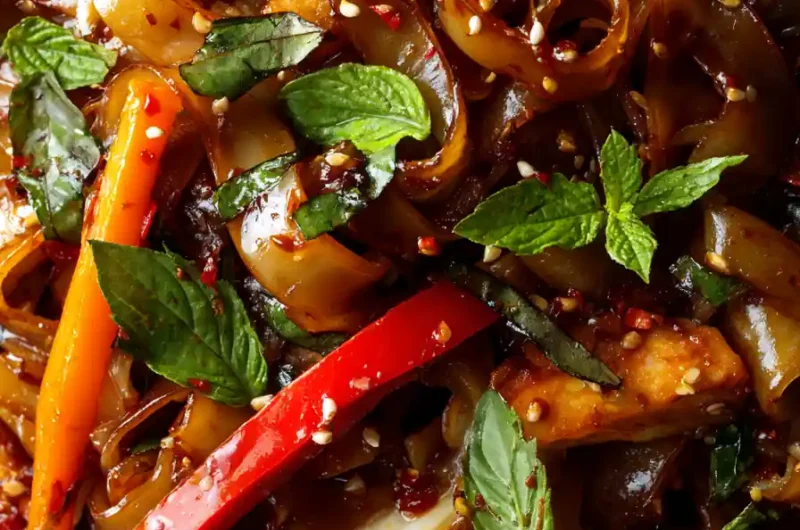
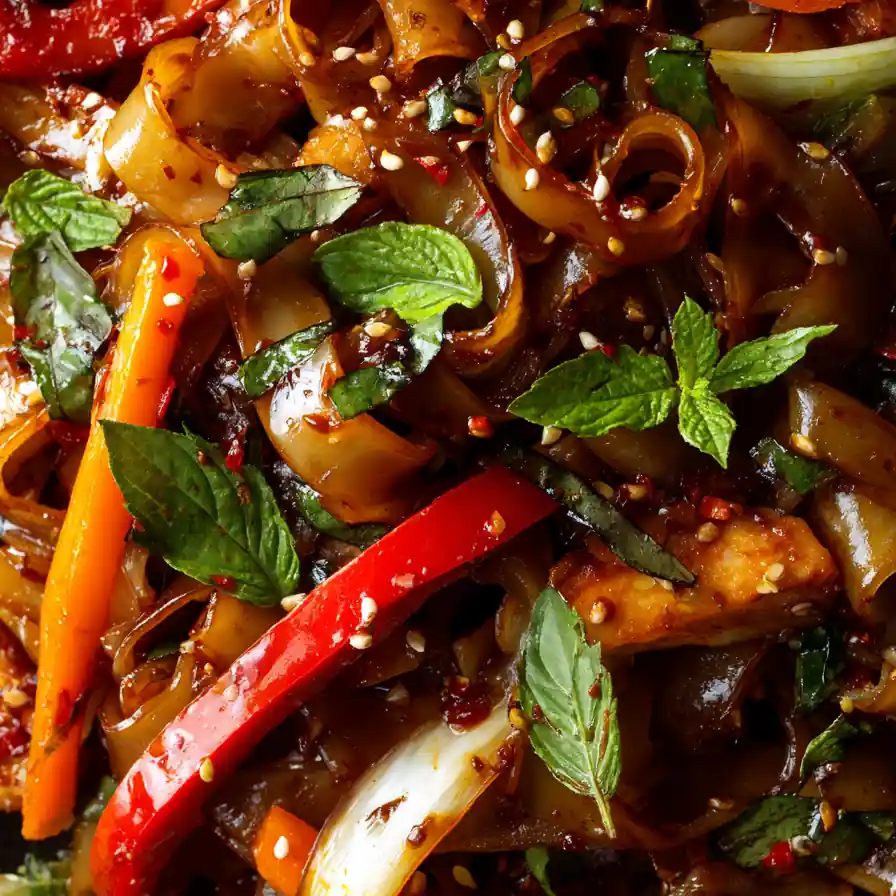
Craving the vibrant, savory, and slightly spicy flavors of a bustling Bangkok street food stall? Look no further! This Street Style Thai Drunken Noodles (Pad Kee Mao) recipe brings the authentic taste of Thailand right to your kitchen. These aren’t your average noodles – they’re stir-fried to perfection with a delightful balance of sweet, salty, spicy, and umami. We’ll guide you through creating this classic dish, ensuring a truly satisfying and flavorful experience. Get ready to wok it up!
What You’ll Need: The Ingredient List
- 400 g (14 oz) Wide Rice Noodles: These are the star of the show! Look for fresh wide rice noodles if possible, as they have the best texture. If using dried, ensure they are the wide variety (around 1 inch) and soak them properly to achieve a chewy, not mushy, consistency.
- 300 g (10.5 oz) Boneless, Skinless Chicken Thighs, Thinly Sliced: Chicken thighs are preferred for their flavor and tenderness. Slicing them thinly ensures they cook quickly and absorb the delicious sauce.
- 3 Cloves Garlic, Minced: Freshly minced garlic is essential for that aromatic base. Don’t skimp – garlic is a cornerstone of Thai cuisine!
- 2 Thai Bird Chilies, Thinly Sliced (Adjust to Taste): These pack a punch! Thai bird chilies are significantly spicier than jalapeños. Remove the seeds for a milder heat, or add more for a fiery kick.
- 1 Medium Red Bell Pepper, Julienned: Adds a touch of sweetness and vibrant color. Julienning (cutting into thin strips) ensures even cooking and a pleasant texture.
- 1 Medium Carrot, Julienned: Similar to the bell pepper, the carrot provides sweetness and a nice crunch.
- 1 Small Onion, Thinly Sliced: Adds a subtle sweetness and depth of flavor.
- 30 ml (2 tbsp) Light Soy Sauce (Low Sodium): Provides the foundational salty flavor. Using low-sodium allows you to control the overall saltiness of the dish.
- 15 ml (1 tbsp) Dark Soy Sauce: This isn’t about flavor, it’s about color! Dark soy sauce adds a rich, deep brown hue to the noodles, making them visually appealing.
- 15 ml (1 tbsp) Fish Sauce (Halal Certified): A key ingredient in Thai cooking, fish sauce provides a unique umami flavor. Ensure it’s halal certified if needed.
- 10 ml (2 tsp) Oyster Sauce (Halal): Adds a savory richness and slight sweetness. Again, check for halal certification if required.
- 5 g (1 tsp) Palm Sugar or Brown Sugar: Balances the saltiness and spice with a touch of sweetness. Palm sugar has a more complex flavor, but brown sugar is a good substitute.
- 15 ml (1 tbsp) Fresh Lime Juice: Brightens the flavors and adds a zesty tang. Always use fresh lime juice for the best results.
- 15 ml (1 tbsp) Vegetable Oil: For stir-frying. Choose an oil with a high smoke point, like canola or peanut oil.
- 30 g (1 oz) Thai Basil Leaves: Essential for that authentic Thai flavor! Thai basil has a slightly anise-like flavor that sets it apart from Italian basil.
- 30 ml (2 tbsp) Bean Sprouts (Optional): Adds a refreshing crunch.
- 1 Lime, Cut into Wedges: For serving – a squeeze of fresh lime juice elevates the flavors even further.
- 5 ml (1 tsp) Toasted Sesame Oil: A finishing drizzle for added aroma and flavor.
- 5 ml (1 tsp) Chili Oil (Optional): For an extra kick of heat and flavor.
Ingredient Substitutions
Don’t have everything on hand? Here are a few substitutions you can make:
- Chicken Thighs: You can substitute with chicken breast, but it may be drier. Pork or beef also work well.
- Thai Bird Chilies: Use jalapeños or serrano peppers, adjusting the quantity to your desired spice level.
- Palm Sugar: Brown sugar, granulated sugar, or even maple syrup can be used as substitutes.
- Fish Sauce: A small amount of soy sauce mixed with a pinch of seaweed flakes can mimic the umami flavor, but it won’t be quite the same.
- Thai Basil: Italian basil can be used in a pinch, but the flavor will be different.
Step-by-Step Instructions for Authentic Street Style Thai Drunken Noodles
- Soften the Rice Noodles: Begin by bringing water to a near boil (around 95°C or 203°F). Submerge the wide rice noodles and let them soak for 8-10 minutes, or until they become pliable but still retain some bite. This prevents them from becoming mushy during the stir-fry. Once softened, drain the noodles thoroughly and set aside.
- Marinate the Chicken: While the noodles are soaking, prepare the chicken. In a small bowl, combine the thinly sliced chicken thighs with 1 teaspoon of light soy sauce and 1 teaspoon of lime juice. This quick marinade adds flavor and helps tenderize the chicken. Allow the chicken to marinate while the noodles soften.
- Prepare the Wok: Heat a wok over high heat – this is crucial for achieving the signature “wok hei” (breath of the wok) flavor. Add 1 tablespoon of vegetable oil and swirl it around to coat the entire surface of the wok. A well-seasoned wok is ideal, but any wok or large, heavy-bottomed skillet will work.
- Aromatics First: Add the minced garlic and sliced Thai bird chilies to the hot wok. Stir-fry for just 15 seconds, until fragrant. Be careful not to burn the garlic, as this will impart a bitter taste. The chilies release their heat quickly, so adjust the amount based on your spice preference.
- Cook the Chicken: Add the marinated chicken to the wok and stir-fry for 3-4 minutes, until it’s just cooked through. Avoid overcrowding the wok; cook in batches if necessary. Once cooked, push the chicken to one side of the wok.
- Stir-Fry the Vegetables: Add the sliced onion, julienned bell pepper, and julienned carrot to the wok. Stir-fry for 2 minutes, maintaining high heat, until the vegetables are crisp-tender. They should still have a slight crunch.
- Combine and Season: Return the cooked chicken to the center of the wok. Add the drained rice noodles, light soy sauce, dark soy sauce, fish sauce, oyster sauce, and palm sugar. Now, the vigorous tossing begins! Toss everything together for 2-3 minutes, ensuring the noodles are well coated with the sauce and develop a light caramelized edge – this is where the “wok hei” really comes into play.
- Add the Basil and Bean Sprouts: Fold in the Thai basil leaves and bean sprouts (if using). Stir-fold for just 30 seconds, until the basil wilts and releases its fragrant aroma. Don’t overcook the basil, as it will lose its flavor.
- Final Touches: Drizzle the remaining lime juice and toasted sesame oil over the noodles. Give a final quick toss to distribute the flavors evenly.
- Serve Immediately: Transfer the noodles to a dark matte serving plate. Let them rest for 1 minute to allow the flavors to meld. Garnish with extra Thai basil leaves, lime wedges, a thin drizzle of chili oil (optional), and a sprinkle of toasted sesame seeds for added texture and visual appeal.
Understanding the Importance of “Wok Hei”
“Wok hei” translates to “breath of the wok” and is the elusive smoky, slightly charred flavor that defines authentic stir-fries. Achieving wok hei requires high heat, a well-seasoned wok, and constant movement. The key is to quickly cook the ingredients in small batches, allowing them to briefly kiss the hot metal of the wok, creating that signature smoky flavor. Don’t be afraid to get a little char on the noodles – that’s a good thing!
Choosing the Right Noodles
For the most authentic Street Style Thai Drunken Noodles, wide rice noodles (sen yai) are essential. These noodles have a chewy texture that holds up well to the intense flavors of the sauce. If you can’t find wide rice noodles, you can substitute with fettuccine or linguine, but the texture won’t be quite the same. Ensure the noodles are properly softened before stir-frying to prevent them from breaking apart.
Adjusting the Spice Level
Thai cuisine is known for its bold flavors, and Street Style Thai Drunken Noodles are no exception. The spice level can be easily adjusted to your preference. Start with 2 Thai bird chilies and taste as you go. If you prefer a milder dish, remove the seeds from the chilies or use fewer. For a fiery kick, add more chilies or a dash of chili oil at the end.
The Role of Dark Soy Sauce
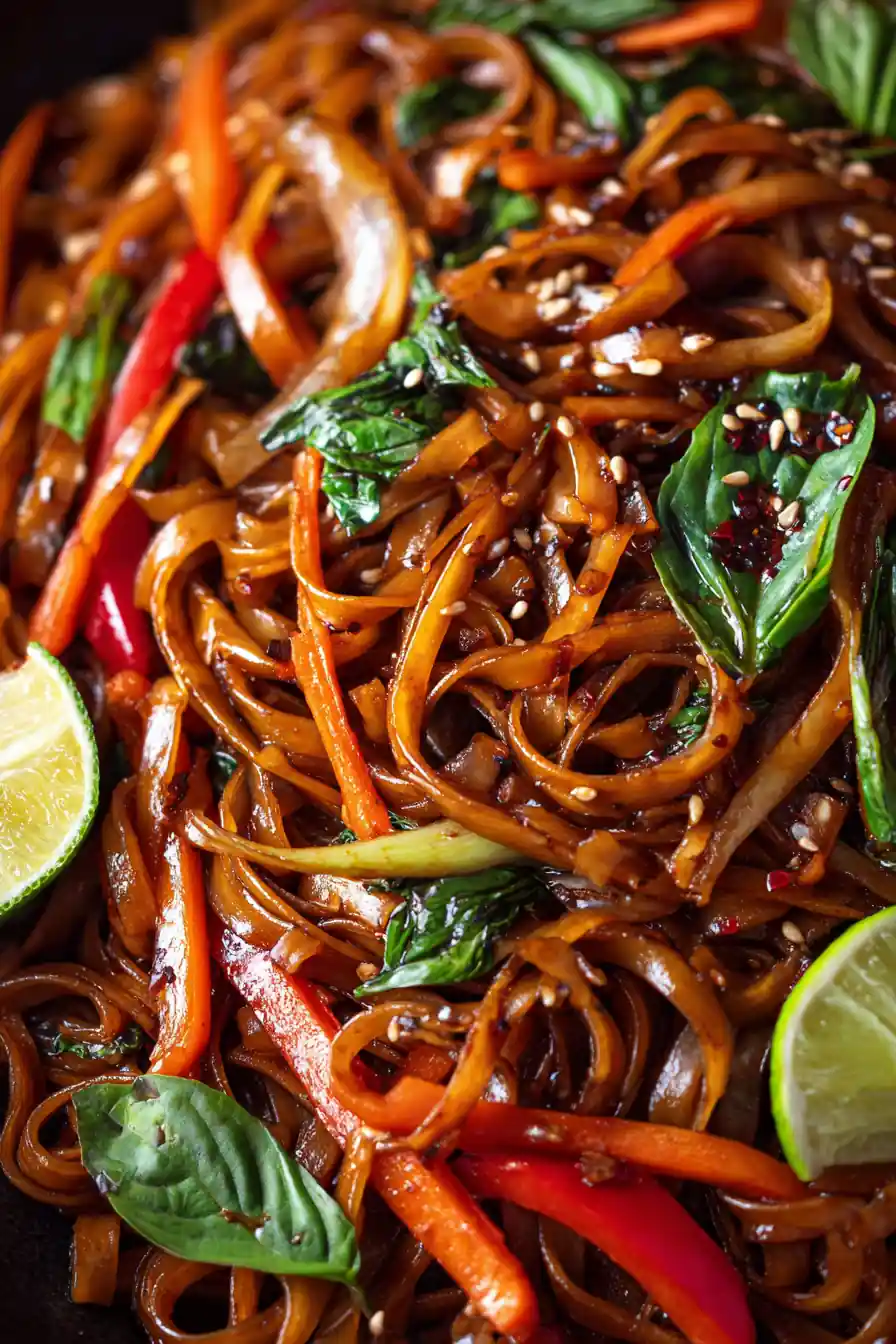
Dark soy sauce isn’t just about flavor; it’s about color. It adds a rich, dark hue to the noodles, giving them that characteristic street food appearance. It also has a slightly sweeter and less salty flavor than light soy sauce. Don’t substitute it with light soy sauce, as the color won’t be the same. A little goes a long way, so use it sparingly.
Frequently Asked Questions (FAQ)
Can I use a different protein?
Absolutely! Chicken is traditional, but you can easily substitute with pork, beef, shrimp, or tofu. Adjust the cooking time accordingly.
Can I make this dish vegetarian/vegan?
Yes! Use tofu instead of meat and substitute the fish sauce and oyster sauce with vegetarian alternatives. Mushroom soy sauce and a vegan oyster sauce are readily available.
How can I prepare the ingredients ahead of time?
You can slice the vegetables, marinate the chicken, and soften the noodles ahead of time. However, it’s best to stir-fry the noodles immediately after they’re softened to prevent them from sticking together.
Final Thoughts
These Street Style Thai Drunken Noodles are a true taste of Thailand, bringing the vibrant flavors of the streets right to your kitchen. With a little practice, you’ll be able to master the art of “wok hei” and create a dish that’s both delicious and satisfying. Don’t forget to save this recipe to Pinterest for easy access later!
Print
Street Style Thai Drunken Noodles
- Total Time: 35 minutes
- Yield: 4 servings 1x
- Diet: General
Description
Experience the authentic taste of Thailand with these Street Style Thai Drunken Noodles (Pad Kee Mao). This recipe delivers a flavorful stir-fry with a perfect balance of sweet, salty, spicy, and umami flavors.
Ingredients
- 400 g (14 oz) Wide Rice Noodles: Soak for 8-10 minutes until pliable.
- 300 g (10.5 oz) Chicken Thighs, thinly sliced: Marinate with 1 tsp light soy sauce and 1 tsp lime juice.
- 3 Cloves Garlic, minced: Stir-fry briefly until fragrant.
- 2 Thai Bird Chilies, sliced: Adjust quantity to taste.
- 1 Red Bell Pepper, julienned: Adds sweetness and color.
- 1 Carrot, julienned: Adds sweetness and crunch.
- 1 Small Onion, sliced: Adds subtle sweetness.
- 30 ml (2 tbsp) Light Soy Sauce: Provides salty flavor.
- 15 ml (1 tbsp) Dark Soy Sauce: Adds color and slight sweetness.
- 15 ml (1 tbsp) Fish Sauce: Provides umami flavor.
- 10 ml (2 tsp) Oyster Sauce: Adds savory richness.
- 5 g (1 tsp) Palm Sugar: Balances flavors.
- 15 ml (1 tbsp) Lime Juice: Brightens flavors.
- 15 ml (1 tbsp) Vegetable Oil: For stir-frying.
- 30 g (1 oz) Thai Basil Leaves: Essential for authentic flavor.
- 30 ml (2 tbsp) Bean Sprouts (optional): Adds crunch.
- 1 Lime, cut into wedges: For serving.
- 5 ml (1 tsp) Toasted Sesame Oil: For aroma and flavor.
- 5 ml (1 tsp) Chili Oil (optional): For extra heat.
Instructions
- Soften Noodles: Soak rice noodles for 8-10 minutes until pliable, then drain.
- Marinate Chicken: Combine chicken with light soy sauce and lime juice.
- Prepare Wok: Heat wok with vegetable oil over high heat.
- Aromatics First: Stir-fry garlic and chilies for 15 seconds.
- Cook Chicken: Stir-fry chicken until cooked through.
- Stir-Fry Vegetables: Stir-fry onion, bell pepper, and carrot until crisp-tender.
- Combine & Season: Add noodles, sauces, and sugar; toss for 2-3 minutes.
- Add Basil & Sprouts: Fold in basil and bean sprouts; stir-fry briefly.
- Final Touches: Drizzle with lime juice and sesame oil.
- Serve Immediately: Garnish with basil and lime wedges.
Notes
Achieving ‘wok hei’ requires high heat and constant movement. Adjust spice level to your preference.
- Prep Time: 20 minutes
- Cook Time: 15 minutes
- Category: Asian
- Method: Stir-fry
- Cuisine: Thai
Nutrition
- Serving Size: 1 serving
- Calories: 450 kcal
- Sugar: 20 g
- Sodium: 800 mg
- Fat: 20 g
- Saturated Fat: 5 g
- Unsaturated Fat: 10 g
- Trans Fat: 0 g
- Carbohydrates: 60 g
- Fiber: 5 g
- Protein: 25 g
- Cholesterol: 100 mg
Keywords: thai, noodles, drunken noodles, pad kee mao, stir fry, asian, street food, spicy