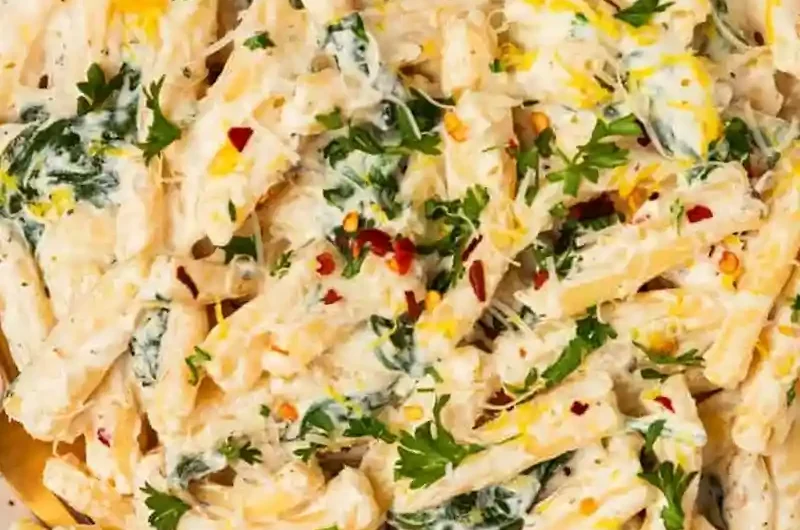
This creamy lemon ricotta pasta is a refreshing and effortless meal that comes together in just 20 minutes. It is an ideal choice for busy weeknights when you want a comforting dish with a bright citrus lift.
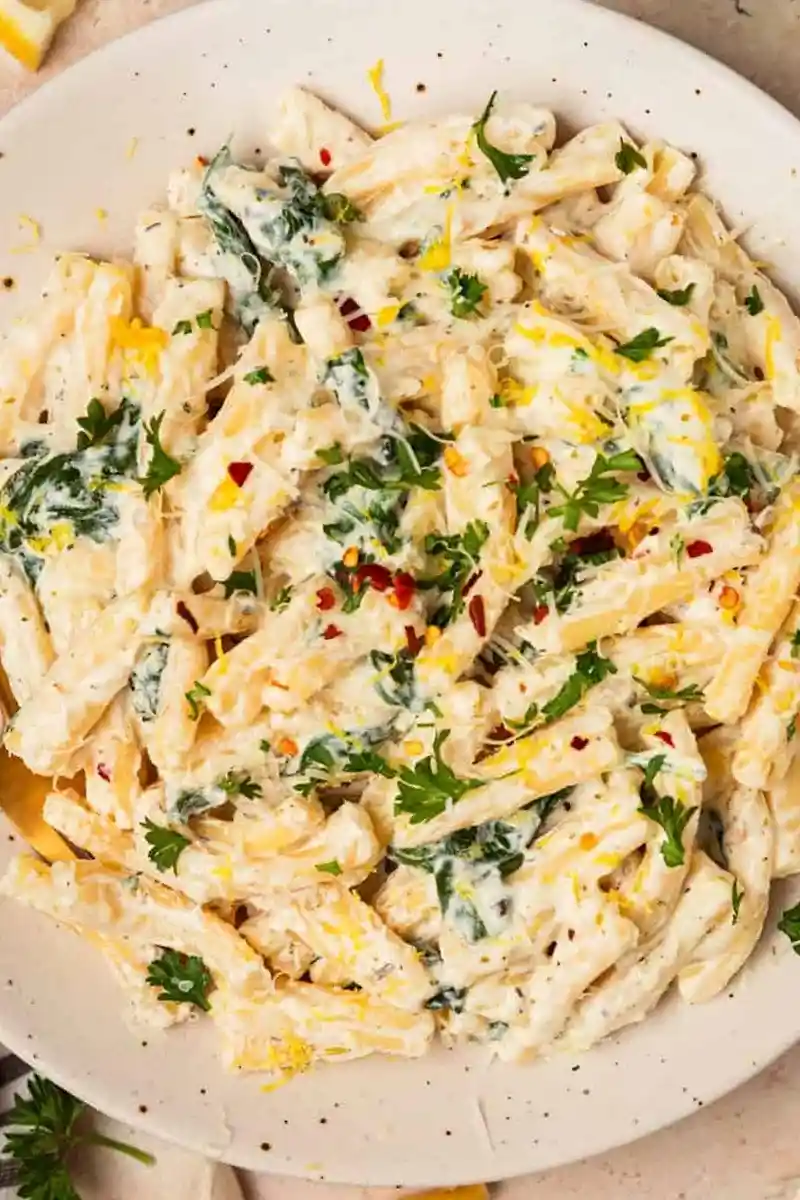
List of ingredients
- 12 oz. short pasta (rotini, cavatappi, medium shells, or penne) – provides the base for the creamy sauce.
- 15 oz whole milk ricotta cheese – creates the rich, creamy texture of the sauce.
- 1/2 cup grated parmesan – freshly grated for the best melting and creaminess.
- 3 Tbsp olive oil, separated – used for whisking into the sauce and sautéing garlic.
- 2 – 3 Tbsp fresh lemon juice – adds a bright, acidic pop to balance the richness.
- 1 T lemon zest – enhances the citrus aroma and flavor.
- 2 – 3 garlic cloves, minced – adds savory depth to the base.
- 1 tsp Italian seasoning – a blend of herbs for a classic Mediterranean taste.
- 1/2 tsp sea salt – enhances all the flavors in the dish.
- 1/2 tsp cracked pepper – provides a subtle warmth and spice.
- 3 oz chopped baby spinach – adds color and nutritional value.
- 1 – 1 1/2 c reserved pasta water – essential for emulsifying the sauce.
step-by-step instructions
- Boil the Pasta: Bring a large pot of salted water to a boil. Cook the short pasta according to the package directions until it reaches an al dente texture.
- Prepare the Ricotta Base: While the water is heating, whisk together the ricotta cheese, fresh lemon juice, 2 tablespoons of olive oil, lemon zest, and the seasonings in a small mixing bowl.
- Sauté the Garlic: Heat a medium saucepan over medium heat and add the remaining tablespoon of olive oil. Once the oil is glistening, add the minced garlic and sauté for about one minute until fragrant.
- Reserve Pasta Water: Immediately before draining the cooked pasta, scoop out at least one and a half cups of the starchy pasta water and set it aside for the sauce.
- Simmer the Sauce: Pour the lemon ricotta mixture into the saucepan with the garlic. Heat the mixture while whisking occasionally, then stir in about 1/2 cup of the reserved pasta water to thin the sauce. Aim for a slightly thinner consistency than desired, as it will thicken when combined with the pasta.
- Combine Ingredients: Drain the pasta and return it to the pot. Place the chopped baby spinach on top of the pasta, then pour the lemon ricotta sauce over both.
- Toss and Finish: Gently toss the pasta and spinach with the sauce until the spinach wilts and the noodles are evenly coated. Stir in additional pasta water if the sauce is too thick, then adjust the salt and pepper to your preference.
- Serve: Plate the pasta and garnish with freshly grated parmesan and chopped fresh parsley or basil.
Choosing the Best Pasta Shape
Cavatappi and Spirals
Cavatappi is an excellent choice because its corkscrew shape creates pockets that trap the thick ricotta sauce. Rotini and fusilli also work well for this reason, ensuring every bite is loaded with flavor.
Penne and Tubes
Penne is a classic option that allows the sauce to enter the center of the tube. This provides a balanced distribution of the creamy cheese and the zesty lemon juice throughout the dish.
Bow Tie and Farfalle
Farfalle provides a unique texture with a firmer center and softer edges. The flat surfaces of the bow tie pasta are great for the sauce to cling to without being overly heavy.
Medium Shells
Shells act like small scoops for the ricotta mixture and pieces of wilted spinach. This shape is particularly useful if you are adding extra small vegetables like peas to the recipe.
Adding Protein for a Heartier Meal
Grilled Chicken Breast
Adding sliced grilled chicken breast turns this light pasta into a filling dinner. Season the chicken with lemon pepper or salt and garlic before grilling to complement the sauce flavors.
Sautéed Shrimp
Shrimp pairs naturally with lemon and garlic. Sauté the shrimp in a separate pan with a bit of olive oil and garlic, then toss them into the pasta at the very end to avoid overcooking.
Roasted Chickpeas
For a plant-based protein option, use canned chickpeas that have been roasted until crispy. Add them as a garnish on top of the plated pasta to provide a contrasting crunchy texture.
Smoked Tofu Cubes
Firm tofu cubes can be pan-seared until golden brown and stirred in with the pasta. The mild flavor of tofu absorbs the citrusy notes of the ricotta sauce effectively.
Enhancing the Dish with Extra Vegetables
Fresh Green Peas
Frozen or fresh green peas add a sweet pop of flavor and a bright green color. Stir them in during the final tossing step so they heat through without losing their firmness.
Sliced Asparagus Tips
Blanched asparagus tips provide an earthy contrast to the lemon zest. Sauté them briefly in the saucepan before adding the ricotta mixture to ensure they are tender-crisp.
Sun-Dried Tomatoes
Chopped sun-dried tomatoes add a concentrated tang and a chewy texture. Their salty, sweet profile balances the creaminess of the whole milk ricotta.
Hearty Kale or Arugula
If you prefer a bolder green than spinach, use chopped kale or fresh arugula. Kale should be stirred in slightly earlier to soften, while arugula is best added at the end for a peppery bite.
Pro Tips for the Perfect Sauce
Maximize Starch with Reserved Pasta Water
The starchy water from the boiling pasta is the secret to a smooth emulsion. It binds the ricotta and olive oil together, preventing the sauce from separating or appearing grainy.
Use Freshly Grated Parmesan
Freshly grated parmesan melts much more smoothly than pre-shredded versions, which often contain anti-clumping agents. This results in a creamier, more cohesive sauce texture.
Prevent Garlic from Burning
Garlic can turn bitter if it browns too quickly. Keep the heat at medium and sauté the garlic only until it becomes fragrant, which usually takes about 60 seconds.
Handling Fresh Spinach Correctly
Adding the spinach directly to the hot pasta before the sauce allows the residual heat to wilt the leaves. This method prevents the spinach from becoming overcooked or mushy.
Storage and Reheating Guide
Refrigeration Best Practices
Store any leftover pasta in an airtight container in the refrigerator for up to five days. To keep the pasta from drying out, ensure the container is sealed tightly to lock in moisture.
Proper Reheating Technique
The sauce will thicken significantly as it cools in the fridge. When reheating on the stove or in the microwave, stir in a splash of milk or a drizzle of olive oil to restore the original creaminess.
Freezing and Thawing Advice
Freezing is generally not recommended as the pasta texture can become mushy and the ricotta may separate. However, if necessary, freeze in an airtight container for up to three months and thaw in the fridge before reheating.
Useful Ingredient Substitutions
Lower Fat Ricotta Alternatives
You can use part-skim or low-fat ricotta if you prefer a lighter sauce. Note that the consistency will be slightly less rich, so you may need an extra tablespoon of pasta water to keep it smooth.
Fresh Lemon Substitutes
If fresh lemons are unavailable, you can use bottled lemon juice, though the flavor is less bright. Avoid using lemon concentrate unless it is diluted, as it can be overly acidic.
Custom Italian Seasoning Mixes
If you do not have a pre-made Italian blend, mix equal parts dried oregano, basil, rosemary, and thyme. This homemade blend provides the same savory herbal profile required for the sauce.
Serving and Presentation Ideas
Pairing with Fresh Salads
A side of mixed greens with a light balsamic vinaigrette cuts through the richness of the ricotta. A cucumber and tomato salad also complements the lemon flavors perfectly.
Choosing the Best Garlic Bread
Serve this dish with toasted ciabatta or a baguette brushed with garlic butter and parsley. The crunch of the bread provides a great textural contrast to the soft pasta.
Using Fresh Herb Garnishes
Freshly chopped parsley or basil added just before serving enhances the visual appeal and adds a fresh aroma. A sprinkle of extra lemon zest on top also makes the dish look professional.
Common Questions
Can I use cream cheese instead of ricotta?
Yes, you can use softened cream cheese, but the flavor will be tangier and the texture much denser. Ricotta provides a slightly grainier, lighter feel that is traditional for this type of sauce.
How do I prevent the sauce from curdling?
Avoid boiling the ricotta sauce aggressively. Heat it gently and whisk in the pasta water slowly to ensure the cheese remains smooth and emulsified.
Can I make this gluten-free?
This recipe is easily adaptable by using your favorite gluten-free short pasta. Be aware that gluten-free pasta water can sometimes be thicker or thinner, so adjust the amount of reserved water accordingly.
What can I use if I forget to save pasta water?
If you forget to save the water, mix one cup of warm water with a quarter teaspoon of cornstarch and a pinch of salt. Microwave the mixture for two minutes to create a similar starchy consistency.
Print
20 Minute Lemon Ricotta Pasta
- Total Time: 20 minutes
- Yield: 6 servings 1x
- Diet: Vegetarian
Description
Simple creamy and so refreshing, this Lemon Ricotta Pasta is a 20 minute meal that is so effortless. A comforting and cozy bowl of pasta with a pop of citrus flavor in rich creamy ricotta.
Ingredients
- 12 oz. short pasta (rotini, cavatappi, medium shells, or penne)
- 15 oz whole milk ricotta cheese
- ½ cup grated parmesan
- 3 Tbsp olive oil
- 2–3 Tbsp fresh lemon juice
- 1 Tbsp lemon zest
- 2–3 garlic cloves, minced
- 1 tsp Italian seasoning
- ½ tsp sea salt
- ½ tsp cracked pepper
- 3 oz chopped baby spinach
- 1 – 1 ½ cups reserved pasta water
Instructions
- Step 1: Bring a large pot of water to a boil and cook pasta according to package instructions until al dente.
- Step 2: While waiting for water to boil, whisk together the ricotta, lemon juice, 2 tablespoons olive oil, lemon zest, and seasoning in a small bowl.
- Step 3: Heat a medium saucepan over medium heat with the remaining tablespoon of olive oil, then add minced garlic and sauté until fragrant for about one minute.
- Step 4: Reserve at least a cup and a half of pasta water before draining; add the lemon ricotta mixture to the saucepan, heat while whisking, and stir in 1/2 cup of reserved water to thin the sauce.
- Step 5: Drain the pasta and return it to the pot along with the baby spinach.
- Step 6: Pour the lemon ricotta sauce over the pasta and spinach, tossing until evenly coated and the spinach is wilted.
- Step 7: Adjust seasoning to taste and serve with freshly grated parmesan and chopped parsley or basil on top.
Notes
Store leftovers in an airtight container for 4-5 days. When reheating, stir in a splash of milk or olive oil if the sauce has dried up.
- Prep Time: 10 minutes
- Cook Time: 10 minutes
- Category: Main Course
- Method: Stovetop
- Cuisine: Italian-American
Nutrition
- Serving Size: 1 serving
- Calories: 438 kcal
- Sugar: 2 g
- Sodium: 414 mg
- Fat: 19 g
- Saturated Fat: 8 g
- Unsaturated Fat: 11 g
- Trans Fat: 0 g
- Carbohydrates: 47 g
- Fiber: 2 g
- Protein: 18 g
- Cholesterol: 43 mg
Keywords: lemon ricotta pasta, creamy pasta, quick dinner, 20 minute meal, vegetarian pasta