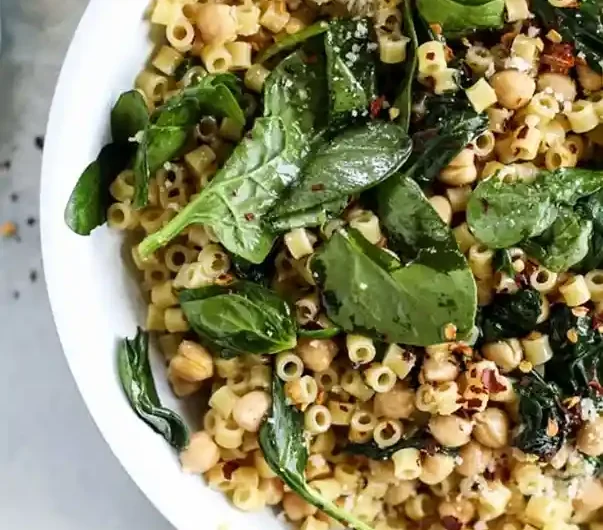
This fast pasta dish combines nutrient-dense spinach and protein-rich chickpeas for a satisfying meal. It takes only 20 minutes to prepare, making it an ideal option for busy weeknights.
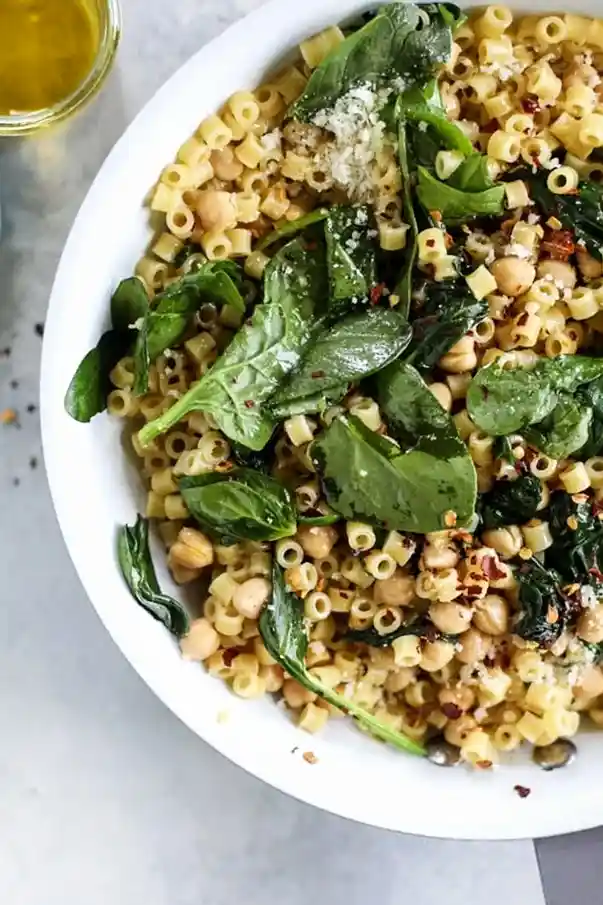
List of ingredients
- 8 ounces ditalini pasta – cooked until al dente.
- 3 tablespoons olive oil – used for sautéing the aromatics.
- 1 tablespoon unsalted butter – adds richness and a silky texture to the sauce.
- 4 garlic cloves, minced – provides a pungent and aromatic base.
- 1/2 teaspoon crushed red pepper flakes – adds a spicy kick (plus extra for garnish).
- 12 ounces fresh baby spinach – wilts quickly to add greens and nutrients.
- Pinch of salt and pepper – used for basic seasoning.
- 1 14-ounce can chickpeas – drained and rinsed to add plant-based protein.
- 1/3 cup freshly grated pecorino romano cheese – adds a salty, sharp finish (plus extra for topping).
step-by-step instructions
- Cook the pasta: Bring a large pot of salted water to a boil. Add the ditalini pasta and cook according to the package directions until it reaches an al dente texture. Drain the pasta and set it aside.
- Sauté aromatics: Heat a large skillet over medium-low heat. Add the olive oil and unsalted butter, then stir in the minced garlic and red pepper flakes. Cook for approximately 30 seconds until the garlic is fragrant but not browned.
- Wilt the spinach: Add the fresh baby spinach to the skillet along with a pinch of salt and pepper. Stir constantly until the leaves have wilted completely.
- Incorporate chickpeas: Stir the drained and rinsed chickpeas into the skillet, ensuring they are evenly coated in the garlic and oil mixture.
- Combine and serve: Stir in the cooked pasta and 1/3 cup of grated pecorino romano cheese until everything is well combined. Serve immediately, garnished with extra red pepper flakes and grated cheese.
Pasta Selection and Alternatives
Using Penne or Fusilli
While ditalini is used in the original recipe, penne or fusilli are excellent alternatives because their ridges and hollow centers trap the garlic oil and small bits of spinach. This ensures every bite is well-coated in flavor. Adjust the cooking time based on the specific shape’s package instructions.
Gluten-Free Pasta Options
Chickpea pasta or brown rice pasta are suitable substitutes for those avoiding gluten. Because gluten-free pasta can release more starch or become mushy quickly, be careful not to overcook it. Drain it immediately and rinse with warm water if it feels too sticky.
Whole Wheat Pasta Benefits
Substituting whole wheat ditalini increases the fiber content of the dish while maintaining a hearty texture. Whole wheat pasta typically requires a slightly longer boiling time than white pasta. It pairs well with the earthy flavor of chickpeas and spinach.
Spinach Preparation and Substitutes
Washing Fresh Baby Spinach
Fresh baby spinach often contains grit or sand from the growing process. Place the spinach in a large bowl of cold water, swish it around, and let the debris settle at the bottom. Lift the leaves out carefully and pat them dry with a clean kitchen towel to avoid adding excess water to the skillet.
Substituting Frozen Spinach
If fresh spinach is unavailable, you can use frozen chopped spinach. Thaw the spinach completely and squeeze out as much excess liquid as possible using a fine-mesh strainer or a clean cloth. Stir it into the skillet after the garlic is fragrant, though it will not wilt in the same way as fresh leaves.
Using Kale as a Substitute
Kale is a heartier alternative that provides a different texture and a slightly more bitter taste. Remove the tough center stems and chop the leaves into small pieces. Sauté kale for 3-5 minutes longer than baby spinach to ensure it becomes tender.
Protein Additions and Variations
Adding Sautéed Chicken
To increase the animal protein, add diced chicken breast to the skillet. Brown the chicken in olive oil over medium-high heat until fully cooked before reducing the heat to add the butter and garlic. This ensures the chicken is seared while the garlic does not burn.
Incorporating Shrimp
Shrimp pairs exceptionally well with garlic and red pepper. Add peeled and deveined shrimp to the pan after the garlic is fragrant but before the spinach. Cook for 2 minutes per side until pink, then proceed with the spinach and chickpeas.
Vegan Protein Boosts
For a fully plant-based version, keep the chickpeas and consider adding smoked tofu cubes. Sauté the tofu in the olive oil until the edges are crisp before adding the garlic. This adds a savory, smoky depth to the overall flavor profile.
Cheese and Dairy Modifications
Using Parmesan Instead of Pecorino
Parmesan is a milder and slightly nuttier alternative to the sharp, salty taste of pecorino romano. If using Parmesan, you may want to add an extra pinch of salt to the dish to compensate for the lower salt content. Use freshly grated cheese for the best melting results.
Adding Feta Cheese
Feta cheese provides a tangy and creamy contrast to the spicy garlic oil. Instead of stirring it in completely, crumble the feta over the finished pasta just before serving. This prevents the cheese from melting entirely and creates pockets of flavor.
Dairy-Free Cheese Alternatives
Replace pecorino romano with nutritional yeast for a cheesy, nutty flavor that is entirely dairy-free. Alternatively, use a store-bought vegan parmesan made from coconut oil and cashews. These options maintain the savory profile without the use of animal products.
Managing Spice and Flavor
Reducing the Heat Level
For those with a lower tolerance for spice, reduce the red pepper flakes to 1/4 teaspoon or omit them entirely. You can replace the flakes with a small amount of smoked paprika to maintain a depth of flavor without the heat. This makes the dish more kid-friendly.
Increasing the Spicy Kick
To make the dish significantly spicier, add a pinch of cayenne pepper or a finely diced fresh habanero. Adding the fresh chili at the same time as the garlic allows the oils to infuse into the butter. Be cautious, as the heat will intensify as the dish sits.
Balancing Flavor with Acid
Adding a squeeze of fresh lemon juice at the very end brightens the dish and cuts through the richness of the butter and cheese. The acidity balances the saltiness of the pecorino and the earthiness of the chickpeas. A sprinkle of fresh parsley also adds a clean, herbal finish.
Storage and Reheating Methods
Refrigerating Leftovers
Store any remaining pasta in an airtight container in the refrigerator for up to four days. Keep the extra cheese and red pepper flakes separate until you are ready to serve. The pasta may absorb some of the sauce over time, which is normal for starch-based dishes.
Microwave Reheating Tips
When reheating in the microwave, add a tablespoon of water or a small knob of butter to the pasta. Cover the dish with a damp paper towel to trap steam, which prevents the pasta from drying out. Heat in 30-second intervals, stirring in between to ensure even warming.
Stovetop Reheating Process
For the best texture, reheat the pasta in a small skillet over low heat. Add a splash of water or vegetable broth to loosen the sauce and restore its creaminess. Stir gently to avoid breaking the pasta shapes or overcooking the spinach.
Make-Ahead and Meal Prep Advice
Pre-chopping Aromatics
You can mince the garlic and wash the spinach several hours before you intend to cook. Store the minced garlic in a small container with a teaspoon of olive oil to prevent it from oxidizing. Keep the washed spinach in a sealed bag with a paper towel to absorb excess moisture.
Cooking Pasta in Advance
If prepping for the week, cook the pasta to slightly under al dente. This prevents the pasta from becoming mushy when it is reheated later. Toss the cooked pasta with a small amount of olive oil to prevent the noodles from sticking together in the fridge.
Pre-assembling the Sauce
Sauté the garlic, red pepper flakes, spinach, and chickpeas as a standalone base. Store this mixture separately from the pasta. When ready to eat, simply heat the sauce and toss in freshly cooked or reheated pasta and cheese for a quick assembly.
Troubleshooting Common Issues
Preventing Burnt Garlic
Garlic burns quickly and becomes bitter if the heat is too high. Always use medium-low heat and keep the garlic moving in the pan. If the garlic begins to brown too quickly, immediately add the spinach to lower the temperature of the skillet.
Avoiding Mushy Pasta
Overcooked pasta loses its structure and becomes gummy, especially when mixed with other ingredients. Always test the pasta two minutes before the package instructions suggest. Drain the pasta immediately and do not rinse it if you want the cheese sauce to adhere better.
Handling Excess Spinach Moisture
Fresh spinach can release a significant amount of water, which may make the sauce runny. To prevent this, ensure the skillet is sufficiently hot before adding the leaves. Sauté the spinach quickly over slightly higher heat to evaporate the moisture as it wilts.
Recommended Kitchen Equipment
The Right Skillet
Use a wide, heavy-bottomed stainless steel or non-stick skillet. A wide surface area allows the spinach to wilt evenly and prevents the ingredients from crowding, which would lead to steaming rather than sautéing. Heavy bottoms ensure consistent heat distribution.
Pasta Pot and Colander
A large stockpot is necessary to give the ditalini pasta plenty of room to move, which prevents clumping. Use a sturdy colander for draining to ensure all the cooking water is removed. A spider strainer is also useful for transferring pasta directly into the skillet.
Microplane or Grater
Use a microplane or a fine-hole grater for the pecorino romano cheese. Finely grated cheese melts much faster and more evenly into the pasta, creating a cohesive sauce. Coarser shreds may leave clumps of unmelted cheese in the final dish.
Frequently Asked Questions
Can I use canned spinach instead of fresh?
Yes, but you must drain the canned spinach thoroughly and squeeze out the excess water. Canned spinach has a different texture and a more concentrated flavor, so you may need to adjust the salt levels accordingly.
Do I need to rinse the chickpeas?
Yes, rinsing canned chickpeas removes the excess sodium and the viscous liquid (aquafaba) from the can. This results in a cleaner taste and a better texture when the chickpeas are sautéed in the garlic oil.
What is the best oil for this recipe?
Extra virgin olive oil is the best choice because it provides a fruity, peppery base that complements the garlic and spinach. However, a neutral oil like avocado oil can be used if you prefer a less dominant oil flavor.
Can I add other vegetables to the mix?
Yes, sautéed mushrooms, diced bell peppers, or frozen peas work well in this recipe. Add firmer vegetables like carrots or peppers at the same time as the garlic, and add softer vegetables like peas at the same time as the chickpeas.
Print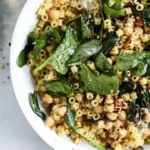
20 Minute Spicy Garlic Spinach Pasta with Chickpeas
- Total Time: 20 minutes
- Yield: 4 servings 1x
- Diet: Vegetarian
Description
An easy, spicy, and healthy pasta dish featuring ditalini pasta, chickpeas, and fresh baby spinach, ready in just 20 minutes.
Ingredients
- 8 ounces ditalini pasta
- 3 tablespoons olive oil
- 1 tablespoon unsalted butter
- 4 garlic cloves, minced
- 1/2 teaspoon crushed red pepper flakes
- 12 ounces fresh baby spinach
- pinch of salt
- pinch of pepper
- 1 14-ounce can chickpeas, drained and rinsed
- 1/3 cup freshly grated pecorino romano cheese (microbial rennet)
Instructions
- Step: Bring a pot of salted water to a boil and cook the pasta according to the package directions.
- Step: Heat a large skillet over medium-low heat and add the olive oil and butter.
- Step: Stir in the garlic cloves and the red pepper flakes, cooking for about 30 seconds until the garlic is fragrant.
- Step: Add in the spinach with a pinch of salt and pepper and stir, cooking until it wilts.
- Step: Stir in the chickpeas.
- Step: Stir in the cooked pasta and the grated cheese until combined.
- Step: Serve immediately with extra red pepper flakes and grated cheese.
Notes
This dish reheats well and can also be enjoyed cold. For added protein, consider adding chicken or shrimp.
- Prep Time: 5 minutes
- Cook Time: 15 minutes
- Category: Main Course
- Method: Sautéing
- Cuisine: Italian
Nutrition
- Serving Size: 1 serving
- Calories: 482 kcal
- Sugar: 6 g
- Sodium: 650 mg
- Fat: 21 g
- Saturated Fat: 6 g
- Unsaturated Fat: 15 g
- Trans Fat: 0 g
- Carbohydrates: 45 g
- Fiber: 8 g
- Protein: 16 g
- Cholesterol: 35 mg
Keywords: spicy garlic pasta, spinach pasta, chickpea pasta, 20 minute meal, vegetarian pasta