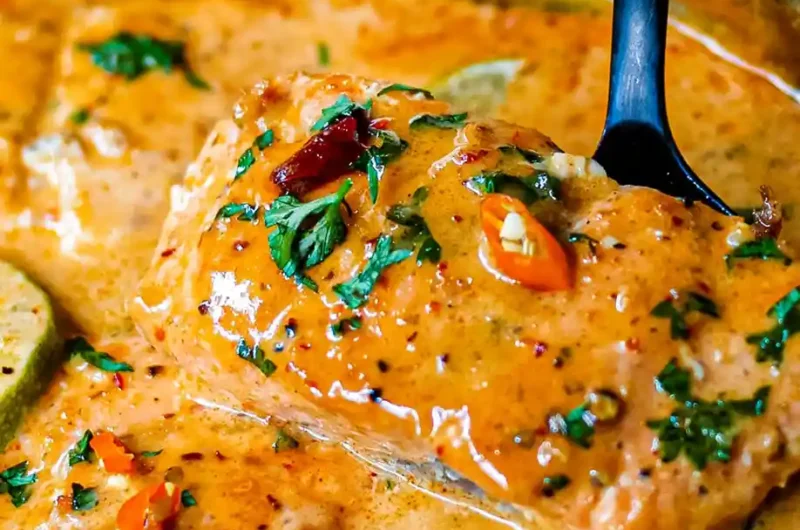
This quick Thai red curry blends creamy coconut and spicy aromatics for a satisfying, restaurant-quality dinner. It comes together in just 30 minutes, making it an ideal choice for busy weeknights when you want a bold flavor profile without the long prep time.
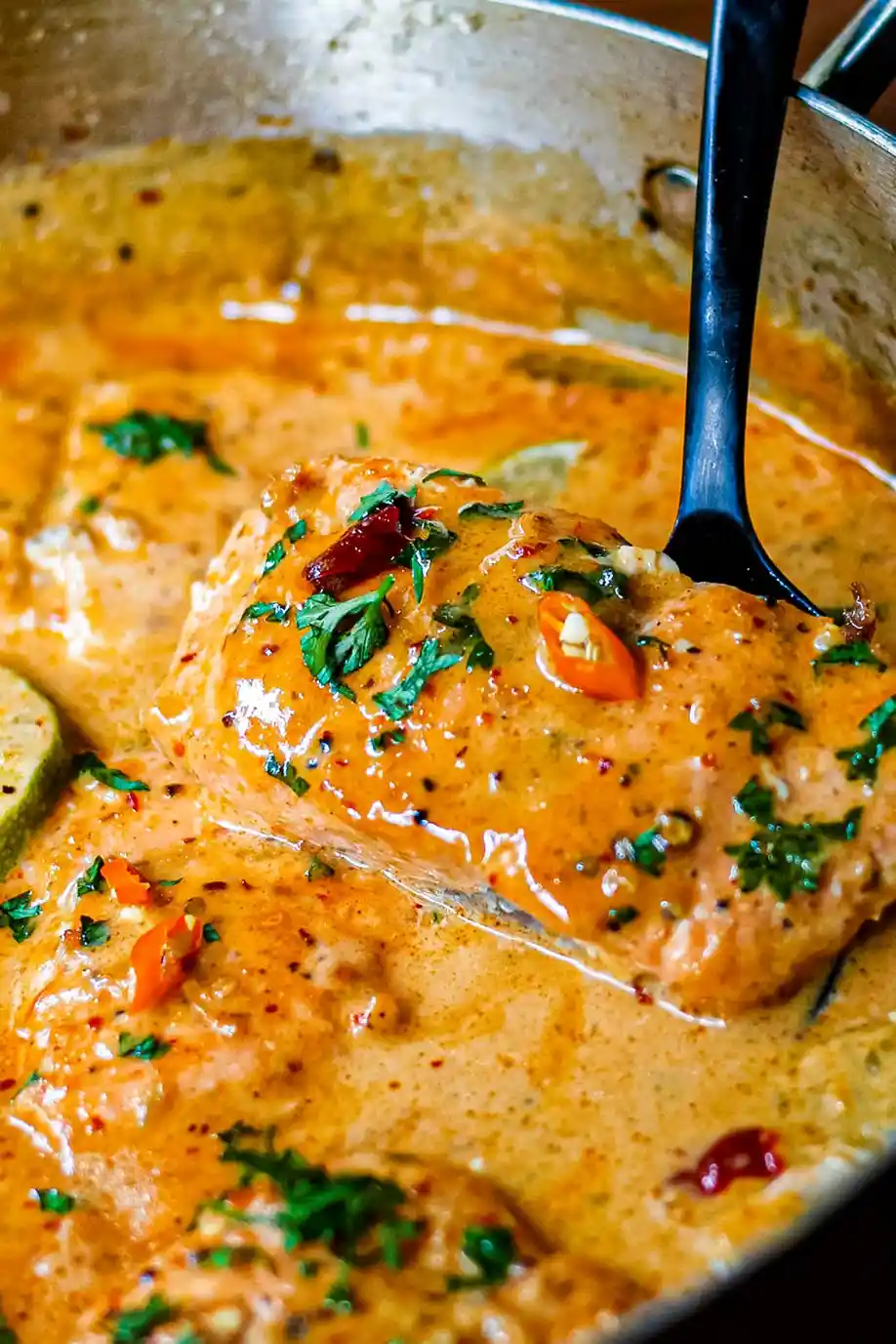
List of ingredients
- 1 tablespoon grated ginger – provides a fresh, zesty warmth.
- 4 cloves garlic (small) (minced or finely chopped) – used for a pungent aromatic base.
- 3 tablespoons Thai Red Curry Paste – the primary source of spice and depth.
- 1 large Lime (4 thinly slices of lime to add to the sauce and juice the remaining lime) – adds essential acidity to balance the richness.
- salt (to taste) – used for seasoning both the fish and the sauce.
- black pepper (to taste) – adds a subtle sharp heat.
- 1 tablespoon chili paste – enhances the red color and spice level.
- 2 green thai chili pepper (or 2 dried red chili) – provides a sharp, authentic Thai heat.
- 1 teaspoon coconut sugar – balances the salt and spice with a mellow sweetness.
- 1 can organic full fat coconut cream (unsweetened) (14 ounces) – creates a thick, velvety texture.
- 4 salmon fillets (4 to 6 ounces) (skin-on or skinless) – the main protein, rich in omega-3s.
- 3 Thai basil leaves – adds a distinct anise-like freshness.
- 2 tablespoons olive oil (or any neutral oil) – used for searing the salmon and sautéing aromatics.
- 1 finely chopped shallot – adds a mild, sweet onion flavor.
- 1 tablespoon fish sauce – contributes a deep, salty umami punch.
step-by-step instructions
- Season the Salmon: Generously apply salt and black pepper to each salmon fillet on all sides to ensure the protein is well-seasoned.
- Initial Sear: Heat olive oil in a large pan over medium heat. Place the salmon fillets in the pan skin side up and sear for approximately 1 minute until they are light golden, then transfer them to a clean tray and set aside.
- Sauté Aromatics: Using the same pan, add 1 tablespoon of oil, the chopped shallot, and grated ginger. Cook these ingredients until they are caramelized and fragrant.
- Develop Flavor Base: Stir in the minced garlic and coconut sugar, continuing to cook until the garlic turns a light golden brown. Add the Thai red curry paste, chili paste, and Thai green chilies, frying the mixture for 1 minute to release the oil-soluble flavors.
- Simmer the Sauce: Pour in the unsweetened coconut cream and fish sauce, stirring well to combine. Allow the sauce to simmer for 2-3 minutes, then add salt and pepper to taste.
- Add Brightness: Stir in the juice of half a lime and add 2-3 lime slices and the Thai basil leaves to the simmering sauce.
- Finish Cooking: Lower the heat and carefully place each salmon fillet back into the sauce. Allow them to simmer for 4-5 minutes or until the salmon is cooked through to your preferred doneness.
- Serve: Plate the curry and serve immediately alongside a portion of steamed jasmine rice or warm naan bread.
Professional Cooking Tips for Better Results
Optimizing the Searing Process
Ensure your pan is well-heated before adding the oil to prevent the salmon from sticking. Searing the salmon skin-side up first creates a caramelized crust that adds a deep, savory dimension to the final sauce. This initial step locks in moisture and prevents the fish from breaking apart during the final simmering phase.
Managing Heat Levels
If you prefer a milder curry, remove the seeds from the Thai green chilies before adding them to the pan. The heat in this recipe comes from three sources: the curry paste, the chili paste, and the fresh chilies. Adjusting these three components allows you to customize the spice to your specific palate.
Developing Aromatic Depth
Do not rush the caramelization of the shallots and ginger. Sautéing them until they are golden ensures that the raw edge of the alliums is gone, replaced by a sweetness that complements the coconut cream. This creates a complex foundation that makes the 30-minute meal taste like it simmered for hours.
Selecting the Best Salmon
For this recipe, center-cut fillets are recommended because they provide a uniform thickness, ensuring all pieces cook evenly in the sauce. If using skin-on salmon, the sear provides a textural contrast that is highly desirable. Ensure the salmon is patted dry with paper towels before seasoning to achieve a better sear.
Ingredient Substitutions and Alternatives
Swapping Coconut Cream for Coconut Milk
You can use full-fat coconut milk as a substitute if coconut cream is unavailable. Be aware that coconut milk has a higher water content and a thinner consistency, which may result in a more liquid sauce. To achieve the same thickness, you may need to simmer the sauce for an additional 5-10 minutes before adding the salmon.
Substituting Coconut Sugar
If you do not have coconut sugar, honey or brown sugar are excellent alternatives. Honey provides a more floral sweetness and a slightly different viscosity, while brown sugar offers a molasses-like depth. Use the same measurement of one teaspoon to maintain the intended flavor balance.
Using Alternative Chilies
Serrano peppers can be used as a replacement for Thai green chilies if the latter are hard to find. Serranos offer a similar heat level and a bright, grassy flavor that fits well in Thai cuisine. If using dried red chilies, ensure they are slightly hydrated or fried quickly to avoid burning.
Vegan-Friendly Fish Sauce Alternatives
To make this dish without fish sauce, use a high-quality vegan fish sauce or a combination of soy sauce and a pinch of salt. A small amount of mushroom powder or light soy sauce can replicate the umami depth and saltiness that the fish sauce provides. This substitution keeps the savory profile intact while altering the ingredient source.
Serving and Pairing Suggestions
Pairing with Jasmine Rice
Steamed jasmine rice is the traditional accompaniment for this curry due to its floral aroma and ability to absorb the creamy sauce. For the fluffiest results, rinse the rice under cold water until the water runs clear to remove excess starch. Cook the rice in a ratio of 1 part rice to 1.5 parts water.
Serving with Naan Bread
Warm naan bread is perfect for scooping up the thick coconut sauce and pieces of salmon. For added flavor, brush the naan with melted garlic butter and toast it in the oven for 2-3 minutes before serving. This adds a buttery richness that complements the spicy and sour notes of the curry.
Adding Fresh Garnishments
To elevate the presentation and flavor, garnish the finished dish with fresh cilantro leaves or thinly sliced scallions. A squeeze of fresh lime juice right before eating can reactivate the acidity and brighten the flavors. Adding a few toasted sesame seeds can also provide a subtle nuttiness and a professional visual touch.
Integrating Extra Vegetables
You can easily add vegetables to this curry to make it a one-pan meal. Stir in snap peas, baby corn, or sliced red bell peppers during the sauce simmering stage. Ensure that denser vegetables, like carrots, are sliced thinly so they cook through in the 5-minute window while the salmon finishes.
Storage and Reheating Guidelines
Storing Leftovers Safely
Store any remaining curry in an airtight glass container in the refrigerator for up to three days. Ensure the curry has cooled slightly before sealing the container to prevent excess condensation from watering down the sauce. Keep the salmon submerged in the sauce to prevent the fish from drying out.
Best Methods for Reheating
The best way to reheat this curry is on the stovetop over low heat. Add a splash of water or a tablespoon of coconut milk to loosen the sauce, which may have thickened in the fridge. Heat gently to avoid overcooking the salmon, which can become tough or rubbery if boiled.
Avoiding Microwave Overcooking
If using a microwave, heat the curry in short 30-second bursts, stirring in between. Use a microwave-safe cover to trap steam and keep the salmon moist. Stop heating as soon as the sauce is warm to ensure the fish retains its delicate texture.
Freezing Considerations
While the sauce freezes well, the texture of the salmon may change significantly upon thawing and reheating. If you plan to freeze the meal, consider freezing only the curry base. Then, sear and simmer fresh salmon fillets in the thawed sauce for the best possible dining experience.
Make-Ahead Advice
Preparing the Curry Base
You can prepare the aromatic base and coconut sauce up to 24 hours in advance. Cook the ingredients through the simmering stage, then cool the sauce and store it in the refrigerator. When ready to eat, simply reheat the sauce and perform the final salmon sear and simmer steps.
Prepping the Salmon
Salmon fillets can be portioned and seasoned a few hours before cooking and kept in the fridge. This allows the salt to penetrate the fish slightly, which can improve the seasoning. However, avoid seasoning the fish too many hours in advance, as the salt may draw out too much moisture, affecting the sear.
Pre-cutting Aromatics
Mince the garlic, grate the ginger, and chop the shallots in advance and store them in small containers. Having your mise en place ready is the key to completing this recipe in 30 minutes. This prevents the garlic or ginger from burning while you are busy chopping other ingredients.
Troubleshooting Common Issues
Fixing an Overly Spicy Sauce
If the curry is too spicy, stir in an extra tablespoon of coconut cream or a pinch more coconut sugar. The fats in the coconut cream help neutralize the capsaicin from the chilies. Adding a bit more lime juice can also help mask the heat by introducing a competing sour flavor.
Correcting a Thin Sauce
If the sauce appears too thin, simmer it on medium-high heat without a lid for a few minutes before adding the salmon. This allows the water in the coconut cream to evaporate, concentrating the flavors and thickening the texture. Avoid adding flour or cornstarch, as this can alter the authentic taste of the Thai curry.
Preventing Salmon Overcooking
The most common issue with salmon is overcooking, which leads to a dry, chalky texture. Use a meat thermometer to check that the internal temperature of the thickest part of the fillet reaches 145°F (63°C). Remember that the fish will continue to cook for a minute after being removed from the heat.
Balancing Too Much Salt
If the fish sauce makes the curry too salty, add a small amount of unsweetened coconut milk or a squeeze of extra lime. The creaminess and acidity work together to balance the salinity. In extreme cases, adding a few pieces of steamed potato can help absorb some of the excess salt.
Frequently Asked Questions
Can I use frozen salmon fillets?
Yes, but you must ensure they are completely thawed and patted dry before searing. If the salmon is still frozen or wet, it will steam rather than sear, and you will lose the caramelized flavor and texture essential to the dish.
Which brand of red curry paste is best?
Look for a paste that lists ingredients like lemongrass, galangal, and shrimp paste. High-quality organic brands often have a more vibrant color and a more complex flavor profile, which reduces the need for additional seasoning.
How do I store the leftover sauce?
Store the sauce in a glass jar with a tight lid to prevent it from absorbing other odors from the refrigerator. Because of the high fat content in the coconut cream, the sauce may solidify slightly; it will return to a creamy state upon reheating.
Can I add vegetables to this curry?
Absolutely. Bamboo shoots, red peppers, and snap peas are traditional additions. Simply add them to the sauce just before adding the salmon fillets, as they only require a few minutes of simmering to reach the ideal tenderness.
What is the best way to prevent the sauce from separating?
Avoid boiling the sauce on high heat for an extended period, as this can cause the coconut cream to break. Keep the heat at a gentle simmer and stir occasionally to maintain a smooth, emulsified consistency throughout the cooking process.
Print
30-Minute Coconut Thai Salmon Curry
- Total Time: 35 minutes
- Yield: 4 servings 1x
- Diet: Seafood
Description
A simple, saucy, and spicy 30-minute Thai Red Curry with salmon. This is the perfect weeknight dinner, offering a balance of sweet, spicy, and sour flavors.
Ingredients
- 1 tablespoon grated ginger
- 4 cloves garlic, minced or finely chopped
- 3 tablespoons Thai Red Curry Paste
- 1 large lime (4 thinly sliced for the sauce and remaining juiced)
- salt to taste
- black pepper to taste
- 1 tablespoon chili paste
- 2 green Thai chili peppers or 2 dried red chilies
- 1 teaspoon coconut sugar
- 14 ounces organic full fat coconut cream (unsweetened)
- 4 salmon fillets (4 to 6 ounces each)
- 3 Thai basil leaves
- 2 tablespoons olive oil
- 1 finely chopped shallot
- 1 tablespoon fish sauce
Instructions
- Step: Salt and pepper each salmon fillet.
- Step: In a large pan on medium to heat heat, add olive oil and sear the salmon skin side up and sear for about 1 minute until light golden. Then transfer the salmon to a clean tray and set aside.
- Step: Using the same pan you seared the salmon, add 1 tablespoon oil, shallot and ginger and cook until carmelized. Then add the garlic and coconut sugar and cook until garlic gets light golden. Then add the curry paste, chili paste and and Thai green chili and fry for 1 minute.
- Step: Then pour the coconut cream (unsweetened) and fish sauce and stir. Allow the sauce to simmer for 2-3 minutes. Add salt and pepper to taste. Then add juice of half a lime and 2-3 lime slices. Add the Thai basil and stir.
- Step: Lower the heat and add each salmon fillet in the sauce and allow to simmer for 4-5 minutes or until salmon is cooked. Serve the the curry with some jasmine rice or naan bread!
Notes
Ingredient Swaps: You can replace the coconut cream with coconut milk (this may require longer simmering to thicken). Thai chilies can be replaced with serrano peppers, and coconut sugar can be replaced with honey.
- Prep Time: 10 minutes
- Cook Time: 25 minutes
- Category: Main Course
- Method: Searing and Simmering
- Cuisine: Thailand
Nutrition
- Serving Size: 1 salmon fillet with curry sauce
- Calories: 720 kcal
- Sugar: 8 g
- Sodium: 850 mg
- Fat: 56 g
- Saturated Fat: 32 g
- Unsaturated Fat: 22 g
- Trans Fat: 0 g
- Carbohydrates: 14 g
- Fiber: 2 g
- Protein: 31 g
- Cholesterol: 95 mg
Keywords: Thai red curry, salmon curry, coconut curry, 30 minute meal, seafood dinner