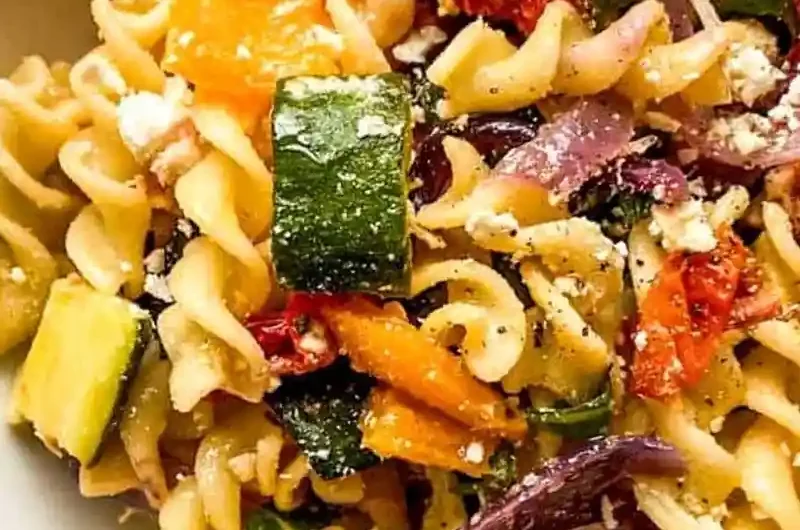
This roasted vegetable pasta with feta is an efficient meal for busy weeknights. It combines the depth of oven-roasted produce with the creamy texture of melted feta cheese. The dish comes together in about 25 minutes.
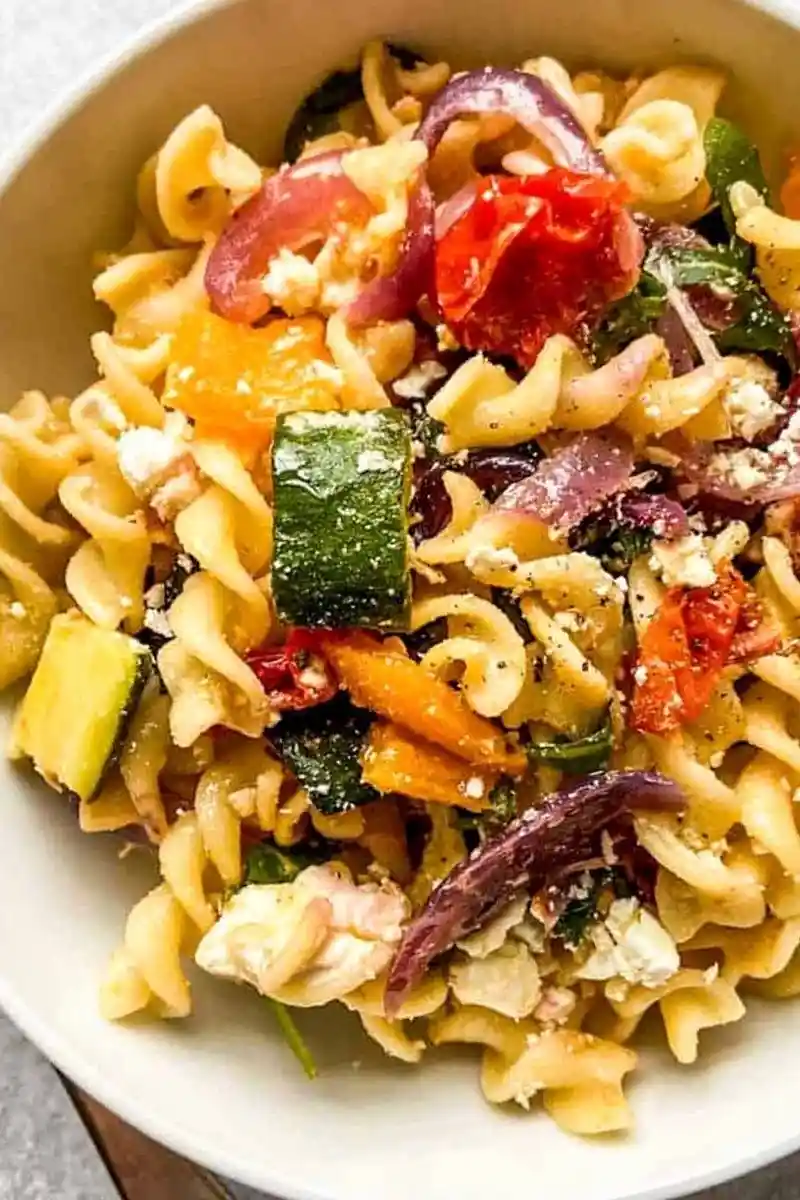
List of ingredients
- 1 pound fusilli (or other chunky pasta) – provides a sturdy base that holds the sauce.
- 6 ounce block of feta – creates a creamy, salty sauce when baked.
- 1 cup cherry tomatoes – adds juicy bursts of flavor.
- 1 red onion (cut into thin wedges) – provides a sharp, tangy contrast.
- 2 small zucchini (diced into 1/2 in pieces) – adds a mild, creamy texture.
- 1 orange bell pepper (diced into 1/2 in pieces) – contributes sweetness and color.
- 2 tablespoons olive oil – used for roasting and final mixing.
- 2 teaspoons kosher salt – enhances the natural flavors of the vegetables.
- 1 teaspoon ground black pepper – adds a subtle spicy warmth.
- 2 tablespoons freshly squeezed lemon juice – brightens the rich cheese flavor.
- 2 cups fresh baby arugula – adds a peppery, fresh finish.
step-by-step instructions
- Preheat: Set your oven to 400 degrees F to ensure it is hot enough for roasting.
- Prepare Sheet Pan: Place the feta block and all chopped vegetables on a baking sheet lined with parchment paper.
- Season: Toss the vegetables in 1 tablespoon of olive oil and 1 teaspoon of salt, then drizzle the remaining oil and salt over the feta.
- Roast: Bake for 15 minutes, or until the cherry tomatoes have burst and released their juices.
- Cook Pasta: While vegetables roast, boil the pasta in heavily salted water according to the package instructions.
- Reserve Water: Drain the pasta, but make sure to save 1/2 cup of the starchy pasta water before draining.
- Create Sauce: In a large bowl, combine the baked feta, reserved pasta water, and cooked pasta, stirring until the feta is evenly dispersed.
- Combine: Gently stir in the roasted vegetables, remaining olive oil, remaining salt, black pepper, lemon juice, and fresh baby arugula.
- Serve: Plate immediately or store in the refrigerator for later use.
Optimizing Your Pasta Selection
Why Fusilli Works Best
Fusilli is an ideal choice because its spiral shape creates numerous grooves. These grooves trap the melted feta sauce and small pieces of roasted vegetables, ensuring every bite is flavorful. This prevents the sauce from simply pooling at the bottom of the bowl.
Using Penne or Cavatappi
Penne and cavatappi are excellent alternatives due to their hollow centers. The interior of these pastas collects the melted cheese and tomato juices, providing a consistent flavor profile. Ensure you choose a ‘rigate’ or ridged version for maximum sauce adhesion.
Avoiding Small Pasta Shapes
Small shapes like macaroni or orzo are less effective for this specific recipe. Because the roasted vegetables are diced into 1/2 inch pieces, small pasta can get lost or create an uneven ratio of vegetable to noodle. Stick to larger, chunky shapes for the best textural balance.
Vegetable Customization for Every Season
Autumn Root Vegetables
During the fall, replace zucchini and bell peppers with diced butternut squash or carrots. These denser vegetables require a slightly longer roasting time, so you may need to add 5 to 10 minutes to the oven timer. They pair exceptionally well with the salty nature of baked feta.
Spring Green Vegetables
In the spring, asparagus tips and frozen peas are great additions. Add asparagus to the roasting pan as instructed, but toss in the peas during the last 5 minutes of baking to prevent them from shriveling. These add a fresh, bright green color to the dish.
Winter Hardy Produce
Winter versions can include Brussels sprouts or chopped kale. Halve the Brussels sprouts to ensure they roast through in the allotted time. For kale, toss it with olive oil and roast it for the final 7 minutes to achieve a crispy texture.
Summer Squash Varieties
While zucchini is standard, yellow summer squash or pattypan squash work equally well. These maintain a similar moisture content and cook at the same rate. Using a mix of green and yellow squash improves the visual presentation of the meal.
Feta and Cheese Alternatives
Using Crumbled Feta Instead of Blocks
If you only have crumbled feta, you can still achieve a similar result. Pile the crumbles into a mound in the center of the baking sheet so they melt together. Note that crumbles may brown faster than a block, so keep a close eye on the oven.
Substituting with Goat Cheese
Goat cheese is a viable substitute for feta if you prefer a tangier, softer profile. It melts more quickly and becomes creamier than feta. Reduce the added salt slightly, as some goat cheeses vary in salinity.
Plant-Based Feta Options
For a dairy-free version, use a firm almond-based or tofu-based feta substitute. Ensure the substitute is oven-safe and can withstand 400 degrees F. Some plant-based cheeses do not melt as smoothly, so adding an extra tablespoon of pasta water can help emulsify the sauce.
Professional Roasting Techniques
Preventing Vegetable Steaming
Avoid overcrowding the baking sheet by using a large pan or two smaller ones. If the vegetables are packed too tightly, they will release steam and boil rather than roast. Spreading them in a single layer ensures the edges caramelize for deeper flavor.
The Importance of Parchment Paper
Lining your pan with parchment paper prevents the feta and tomato sugars from sticking to the metal. This makes cleanup easier and ensures that the melted cheese can be scraped easily into the pasta bowl. Avoid using wax paper, as it will melt in the oven.
Ensuring Even Browning
Rotate your baking sheet halfway through the 15-minute cook time. Most ovens have hot spots that can cause one side of the vegetables to burn while the other remains raw. This simple shift ensures a uniform roast across all ingredients.
Flavor Enhancement Strategies
Adding Aromatic Garlic
For a more pungent flavor, add 3 to 4 peeled whole garlic cloves to the baking sheet. The roasting process mellows the garlic, turning it sweet and spreadable. Smash the roasted cloves into the pasta bowl before stirring in the other vegetables.
Incorporating Red Pepper Flakes
If you enjoy a spicy kick, add 1/2 teaspoon of red pepper flakes to the vegetables before roasting. The heat infuses into the olive oil and spreads throughout the entire dish. This balances the richness of the feta and the sweetness of the bell peppers.
Fresh Herb Additions
While arugula provides a peppery base, adding fresh basil or flat-leaf parsley at the end enhances the aroma. Chop the herbs finely and fold them in with the lemon juice. This adds a layer of freshness that complements the roasted elements.
Balancing Salt with Acidity
The lemon juice is critical for cutting through the fat of the feta cheese. If the dish tastes too heavy or salty, add an extra teaspoon of fresh lemon juice. The acidity brightens the flavors and makes the roasted vegetables taste more vibrant.
Serving and Pairing Suggestions
Adding Lean Proteins
To make this a more protein-heavy meal, stir in grilled chicken breast or sautéed shrimp. These proteins can be added at the very end just to warm through. This transforms the recipe from a side dish or light meal into a hearty main course.
Complementary Side Salads
Serve this pasta with a simple side of sliced cucumbers and red onion in a light vinaigrette. The coolness of a cucumber salad contrasts well with the warmth of the roasted pasta. A side of mixed baby greens with a lemon-olive oil dressing also works perfectly.
Bread Pairings
A piece of toasted sourdough or warm garlic bread is ideal for scooping up any leftover feta sauce. The crunch of the toast provides a textural contrast to the soft pasta and tender vegetables. Brush the bread with olive oil and a pinch of salt before toasting.
Storage and Preservation
Refrigerator Storage Duration
Store any leftovers in an airtight container in the refrigerator for up to 4 days. The flavors often meld and intensify overnight, making the second day’s portion taste even better. Keep the container sealed to prevent the pasta from drying out.
Airtight Container Selection
Use glass containers with locking lids to maintain the freshness of the arugula and vegetables. Glass does not absorb odors and allows you to see the contents clearly. Ensure the pasta is completely cooled before sealing to prevent excess condensation.
Freezing Considerations
This dish is not recommended for freezing due to the high water content of the zucchini and tomatoes. Freezing and thawing can cause the vegetables to become mushy and the feta sauce to separate. For the best quality, consume the recipe within the refrigerated window.
Reheating for Best Texture
Stovetop Reheating Method
The best way to reheat this pasta is in a skillet over medium heat. Add a splash of water or a teaspoon of olive oil to loosen the feta sauce. Toss gently for 3 to 5 minutes until heated through without overcooking the pasta.
Microwave Reheating Tips
If using a microwave, place the pasta in a microwave-safe bowl and cover it with a damp paper towel. Heat in 30-second intervals, stirring in between. This prevents the edges from drying out and keeps the cheese creamy.
Oven Reheating Approach
For larger portions, place the pasta in a baking dish and cover it with foil. Heat at 350 degrees F for about 10 to 15 minutes. This method preserves the texture of the roasted vegetables better than the microwave.
Make-Ahead Preparation Tips
Pre-Cutting Vegetables
You can dice the zucchini, bell pepper, and onion up to 24 hours in advance. Store them in a sealed container or bag in the refrigerator. This reduces the active prep time to nearly zero on the day of cooking.
Preparing the Feta Block
Keep the feta in its brine until you are ready to roast it to maintain maximum moisture. Once removed, pat it dry with a paper towel so the olive oil adheres better. This ensures the cheese browns evenly without steaming.
Par-boiling the Pasta
If you are preparing this for a gathering, you can boil the pasta slightly under the package instructions. Drain and toss with a little olive oil to prevent sticking. Finish cooking the pasta in the feta sauce for a more integrated flavor.
Troubleshooting Common Issues
Fixing a Dry Sauce
If the feta does not emulsify into a smooth sauce, add more reserved pasta water one tablespoon at a time. The starch in the water acts as a binder between the cheese and the oil. Stir vigorously until the desired creaminess is achieved.
Managing Over-Salted Pasta
Because feta is naturally salty, it is easy to over-season the dish. If it tastes too salty, increase the amount of lemon juice or add a handful of unsalted baby spinach. The acidity and extra greens help neutralize the saltiness.
Correcting Mushy Vegetables
If your vegetables come out too soft, you may have overcrowded the pan or roasted them too long. Next time, ensure there is space between the pieces on the sheet. To fix mushy vegetables in the current batch, avoid over-stirring the final mixture.
Frequently Asked Questions
Can I use frozen vegetables?
You can use frozen vegetables, but they may release more water during roasting. It is best to thaw and pat them dry before adding them to the pan. Be prepared to roast them for a few extra minutes to evaporate the excess moisture.
Why is the pasta water necessary?
Pasta water contains starch that helps the melted feta bond with the noodles. Without it, the cheese may remain in clumps rather than forming a cohesive sauce. It creates a professional, restaurant-style finish.
Is this recipe suitable for meal prep?
Yes, this recipe is excellent for meal prep because it tastes great cold or reheated. Divide the portions into containers immediately after mixing. The arugula may wilt slightly, but the overall flavor and texture remain intact.
Print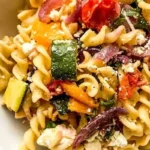
Roasted Vegetable Pasta with Creamy Baked Feta
- Total Time: 25 minutes
- Yield: 6 servings 1x
- Diet: Vegetarian
Description
This delicious roast veggie feta pasta is so easy to make! It’s a perfect weeknight meal.
Ingredients
- 1 pound fusilli (or other chunky pasta)
- 6 ounce block of feta
- 1 cup cherry tomatoes
- 1 red onion, cut into thin wedges
- 2 small zucchini, diced into 1/2 in pieces
- 1 orange bell pepper, diced into 1/2 in pieces
- 2 tablespoons olive oil
- 2 teaspoons kosher salt
- 1 teaspoon ground black pepper
- 2 tablespoons freshly squeezed lemon juice
- 2 cups fresh baby arugula
Instructions
- Step 1: Preheat oven to 400 degrees F.
- Step 2: Place the feta and vegetables on a parchment-lined baking sheet. Toss vegetables and drizzle cheese with 1 tablespoon of olive oil and 1 teaspoon of salt.
- Step 3: Bake in the oven for 15 minutes or until the tomatoes have burst.
- Step 4: Meanwhile, boil the pasta in very salty water according to package directions. Drain and set aside, reserving 1/2 cup of pasta water.
- Step 5: When the vegetables and feta are done baking, combine the feta, reserved pasta water, and pasta in a large bowl. Stir the feta is evenly dispersed over the pasta. Then add the vegetables, remaining olive oil, remaining salt, pepper, lemon juice, and arugula and stir gently till combined.
- Step 6: Serve immediately or save in the refrigerator for up to 4 days.
Notes
The greens are flexible; baby spinach or chopped chard can replace arugula. Seasonal vegetables like butternut squash, broccoli, asparagus, or leeks also work well. Reserving a bit of pasta water is recommended for a creamier sauce.
- Prep Time: 5 minutes
- Cook Time: 15 minutes
- Category: Main Meal Recipes
- Method: Baking
- Cuisine: American
Nutrition
- Serving Size: 1 serving
- Calories: 429 kcal
- Sugar: 6 g
- Sodium: 1114 mg
- Fat: 12 g
- Saturated Fat: 5 g
- Unsaturated Fat: 7 g
- Trans Fat: 0 g
- Carbohydrates: 64 g
- Fiber: 4 g
- Protein: 16 g
- Cholesterol: 25 mg
Keywords: roasted veggie pasta, baked feta pasta, easy weeknight meal, vegetarian dinner