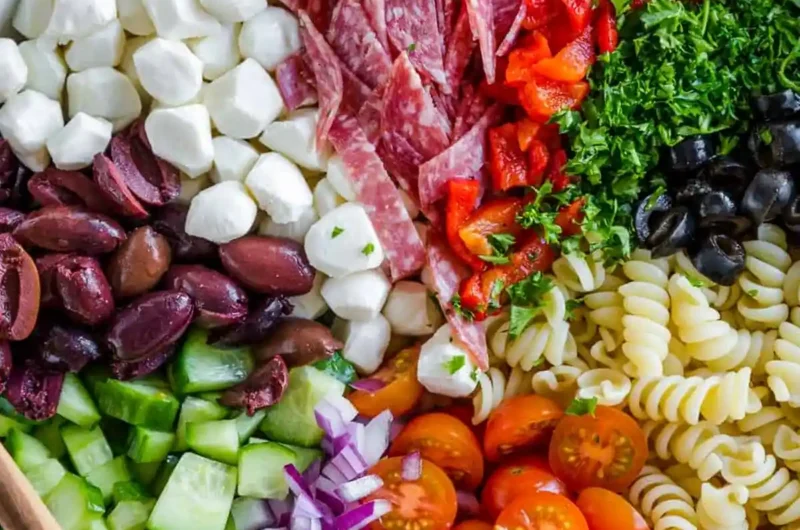
This vibrant pasta salad is an ideal choice for meal prep and large gatherings. It combines fresh vegetables, savory beef salami, and a zesty Italian dressing for a satisfying, refreshing meal.
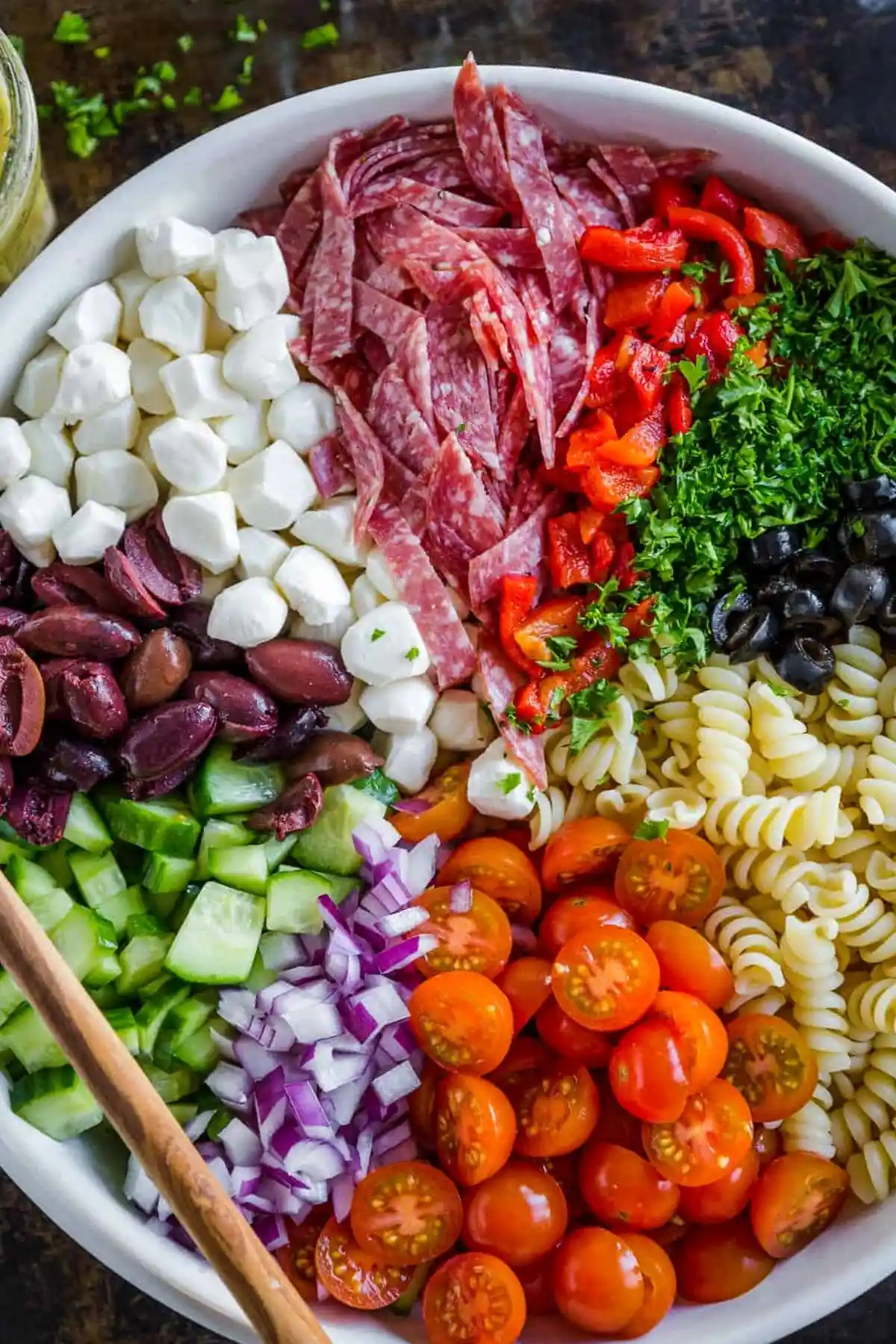
List of ingredients
- 8 oz rotini pasta – spiral shape holds dressing best.
- 6 oz beef salami – sliced into thin strips.
- 10 oz cherry tomatoes – halved, approximately 3 cups.
- 1/2 English cucumber – diced for crunch.
- 1/2 medium red onion – finely diced.
- 8 oz fresh mozzarella – pearls or halved small balls.
- 1/2 cup black olives – pitted and sliced.
- 1/2 cup kalamata olives – pitted and halved.
- 1/2 cup roasted red peppers – drained and coarsely chopped.
- 1/3 cup parsley – finely chopped for freshness.
- 1 cup Italian dressing – or adjusted to taste.
step-by-step instructions
- Cook the pasta: Boil rotini pasta in salted water according to the package instructions. Cook only until the pasta is al dente, meaning it remains firm to the bite.
- Prepare the additions: While the pasta is cooking, chop and prep the beef salami, tomatoes, cucumber, onion, olives, peppers, and parsley. Prepare the Italian dressing if making it from scratch.
- Assemble and dress: Combine the cooked pasta with the prepared ingredients. Add the dressing only to the portion of the salad you plan to eat immediately.
- Marinate: For the best flavor, cover the salad and let it marinate in the refrigerator for 1 to 3 hours before serving.
Pasta Preparation Techniques
Choosing the Best Noodle
Rotini is the preferred choice for this salad because its spiral shape creates grooves that trap the dressing and small bits of herbs. This ensures that every bite is evenly flavored. You can also use fusilli, which is similar, or shell pasta to create small pockets of dressing.
Achieving the Al Dente Bite
Cooking pasta al dente is critical for salads because the noodles continue to soften slightly as they marinate in the acidic dressing. If you overcook the pasta, it can become mushy and lose its structural integrity. Taste the pasta two minutes before the package timer ends to ensure it has a slight resistance in the center.
The Cold Rinse Method
Immediately after draining the pasta in a colander, rinse it thoroughly under cold running water. This process stops the cooking process instantly, preventing the noodles from overcooking due to residual heat. Rinsing also removes excess surface starch, which prevents the pasta from sticking together in a clump.
Omitting Pre-Dressing Fats
Do not add butter or oil to the pasta after draining it. Fats like butter create a waterproof barrier around the noodle, which prevents the Italian dressing from adhering to the pasta. The oil already present in the dressing is sufficient to keep the noodles separated and moist.
Ingredient Modifications
Swapping the Cheese
While fresh mozzarella pearls provide a mild and creamy contrast, you can use crumbled feta for a saltier, tangier profile. Cubed provolone or sharp white cheddar are also excellent alternatives that add a different depth of flavor. Ensure the cheese is cut into small, uniform pieces to match the size of the other ingredients.
Adding Garden Vegetables
To increase the crunch and nutritional value, consider adding finely diced green bell peppers or small steamed broccoli florets. Sliced carrots or frozen peas (thawed) can also add color and texture. Keep the vegetable cuts small so they distribute evenly throughout the rotini spirals.
Beef Salami Selection
Choose a high-quality beef salami to maintain a savory, salty element without using pork. Hard salami is generally better for salads as it holds its shape when sliced into thin strips. Avoid overly soft deli meats that might tear or become soggy during the marination process.
Enhancing Roasted Red Peppers
Jarred roasted red peppers are convenient, but roasting your own fresh red bell peppers takes the flavor to a higher level. Char the skins under a broiler, steam them in a covered bowl, and peel off the skin. This provides a smokier, sweeter taste that complements the acidic dressing.
Dressing Guidance
Selecting a High-Quality Oil
If making the dressing at home, use extra virgin olive oil for a rich, fruity base. For a lighter taste, a blend of olive oil and avocado oil works well. The quality of the oil directly impacts the smoothness of the salad and the overall mouthfeel.
Adjusting the Dressing Volume
Start by adding three-quarters of a cup of dressing and tossing the salad thoroughly. Let it sit for ten minutes before adding the remaining quarter cup. This prevents the salad from becoming swimming in liquid and allows you to control the intensity of the flavors.
Store-Bought Recommendations
When using a store-bought Italian dressing, look for brands that list olive oil as the first ingredient. Avoid dressings with high amounts of corn syrup or artificial thickeners. A zesty, vinegar-forward dressing typically pairs best with the creaminess of the mozzarella.
Storage and Freshness
Ideal Marination Periods
Marinating the salad for 1 to 3 hours in the refrigerator allows the pasta and vegetables to absorb the seasonings. However, avoiding marination for more than 24 hours is recommended, as the acidity in the dressing can eventually break down the texture of the fresh vegetables.
Container Selection
Store the salad in an airtight glass container to keep the flavors fresh and prevent the salad from absorbing odors from other foods in the fridge. Glass is preferable to plastic as it does not leach chemicals and stays colder, keeping the salad crisp.
Freshness Windows
This pasta salad typically remains fresh for 3 to 5 days when stored properly in the refrigerator. The tomatoes and cucumbers may release some water over time, which can dilute the dressing. Stir the salad gently before serving to redistribute the dressing.
Preventing Soggy Pasta
If you are preparing the salad for a party several days in advance, store the cooked pasta and the chopped vegetables in separate containers. Combine them and add the dressing only a few hours before serving to ensure the pasta remains firm.
Serving Suggestions
Plating for Parties
Serve the salad in a large, shallow bowl rather than a deep one. This prevents the heavier ingredients, like the mozzarella and olives, from settling at the bottom and ensures a balanced distribution of components in every scoop.
Pairing with Main Courses
This salad works exceptionally well as a side dish for grilled chicken breast or baked fish. It can also be served alongside a platter of roasted vegetables or as a standalone light lunch. The acidity of the salad cleanses the palate between bites of richer proteins.
Adding Final Garnishes
Just before serving, sprinkle a handful of freshly chopped parsley or a pinch of cracked black pepper over the top. A light dusting of grated parmesan cheese can also add an extra layer of savory saltiness that ties the Italian flavors together.
Common Troubleshooting
Correcting Overcooked Pasta
If the pasta turns out too soft, you can balance the texture by adding extra crunchy elements. Adding diced celery or raw red bell pepper can provide the necessary contrast to offset the mushiness of the noodles.
Balancing Saltiness
Since olives and salami are naturally salty, the salad can sometimes become too salty. To fix this, add a small splash of apple cider vinegar or a pinch of granulated sugar to the dressing. This acidity and sweetness will neutralize the excess salt.
Managing Excess Liquid
If the salad becomes too watery due to the tomatoes and cucumbers, use a slotted spoon to serve it. Alternatively, you can gently drain the excess liquid from the bottom of the bowl before adding a final tablespoon of fresh dressing to refresh the taste.
Frequently Asked Questions
Can I freeze pasta salad?
No, pasta salad should not be frozen. The freezing and thawing process destroys the texture of the fresh vegetables and causes the mozzarella to become rubbery. It is best enjoyed fresh or refrigerated.
Which olives work best?
A combination of black olives and kalamata olives provides the best balance. Black olives offer a mild, salty flavor, while kalamata olives add a punchy, vinegary tang that is characteristic of Mediterranean dishes.
Is this salad suitable for meal prep?
Yes, it is an excellent meal prep option because it is filling and holds up well in the fridge. To keep it fresh, store the dressing on the side and mix it in right before eating.
Can I use dried herbs instead of fresh parsley?
You can use dried parsley, but the flavor is less vibrant. Use a ratio of one teaspoon of dried herbs for every tablespoon of fresh herbs to avoid overpowering the other ingredients.
How do I prevent the red onion from being too sharp?
If the raw red onion is too pungent, soak the finely diced pieces in cold water for ten minutes, then drain and pat dry. This removes the harsh sulfur compounds while keeping the onion’s crunch and color.
Print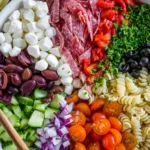
Hearty Italian Pasta Salad
- Total Time: 30 minutes
- Yield: 8 servings 1x
- Diet: General
Description
Italian Pasta Salad is an easy, make-ahead recipe that is perfect for meal prep. Every bite is loaded with rotini, beef salami, fresh mozzarella, olives, and healthy vegetables, and it all comes together with a homemade creamy Italian Dressing.
Ingredients
- 8 oz rotini pasta
- 6 oz beef salami, sliced into strips
- 10 oz cherry tomatoes, halved
- 1/2 English cucumber, diced
- 1/2 medium red onion, finely diced
- 8 oz fresh mozzarella, pearls or halved mozzarella balls
- 1/2 cup black olives, pitted and sliced
- 1/2 cup kalamata olives, pitted and halved
- 1/2 cup roasted red peppers, drained and coarsely chopped
- 1/3 cup parsley, finely chopped
- 1 cup Italian dressing
Instructions
- Step 1: Cook rotini pasta according to package instructions in salted water just until pasta is aldente (firm to the bite).
- Step 2: While pasta cooks, prep remaining ingredients and make Italian Dressing.
- Step 3: Add dressing just to the portion of salad you plan to eat. Enjoy right away or cover and let the salad marinate for 1-3 hours before serving.
Notes
You can make your own roasted peppers for extra flavor.
- Prep Time: 20 minutes
- Cook Time: 10 minutes
- Category: Salad
- Method: Mixing
- Cuisine: Italian
Nutrition
- Serving Size: 1 serving
- Calories: 386 kcal
- Sugar: 6 g
- Sodium: 1340 mg
- Fat: 23 g
- Saturated Fat: 8 g
- Unsaturated Fat: 15 g
- Trans Fat: 0 g
- Carbohydrates: 30 g
- Fiber: 2 g
- Protein: 16 g
- Cholesterol: 39 mg
Keywords: italian pasta salad, pasta salad