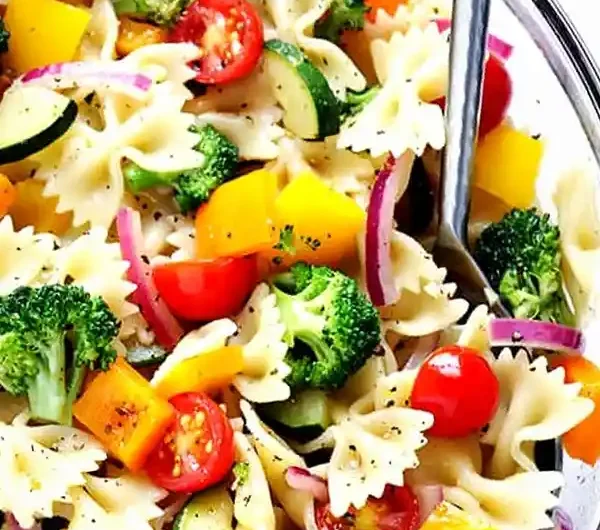
This vibrant pasta salad combines sautéed fresh vegetables with a zesty balsamic vinaigrette for a nutrient-dense meal. It is a versatile dish that is easy to prepare in advance for gatherings or weekly meal prep.
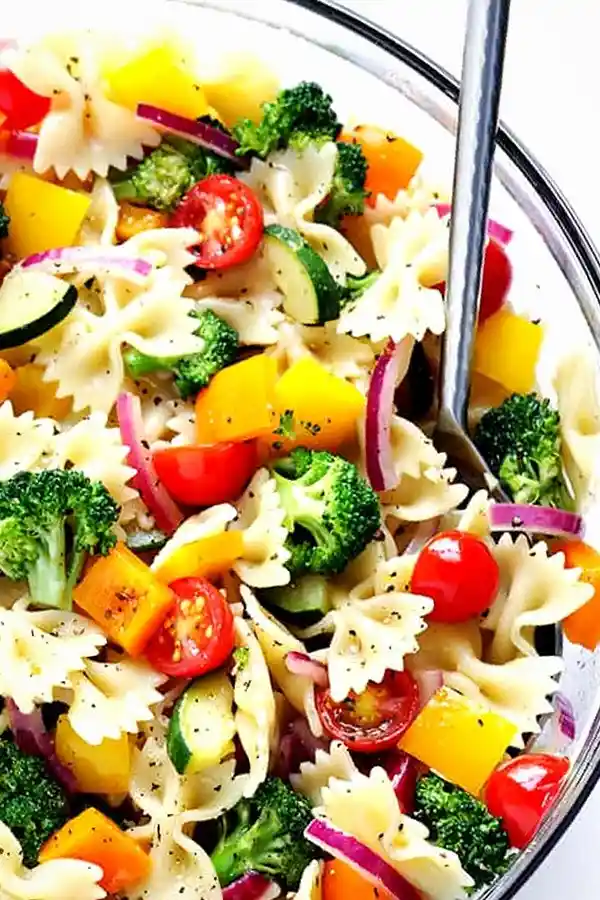
List of ingredients
- 12 ounces dry pasta (farfalle recommended) – provides a sturdy base.
- 2-3 tablespoons olive oil – used for sautéing the vegetables.
- 1 zucchini – cut into bite-sized pieces for even cooking.
- 3 cups chopped broccoli florets – approximately one small head.
- 2 bell peppers (yellow and orange) – cored and diced into bite-sized pieces.
- 1 cup cherry or grape tomatoes – halved lengthwise.
- 3 cloves garlic – peeled and minced finely.
- Salt and pepper – to taste for seasoning.
- Half a small red onion – peeled and thinly sliced.
- 1/2 cup white balsamic vinaigrette – or a preferred Italian dressing.
- Grated microbial-rennet Parmesan cheese – optional for topping.
step-by-step instructions
- Boil Pasta: Cook the pasta in a large stockpot of generously-salted water al dente according to package directions. Drain the pasta and rinse under cold water for about 20-30 seconds until no longer hot, then set aside.
- Sauté Primary Vegetables: Heat 1 tablespoon of olive oil in a large saute pan over medium-high heat. Add the zucchini and broccoli florets and saute for 3 minutes, stirring occasionally.
- Add Remaining Aromatics: Stir in the remaining olive oil, then add the bell peppers, tomatoes, garlic, and a few generous pinches of salt and pepper. Continue sauteing for 4-5 more minutes, stirring occasionally, until the vegetables reach your desired doneness, keeping them slightly firm to avoid mushiness.
- Finish Vegetables: Stir in the thinly-sliced red onion and saute for 1 more minute.
- Combine and Dress: Place the cooked pasta and sautéed vegetables together in the large stockpot. Drizzle with the white balsamic vinaigrette and toss until everything is evenly coated.
- Garnish and Serve: Top with extra grated Parmesan cheese if desired. Serve immediately or refrigerate in a sealed container for up to 3 days.
Vegetable Selection and Preparation
Selecting the Best Zucchini
Choose firm, medium-sized zucchini with a bright green skin. Avoid oversized zucchinis as they tend to have larger seeds and a softer texture that can become mushy when sautéed. Cut them into uniform half-moons to ensure they cook at the same rate as the broccoli.
Preparing Broccoli Florets for Even Cooking
Cut the broccoli into small, bite-sized florets to increase the surface area for searing. Keeping the florets small ensures that the stems are tender by the time the tops are browned. Avoid leaving large chunks of stem, which can remain too hard compared to the other vegetables.
Choosing and Dicing Bell Peppers
Using a mix of yellow and orange bell peppers adds visual contrast and a sweet flavor profile. Dice them into pieces similar in size to the zucchini for a consistent mouthfeel. Ensure all seeds and white membranes are removed to prevent bitterness.
Slicing Red Onion for Mild Flavor
Slice the red onion into very thin slivers to distribute the flavor evenly without overpowering the dish. Adding the onion at the very end of the sauté process preserves its color and provides a slight crispness. This prevents the onion from becoming too sweet or translucent.
Prepping Cherry Tomatoes to Prevent Leaking
Halve the cherry or grape tomatoes just before adding them to the pan. This keeps the juices inside until they hit the heat, preventing the sauté pan from becoming too watery. Halving them also allows the dressing to cling to the cut side of the tomato.
Mastering the Pasta Base
Why Farfalle is the Preferred Choice
Farfalle, or bow-tie pasta, is ideal because its shape captures the vinaigrette in the center fold. Its thickness also provides a satisfying chew that stands up well to the hearty sautéed vegetables. Other short pastas like fusilli or rotini are also excellent alternatives.
Cooking Pasta to Perfect Al Dente
Cook the pasta for 1-2 minutes less than the package instructions for al dente. Since the pasta will be tossed with warm vegetables and potentially chilled later, slightly undercooking it prevents it from becoming soft. This maintains the structural integrity of the salad.
The Importance of Salting Pasta Water
Add a generous amount of salt to the boiling water to season the pasta from the inside out. This is the only opportunity to flavor the actual noodle before the dressing is added. Salted water also helps the pasta release a small amount of starch that helps the dressing adhere better.
Using Cold Water Rinsing for Texture
Rinsing the pasta under cold water immediately stops the cooking process and removes excess surface starch. In a hot pasta dish, starch is desired for sauce adhesion, but in a cold salad, it can make the noodles gummy. Rinsing ensures a clean, separate texture for each piece of pasta.
Flavor Enhancements and Dressing Tips
Using White Balsamic Vinaigrette
White balsamic vinaigrette provides a tangy, slightly sweet flavor without the dark color of traditional balsamic. This keeps the colors of the vegetables bright and vibrant. It offers a cleaner taste that complements the freshness of the zucchini and broccoli.
Creating a Homemade Balsamic Dressing
If making your own, whisk together white balsamic vinegar, olive oil, a touch of honey or maple syrup, and a pinch of salt. Emulsify the mixture by whisking vigorously or shaking it in a jar until thickened. This ensures the dressing coats the pasta evenly rather than pooling at the bottom.
Adding Fresh Herbs for Depth
Freshly chopped parsley or basil can be stirred in at the end for an aromatic lift. These herbs add a layer of freshness that contrasts well with the sautéed flavors. Add them after the pan has cooled slightly to prevent the herbs from wilting or darkening.
Adjusting Acidity and Sweetness
Depending on the brand of vinaigrette, you may need to balance the flavor. If it is too tart, a small pinch of sugar or a drizzle of agave can soften the acidity. Conversely, a squeeze of fresh lemon juice can brighten a dressing that feels too heavy on the oil.
Professional Sautéing Techniques
Controlling Pan Temperature
Maintain a medium-high heat to ensure the vegetables sear rather than steam. If the pan is too cool, the vegetables will release water and boil, leading to a mushy texture. If it is too hot, the garlic will burn before the other vegetables are cooked.
The Order of Adding Vegetables
Add the densest vegetables, like broccoli and zucchini, first as they require more time to soften. Bell peppers and tomatoes follow because they have higher water content and cook faster. This staggered approach ensures every vegetable is cooked perfectly.
Sautéing Garlic Without Burning
Add the minced garlic toward the end of the vegetable sauté process. Garlic burns quickly and becomes bitter if left in the pan for too long. A few minutes of cooking is sufficient to release its fragrance and flavor.
Achieving the Right Vegetable Texture
Aim for a texture where the vegetables are tender but still retain a slight bite. This is especially important for pasta salads that are stored in the fridge, as the vegetables will soften further over time. Removing them from the heat slightly early preserves the crunch.
Serving and Presentation
Serving at Room Temperature
While this salad can be served cold, serving it at room temperature often enhances the flavor of the vegetables and dressing. Let it sit for 15-20 minutes after tossing to allow the pasta to absorb the vinaigrette. This results in a more cohesive taste.
Plating for Large Groups
Use a wide, shallow bowl or a platter to present the salad, which prevents the ingredients from being crushed. Toss the salad gently one last time before serving to redistribute the dressing. Arrange the most colorful vegetables on top for a professional look.
Garnish Options for Visual Appeal
Beyond the Parmesan cheese, a sprinkle of toasted pine nuts or sunflower seeds adds a nice crunch. A few whole cherry tomatoes or a sprig of fresh basil on top can make the dish look more appetizing. These small additions create a contrast in textures.
Storage and Preservation
Optimal Refrigeration Containers
Store the salad in an airtight glass or BPA-free plastic container to prevent the pasta from drying out. Glass is preferable as it does not absorb odors and keeps the vegetables crisper. Ensure the lid is sealed tight to avoid any fridge odors leaching into the vinaigrette.
Maximum Storage Duration
This pasta salad is best enjoyed within 3 days of preparation. After this point, the vegetables may lose their structure and the pasta may become overly soft. The white balsamic dressing acts as a preservative, but the fresh vegetables have a limited window of peak quality.
Avoiding Sogginess During Storage
To prevent the salad from becoming soggy, ensure the pasta is completely cooled before mixing it with the sautéed vegetables. If the components are too hot when combined, they create steam inside the container. This condensation can dilute the dressing and soften the vegetables.
Reheating and Refreshing Methods
Reviving Cold Pasta Salad
Cold pasta can sometimes tighten up and feel dry. To revive it, gently stir in one tablespoon of olive oil or a splash of vinegar before serving. This re-emulsifies the dressing and restores the glossy appearance of the salad.
Adding Fresh Dressing Before Serving
Pasta absorbs dressing as it sits in the refrigerator. To keep the flavor bold, reserve a small amount of vinaigrette to drizzle over the salad just before serving. This replenishes the acidity and moisture lost during storage.
Preventing Vegetable Oxidation
The acidity in the balsamic vinegar helps prevent the vegetables from oxidizing. However, if you are making the salad a day in advance, keep the red onions separate and stir them in just before serving. This keeps the onion flavor sharp and the color vibrant.
Customization and Variations
Incorporating Plant-Based Proteins
To make the salad more filling, add a can of rinsed chickpeas or cannellini beans. These legumes add protein and fiber while complementing the Italian flavor profile. Stir them in during the final mixing stage with the pasta.
Swapping Vegetables for Seasonal Options
In the winter, replace zucchini with diced carrots or cauliflower. In the summer, adding fresh corn kernels or diced cucumber can provide a refreshing twist. Always adjust the sauté times based on the density of the replacement vegetable.
Using Alternative Cheeses
While microbial-rennet Parmesan is traditional, you can use crumbled feta or small mozzarella pearls for a different taste. Feta adds a salty, tangy punch, while mozzarella provides a creamy contrast to the acidic dressing. For a vegan version, use nutritional yeast or a plant-based parmesan alternative.
Troubleshooting Common Issues
Managing Excess Liquid in the Bowl
If the salad seems watery, it is usually due to the tomatoes releasing juice or the vegetables not being sautéed enough. You can drain some of the liquid from the bottom of the bowl before serving. In the future, ensure the vegetables are sautéed until most of their moisture has evaporated.
Fixing Bland Flavor Profiles
If the salad tastes bland, increase the acidity with a squeeze of lemon or more vinaigrette. A pinch of extra salt or a dash of cracked black pepper can also wake up the flavors. Remember that chilled food often tastes less intense than hot food.
Preventing Pasta from Sticking
If the pasta clumps together, it is likely due to insufficient rinsing or a lack of oil. Toss the pasta with a teaspoon of olive oil immediately after rinsing and before adding the vegetables. This creates a barrier that keeps the noodles separate.
Frequently Asked Questions
Can I use frozen vegetables?
Yes, you can use frozen broccoli and mixed peppers, but sauté them on higher heat to evaporate the extra moisture. Avoid using frozen zucchini, as it often becomes too soft and watery upon thawing and cooking.
How do I make this vegan?
Omit the Parmesan cheese entirely or replace it with a vegan Parmesan alternative. Ensure your chosen vinaigrette is free of honey or dairy products to keep the dish strictly plant-based.
Can I roast the vegetables instead?
Roasting the zucchini, broccoli, and peppers on a sheet pan at 400°F (200°C) for 15-20 minutes is a great alternative. This adds a caramelized depth of flavor that differs from the sauté method but works perfectly with the balsamic dressing.
What is the best pasta for this salad?
Farfalle is recommended for its ability to hold dressing and its structural strength. However, fusilli and rotini are equally effective because their spirals trap the small pieces of sautéed vegetables and dressing.
Can I use red balsamic vinegar?
You can use red balsamic, but be aware that it will turn the pasta and vegetables a brownish hue. The flavor will be slightly more intense and syrupy, which some may prefer, though the white balsamic keeps the dish looking brighter.
Print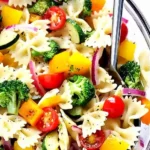
Garden Vegetable Pasta Salad with Balsamic Dressing
- Total Time: 35 minutes
- Yield: 6–8 servings 1x
- Diet: Vegetarian
Description
This Veggie Lovers’ Pasta Salad recipe is easy to whip up with whatever veggies you have on hand, it’s tossed with a simple white balsamic vinaigrette, it’s easy to make ahead of time, and — of course — it’s absolutely delicious!
Ingredients
- 12 ounces dry pasta (farfalle)
- 2–3 tablespoons olive oil
- 1 zucchini, cut into bite-sized pieces
- 3 cups chopped broccoli florets
- 2 bell peppers, cored and diced into bite-sized pieces
- 1 cup cherry or grape tomatoes, halved
- 3 cloves garlic, peeled and minced
- salt and pepper
- half a small red onion, peeled and thinly-sliced
- 1/2 cup white balsamic vinaigrette
- optional: grated microbial-rennet Parmesan cheese
Instructions
- Cook: Cook the pasta in a large stockpot of generously-salted water al dente according to package directions, then drain and rinse under cold water for 20-30 seconds.
- Saute: Heat 1 tablespoon of oil in a large saute pan over medium-high heat, add zucchini and broccoli florets and saute for 3 minutes.
- Season: Stir in the remaining oil, bell peppers, tomatoes, garlic, salt, and pepper, and saute for 4-5 more minutes.
- Finish Veggies: Stir in the red onion and saute for 1 more minute.
- Mix: Combine the cooked pasta and sauteed vegetables in the large stockpot, drizzle with vinaigrette, and toss until evenly coated.
- Serve: Top with grated Parmesan if desired and serve immediately or refrigerate in a sealed container for up to 3 days.
Notes
You can make this recipe vegan by omitting the Parmesan cheese.
- Prep Time: 15 minutes
- Cook Time: 20 minutes
- Category: Main Course
- Method: Sauteing
- Cuisine: Italian
Nutrition
- Serving Size: 1 serving
- Calories: 390 kcal
- Sugar: 6 g
- Sodium: 610 mg
- Fat: 12 g
- Saturated Fat: 2 g
- Unsaturated Fat: 10 g
- Trans Fat: 0 g
- Carbohydrates: 42 g
- Fiber: 6 g
- Protein: 10 g
- Cholesterol: 12 mg
Keywords: pasta salad, veggie pasta, Italian, summer salad, healthy dinner