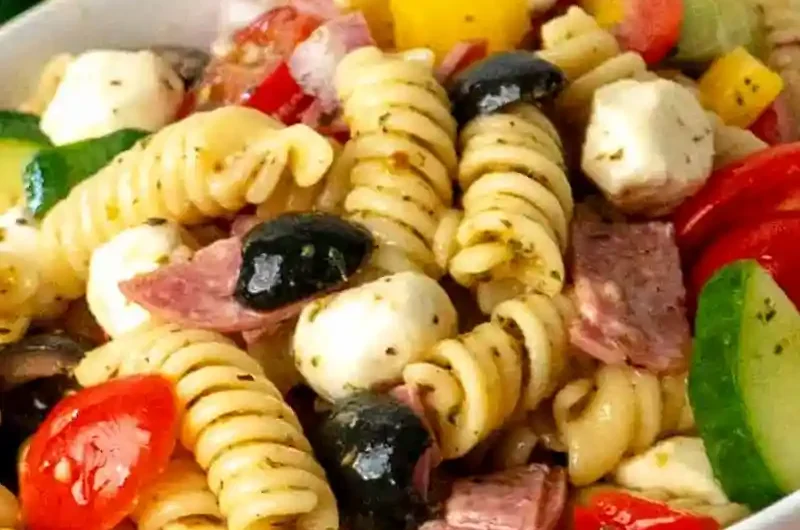
This zesty pasta salad combines rotini noodles with crisp vegetables and savory beef salami for a refreshing meal. It is an ideal side dish for outdoor gatherings or a convenient option for weekday meal prep.
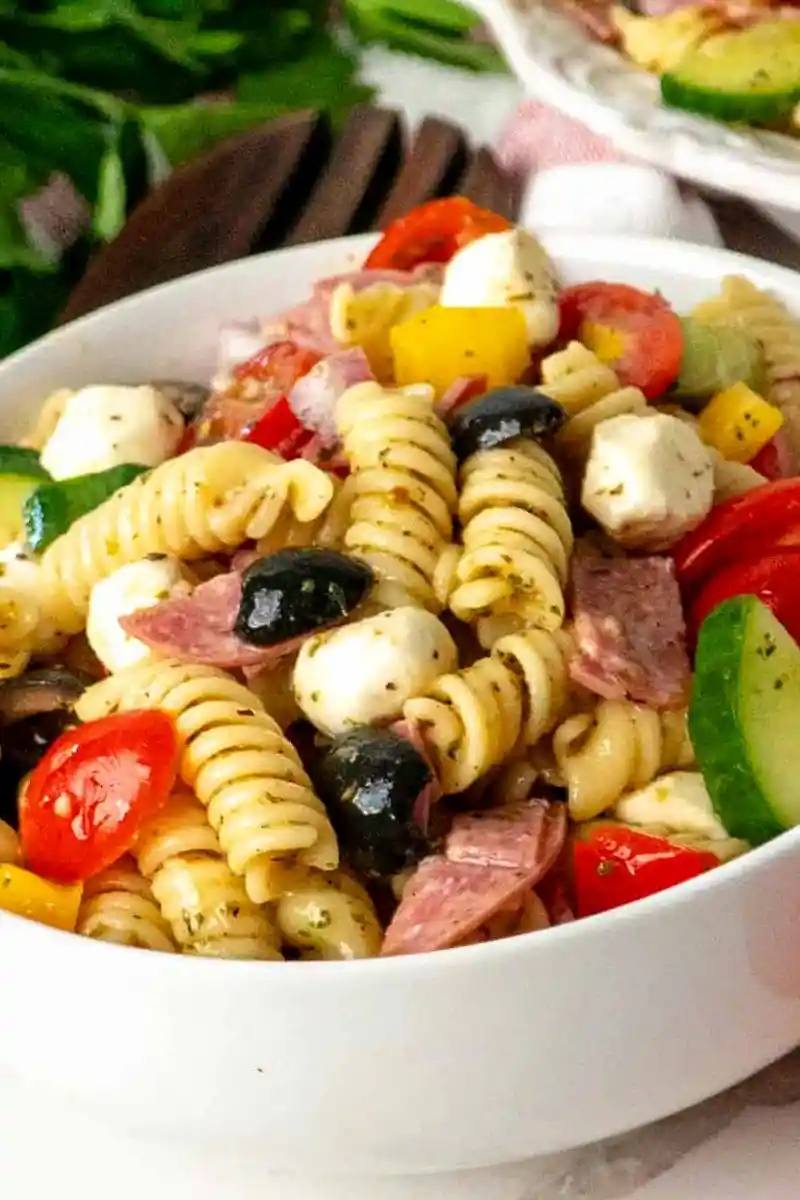
List of ingredients
- 16 oz rotini pasta – provides a spiral shape to hold the dressing.
- 10 oz beef salami – chopped into 1/4 inch pieces for savory saltiness.
- 1 cup English cucumber – quartered and sliced for a fresh crunch.
- 2 cups grape tomatoes – halved to release their juices into the salad.
- 1 1/2 cups bell peppers – diced in various colors for visual appeal.
- 1/2 cup red onion – finely chopped for a sharp, piquant flavor.
- 8 oz black olives – drained and sliced for a briny addition.
- 8 oz fresh mozzarella pearls – microbial-rennet cheese for creamy texture.
- 1/2 cup parmesan cheese – shredded microbial-rennet cheese for salty depth.
- 1/2 cup parsley – freshly chopped to add a clean, herbal note.
- 1 1/4 cup olive oil – extra virgin for a rich, fruity base.
- 3 tbsp lemon juice – freshly squeezed to provide a bright acidity.
- 1 1/2 tbsp Italian seasoning – a blend of dried herbs for traditional flavor.
- 2 tsp sugar – helps balance the acidity of the vinegar and lemon.
- 3 tbsp red wine vinegar – adds a tangy, fermented depth to the dressing.
- 2 tsp garlic – minced fresh for a bold aromatic punch.
- 1 tsp Dijon mustard – acts as an emulsifier and adds subtle tang.
- 1/2 tsp salt – enhances all the existing flavors.
- 1/2 tsp black pepper – provides a mild, warm spice.
step-by-step instructions
- Prepare the pasta: Cook the rotini in a large pot of boiling water according to the package directions until it reaches an al dente texture. Drain the pasta in a colander and rinse it immediately with cold water to stop the cooking process and cool it down.
- Whisk the dressing: In a medium-sized mixing bowl, combine the olive oil, lemon juice, Italian seasoning, sugar, red wine vinegar, Dijon mustard, salt, and black pepper. Whisk the ingredients vigorously until the sugar is dissolved and the dressing is well emulsified.
- Combine the salad: Place the cooled pasta and all the remaining ingredients, including the beef salami, vegetables, and cheeses, into a large mixing bowl. Pour the prepared dressing over the top and toss everything together until the ingredients are evenly coated.
- Chill and serve: Place the salad in the refrigerator to chill before serving. This allows the flavors to meld and ensures the vegetables remain crisp and refreshing.
Optimizing Pasta Texture and Shape
Cooking Pasta to an Al Dente Texture
Always cook your rotini until it is firm to the bite. Because the pasta will continue to absorb the dressing while chilling in the refrigerator, starting with an al dente texture prevents the noodles from becoming mushy. This ensures the salad maintains a pleasant chewiness in every bite.
Rinsing Pasta to Stop the Cooking Process
Rinsing the pasta under cold water immediately after draining is a critical step for cold salads. This process removes excess surface starch, which prevents the noodles from sticking together in a large clump. It also lowers the temperature rapidly, ensuring that the cheese and vegetables do not wilt when mixed.
Choosing the Best Pasta Shapes for Dressing Adhesion
While rotini is recommended for its spirals that trap the dressing, other shapes like fusilli or farfalle also work well. The key is to choose a shape with ridges or folds. Avoid smooth pastas like spaghetti, as the dressing will simply slide off, leaving the pasta tasting bland.
Ingredient Selection and Preparation Tips
Selecting High-Quality Beef Salami for Depth
Use a dry-cured beef salami to provide a rich, salty contrast to the fresh vegetables. Cutting the salami into small, uniform 1/4 inch pieces ensures that you get a bit of meat in every forkful. Ensure the pieces are bite-sized to maintain a balanced texture throughout the dish.
Maintaining Cucumber Crispness
English cucumbers are preferred because they have thinner skins and fewer seeds than regular cucumbers. This results in a crunchier texture and prevents the salad from becoming too watery. Quartering and slicing them ensures they match the size of the other diced ingredients.
Preparing Grape Tomatoes for Better Flavor Distribution
Halving grape tomatoes allows their natural juices to mingle with the dressing, enhancing the overall flavor profile. Grape tomatoes are used instead of larger tomatoes because they hold their shape better and provide a consistent burst of sweetness. Ensure they are dried after washing to avoid adding excess water to the bowl.
Achieving Uniform Bell Pepper Dices
Dicing bell peppers into small, consistent pieces ensures that no single ingredient dominates the palate. Using a mix of red, yellow, and orange peppers adds vibrant color and a mild sweetness. Consistency in cutting helps the dressing coat every surface of the vegetable evenly.
Using Red Onion for Sharp Contrast
Red onion provides a pungent, sharp flavor that cuts through the richness of the oil and cheese. Finely chopping the onion prevents any single piece from being overpowering. If the raw onion flavor is too intense, you can soak the chopped pieces in cold water for ten minutes before adding them to the salad.
Selecting the Right Olives for Brininess
Canned sliced black olives are a convenient and classic choice for this recipe. For a more complex flavor, you can use a mix of black and green olives. Ensure the olives are well-drained so that the brine does not dilute the homemade dressing.
Integrating Mozzarella Pearls for Creaminess
Mozzarella pearls provide a soft, creamy contrast to the crunchy vegetables. If pearls are unavailable, you can cut a block of fresh microbial-rennet mozzarella into small, uniform cubes. These cheese elements absorb some of the dressing, making them flavorful and juicy.
Adding Shredded Parmesan for Saltiness
Shredded parmesan adds a layer of umami and a concentrated saltiness that complements the beef salami. Using a high-quality microbial-rennet parmesan ensures a sharp taste. Stir it in at the end to maintain some of the cheese’s distinct texture.
Using Fresh Parsley for a Clean Finish
Freshly chopped flat-leaf parsley adds a bright, herbal note that refreshes the palate. It helps balance the heavy fats from the olive oil and salami. Stirring the parsley in last prevents it from bruising and keeps the green color vibrant.
Mastering the Zesty Dressing
Emulsifying the Olive Oil and Vinegar
Whisking the oil and vinegar together vigorously creates a temporary emulsion. This ensures that the dressing clings to the pasta rather than pooling at the bottom of the bowl. Using a whisk or a closed jar to shake the dressing can help achieve a smoother consistency.
The Role of Fresh Lemon Juice in Brightness
Freshly squeezed lemon juice provides a different type of acidity than vinegar, adding a citrusy brightness. This layer of flavor lifts the heavier ingredients like the beef salami and mozzarella. Always use fresh juice rather than bottled for the best flavor profile.
Using Italian Seasoning for Complexity
Italian seasoning typically contains oregano, basil, rosemary, and thyme, providing a complex aromatic base. Ensure the seasoning is well-distributed in the dressing to avoid clumps of herbs. This pre-mixed blend provides a consistent, traditional taste.
Balancing Acidity with Granulated Sugar
A small amount of sugar is added to the dressing to temper the sharp edges of the lemon juice and red wine vinegar. It does not make the salad sweet but rather creates a more rounded, balanced flavor. This is a professional technique to ensure the dressing isn’t overly harsh.
Adding Dijon Mustard for Texture and Tang
Dijon mustard serves two purposes: it adds a subtle, spicy tang and helps stabilize the oil and vinegar. This prevents the dressing from separating too quickly. A small amount goes a long way in providing a professional, deli-style consistency.
Using Fresh Garlic for Pungency
Freshly minced garlic provides a bold, aromatic quality that powdered garlic cannot replicate. For the best results, mince the garlic finely or use a garlic press to ensure it integrates fully into the oil. This adds a pungent depth that defines the Italian profile.
Adjusting Salt and Pepper for Balance
Salt and pepper are essential for enhancing the natural flavors of the vegetables. Because salami and parmesan are already salty, add the salt gradually and taste as you go. Freshly cracked black pepper adds a mild heat that complements the lemon and vinegar.
Flavor Variations and Substitutions
Incorporating Artichoke Hearts and Feta
To give the salad a more Mediterranean feel, add marinated artichoke hearts and crumbled feta cheese. The feta provides a saltier, tangier profile than mozzarella. These additions pair perfectly with the existing olive oil and lemon base.
Adding Heat with Pepperoncini Peppers
For those who prefer a spicy kick, add sliced pepperoncini peppers or a pinch of red pepper flakes. The vinegar-based heat of the peppers complements the zesty dressing. This adds a layer of complexity and wakes up the taste buds.
Substituting Gluten-Free Pasta Alternatives
This recipe works well with gluten-free pasta made from brown rice or chickpeas. Be cautious not to overcook gluten-free pasta, as it can break down more quickly than wheat pasta. Rinse these varieties thoroughly to remove excess starch.
Replacing Salami with Turkey Pepperoni
If you prefer a different meat profile, diced turkey pepperoni is a great alternative to beef salami. It offers a similar salty and smoky flavor while maintaining the structural integrity of the salad. Keep the dice small to match the vegetables.
Adding Protein with Garbanzo Beans
For a heartier version, add a can of drained and rinsed garbanzo beans. These add plant-based protein and a creamy texture. They are an excellent addition for those who want a more filling meal.
Using Roasted Vegetables for a Different Profile
Instead of raw vegetables, try adding roasted red peppers, roasted broccoli, or marinated mushrooms. These provide a deeper, caramelized flavor that contrasts with the fresh dressing. Ensure roasted vegetables are completely cooled before mixing.
Storage and Food Safety
Storing the Salad in Airtight Containers
Store the finished pasta salad in a glass or BPA-free plastic airtight container. This prevents the salad from absorbing other smells in the refrigerator and keeps the vegetables from drying out. Proper sealing maintains the freshness of the herbs.
Managing Dressing Absorption Over Time
Pasta continues to absorb liquid as it sits in the fridge, which can leave the salad looking dry on the second or third day. To fix this, drizzle a small amount of extra olive oil or a tablespoon of lemon juice over the salad before serving. Give it a quick toss to redistribute the moisture.
Preventing Vegetable Oxidation in the Fridge
Adding the dressing immediately helps coat the vegetables, which can slow down oxidation. However, if you are making the salad several days in advance, consider adding the fresh parsley and grape tomatoes just before serving. This ensures the colors remain bright and the textures stay crisp.
Serving and Pairing Recommendations
Serving at the Optimal Chilled Temperature
This salad is best enjoyed cold, as the chilling process allows the flavors of the garlic and herbs to penetrate the pasta. Let it sit in the refrigerator for at least two hours before serving. If serving at a party, keep the bowl nested in a larger bowl of ice to maintain the temperature.
Pairing the Salad with Heavy Pasta Mains
Since this salad is zesty and acidic, it pairs perfectly with rich, creamy dishes like Chicken Parmesan or Lasagna. The acidity of the dressing cleanses the palate between bites of heavy cheese and sauce. It also works well with roasted meats and grilled vegetables.
Packing the Salad for Outdoor Events
When transporting the salad to a picnic or potluck, use an insulated bag with ice packs. This prevents the mozzarella and beef salami from reaching unsafe temperatures. A wide-mouthed container makes it easier for guests to serve themselves.
Troubleshooting Common Problems
Correcting an Overly Acidic Dressing
If the dressing tastes too sharp, add a pinch more sugar or a teaspoon of olive oil. The fat in the oil helps neutralize the acidity of the vinegar and lemon juice. Taste after each small addition to find the perfect balance.
Stopping the Salad from Becoming Watery
Wateriness usually occurs if the cucumbers or olives were not drained properly. To prevent this, pat your sliced cucumbers with a paper towel before adding them to the bowl. Ensure the olives are thoroughly drained in a colander.
Preventing Mozzarella from Melting
Ensure the pasta is completely cooled to room temperature before adding the mozzarella pearls. If the pasta is still warm, the cheese will soften or melt, creating a cloudy appearance in the salad. Rinsing with cold water is the best way to ensure this doesn’t happen.
Frequently Asked Questions
Can this pasta salad be frozen?
No, this pasta salad should not be frozen. The fresh vegetables would lose their crunch and become mushy upon thawing, and the emulsion of the dressing would break, resulting in an oily texture.
What can I use instead of red wine vinegar?
Apple cider vinegar is a suitable substitute, although it has a slightly fruitier taste. White wine vinegar also works well and provides a similar level of acidity to the original recipe.
How do I make this recipe vegan?
Replace the beef salami with smoked tofu or chickpeas, and substitute the mozzarella and parmesan with plant-based, microbial-rennet free alternatives. The dressing is already vegan as long as you use a vegan-certified Dijon mustard.
Can I use a store-bought Italian dressing?
Yes, you can use a high-quality store-bought dressing in a pinch. However, homemade dressing allows you to control the salt and sugar levels and provides a fresher, more vibrant taste.
Print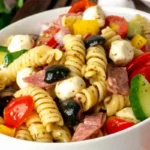
Zesty Italian-Style Pasta Salad
- Total Time: 22 minutes
- Yield: 12 servings 1x
- Diet: General
Description
A family-friendly dish featuring rotini noodles, beef salami, crisp vegetables, creamy mozzarella pearls, and a delicious homemade dressing.
Ingredients
- 16 oz rotini pasta
- 10 oz beef salami (chopped into ¼ inch pieces)
- 1 cup English cucumber (quartered and sliced)
- 2 cups grape tomatoes (halved)
- 1 ½ cups bell peppers (diced)
- ½ cup red onion (chopped)
- 8 oz black olives (drained and sliced)
- 8 oz fresh mozzarella pearls
- ½ cup parmesan cheese (shredded)
- ½ cup parsley (chopped)
- 1 ¼ cup olive oil
- 3 tbsp lemon juice (freshly squeezed)
- 1 ½ tbsp Italian seasoning
- 2 tsp sugar
- 3 tbsp red wine vinegar
- 2 tsp garlic (minced)
- 1 tsp Dijon mustard
- ½ tsp salt
- ½ tsp black pepper
Instructions
- Step 1: In a large pot, cook pasta according to the package directions on the box for al dente. Drain in a large colander and rinse with cold water to cool the pasta down.
- Step 2: Add olive oil, lemon juice, Italian seasoning, sugar, red wine vinegar, Dijon mustard, salt, and black pepper to a medium bowl. Whisk until well combined and set aside.
- Step 3: Add cooked pasta and the remaining pasta salad ingredients to a large bowl. Then pour dressing over the top. Mix until well combined!
- Step 4: Serve cold, and enjoy!
Notes
If you cannot find pearl-sized fresh mozzarella, you can substitute it with fresh mozzarella cut into small cubes. Beef pepperonis also make a tasty alternative to salami. For best results, make this dish a day ahead to let the flavors meld.
- Prep Time: 10 minutes
- Cook Time: 12 minutes
- Category: Side Dish
- Method: Mixing
- Cuisine: American
Nutrition
- Serving Size: 1 serving
- Calories: 557 kcal
- Sugar: 4 g
- Sodium: 1123 mg
- Fat: 39 g
- Saturated Fat: 10 g
- Unsaturated Fat: 28 g
- Trans Fat: 0 g
- Carbohydrates: 35 g
- Fiber: 3 g
- Protein: 17 g
- Cholesterol: 36 mg
Keywords: Italian Pasta Salad, Zesty Italian Pasta Salad Recipe