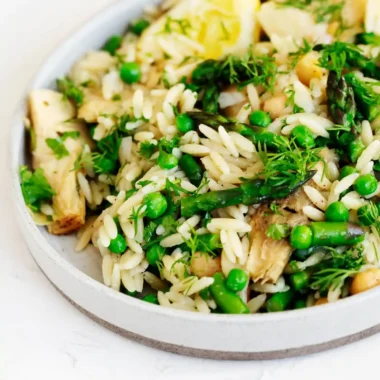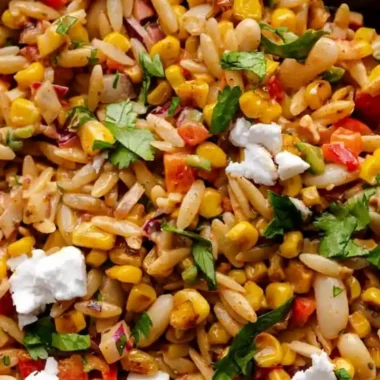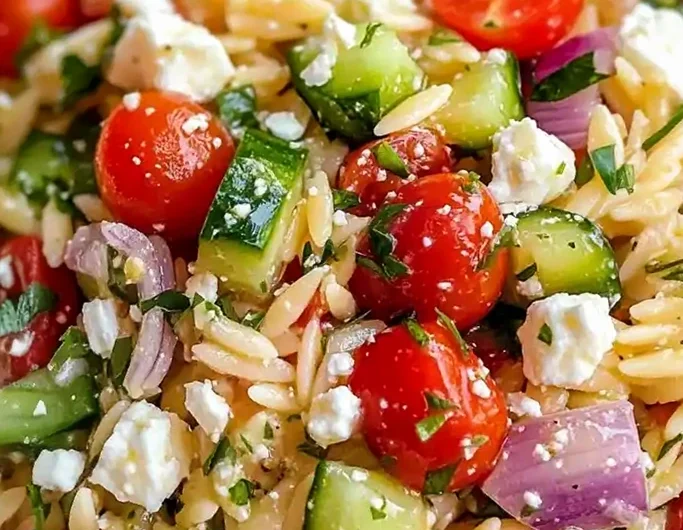
This lemon orzo pasta salad combines zesty citrus and crisp vegetables for a refreshing meal. It is an efficient choice for weekday lunches, meal prep, or a vibrant side dish for outdoor gatherings.
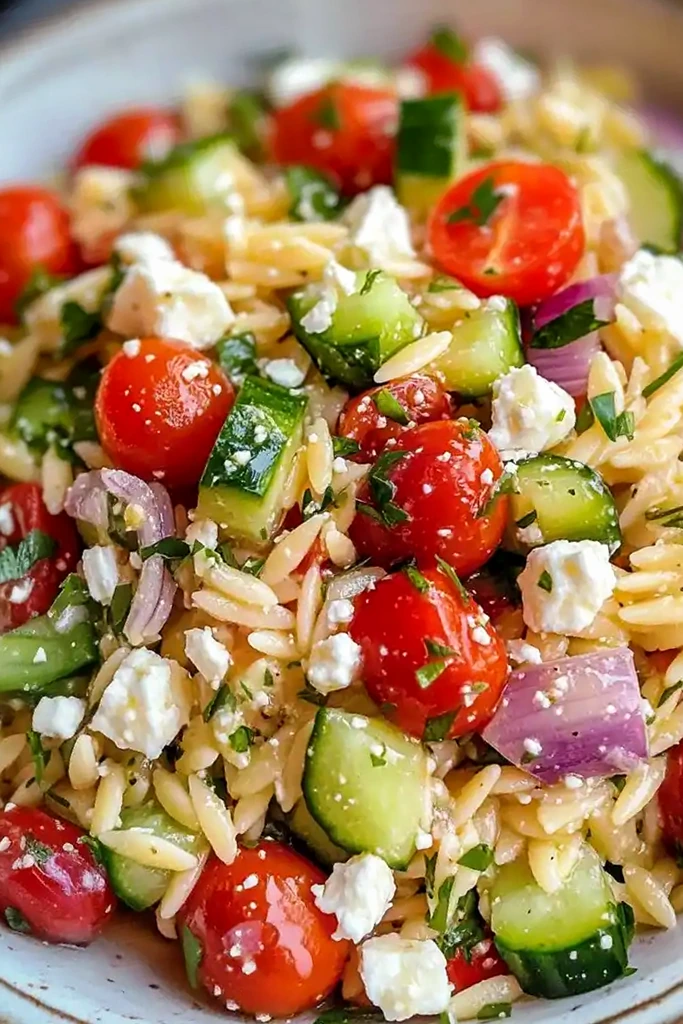
List of ingredients
- 1 cup dry orzo pasta – cooked al dente to maintain texture.
- 1 ½ cups cherry tomatoes – halved for better dressing distribution.
- 1 cup cucumber – diced into small, uniform pieces.
- ½ cup red bell pepper – diced for sweetness and crunch.
- ¼ cup red onion – finely chopped to balance the flavor.
- ⅓ cup crumbled feta cheese – use a microbial-rennet variety for suitability.
- 2 tablespoons fresh parsley – chopped for brightness.
- 2 tablespoons fresh dill – chopped, optional for a herbal note.
- 2 cups fresh spinach – roughly chopped, optional for added greens.
- ¼ cup extra-virgin olive oil – used for the base of the vinaigrette.
- 2 tablespoons fresh lemon juice – approximately one medium lemon.
- 1 teaspoon Dijon mustard – adds emulsification and tang.
- 1 teaspoon honey – or use maple syrup for a vegan option.
- 1 clove garlic – minced finely to avoid large chunks.
- Salt and pepper – added to taste for final seasoning.
step-by-step instructions
- Cook the Orzo: Bring a pot of salted water to a boil. Add 1 cup of orzo and cook until al dente, which usually takes 8–10 minutes. Drain the pasta and rinse it under cold water immediately to stop the cooking process and prevent sticking.
- Prepare the Vegetables: While the pasta is cooking, chop the cherry tomatoes, cucumber, red bell pepper, and red onion into bite-sized pieces. Chop the fresh parsley, optional dill, and optional spinach, and crumble the feta cheese.
- Make the Dressing: In a small bowl or a glass jar, whisk together the extra-virgin olive oil, fresh lemon juice, Dijon mustard, honey (or maple syrup), and minced garlic. Season the mixture with salt and pepper to taste.
- Combine the Salad: Place the cooked and cooled orzo in a large mixing bowl. Add the prepared vegetables, crumbled feta, and chopped herbs, then pour the dressing over the top. Toss all ingredients thoroughly until everything is evenly coated.
- Chill and Serve: Place the salad in the refrigerator for at least 30 minutes to allow the flavors to meld. Give the salad one final toss before serving, adding a small splash of olive oil or lemon juice if the pasta has absorbed too much dressing.
Essential Preparation Techniques
Cooking Orzo Al Dente to Prevent Mushiness
To achieve the best texture, ensure the orzo is not overcooked. Al dente pasta maintains a slight firmness that prevents the salad from becoming a soft mass after chilling. Carefully monitor the timer and test a piece of pasta a minute before the package directions suggest.
Rinsing the Pasta to Remove Excess Starch
Rinsing the cooked orzo under cold running water is a critical step for pasta salads. This process removes the surface starch that otherwise makes the pasta sticky. It also immediately drops the temperature, ensuring the fresh vegetables do not wilt when combined.
Chopping Vegetables into Uniform Pieces
Cutting the cucumbers, peppers, and onions into small, consistent cubes ensures that every bite contains a balanced variety of ingredients. Uniform pieces also allow the vinaigrette to coat the surface area of the vegetables more effectively. This prevents any single ingredient from dominating the texture of the dish.
Customization and Flavor Variations
Adding Kalamata Olives for Mediterranean Depth
For a more traditional Mediterranean profile, stir in a handful of pitted Kalamata olives. The briny, salty flavor of the olives complements the acidity of the lemon juice and the creaminess of the feta. This addition increases the complexity of the salad without requiring changes to the base dressing.
Using Mozzarella Pearls for an Italian Twist
If you prefer a milder cheese flavor, replace the feta with small mozzarella pearls. Combine this change with fresh basil instead of dill to create an Italian-inspired salad. This version is slightly creamier and pairs exceptionally well with sun-dried tomatoes.
Replacing Honey with Maple Syrup for Vegan Diets
To make this recipe entirely plant-based, substitute the honey with an equal amount of pure maple syrup. Maple syrup provides the necessary sweetness to balance the lemon juice without altering the overall flavor profile. You can also omit the feta or use a plant-based feta alternative.
Integrating Corn and Black Beans for a Southwestern Flavor
For a bolder taste, add canned black beans and sweet corn to the mixture. Replace the lemon juice with lime juice and add a pinch of cumin or chili powder to the dressing. This variation transforms the dish into a hearty, Southwestern-style pasta salad.
Incorporating Protein for Main Meals
Adding Grilled Chicken for a Hearty Main
Sliced grilled chicken breast is an excellent addition for those wanting a complete meal. Season the chicken with salt, pepper, and a hint of dried oregano before grilling. Let the chicken cool slightly before folding it into the salad to keep the vegetables crisp.
Adding Canned Chickpeas for Plant-Based Protein
Chickpeas provide a satisfying texture and a significant amount of protein for vegetarians. Rinse and drain a can of chickpeas thoroughly before adding them to the mixing bowl. This addition makes the salad more filling and adds an earthy contrast to the zesty lemon.
Combining Sautéed Shrimp for Seafood Variety
Garlic-sautéed shrimp pair perfectly with the lemon and dill flavors in this recipe. Ensure the shrimp are cooked through and chilled before adding them to the salad. This turns the side dish into an elegant lunch or a light dinner option.
Using Firm Tofu Cubes as a Meat Alternative
Pressed, extra-firm tofu cut into small cubes can be pan-seared or added raw for a neutral protein source. If searing, use a small amount of olive oil and salt to create a golden crust. Tofu absorbs the lemon vinaigrette well, making it a tasty option for vegan diets.
Storage and Freshness Guidelines
Using Airtight Containers to Preserve Flavor
Store the assembled salad in a high-quality airtight glass or plastic container. This prevents the salad from absorbing other odors from the refrigerator and keeps the vegetables from drying out. Properly sealed containers maintain the freshness of the herbs and the tang of the dressing.
Adding Fresh Greens Just Before Serving
If you are using spinach or arugula, add these greens immediately before serving rather than during the initial mixing. Fresh greens tend to wilt when exposed to the acidic lemon dressing over several hours. This keeps the salad looking vibrant and the greens tasting crisp.
Refreshing the Salad with Extra Dressing
Orzo pasta tends to absorb the dressing as it sits in the refrigerator. If the salad appears dry when you are ready to serve it, stir in a tablespoon of extra-virgin olive oil or a squeeze of fresh lemon juice. This restores the glossy finish and the zesty flavor profile.
Serving Suggestions and Pairings
Pairing with Grilled Salmon or Steak
The acidity of the lemon orzo salad cuts through the richness of grilled proteins like salmon or steak. Serve a generous scoop of the salad alongside the meat to balance the meal. The fresh vegetables act as a palate cleanser between bites of the savory protein.
Complementing Mediterranean-Style Wraps
This salad works well as a side for wraps filled with hummus, roasted red peppers, and grilled vegetables. The similar flavor profiles create a cohesive meal that feels light yet satisfying. It is an ideal combination for a healthy work lunch.
Serving with Hummus and Toasted Pita
For a platter-style appetizer, serve the orzo salad in a bowl surrounded by hummus and warm, toasted pita bread. This setup allows guests to scoop the salad and dip the pita, making it a great option for parties. Add a few extra lemon wedges on the side for additional zest.
Frequently Asked Questions
How to store the salad for maximum freshness?
Keep the salad in an airtight container in the refrigerator for up to 3 to 4 days. For the best results, store the dressing separately and toss it with the pasta and vegetables right before eating. If already mixed, simply stir in a bit of olive oil before serving to refresh the texture.
What is the best way to add protein?
The best way to add protein is to ensure the protein is cooked and cooled completely before adding it to the salad. This prevents the residual heat from wilting the spinach and softening the cucumbers. Stir the protein in gently at the end to maintain the integrity of the ingredients.
How to substitute fresh herbs with dried ones?
If fresh parsley or dill are unavailable, you can use dried alternatives, but use a smaller quantity. Use ½ teaspoon of dried parsley and ½ teaspoon of dried dill to replace the two tablespoons of fresh herbs. Dried herbs have a more concentrated flavor and do not provide the same visual brightness.
Can I use a different type of pasta?
While orzo is traditional for its rice-like shape, you can use small pasta shapes like ditalini or acini di pepe. Ensure the pasta is small enough to be easily scooped with the diced vegetables. Always follow the al dente cooking instructions regardless of the pasta shape chosen.
Print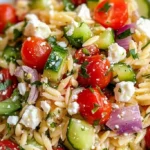
Zesty Lemon Orzo Pasta Salad
- Total Time: 25 minutes
- Yield: 6 servings 1x
- Diet: Vegetarian
Description
This Lemon Orzo Pasta Salad is a fresh, colorful, and zesty dish that’s perfect for any occasion—from weekday lunches to picnic spreads. Made with tender orzo pasta, crunchy vegetables, tangy feta, and a lemony vinaigrette, it comes together in under 30 minutes and holds up beautifully in the fridge.
Ingredients
- 1 cup dry orzo pasta
- 1 ½ cups cherry tomatoes (halved)
- 1 cup cucumber (diced)
- ½ cup red bell pepper (diced)
- ¼ cup red onion (finely chopped)
- ⅓ cup crumbled feta cheese
- 2 tablespoons fresh parsley (chopped)
- 2 tablespoons fresh dill (optional, chopped)
- 2 cups fresh spinach (roughly chopped (optional))
- ¼ cup extra-virgin olive oil
- 2 tablespoons fresh lemon juice
- 1 teaspoon Dijon mustard
- 1 teaspoon honey
- 1 clove garlic (minced)
- Salt and pepper (to taste)
Instructions
- Cook the Orzo: Bring a pot of salted water to a boil. Add 1 cup of orzo and cook until al dente, about 8–10 minutes. Drain and rinse under cold water to stop the cooking. Set aside.
- Prepare the Vegetables: While the orzo cooks, chop the cherry tomatoes, cucumber, red bell pepper, red onion, and optional spinach. Crumble the feta cheese and chop your herbs.
- Make the Dressing: In a small bowl or jar, whisk together the olive oil, lemon juice, Dijon mustard, honey, garlic, and a pinch of salt and pepper.
- Combine the Salad: In a large mixing bowl, combine the cooked orzo, all the chopped veggies, feta, and herbs. Pour the dressing over the top and toss well to coat.
- Chill and Serve: For best flavor, chill the salad in the refrigerator for at least 30 minutes. Before serving, give it a good toss. If needed, add a little more olive oil or lemon juice.
Notes
Store in an airtight container in the fridge for up to 3–4 days. Add delicate greens like spinach or arugula just before serving to keep them crisp.
- Prep Time: 15 minutes
- Cook Time: 10 minutes
- Category: Main Course, Salad, Side Dish
- Method: Mixing
- Cuisine: American, Mediterranean
Nutrition
- Serving Size: 1 serving
- Calories: 280 kcal
- Sugar: 6 g
- Sodium: 450 mg
- Fat: 12 g
- Saturated Fat: 3 g
- Unsaturated Fat: 9 g
- Trans Fat: 0 g
- Carbohydrates: 35 g
- Fiber: 4 g
- Protein: 8 g
- Cholesterol: 15 mg
Keywords: Orzo Pasta Salad, Salad recipes