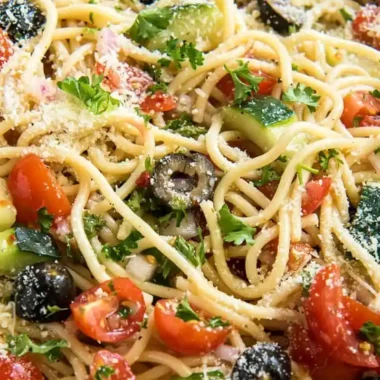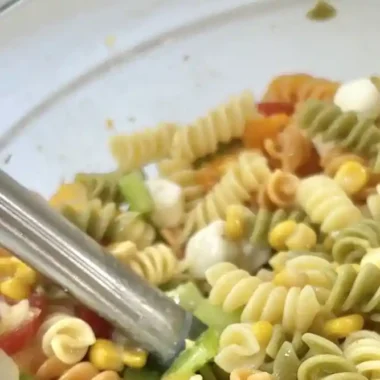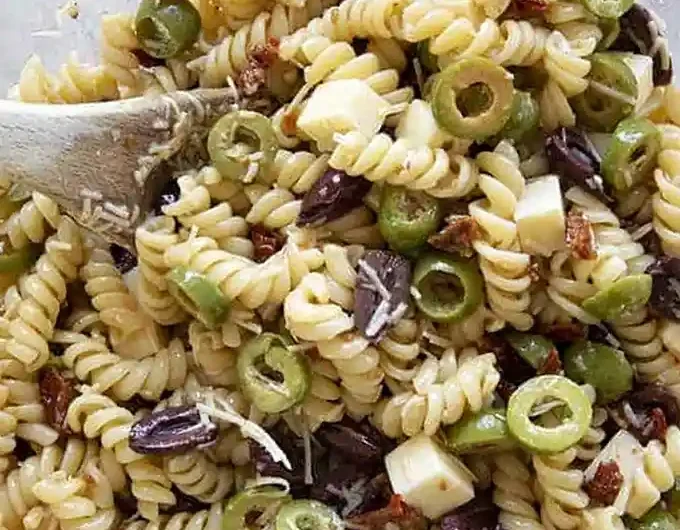
This Mediterranean-inspired pasta salad combines briny olives and savory cheeses for a refreshing side dish. It is an efficient recipe for meal prep or large gatherings due to its stability and flavor profile.
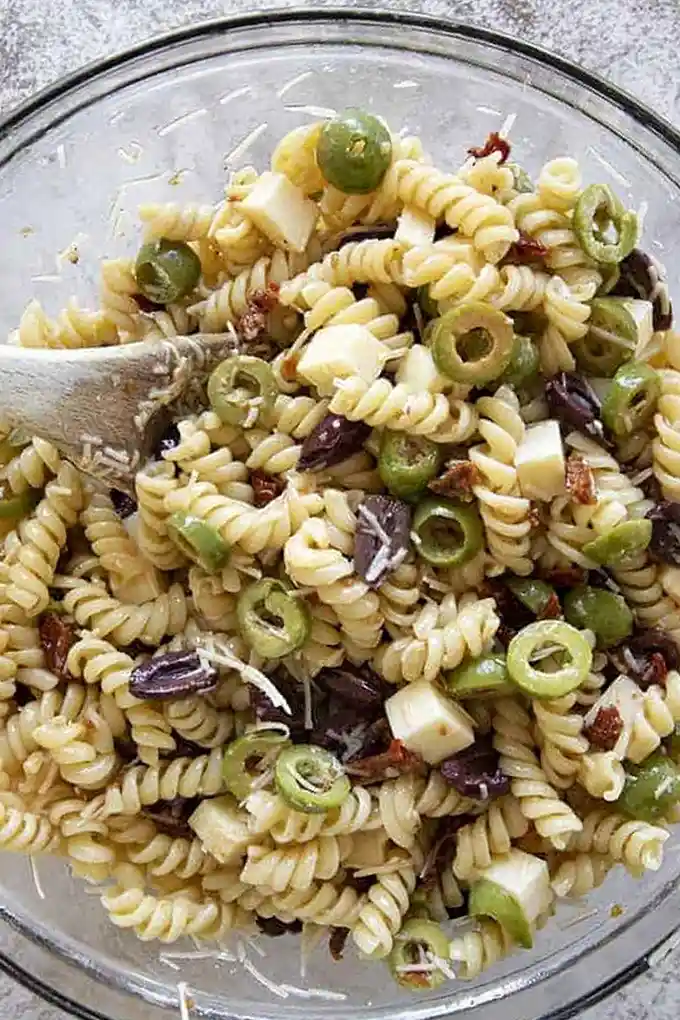
List of ingredients
- 16 Ounces Rotini – use a high-quality durum wheat variety for better structure.
- 1 Cup Pitted Sliced Castelvetranos Olives – known for their buttery, mild flavor.
- 1 Cup Pitted Sliced Kalamata Olives – provides a salty, fruity punch.
- 1/2 Cup Chopped Sun Dried Tomatoes – use the oil-packed variety for maximum flavor.
- 8 Ounces Mozzarella Cheese, cubed – ensure you use a microbial-rennet variety.
- 1/3 Cup Freshly Grated Parmesan Cheese – microbial-rennet version for a salty finish.
- 1/4 Cup Olive Oil – extra virgin is recommended for the best taste.
- 2 Tablespoons Sun Dried Tomato Oil – sourced directly from the sun-dried tomato jar.
- 2 Tablespoons Red Wine Vinegar – provides the necessary acidity.
- 2 Cloves Garlic, finely minced – fresh garlic is preferred over powdered.
- 1 teaspoon Dijon Mustard – acts as an emulsifier for the dressing.
- 1 teaspoon Honey – balances the saltiness of the olives.
- 1/2 teaspoon Red Pepper Flakes – adds a subtle heat.
- 1 Pinch Salt & Pepper – adjust to taste after the first mix.
step-by-step instructions
- Boil the Pasta: Cook the rotini according to the package directions. Once done, drain into a colander and rinse under cold water until the noodles are completely chilled to stop the cooking process.
- Combine Base Ingredients: Place the chilled rotini into a large mixing bowl. Add the sliced Castelvetrano olives, Kalamata olives, chopped sun-dried tomatoes, cubed mozzarella, and grated parmesan.
- Prepare the Vinaigrette: In a small bowl or a jar with a tight-fitting lid, combine olive oil, sun-dried tomato oil, red wine vinegar, minced garlic, Dijon mustard, honey, red pepper flakes, salt, and pepper. Shake vigorously for 30 seconds until the dressing is fully emulsified.
- Toss and Set: Pour the prepared dressing over the pasta mixture. Stir well to ensure every piece of pasta and vegetable is evenly coated.
- Chill and Serve: Place the salad in the refrigerator for 1-2 hours before serving. This allows the flavors to meld and the pasta to absorb the dressing.
Optimal Olive Selection
The Profile of Castelvetrano Olives
Castelvetrano olives are sourced from Sicily and are prized for their bright green color and mild, buttery taste. Unlike many green olives, they are not overly salty or acidic, making them a perfect balance to the bolder Kalamata olives. They add a creamy texture to the salad that complements the mozzarella cheese.
The Characteristics of Kalamata Olives
Kalamata olives are almond-shaped and deep purple, offering a more intense, vinegary, and fruity flavor profile. They provide the primary salty element of the dish, which is essential for cutting through the richness of the olive oil. Always ensure they are pitted and sliced to ensure consistent flavor distribution in every bite.
Suitable Olive Alternatives
If you cannot find these specific varieties, regular pimento-stuffed green olives and sliced black olives are acceptable substitutes. While the flavor will be less complex, the briny element will remain. For a more gourmet twist, you can use Manzanilla olives for a sharper tang.
Pasta Shape and Variety Options
Why Rotini is the Preferred Shape
Rotini is ideal for pasta salads because its spiral shape creates a high surface area. The twists and grooves effectively trap the dressing and small bits of garlic or herbs, ensuring you get a full flavor in every forkful. This prevents the dressing from simply pooling at the bottom of the bowl.
Alternative Pasta Shapes for Texture
Small shells are another excellent choice as they act as tiny scoops for the chopped sun-dried tomatoes and parmesan. Fusilli is very similar to rotini and works equally well. Avoid long noodles like spaghetti or linguine, as they are difficult to toss and do not hold the chunky ingredients together.
Dietary Pasta Substitutions
You can use chickpea or lentil pasta to increase the protein content and lower the glycemic index of the dish. Gluten-free brown rice pasta also works well, though it should be cooked slightly under al dente to prevent it from becoming too soft after absorbing the dressing. Always rinse these varieties thoroughly to remove excess starch.
Advanced Dressing Techniques
The Role of Sun-Dried Tomato Oil
Using the oil from the sun-dried tomato jar is a critical step for depth of flavor. This oil has already been infused with the concentrated essence of the tomatoes and herbs. It bridges the gap between the neutral olive oil and the sharp red wine vinegar, creating a more cohesive vinaigrette.
Emulsifying with Dijon Mustard
Dijon mustard does more than add flavor; it serves as an emulsifier. An emulsion is a mixture of two liquids that normally don’t mix, like oil and vinegar. The mustard helps bind them together, preventing the dressing from separating and ensuring a smooth, creamy coating on the pasta.
Balancing Acidity with Honey
Honey acts as a counterpoint to the high salt content of the olives and the acidity of the vinegar. A small amount of honey rounds out the sharp edges of the dressing without making the salad taste sweet. This balance is what creates a professional, restaurant-quality flavor profile.
Cheese Pairings and Modifications
Fresh Mozzarella vs. Low Moisture
Using cubed low-moisture mozzarella provides a firmer chew and a cleaner taste. If you prefer a creamier texture, fresh mozzarella pearls are a great alternative, although they may release a bit more moisture into the salad. Ensure the cheese is cut into uniform cubes to match the size of the olives.
Enhancing the Saltiness with Parmesan
Freshly grated parmesan provides an umami-rich finish that binds the ingredients together. Using a block of parmesan and grating it yourself ensures there are no anti-clumping agents (like cellulose) that can interfere with the dressing’s texture. It adds a sharp, crystalline saltiness that complements the olives.
Substituting with Feta Cheese
For a more traditional Greek flavor, you can replace the mozzarella with cubed feta cheese. Feta is significantly saltier and tangier, so if you make this switch, you should reduce the amount of added salt in the dressing. Feta also tends to crumble, adding a different textural dimension to the salad.
Storage and Freshness Guidelines
Using Airtight Containers
To maintain the quality of the salad, store it in a BPA-free airtight container. This prevents the salad from absorbing other odors from the refrigerator and keeps the olives from drying out. Proper sealing also ensures that the olive oil does not oxidize as quickly.
Maximum Refrigeration Period
This pasta salad can be stored in the refrigerator for up to five days. Because it is oil-based rather than mayo-based, it remains stable and safe for longer periods. However, the pasta may soften over time as it continues to absorb the liquid.
Refreshing Stored Pasta Salad
After a day or two, the pasta may appear dry because it has absorbed most of the dressing. To refresh the salad, stir in a tablespoon of olive oil or a teaspoon of red wine vinegar just before serving. This restores the glossy sheen and awakens the flavors.
Serving and Pairing Recommendations
Protein Pairings for a Full Meal
While this is a side dish, it can be turned into a main course by adding grilled chicken thighs or shrimp. The acidity of the salad cuts through the char of grilled meats perfectly. For a plant-based protein option, add grilled tofu or canned chickpeas.
Complementary Vegetable Sides
Serve this salad alongside roasted red peppers or a fresh cucumber salad. The coolness of cucumbers balances the richness of the olive oil. Adding a side of mixed baby greens with a light lemon vinaigrette also works well to lighten the overall meal.
Bread and Garnish Suggestions
Toasted garlic bread or warm focaccia are the best accompaniments for this dish. For a final touch, garnish the salad with freshly chopped parsley or basil. The fresh herbs add a bright, grassy note that contrasts with the salty olives.
Make-Ahead Preparation Strategies
Preparing the Dressing in Advance
The vinaigrette can be made up to one week before the salad. Store it in a sealed mason jar in the refrigerator. If the oil solidifies slightly due to the cold, simply let it sit at room temperature for ten minutes and shake it again before pouring.
Pre-Cooking the Pasta
You can cook and chill the pasta a day in advance. Toss the chilled noodles with a tiny bit of olive oil to prevent them from sticking together in a clump. Store them in a covered bowl until you are ready to add the vegetables and cheese.
The Importance of the Chilling Phase
Chilling the salad for 1-2 hours is not just about temperature; it is about infusion. During this time, the pasta absorbs the garlic, vinegar, and tomato oil. Serving the salad immediately often results in the dressing tasting separate from the ingredients.
Troubleshooting Common Issues
Fixing Dry Pasta Salad
If the salad seems too dry after chilling, it is likely because the rotini absorbed too much dressing. Fix this by whisking together a small amount of olive oil and red wine vinegar (in a 3:1 ratio) and stirring it in. Avoid adding just oil, as you need the acidity to keep the flavor balanced.
Reducing Excessive Saltiness
If the olives are particularly salty, the overall dish may taste over-seasoned. To counteract this, add a small amount of extra honey or a squeeze of fresh lemon juice. Adding a handful of fresh baby spinach or arugula can also dilute the saltiness through volume.
Preventing Mushy Pasta
Mushy pasta occurs when the noodles are overcooked or not rinsed properly. Always cook the pasta to al dente (firm to the bite) because it will soften further as it sits in the acidic dressing. Rinsing with cold water is mandatory to remove surface starch and stop the cooking process.
Frequently Asked Questions
Can I use frozen olives in this recipe?
No, frozen olives lose their cellular structure and become mushy upon thawing. Always use jarred or fresh olives from the deli bar to ensure the correct texture and briny flavor.
Can I substitute red wine vinegar with apple cider vinegar?
Yes, apple cider vinegar is a suitable substitute. It has a slightly fruitier, sweeter profile than red wine vinegar, which may slightly alter the taste but will still provide the necessary acidity.
Is this pasta salad suitable for freezing?
No, this salad should not be frozen. The mozzarella and parmesan cheeses will change texture, and the olive oil can separate or become cloudy, ruining the emulsion of the dressing.
How do I prevent the garlic from being too overpowering?
If you find raw garlic too pungent, you can sauté the minced garlic in the olive oil for 30 seconds before adding the other dressing ingredients. This mellows the flavor while still providing a garlic aroma.
} Print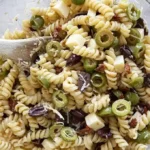
Savory Mediterranean Olive Pasta Salad
- Total Time: 30 minutes
- Yield: 8 servings 1x
- Diet: Vegetarian
Description
Amazing Olive Pasta Salad is loaded with Castelvetranos olives, kalamata olives, sun dried tomatoes, and two cheeses! A summery pasta salad is perfectly flavorful with the best dressing!
Ingredients
- 16 ounces rotini
- 1 cup pitted sliced Castelvetranos olives
- 1 cup pitted sliced Kalamata olives
- 1/2 cup chopped sun dried tomatoes
- 8 ounces mozzarella cheese, cubed
- 1/3 cup freshly grated parmesan cheese
- 1/4 cup olive oil
- 2 tablespoons sun dried tomato oil
- 2 tablespoons red wine vinegar
- 2 cloves garlic, finely minced
- 1 teaspoon dijon mustard
- 1 teaspoon honey
- 1/2 teaspoon red pepper flakes
- 1 pinch salt
- 1 pinch pepper
Instructions
- Step: Cook the rotini according to package directions. Drain into a colander, then rinse under cold water until the noodles are chilled.
- Step: Add the rotini to a bowl along with the olives, sun dried tomatoes, and cheeses.
- Step: For the dressing, combine all dressing ingredients in a small bowl or jar with a tight fitting lid. Shake for about 30 seconds until everything is well combined. Pour the dressing over the salad and stir well to coat.
- Step: For best results, chill the pasta salad for 1-2 hours before serving.
Notes
Castelvetranos and Kalamata olives are recommended for the best flavor, but can be substituted with regular green and black olives. Any pasta shape works, though rotini is preferred. This salad can be stored in the refrigerator for up to 5 days.
- Prep Time: 20 minutes
- Cook Time: 10 minutes
- Category: Side Dish
- Method: Mixing
- Cuisine: American
Nutrition
- Serving Size: 1 cup
- Calories: 378 kcal
- Sugar: 3 g
- Sodium: 303 mg
- Fat: 15 g
- Saturated Fat: 6 g
- Unsaturated Fat: 9 g
- Trans Fat: 0 g
- Carbohydrates: 44 g
- Fiber: 2 g
- Protein: 15 g
- Cholesterol: 26 mg
Keywords: olive pasta salad, summery side dish, Castelvetrano olives, Kalamata olives, Mediterranean style salad