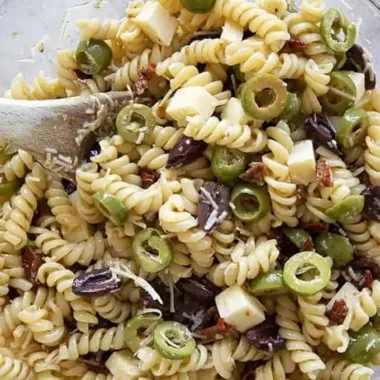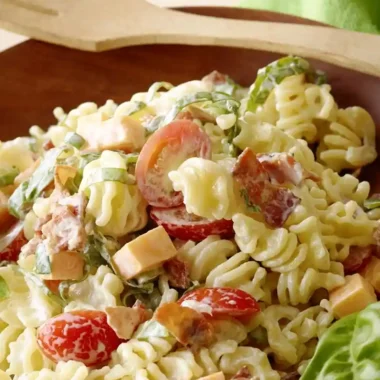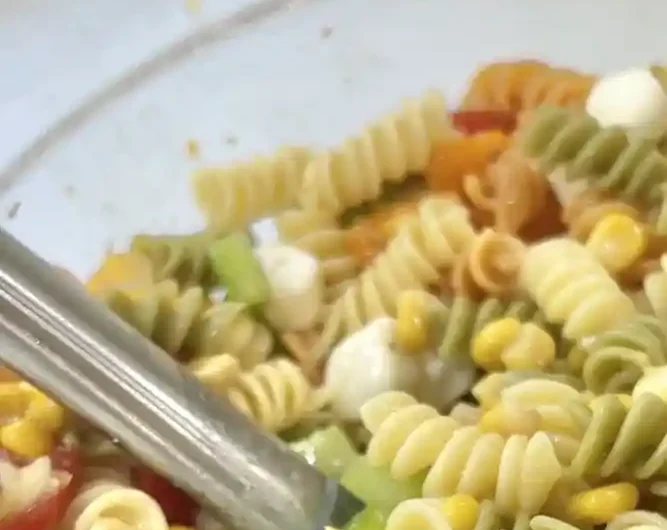
This colorful pasta salad is a nutritious and versatile option that children and adults alike will enjoy. It is an ideal choice for school lunch boxes, family picnics, or a quick weekday side dish.
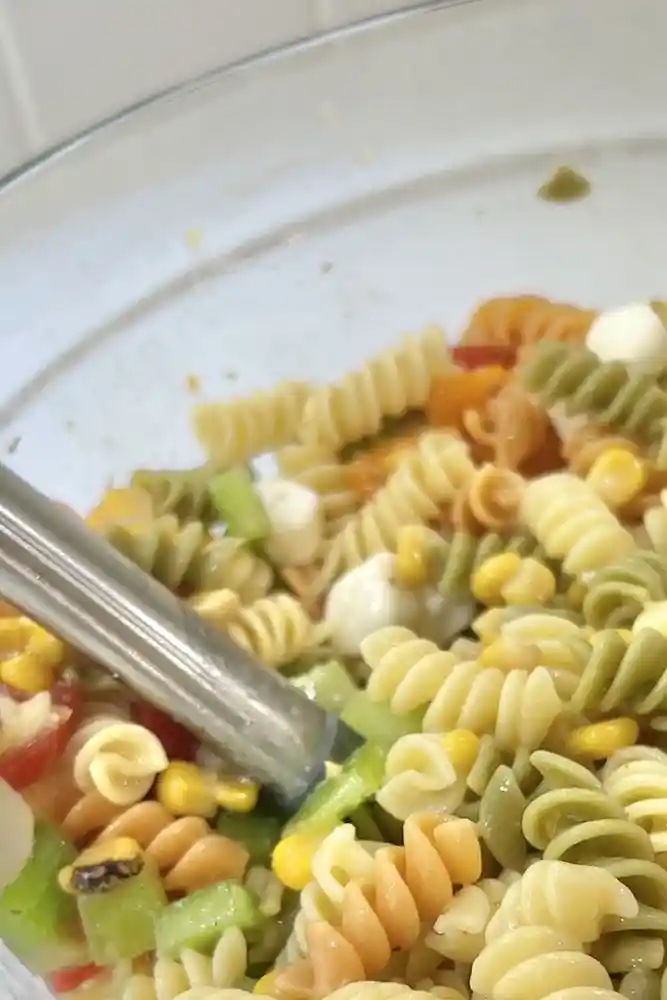
List of ingredients
- 1 box pasta, cooked and cooled – use rotini or bow-tie for best results.
- 1 pint cherry tomatoes, diced – ensure they are cut into small, kid-safe pieces.
- 1 green bell pepper – finely diced to integrate well with the pasta.
- 1 cup corn (canned or thawed frozen corn) – drained thoroughly.
- 8 oz fresh mozzarella pearls – kept whole or halved depending on child’s age.
- 1/2 cup Italian dressing (more or less to taste) – use a mild version for kids.
- 1-2 Tbsp olive oil (optional) – used to prevent the pasta from sticking.
step-by-step instructions
- Prepare the Pasta: Cook pasta according to the package instructions, then drain and cool. Stir in 1-2 Tbsp of olive oil to prevent the noodles from sticking together. Ensure the pasta is completely cooled before adding other ingredients to keep the mozzarella pearls from melting.
- Prepare the Vegetables: While the pasta is cooling, dice the cherry tomatoes and the green bell pepper into small, uniform pieces.
- Combine: Stir the cooked pasta, diced tomatoes, diced bell pepper, corn, mozzarella pearls, and Italian dressing together in a large mixing bowl.
- Chill: Place the salad in the refrigerator and chill for at least 2 hours. For the best flavor development, let it chill overnight.
Optimizing Your Pasta Selection
Rotini Pasta for Maximum Flavor
Rotini pasta is an excellent choice because its spiral shape is designed to trap the dressing in its grooves. This ensures that every bite is flavorful and that the dressing does not simply pool at the bottom of the bowl. The texture of rotini remains firm even after hours of chilling.
Bow-Tie Pasta for Visual Appeal
Farfalle, or bow-tie pasta, is often a favorite among children due to its unique and fun shape. While it does not hold as much dressing as spirals, it provides a satisfying chew. It also makes the salad look more festive and appealing on a plate.
Tri-Colored Pasta for Variety
Using tri-colored rotini or fusilli adds a vibrant visual element to the dish. The addition of spinach and tomato-based pastas introduces different colors without changing the flavor profile significantly. This is a great way to make the meal more exciting for picky eaters.
Whole Wheat Alternatives
For a more nutritious version, you can substitute refined pasta with whole wheat or chickpea pasta. These options provide more fiber and protein, which keeps children full longer. Be sure to cook them slightly less than the package directions to avoid them becoming too soft after marinating.
Vegetable Customization Ideas
Adding English Cucumbers
English cucumbers add a refreshing crunch and a mild flavor that pairs well with Italian dressing. To prevent the salad from becoming watery, slice the cucumbers into small cubes and remove the seeds. This keeps the salad crisp and prevents the dressing from thinning out.
Incorporating Shredded Carrots
Grated or shredded carrots add a natural sweetness and a bright orange color. Because they are soft, they are easy for toddlers to chew and blend seamlessly with the pasta. You can use pre-shredded carrots from the store to save preparation time.
Using Sliced Black Olives
Black olives provide a salty contrast to the sweet corn and tomatoes. Slice them into thin rings so they are easier for children to eat. This addition gives the salad a more Mediterranean flavor profile that adults will also appreciate.
Adding Frozen Peas
Frozen peas are a convenient way to add more greens to the salad. Simply thaw them under warm water or steam them briefly before adding them to the mix. Their soft texture and sweet taste are usually well-received by young children.
Alternative Cheese Options
Cubed Mild Cheddar
If your children prefer a stronger cheese flavor, substitute mozzarella pearls with small cubes of mild cheddar. Cheddar holds its shape well and adds a rich, creamy element to the dish. Ensure the cubes are very small to prevent choking hazards for toddlers.
Crumbled Feta Cheese
Feta cheese adds a tangy, salty punch that complements the Italian dressing perfectly. Since feta crumbles easily, it coats the pasta and vegetables more thoroughly than pearls. Use a mild feta to ensure the taste is not too overwhelming for children.
Shredded Mozzarella
For children who are sensitive to textures, shredded mozzarella is a great alternative to pearls. It blends into the pasta and creates a more uniform consistency. This is a helpful trick for kids who might pick out larger chunks of cheese.
Cubed Provolone
Provolone is another mild cheese that works well in cold salads. It has a slightly firmer texture than mozzarella but remains creamy. Cut it into tiny cubes to match the size of the diced vegetables.
Dressing Variations
Creamy Ranch Dressing
Many children prefer a creamy taste over a vinaigrette. Substituting Italian dressing with ranch creates a cooling, savory salad. This version pairs especially well with carrots and cucumbers if you choose to add them.
Honey Mustard Vinaigrette
A mixture of honey, mustard, and olive oil creates a sweet and zesty dressing. This is a great way to introduce children to more complex flavors while keeping the overall taste appealing. It pairs beautifully with the corn and mozzarella pearls.
Lemon and Olive Oil Blend
For a lighter, fresher taste, use a combination of fresh lemon juice, olive oil, and a pinch of salt. This simple dressing enhances the natural flavors of the fresh vegetables. It is a great option for those who find store-bought dressings too salty.
Homemade Italian Dressing
To control the sodium and sugar content, whisk together olive oil, red wine vinegar, dried oregano, and garlic powder. Homemade dressing often tastes fresher and avoids the preservatives found in bottled versions. You can adjust the acidity to suit your family’s preference.
Storage and Freshness Guidelines
Refrigeration Timeframes
This pasta salad can be stored in the refrigerator for up to four or five days. The flavors actually improve after the first 24 hours as the pasta absorbs the dressing. Keep the salad in a sealed container to prevent it from absorbing other fridge odors.
Using Airtight Glass Containers
Storing the salad in glass containers is preferable to plastic, as glass does not stain or hold onto smells. Airtight lids are essential to keep the vegetables crisp and prevent the pasta from drying out. Glass also makes it easier to see the colorful contents.
Refreshing the Dressing Before Serving
Over time, the pasta will absorb most of the dressing, which can make the salad seem dry. Before serving, stir in an extra tablespoon of Italian dressing or olive oil to bring back the gloss and moisture. This simple step restores the fresh taste of the dish.
Avoiding Freezer Storage
This recipe is not suitable for freezing. The fresh vegetables, such as tomatoes and cucumbers, will lose their structure and become mushy upon thawing. The mozzarella pearls may also change texture, becoming rubbery or grainy.
Serving Suggestions for Toddlers
Finger Food Portions
For toddlers, serve the pasta salad in small, manageable portions on a partitioned plate. This allows them to explore the different colors and textures without feeling overwhelmed. Use a small spoon or let them use their fingers to develop fine motor skills.
Pairing with Fresh Fruits
Balance the savory taste of the pasta salad by serving it alongside fresh fruit. Sliced grapes, melon chunks, or apple slices provide a sweet contrast. This creates a complete, balanced meal with carbohydrates, fats, proteins, and vitamins.
Using Colorful Bowls
Presenting the food in bright, colorful bowls can encourage reluctant eaters to try the salad. When the presentation is fun, children are more likely to be curious about the ingredients. You can even let them help choose the bowl for their meal.
Deconstructed Platter
Some children prefer their foods not to touch. In these cases, serve the pasta, cheese, and vegetables separately on a platter. This allows the child to pick and choose what they want to eat and prevents sensory overload.
Make-Ahead Strategies
The Benefit of Overnight Marination
Allowing the salad to sit overnight is the best way to ensure deep flavor. The acetic acid in the dressing tenderizes the vegetables and permeates the pasta. This results in a more cohesive taste than if the salad were eaten immediately.
Pre-Chopping Vegetables
You can dice the peppers and tomatoes a day in advance and store them in a container. However, avoid mixing them with the salt-heavy dressing until you are ready to assemble the salad. This prevents the vegetables from releasing too much water.
Bulk Pasta Preparation
Cook a large batch of pasta at the beginning of the week. Once cooled and oiled, it can be stored in the fridge for several days. This reduces the assembly time to just a few minutes when you need a quick lunch.
Troubleshooting Common Issues
Preventing Pasta from Clumping
If your pasta often sticks together, ensure you are using enough olive oil immediately after draining. Do not let the pasta sit in the colander for too long; transfer it to a bowl and toss with oil while it is still warm. This creates a lubricant layer that keeps the noodles separate.
Avoiding a Watery Salad
Watery pasta salad usually happens when vegetables are not drained properly. If using canned corn, rinse and pat it dry with a paper towel. For cherry tomatoes, ensure they are diced and any excess liquid is drained before adding them to the bowl.
Adjusting Bland Flavor
If the salad tastes bland after chilling, it is likely because the pasta absorbed the salt and seasoning. Add a small squeeze of fresh lemon juice or an extra splash of dressing. Stir well to redistribute the flavors throughout the entire mixture.
Fixing Overcooked Pasta
If the pasta becomes too soft, it can make the salad feel mushy. To avoid this, cook the pasta to ‘al dente’ (firm to the bite). Since the pasta continues to soften slightly as it absorbs the dressing in the fridge, undercooking it slightly is a professional secret.
Frequently Asked Questions
Can I use gluten-free pasta?
Yes, you can use any gluten-free pasta, such as corn, brown rice, or quinoa-based noodles. Simply follow the cooking instructions on the package. Be careful not to overcook them, as gluten-free pastas can break down more quickly than wheat pastas.
How long does it last in the fridge?
The salad stays fresh and safe to eat for 3 to 5 days when kept in an airtight container. If you notice the vegetables becoming too soft or the dressing separating, it may be time to discard it.
Can I add protein like chicken or chickpeas?
Absolutely. Adding grilled chicken breast, canned chickpeas, or diced turkey can turn this side dish into a full meal. Ensure any meat is fully cooked and completely cooled before adding it to the salad to maintain food safety.
Can this be made vegan?
Yes, you can make this vegan by replacing the mozzarella pearls with cubed firm tofu or a plant-based mozzarella alternative. Ensure the Italian dressing you use is free from honey or dairy products.
Print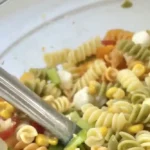
Easy Kid-Friendly Pasta Salad
- Total Time: 18 minutes
- Yield: 8 servings 1x
- Diet: Vegetarian
Description
An easy and delicious kid-friendly pasta salad recipe that’s perfect for the whole family.
Ingredients
- 1 box pasta, cooked and cooled
- 1 pint cherry tomatoes, diced
- 1 green bell pepper
- 1 cup corn (canned or thawed frozen corn)
- 8 oz fresh mozzarella pearls
- 1/2 cup Italian dressing
- 1–2 Tbsp olive oil (optional)
Instructions
- Cook: Cook pasta according to instructions, drain and cool. (I like to add 1-2 Tbsp of olive oil to avoid sticking). Cool to keep cheese from melting.
- Dice: While pasta is cooling, dice veggies.
- Mix: Stir all ingredients together. Chill 2 or more hours (best if chilled overnight).
Notes
This recipe is easy to customize based on your kid’s favorites. It is best served cold after chilling for at least two hours or overnight to let flavors marinate.
- Prep Time: 10 minutes
- Cook Time: 8 minutes
- Category: Lunch
- Method: Mixing
- Cuisine: American
Nutrition
- Serving Size: 1 serving
- Calories: 310 kcal
- Sugar: 6 g
- Sodium: 580 mg
- Fat: 12 g
- Saturated Fat: 5 g
- Unsaturated Fat: 7 g
- Trans Fat: 0 g
- Carbohydrates: 38 g
- Fiber: 4 g
- Protein: 11 g
- Cholesterol: 35 mg
Keywords: kid-friendly pasta salad, toddler meal ideas, easy lunch, make-ahead meal