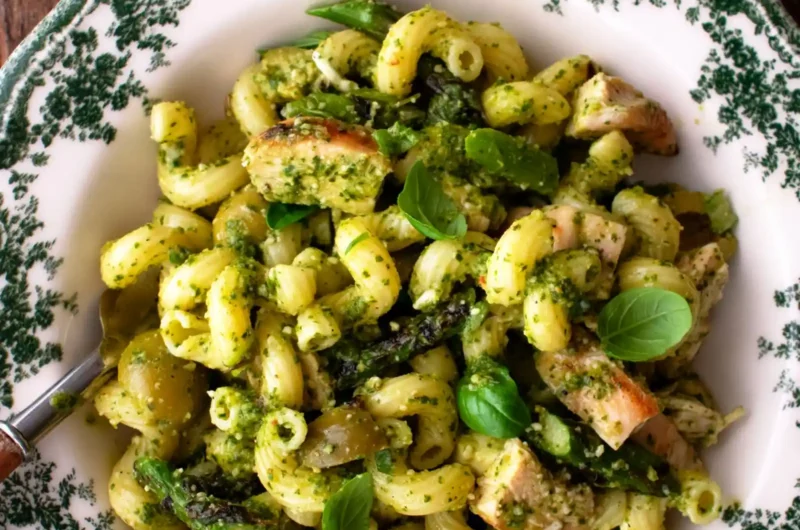
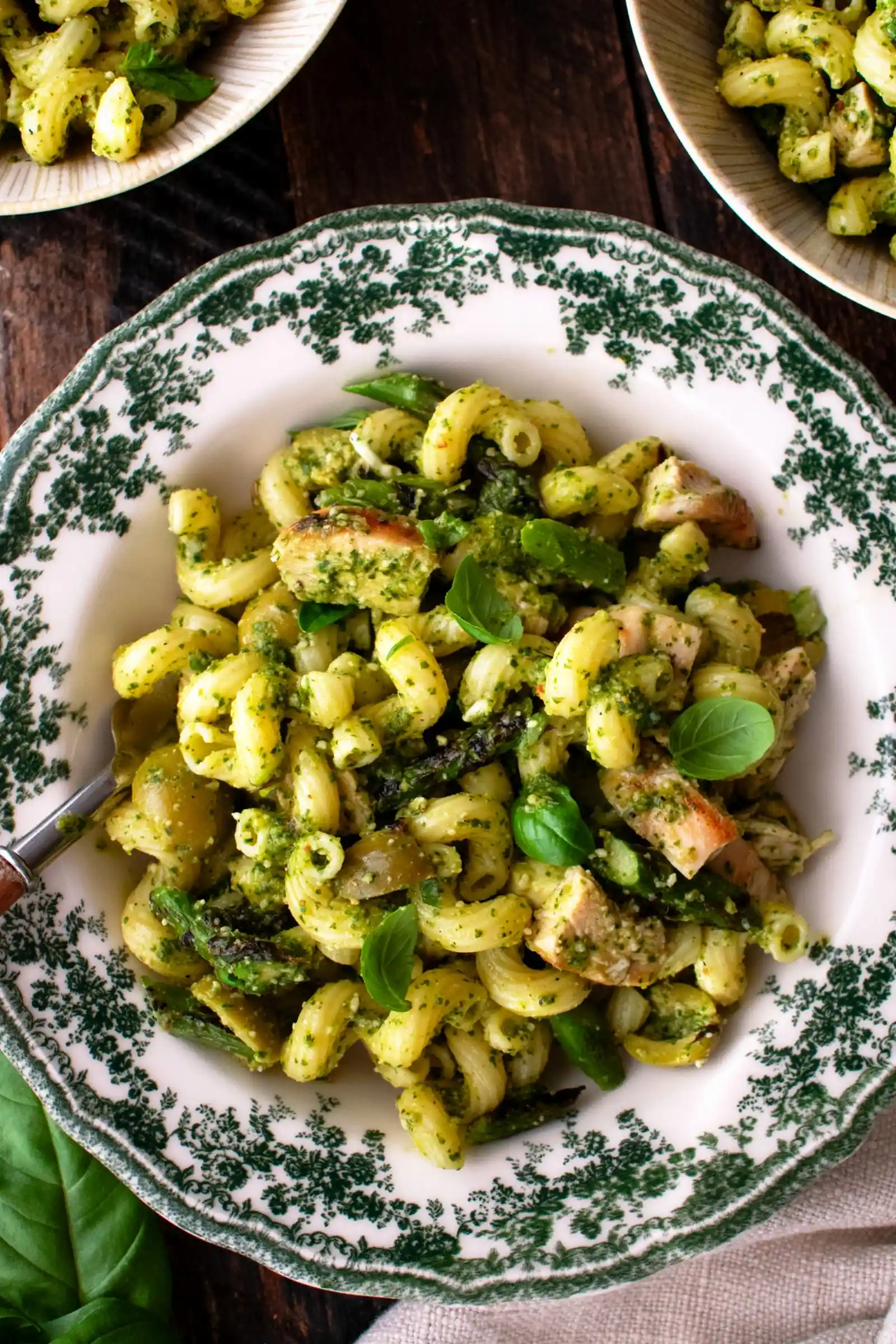
This vibrant pasta salad combines grilled chicken and charred asparagus with a zesty homemade pesto. It is an ideal dish for summer gatherings, providing a refreshing balance of savory and tangy flavors.
List of ingredients
- 1 ½ lbs boneless, skinless chicken breasts – cut into equal portions for even cooking.
- 2 garlic cloves, minced – used for the chicken marinade.
- ½ tsp crushed red pepper – adds a subtle heat to the meat.
- ½ tsp fennel seeds – provides a distinct aromatic flavor.
- ¼ cup olive oil – used to coat the chicken and transfer flavors.
- kosher salt, as needed – for seasoning both the meat and pasta water.
- 1 lb DeLallo Cavatappi Pasta – a corkscrew shape that holds sauce well.
- 1 lb fresh asparagus, ends trimmed – provides a fresh, seasonal crunch.
- 4 green onions – white and green parts separated, with greens thinly sliced.
- 1 lb fresh mozzarella (bocconcini), drained + quartered – adds creamy texture.
- 1 (5.3oz) jar DeLallo Pitted Castelvetrano Olives, halved – buttery and salty.
- 3 cups packed fresh basil leaves – the base for the aromatic pesto.
- 4 garlic cloves, roughly chopped – for the pesto dressing.
- ½ cup grated parmigiano reggiano cheese – adds a salty, nutty depth.
- ¼ cup pine nuts, toasted – enhances the pesto flavor.
- 1 tbsp honey – balances the lemon acidity.
- 1 tsp lemon zest – provides a bright citrus aroma.
- 1 lemon, juiced – adds tanginess to the dressing.
- 1 cup extra-virgin olive oil – creates the emulsion for the pesto.
step-by-step instructions
- Marinate the chicken: Add the chicken to a bowl with the garlic, crushed red pepper, fennel seeds, olive oil, and a good pinch of salt. Toss well to coat, cover, and refrigerate for at least an hour.
- Prepare the pesto: Add the basil, garlic, parmesan, pine nuts, honey, lemon zest, and lemon juice to the bowl of a food processor. Process until roughly chopped, then stream in the olive oil while running until combined. Season with salt to taste and refrigerate.
- Cook the pasta: Bring a large pot of heavily salted water to a boil. Drop the pasta and cook to al dente, then drain and rinse under cold water to cool immediately.
- Prep the grill: Preheat the grill with one side over high heat and the other over medium heat. Bring the marinated chicken to room temperature for 30 minutes before cooking.
- Grill the chicken: Oil the grill grates. Place chicken over high heat for 2-3 minutes per side to form a crust. Transfer to medium heat, close the grill, and cook for about 10 minutes, flipping halfway, until the internal temperature reaches 165°F. Let the meat rest on a cutting board.
- Grill the vegetables: Coat asparagus and the white parts of the green onions with olive oil. Grill over high heat until slightly charred and tender, turning often (1-2 minutes for onions, 4-5 minutes for asparagus). Transfer to the cutting board.
- Slice and chop: Slice the chicken across the grain into smaller pieces. Cut the asparagus into 1-inch pieces and roughly chop the grilled green onions.
- Assemble the salad: Combine the cooled pasta, chicken, asparagus, green onions, fresh mozzarella, olives, and pesto in a large bowl. Toss well to combine and serve at room temperature. Top with extra grated parmesan if desired.
Professional Grilling Techniques
Achieving a Perfect Chicken Sear
Start by grilling the chicken over high heat to trigger the Maillard reaction. This creates a caramelized brown crust that locks in juices and adds a smoky depth. Once the sear is achieved, moving the meat to medium heat ensures the center cooks without burning the exterior.
Managing Two-Zone Heat
Setting up a two-zone fire is essential for controlling the cooking process. The high-heat zone is used for the initial sear and charring the asparagus. The medium-heat zone allows the chicken to reach the safe internal temperature of 165°F without drying out.
The Importance of Resting Meat
Always let the grilled chicken rest for 5 to 10 minutes before slicing. This allows the muscle fibers to relax and the juices to redistribute throughout the meat. Slicing too early causes the juices to run out, resulting in a drier texture in the final salad.
Pesto Flavor Enhancements
Substituting Pine Nuts for Other Seeds
If pine nuts are unavailable or too expensive, toasted walnuts or slivered almonds are excellent alternatives. Walnuts provide an earthier, richer flavor, while almonds offer a cleaner, crunchier bite. Ensure any substitute is toasted in a dry pan first to release the natural oils.
Adjusting the Citrus Balance
The combination of lemon zest and juice provides a critical bright contrast to the heavy oils and cheese. If you prefer a more tart salad, add an extra squeeze of fresh lemon just before serving. The honey helps mellow this acidity to keep the flavor profile balanced.
Using Store-Bought Pesto Efficiently
For a faster preparation, you can use high-quality store-bought pesto. You will need approximately two 6oz jars to cover this volume of pasta and chicken. To make store-bought pesto taste fresher, stir in a teaspoon of fresh lemon zest and a pinch of salt.
Optimizing Pasta Texture
Why Cavatappi is the Best Choice
Cavatappi pasta is a corkscrew shape that is far superior to smooth pasta for salads. The twists and spirals act as traps for the pesto, ensuring that every single piece of pasta is coated in sauce. It also maintains a springy, firm texture even after being chilled.
The Role of Cold Water Rinsing
Unlike hot pasta dishes, pasta salad requires rinsing the noodles under cold water immediately after draining. This process stops the cooking process and removes excess surface starch. This prevents the pasta from clumping together into a gummy mass in the bowl.
Cooking to Precise Al Dente
Cook the pasta for one minute less than the package directions specify. The pasta will continue to soften slightly as it absorbs the pesto dressing and interacts with the warm grilled chicken. This ensures the salad retains a pleasant chew rather than becoming mushy.
Ingredient Selection Tips
Choosing the Right Olives
Castelvetrano olives are preferred for this recipe because they are mild, buttery, and less salty than Kalamata olives. Their bright green color also complements the basil pesto and fresh asparagus. Halving them allows the buttery flavor to integrate better into the pasta.
Selecting Quality Mozzarella
Use fresh bocconcini or ciliegine mozzarella for the best milky flavor and soft texture. Ensure the cheese is well-drained before quartering it to prevent excess moisture from thinning the pesto. Fresh mozzarella provides a cooling contrast to the charred elements of the dish.
Handling Fresh Basil Leaves
To prevent the basil from bruising or darkening, wash and dry the leaves thoroughly using a salad spinner. Water droplets in the food processor can cause the pesto to separate or become watery. Use the pulse setting to avoid overheating the leaves during processing.
Storage and Preservation
Maximum Refrigeration Life
Store the assembled pasta salad in an airtight glass container in the refrigerator. It will remain fresh and flavorful for approximately 3 to 5 days. Using glass helps prevent the pesto from absorbing other odors present in the fridge.
Reviving the Salad Before Serving
Pasta tends to absorb dressing over time, which can make the salad seem dry on the second or third day. To revive it, stir in a tablespoon of extra-virgin olive oil and a squeeze of lemon juice. This restores the glossy appearance and freshens the taste.
The Ideal Serving Temperature
While stored in the fridge, this salad is best served at room temperature. Cold temperatures can mute the delicate flavors of the basil and solidify the fats in the olive oil. Let the salad sit on the counter for 30 minutes before serving to maximize the aroma.
Troubleshooting Common Issues
Fixing Separated Pesto
If your homemade pesto looks separated or grainy, it is likely due to the oil not emulsifying with the basil. To fix this, add a teaspoon of warm water or a small amount of extra olive oil and pulse it again in the food processor. This will bring the creamy consistency back.
Preventing Mushy Asparagus
Asparagus can overcook very quickly on a hot grill, turning from tender to mushy in seconds. To avoid this, ensure the grill is very hot and cook the spears quickly while turning them often. They should retain a slight snap when bitten into.
Avoiding Dry Grilled Chicken
Dry chicken usually results from grilling over high heat for too long. By utilizing the two-zone method, you ensure the outside is seared while the inside cooks gently. Using a meat thermometer to hit exactly 165°F is the most reliable way to keep the meat juicy.
Frequently Asked Questions
Can I make this without a grill?
Yes, you can use a cast-iron grill pan on the stove or a broiler in the oven. Sauté the chicken in a skillet over medium-high heat until browned and cooked through, and sear the asparagus in the same pan for a similar charred effect.
Is this recipe suitable for meal prep?
This is an excellent meal prep option. To keep the ingredients at their peak, you can store the grilled chicken and vegetables separately and toss them with the pasta and pesto on the day you plan to eat.
How do I prevent the mozzarella from melting?
Make sure that the grilled chicken and charred asparagus have cooled down significantly before adding them to the pasta. If the ingredients are too hot, they will melt the fresh mozzarella, turning it gooey rather than keeping it in clean quarters.
Print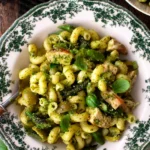
Grilled Chicken and Asparagus Pesto Pasta Salad
- Total Time: 2 hours
- Yield: 12 servings 1x
- Diet: General
Description
A pesto pasta salad with grilled chicken, charred asparagus & green onions, fresh mozzarella, castelvetrano olives, and basil pesto dressing
Ingredients
- 1 ½ lbs boneless, skinless chicken breasts
- 2 garlic cloves, minced
- ½ tsp crushed red pepper
- ½ tsp fennel seeds
- ¼ cup olive oil
- kosher salt, as needed
- 1 lb Cavatappi Pasta
- 1 lb fresh asparagus, ends trimmed
- 4 green onions, white and green parts separated + greens thinly sliced
- 1 lb fresh mozzarella (bocconcini), drained + quartered
- 1 (5.3oz) jar Pitted Castelvetrano Olives, halved
- 3 cups packed fresh basil leaves
- 4 garlic cloves, roughly chopped
- ½ cup grated microbial-rennet parmigiano reggiano cheese
- ¼ cup pine nuts, toasted
- 1 tbsp honey
- 1 tsp lemon zest
- 1 lemon, juiced
- 1 cup extra-virgin olive oil
Instructions
- Step 1: Add the chicken to a bowl with the garlic, crushed red pepper, fennel seeds, olive oil, and a good pinch of salt. Toss well to coat. Cover and refrigerate for at least an hour.
- Step 2: Add the basil, garlic, parmesan, pine nuts, honey, lemon zest, and lemon juice to the bowl of a food processor. Process until roughly chopped. With the processor running, stream in the olive oil until combined. Season with salt to taste. Refrigerate until ready to use.
- Step 3: Bring a large pot of heavily salted water to a boil. Drop the pasta and cook to al dente. Drain and rinse under cold water to cool.
- Step 4: Preheat the grill with one side over high heat and the other side over medium heat. Bring the chicken to room temperature and let sit for 30 minutes.
- Step 5: Oil the grates of the grill. Place the chicken onto the grill over high heat. Cook for about 2-3 minutes per side until a crust forms. Transfer the chicken to medium heat. Close the grill and cook for about 10 minutes, flipping the chicken halfway through (the chicken should reach an internal temperature of 165°F – continue cooking if needed). Transfer the chicken to a cutting board and let it rest.
- Step 6: Coat the asparagus and green onions (white parts) with a drizzle of olive oil. Place them onto the high section of the grill and cook until slightly charred and tender, turning often (approximately 1-2 minutes for the green onions and 4-5 minutes for the asparagus). Transfer both to the cutting board.
- Step 7: Slice the chicken across the grain, and then cut it into smaller pieces. Cut the asparagus into 1” pieces and roughly chop the green onions.
- Step 8: Combine the pasta, chicken, asparagus, green onions, fresh mozzarella, olives, and pesto in a large bowl. Toss well to combine. Serve at room temperature. Top with more grated parmesan if desired.
Notes
If you want to use store-bought pesto, you will need 2 (6oz) jars for a full batch of pasta salad.
- Prep Time: 1 hour 30 minutes
- Cook Time: 30 minutes
- Category: Salads
- Method: Grilling
- Cuisine: Italian
Nutrition
- Serving Size: 1 serving
- Calories: 680 kcal
- Sugar: 6 g
- Sodium: 820 mg
- Fat: 44 g
- Saturated Fat: 13 g
- Unsaturated Fat: 31 g
- Trans Fat: 0 g
- Carbohydrates: 46 g
- Fiber: 5 g
- Protein: 34 g
- Cholesterol: 95 mg
Keywords: pesto pasta salad, grilled chicken, asparagus, summer salad, Cavatappi, mozzarella