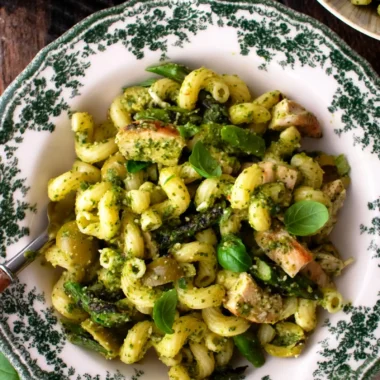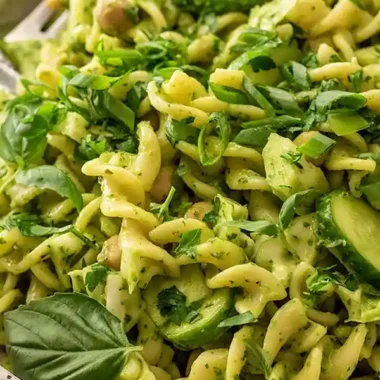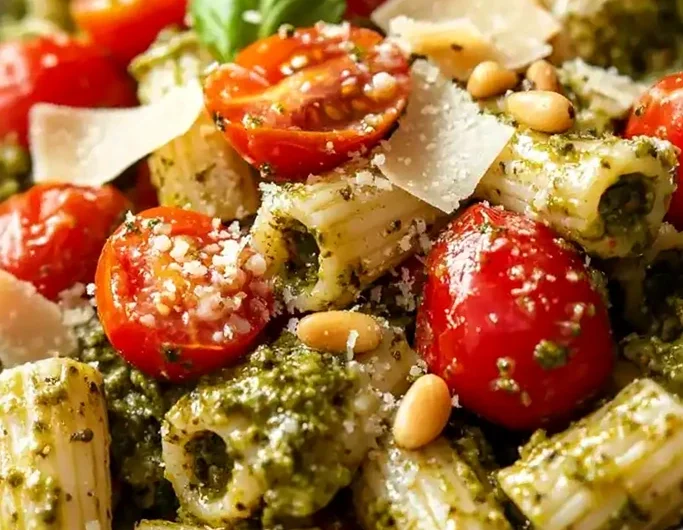
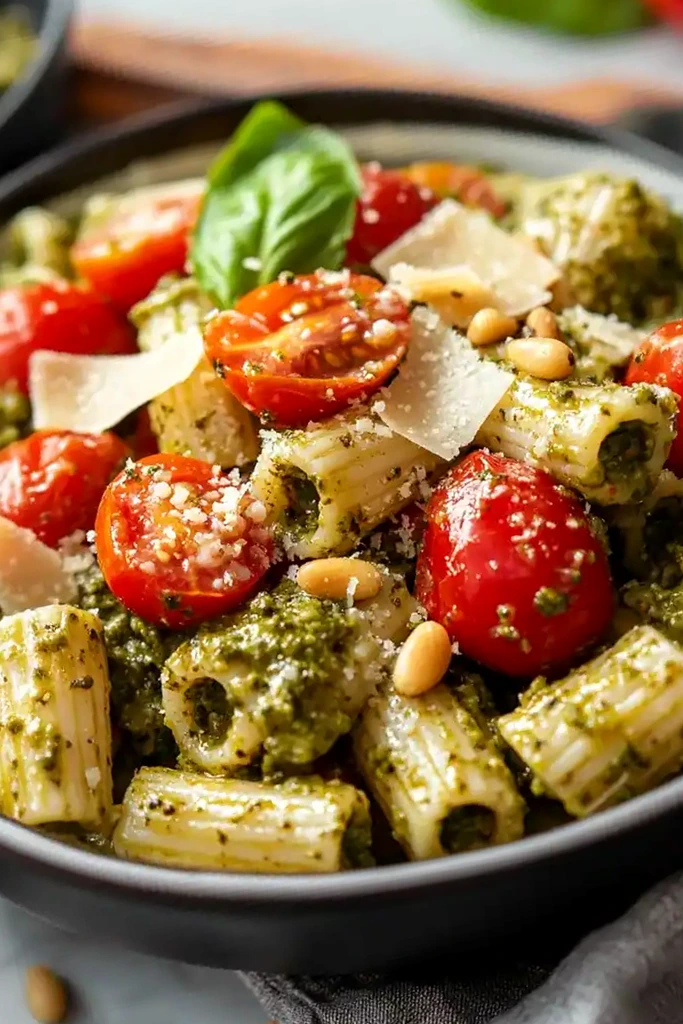
This vibrant pasta dish combines the fresh, herbaceous flavor of homemade pesto with the sweetness of oven-roasted cherry tomatoes. It is a simple yet sophisticated meal that works equally well for a fast weeknight dinner or a planned gathering.
List of ingredients
- 12 oz (340g) pasta – rigatoni or penne are recommended for better sauce adhesion.
- 2 cups fresh basil leaves – packed tightly for a rich, herby base.
- 1/2 cup (60g) pine nuts – can be substituted with walnuts or cashews for a different nutty profile.
- 1 clove garlic – used raw in the pesto for a sharp, fresh bite.
- 1/2 cup (45g) Parmesan cheese – freshly grated, using a microbial-rennet variety.
- 1/2 cup (120ml) olive oil – extra virgin olive oil provides the best flavor for the sauce.
- 1 tbsp (15ml) olive oil – used specifically for coating the tomatoes before roasting.
- 2 cups (250g) cherry tomatoes – sliced in half to allow for better caramelization.
- Salt – used to taste for seasoning both the pasta water and the sauce.
- Pepper – freshly ground black pepper for added warmth.
- 2 cloves garlic – optional addition to the roasting pan for aromatic depth.
step-by-step instructions
- Roast the Tomatoes: Preheat your oven to 400°F (200°C). Place the halved cherry tomatoes on a baking sheet, drizzle with 1 tablespoon of olive oil, and season with salt and pepper. Add two whole garlic cloves if desired, then roast for 20-25 minutes until the tomatoes are soft and the edges are caramelized.
- Prepare the Pesto: While the tomatoes roast, place the fresh basil, pine nuts, one garlic clove, and grated Parmesan into a food processor. Turn the processor on and slowly stream in the 1/2 cup of olive oil until the mixture is smooth. Taste the pesto and add more salt, pepper, or cheese if necessary.
- Cook the Pasta: Bring a large pot of heavily salted water to a boil. Add the pasta and cook according to the package directions until it reaches an al dente texture. Before draining, reserve 1/2 cup of the starchy pasta water.
- Combine the Pasta and Pesto: Return the drained pasta to the pot over low heat. Immediately stir in the fresh pesto, adding the reserved pasta water a tablespoon at a time to create a smooth, creamy emulsion that coats every piece of pasta.
- Add the Roasted Tomatoes: Gently fold the caramelized roasted tomatoes into the pasta. Use a light hand to ensure the tomatoes remain whole and do not break apart, preserving their juicy centers.
- Serve and Garnish: Divide the pasta into bowls and garnish with extra fresh basil leaves, a sprinkle of Parmesan shavings, and toasted pine nuts for added crunch.
Professional Cooking Tips
Toasting Pine Nuts for Enhanced Flavor
Toasting the pine nuts before adding them to the food processor significantly deepens the flavor profile. Place the nuts in a dry skillet over medium heat for 3-5 minutes, stirring constantly until they are golden brown. This process releases the natural oils and adds a toasted, buttery dimension to the pesto.
Selecting the Ideal Pasta Shape
While any pasta works, shapes with ridges, such as rigatoni or fusilli, are superior for this recipe. The ridges and hollow centers trap the chunky pesto and smaller bits of roasted tomato. This ensures a balanced ratio of sauce to pasta in every single bite.
Preventing Pesto Oxidation
Basil is highly susceptible to oxidation, which can turn a bright green pesto brown. To prevent this, ensure the basil is processed quickly and stored with a thin layer of olive oil on top. The oil acts as a barrier that prevents oxygen from reaching the basil leaves.
Balancing Garlic Intensity
The raw garlic in the pesto provides a sharp contrast to the sweet tomatoes, but it can be overpowering for some. If you prefer a milder taste, you can lightly sauté the garlic clove before blending it into the sauce. This removes the raw bite while retaining the aromatic essence of the garlic.
Ingredient Substitutions
Nut-Free Pesto Alternatives
For those with nut allergies, you can replace pine nuts with toasted sunflower seeds or pumpkin seeds. These seeds provide a similar texture and a mild, nutty flavor without the risk of allergens. Alternatively, a small amount of nutritional yeast can add a similar savory depth.
Dairy-Free Cheese Options
To make this dish vegan or dairy-free, replace the Parmesan with an equal amount of nutritional yeast or a store-bought vegan Parmesan alternative. Nutritional yeast provides a salty, cheesy flavor and helps thicken the sauce. You can also add a squeeze of lemon juice to mimic the acidity of aged cheese.
Using Different Tomato Varieties
If cherry tomatoes are unavailable, grape tomatoes are an excellent one-to-one substitute. For a heartier version, you can use Roma tomatoes cut into small quarters. Note that larger tomatoes release more water, so you may need to roast them for an additional 5-10 minutes to achieve the same caramelization.
Fresh vs. Dried Basil
Fresh basil is essential for the vibrant color and peppery taste of classic pesto. Dried basil cannot be used as a direct substitute in the blender as it lacks the moisture and aromatic oils needed for the emulsion. If you only have dried herbs, it is better to make a garlic-oil sauce and stir in the dried herbs at the end.
Serving and Presentation Ideas
Pairing with Fresh Greens
A crisp side salad with a light lemon vinaigrette complements the richness of the pesto. Use arugula or baby spinach to provide a peppery contrast to the sweet roasted tomatoes. This addition balances the meal and adds a refreshing element to the plate.
Adding Grilled Protein
To make this a more filling meal, serve the pasta alongside grilled chicken breast or sautéed shrimp. The herby notes of the pesto pair perfectly with lean proteins. Simply season the meat with salt, pepper, and a touch of olive oil before grilling.
Complementary Bread Options
Warm garlic bread or a toasted focaccia is ideal for scooping up any remaining pesto and tomato juices from the bowl. Brush the bread with melted butter and garlic powder before toasting it in the oven. This adds a crunchy texture that contrasts well with the soft pasta.
Plating for Guests
For a professional presentation, use wide, shallow bowls and swirl the pasta into a mound in the center. Place the roasted tomatoes strategically on top and finish with a drizzle of high-quality extra virgin olive oil. A final sprinkle of coarse sea salt can highlight the flavors of the fresh basil.
Storage and Reheating Guide
Refrigerating Pesto Pasta
Store leftover pasta in an airtight container in the refrigerator for up to three days. Because pesto is oil-based, the pasta may absorb the sauce as it sits, making it appear drier. To maintain quality, ensure the container is completely sealed to prevent the basil from oxidizing further.
Best Methods for Reheating
Avoid reheating pesto pasta in the microwave on high heat, as this can cause the oil to separate and the basil to lose its color. Instead, reheat in a skillet over medium-low heat. Add a tablespoon of water or olive oil to loosen the sauce and restore its creamy consistency.
Freezing the Pesto Sauce
If you make a large batch of pesto, you can freeze it in ice cube trays for future use. Once frozen, transfer the cubes to a freezer bag. To use, simply drop a frozen cube into a pan of hot pasta; the heat will melt the pesto and integrate it into the dish perfectly.
Transforming Leftovers
Cold pesto pasta can be transformed into a refreshing pasta salad. Add halved olives, diced cucumbers, and extra cherry tomatoes to the chilled leftovers. This creates a different meal entirely and is perfect for lunches or picnics.
Troubleshooting Common Issues
Fixing a Too-Thick Pesto
If your pesto is too thick or paste-like, it may be due to a high ratio of cheese and nuts to oil. Gradually stir in one teaspoon of olive oil at a time until the desired consistency is reached. If you are already mixing it with pasta, use the reserved pasta water to thin the sauce.
Preventing Burnt Garlic
When roasting tomatoes with garlic cloves, the garlic can burn if it is too small or exposed to direct heat. Keep the garlic cloves whole and tucked slightly under the tomatoes to protect them. This allows them to soften and become sweet without charring.
Managing Overcooked Pasta
If the pasta is slightly overcooked, avoid stirring it too vigorously when adding the pesto. Overcooked pasta is fragile and can break or become mushy if handled roughly. Gently fold the sauce and tomatoes in using a silicone spatula to keep the pasta intact.
Correcting Too-Salty Sauce
If the combination of Parmesan and salt makes the dish too salty, add a squeeze of fresh lemon juice. The acidity of the lemon cuts through the saltiness and brightens the overall flavor. Alternatively, adding a handful of fresh, unsalted spinach can help balance the taste.
Frequently Asked Questions
Can I use store-bought pesto?
Yes, you can use a high-quality store-bought pesto if you are short on time. However, homemade pesto typically has a more vibrant color and a fresher taste. If using store-bought, you can still roast your own tomatoes to elevate the dish.
How do I keep the pesto bright green?
The best way to maintain the green color is to blanch the basil leaves for 5-10 seconds in boiling water and then immediately plunge them into an ice bath before blending. This stops the enzymes that cause browning and locks in the chlorophyll.
Which olive oil is best for this recipe?
Extra virgin olive oil is highly recommended for the pesto because it provides a fruity, peppery flavor. For roasting the tomatoes, a standard refined olive oil or a blend is acceptable as it can withstand the oven’s heat without smoking.
Can I roast the tomatoes in advance?
Yes, you can roast the tomatoes up to 24 hours in advance and store them in the fridge. When you are ready to serve, simply fold them into the hot pasta. The residual heat from the pasta will warm the tomatoes through without overcooking them.
Print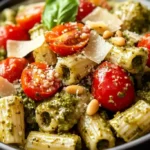
Pesto Pasta with Roasted Tomatoes
- Total Time: 40 minutes
- Yield: 4 servings 1x
- Diet: Vegetarian
Description
This Pesto Pasta with Roasted Tomatoes combines fresh, herby pesto with sweet, caramelized roasted tomatoes and al dente pasta. It’s a quick, easy, and flavorful dish that’s perfect for a busy weeknight or a leisurely weekend dinner.
Ingredients
- 12 oz (340g) pasta (rigatoni, or other)
- 2 cups fresh basil
- 1/2 cup (60g) pine nuts
- 1 clove garlic
- 1/2 cup (45g) microbial-rennet Parmesan cheese
- 1/2 cup (120ml) olive oil
- 1 tbsp (15ml) olive oil
- 2 cups (250g) cherry tomatoes
- Salt to taste
- Pepper to taste
- 2 cloves garlic (optional)
Instructions
- Roast the Tomatoes: Preheat your oven to 400°F (200°C). Slice the cherry tomatoes in half and place them on a baking sheet. Drizzle the tomatoes with 1 tbsp olive oil, then season with salt and pepper. Optionally, add 2 whole garlic cloves for more flavor. Roast in the oven for 20-25 minutes until the tomatoes are soft and caramelized.
- Prepare the Pesto: While the tomatoes are roasting, make the pesto. In a food processor, combine the fresh basil, pine nuts, garlic clove, and Parmesan cheese. Gradually add the olive oil while blending until the pesto reaches a smooth consistency. Taste and adjust seasoning with salt, pepper, or additional cheese if desired.
- Cook the Pasta: Bring a large pot of salted water to a boil and cook your pasta according to the package directions. Once cooked, reserve 1/2 cup of pasta water, then drain the pasta.
- Combine the Pasta and Pesto: Return the pasta to the pot and immediately toss with the freshly made pesto. Add the reserved pasta water as needed to help coat the pasta evenly with the pesto.
- Add the Roasted Tomatoes: Gently fold the roasted tomatoes into the pesto-coated pasta. Be careful not to break them apart too much.
- Serve and Garnish: Serve the pesto pasta in individual bowls, garnishing with fresh basil leaves, extra grated Parmesan, and toasted pine nuts if desired.
Notes
You can swap pine nuts for walnuts or cashews for a variation. Use vegan Parmesan or gluten-free pasta to fit dietary needs.
- Prep Time: 10 minutes
- Cook Time: 30 minutes
- Category: Main Course
- Method: Roasting
- Cuisine: Italian
Nutrition
- Serving Size: 1 serving
- Calories: 475 kcal
- Sugar: 6 g
- Sodium: 580 mg
- Fat: 28 g
- Saturated Fat: 7 g
- Unsaturated Fat: 21 g
- Trans Fat: 0 g
- Carbohydrates: 42 g
- Fiber: 5 g
- Protein: 14 g
- Cholesterol: 20 mg
Keywords: Pesto Pasta with Roasted Tomatoes