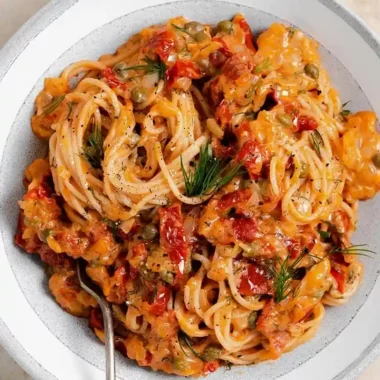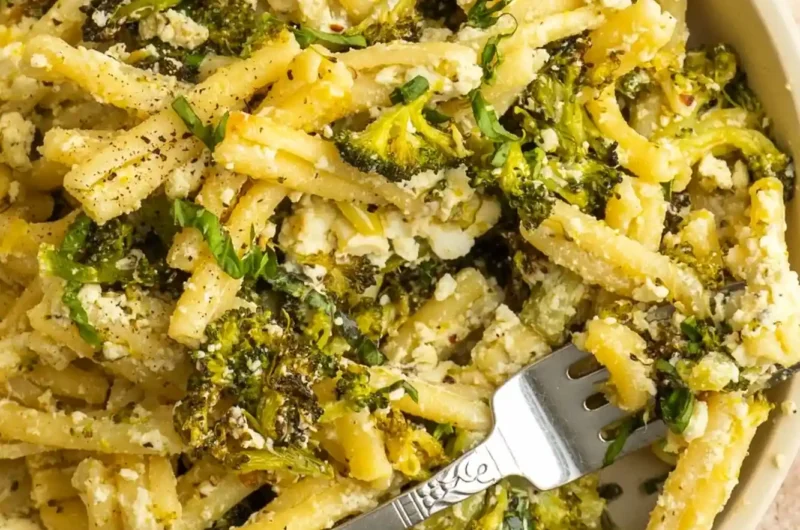
This baked feta and broccoli pasta is a simple, creamy meal that comes together in one baking dish. It is a refreshing alternative to the viral tomato version, using lemon and fresh basil to brighten the flavors.
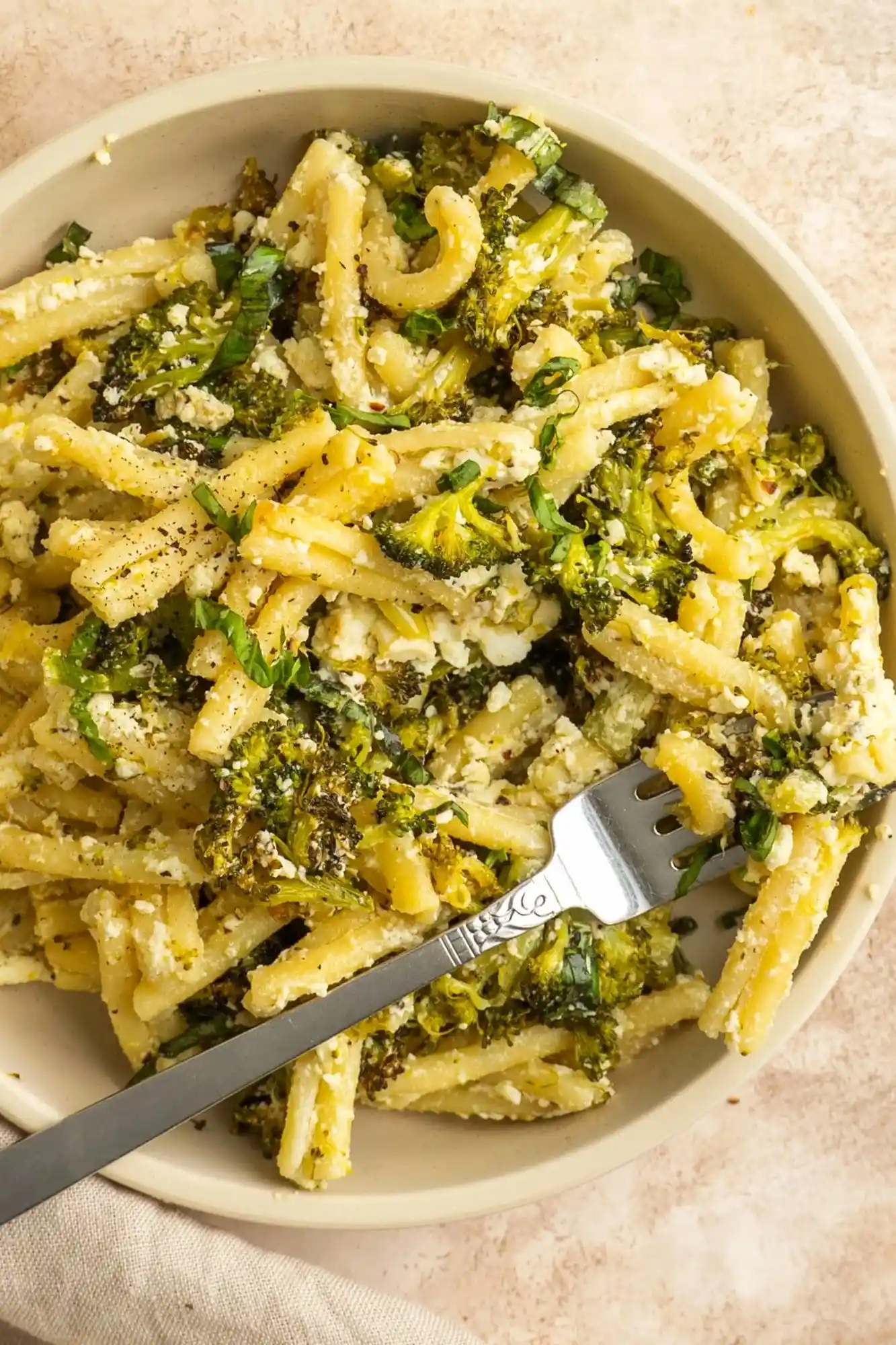
List of ingredients
- 8 oz pasta – use a shape that holds sauce well.
- 4 cups broccoli florets (about 12oz) – cut into small pieces.
- 1/4 cup extra virgin olive oil – for roasting and richness.
- 1/2 tsp salt – to enhance the natural flavors.
- 1/2 tsp fresh cracked black pepper – for a slight bite.
- 8 oz brick of feta – ensure it is a solid block in brine.
- 1 tbsp lemon juice – adds necessary acidity.
- 1 tbsp lemon zest – provides a concentrated citrus aroma.
- 2 tbsp fresh chopped basil – for a fresh, herbal finish.
step-by-step instructions
- Prepare the oven: Preheat your oven to 400F to ensure it is fully heated before the vegetables go in.
- Prepare the broccoli: Cut the broccoli florets into quarters and place them in a baking dish.
- Season the vegetables: Drizzle 1/4 cup olive oil over the broccoli and season with salt and pepper. Toss well to ensure every floret is evenly coated.
- Position the cheese: Create a space in the center of the broccoli and place the brick of feta there. Drizzle a little more olive oil and black pepper over the top of the feta.
- Roast: Bake in the oven at 400F for 35 minutes until the broccoli is tender and the feta is softened.
- Cook the pasta: While the vegetables bake, boil a half pound of pasta in salted water until al dente. Reserve 1/2 cup of the starchy pasta water before draining.
- Create the sauce: Remove the pan from the oven and immediately stir the feta and roasted broccoli together. Pour in the reserved pasta water, stirring until the sauce reaches your desired creaminess.
- Combine: Add the warm cooked pasta into the pan and stir again to coat the noodles.
- Final touch: Stir in the lemon juice, lemon zest, and fresh basil. Mix once more to fully combine and serve immediately.
Customizing Your Pasta Dish
Add Diced Zucchini for Texture
Diced zucchini pairs well with broccoli and roasts in the same timeframe. Cut the zucchini into half-moons and toss them with the broccoli and olive oil. This adds more volume and nutrients to the meal.
Incorporate Roasted Garlic Cloves
Place whole, peeled garlic cloves in the baking dish alongside the broccoli. After roasting, smash the softened cloves into the feta sauce. This provides a deep, mellow garlic flavor throughout the dish.
Add Red Pepper Flakes for Heat
If you prefer a spicy kick, sprinkle red pepper flakes over the feta before baking. The heat infuses into the oil and cheese as they roast. This balances the richness of the feta and the brightness of the lemon.
Mix in Sliced Bell Peppers
Red or yellow bell peppers add a sweet contrast to the salty feta. Slice them into thin strips and roast them with the broccoli. They will caramelize slightly, adding a layer of complexity to the sauce.
Include Cauliflower Florets
Cauliflower can be swapped for half of the broccoli or added as an extra vegetable. Cut the cauliflower into similar sizes to ensure even roasting. It blends seamlessly into the creamy cheese sauce.
Add Sautéed Mushrooms
Brown some sliced mushrooms in a pan before adding them to the finished pasta. The earthiness of the mushrooms complements the tangy feta. This is a great way to add a meaty texture without using meat.
Stir in Fresh Baby Spinach
Fold in a handful of fresh baby spinach after adding the cooked pasta. The residual heat from the pasta and sauce will wilt the spinach quickly. This adds a pop of green and extra vitamins.
Incorporate Grated Parmesan Cheese
Stir in a tablespoon of grated parmesan when you add the pasta water. This deepens the salty, cheesy profile of the sauce. It helps the sauce cling more effectively to the pasta noodles.
Selecting the Right Pasta
Choose Fusilli or Rotini
Spiral-shaped pastas like fusilli or rotini are ideal for this recipe. The twists and turns trap the creamy feta sauce and small broccoli bits. This ensures a balanced flavor in every bite.
Use Orecchiette for Small Bits
Orecchiette, or “little ears,” act like small scoops for the sauce and vegetables. This shape is particularly effective at holding the roasted broccoli florets. It creates a hearty and satisfying texture.
Try Casarecce for a Traditional Feel
Casarecce is a short, curled pasta that provides a great surface area for the sauce. Its structure allows the lemon-feta cream to coat the noodle thoroughly. It is a sophisticated choice for a dinner party.
Avoid Long Noodles like Spaghetti
Long noodles can be difficult to toss with chunky roasted broccoli and thick feta sauce. You may find the vegetables separating from the pasta. Stick to short, chunky shapes for the best consistency.
Using Whole Wheat Pasta
Whole wheat pasta adds a nuttier flavor and more fiber to the dish. It holds up well to the creamy sauce and provides a more filling meal. Ensure you cook it according to the package directions to avoid mushiness.
Experiment with Chickpea Pasta
For a higher protein option, use chickpea or lentil pasta. These alternatives pair well with the tanginess of the feta. Be careful not to overcook them, as they can break down faster than wheat pasta.
Vegetable Preparation and Roasting Tips
Cutting Broccoli for Even Cooking
Aim for uniform, bite-sized florets to ensure everything cooks at the same rate. Very large pieces may remain raw in the center, while tiny bits may burn. Quartering the florets is usually the best approach.
Handling Frozen Broccoli
If using frozen broccoli, roast it directly from the freezer without defrosting. Thawing can lead to mushy vegetables due to excess moisture. Increase the roasting time by 5-10 minutes if necessary.
The Importance of Olive Oil Coating
Ensure every piece of broccoli is thoroughly coated in olive oil. This prevents the vegetables from drying out and helps them brown in the oven. A good coating also helps the salt and pepper stick to the florets.
Monitoring Roast Color
Look for charred edges on the broccoli for the best flavor. These browned bits provide a nutty contrast to the creamy sauce. If the broccoli browns too quickly, lower the oven temperature slightly.
Using Fresh vs. Frozen Lemon
Always use fresh lemon juice and zest for this recipe. Bottled lemon juice lacks the bright, aromatic oils found in fresh fruit. The zest is especially important for the citrus punch.
Preventing Over-roasting
If you are using a very small baking dish, the vegetables may cook faster. Check the broccoli at the 30-minute mark to ensure it isn’t burning. Remove the pan as soon as the feta is soft and the broccoli is tender.
Cheese Selection and Science
Use a Block of Feta in Brine
A solid block of feta is essential because it melts into a creamy consistency when baked. Crumbled feta often dries out or stays grainy in the oven. The brine helps maintain the moisture during the roasting process.
Substituting with Goat Cheese
If you don’t have feta, an 8oz log of goat cheese is a great alternative. It provides a similar tang and melts into a very smooth sauce. The flavor is slightly more earthy than feta.
Using Burrata for Extra Creaminess
A ball of burrata can be used in place of feta for a richer experience. Burrata is softer and will create a much more luxurious, buttery sauce. Be aware that it is less salty than feta, so you may need more salt.
Managing the Saltiness of Feta
Feta varies in salt content depending on the brand. Taste the sauce after mixing in the pasta water before adding more salt. If it’s too salty, add a squeeze more lemon juice to balance it.
Ensuring a Smooth Sauce Emulsion
Stirring the feta and broccoli immediately after removing them from the oven is key. The heat helps the cheese emulsify with the olive oil. Adding the pasta water slowly allows you to control the thickness.
Serving and Pairing Ideas
Pair with a Fresh Green Salad
A simple arugula or spinach salad with a light vinaigrette cuts through the richness of the feta. Use a lemon-based dressing to echo the flavors in the pasta. This creates a balanced and healthy meal.
Add Grilled Chicken Breast
For added protein, serve the pasta with a side of grilled chicken. Season the chicken with oregano and lemon to match the dish. You can also slice the chicken and place it directly on top of the pasta.
Serve with Panko Breaded Fish
Crispy breaded fish fillets provide a great textural contrast to the creamy pasta. The crunch of the panko complements the softness of the roasted broccoli. This makes for a complete and satisfying dinner.
Accompany with Garlic Bread
Warm garlic bread is perfect for scooping up any leftover feta sauce on the plate. Use a baguette or sourdough sliced and toasted with butter and garlic. This adds a comforting element to the meal.
Pair with Roasted Chickpeas
For a vegetarian protein boost, top the dish with crispy roasted chickpeas. They add a crunch and a nutty flavor that works well with the lemon. Toss them in paprika for extra color.
Storage and Reheating Advice
Proper Refrigeration
Store leftovers in an airtight container in the refrigerator for up to 5 days. Ensure the pasta is completely cooled before sealing the lid. This prevents condensation from making the pasta mushy.
Microwave Reheating Method
Heat the pasta in short 30-second intervals, stirring in between. Add a teaspoon of water or milk before heating to loosen the sauce. This prevents the feta from becoming too thick or oily.
Stovetop Reheating Method
Place the pasta in a skillet over medium-low heat. Add a splash of water or vegetable broth to recreate the creamy emulsion. Stir gently until heated through to avoid breaking the pasta noodles.
Refreshing the Sauce After Storage
Cold pasta often absorbs the sauce, making it look dry. Stir in a small amount of fresh lemon juice or a drizzle of olive oil when reheating. This brings back the brightness and creaminess.
Freezing Considerations
This dish is not recommended for freezing due to the high cheese and vegetable content. The feta may separate upon thawing, and the broccoli can become overly soft. It is best enjoyed fresh or refrigerated.
Meal Prep Strategy
You can roast the broccoli and feta ahead of time and store them in the pan. When ready to eat, simply boil the pasta and combine everything. This reduces the active cooking time on a busy weeknight.
Troubleshooting Common Issues
Fixing a Sauce That Is Too Thick
If the sauce feels too heavy or sticky, add more reserved pasta water one tablespoon at a time. The starch in the water helps thin the sauce while keeping it creamy. Continue stirring until the consistency is smooth.
Dealing with Burnt Broccoli
If some broccoli edges are too charred, simply remove the burnt pieces before mixing. To prevent this next time, ensure the broccoli is evenly distributed in the pan. Avoid overcrowding the dish, which can lead to steaming instead of roasting.
Reducing Excessive Saltiness
If the feta makes the dish too salty, stir in a dollop of Greek yogurt or ricotta cheese. The creaminess of these cheeses neutralizes the salt. Alternatively, add more unsalted vegetables like zucchini.
Preventing Grainy Feta Sauce
Graininess usually occurs if the feta was not heated enough or if crumbled feta was used. Ensure you use a block and bake it for the full 35 minutes. Stirring vigorously after baking helps smooth out the texture.
Correcting Lack of Flavor
If the dish tastes bland, increase the amount of lemon zest and black pepper. The acidity from the lemon is what wakes up the flavors of the feta and broccoli. A pinch of extra salt can also help.
Preventing Mushy Pasta
Overcooked pasta will break apart when stirred into the thick feta sauce. Always cook your pasta for 1-2 minutes less than the package directions. It will finish cooking slightly as it sits in the warm sauce.
Frequently Asked Questions
Can I use crumbled feta instead of a block?
It is not recommended because crumbled feta does not melt into a creamy sauce. It tends to dry out and remain in small chunks. For the best results, always use a solid block of feta in brine.
Is this recipe suitable for gluten-free diets?
Yes, you can easily make this gluten-free by using your favorite gluten-free pasta alternative. Chickpea or brown rice pasta works very well. The sauce ingredients are naturally gluten-free.
How do I prevent the feta from drying out?
Drizzle a bit of olive oil over the top of the feta block before putting it in the oven. This creates a barrier that keeps the moisture inside the cheese. Ensure the oven is preheated to the correct temperature.
Can I add spinach to this recipe?
Yes, you can stir in fresh baby spinach at the very end. The heat from the pasta will wilt the leaves in a matter of seconds. This is a great way to add more greens to the dish.
What if I don’t have lemon zest?
If you lack a zester, you can use a fine grater or a microplane. If you have no lemon at all, a small amount of white wine vinegar can provide the necessary acidity, though the flavor will be different.
Can I use frozen broccoli florets?
Yes, you can use frozen broccoli. Roast them directly from frozen without thawing first to maintain a better texture. You may need to add a few extra minutes to the roasting time.
How do I store the leftovers safely?
Keep them in an airtight container in the fridge for up to five days. Let the pasta cool down before sealing the container to prevent excess moisture. Reheat gently on the stove or in the microwave.
Can I add protein like shrimp to this?
Yes, sautéed shrimp pairs beautifully with lemon and feta. Cook the shrimp separately and stir them in at the end with the pasta. This adds a light, elegant protein to the meal.
Print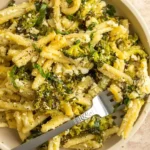
Creamy Baked Feta and Broccoli Pasta
- Total Time: 50 minutes
- Yield: 4 servings 1x
- Diet: Vegetarian
Description
My version of the viral baked feta pasta with broccoli and lemon
Ingredients
- 8 oz pasta
- 4 cups broccoli florets (about 12oz)
- 1/4 cup extra virgin olive oil
- 1/2 tsp salt
- 1/2 tsp fresh cracked black pepper
- 8 oz brick of feta (microbial-rennet)
- 1 tbsp lemon juice
- 1 tbsp lemon zest
- 2 tbsp fresh chopped basil
Instructions
- Step: Preheat oven to 400F. Cut broccoli florets into quarters and place in a baking dish. Drizzle 1/4 cup olive oil and salt and pepper over the broccoli. Toss to coat the broccoli in the oil. Make a space for the brick of feta in the middle of the broccoli and place it there. Drizzle more oil and black pepper on the top of the feta.
- Step: Bake in the oven at 400F for 35 minutes. While the feta and broccoli bakes, prepare a half a pound of pasta. Reserve 1/2 cup of pasta water from the cooked pasta.
- Step: Remove the feta and broccoli from the oven and immediately stir to combine. Pour in some of the pasta water until its your desired creaminess – I use the full 1/2 cup of pasta water. Add the warm cooked pasta into the pan and stir again. Finish the dish with the lemon juice, lemon zest and fresh basil. Stir once more to fully combine and serve.
Notes
For the best creamy result, use a whole block of feta in brine. If using frozen broccoli, roast directly from frozen without defrosting.
- Prep Time: 10 minutes
- Cook Time: 40 minutes
- Category: Dinner
- Method: Baking
- Cuisine: Mediterranean
Nutrition
- Serving Size: 1 serving
- Calories: 514 kcal
- Sugar: 3 g
- Sodium: 971 mg
- Fat: 27 g
- Saturated Fat: 10 g
- Unsaturated Fat: 15 g
- Trans Fat: 0 g
- Carbohydrates: 51 g
- Fiber: 4 g
- Protein: 18 g
- Cholesterol: 50 mg
Keywords: baked feta pasta, broccoli pasta, creamy vegetarian pasta, lemon broccoli pasta