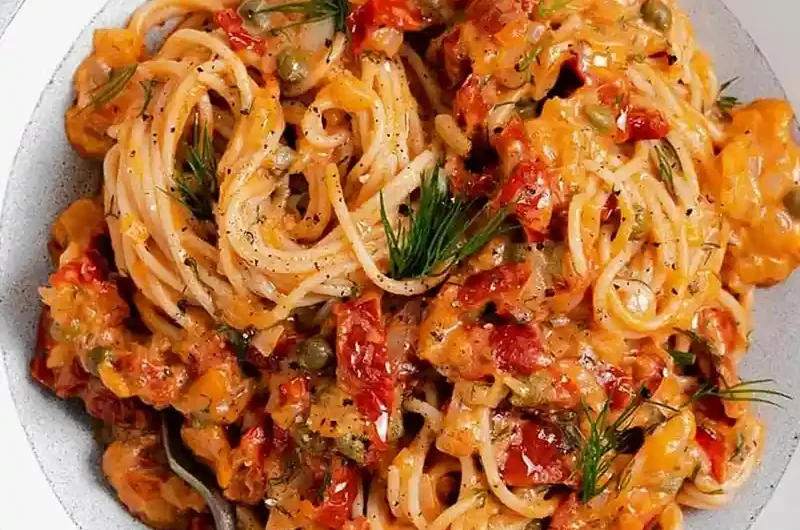
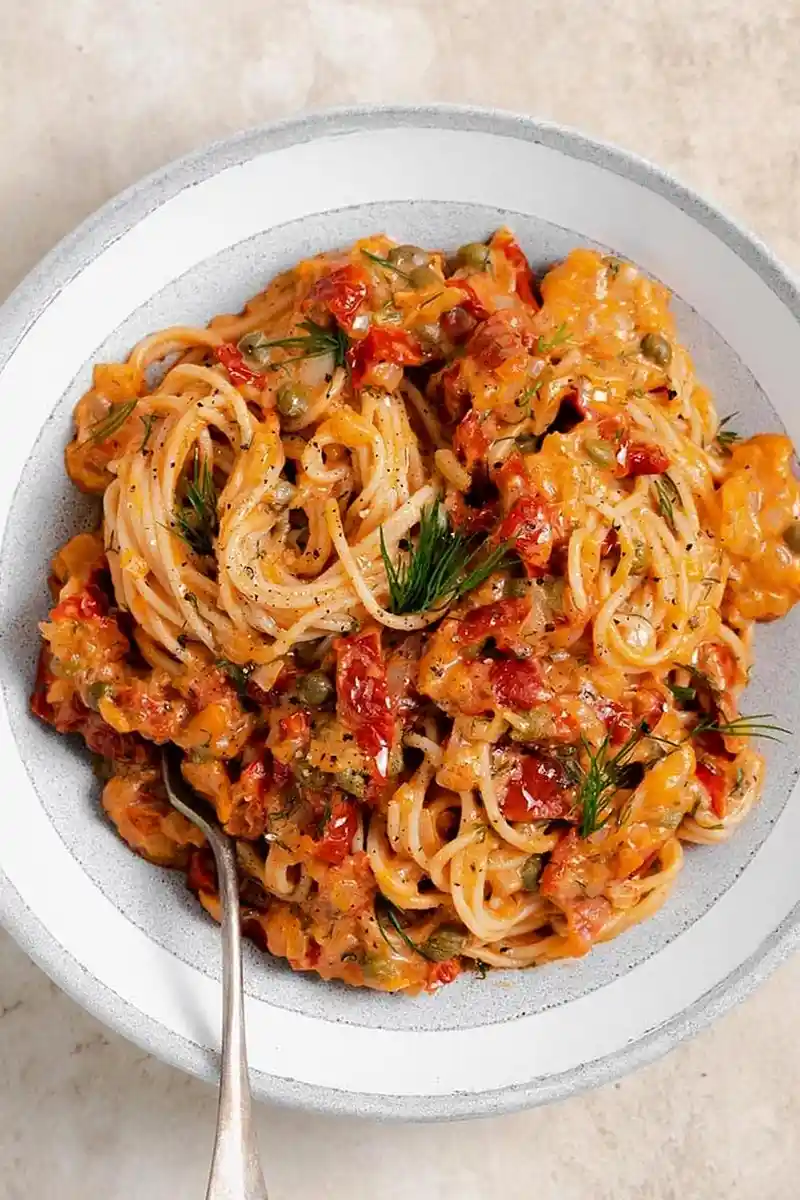
This creamy pasta dish blends the tangy flavor of sun-dried tomatoes with the salty punch of capers and fresh dill. It is a versatile, plant-based meal that works perfectly as a standalone dinner or as a base for various proteins.
List of ingredients
- 1 tbsp avocado oil – used for sautéing the aromatics.
- 1 tsp vegan butter (optional) – adds a rich, creamy flavor to the base.
- 1 medium yellow onion, finely chopped – provides a sweet, aromatic foundation.
- 6 cloves roasted garlic (or 4-6 raw cloves garlic, minced) – offers a mellow, toasted depth.
- 1/4 cup vegetable broth – used to deglaze the pan and build flavor.
- 2 tbsp tomato paste – concentrates the tomato flavor and thickens the sauce.
- 1/2 tsp dried parsley – adds a subtle herbal note.
- 1/3 cup sun-dried tomatoes in oil, drained, rinsed, and chopped – provides a chewy texture and intense tang.
- 1 tbsp capers – adds salty, briny highlights to the dish.
- 1 heaping tbsp fresh dill – provides a bright, citrusy finish.
- 1/2 cup cashew milk – creates a creamy, neutral-tasting sauce base.
- 300g brown rice spaghetti – a gluten-free pasta alternative.
- Pecorino cheese (made with microbial rennet) or vegan parmesan for serving (optional) – adds a salty, umami topping.
step-by-step instructions
- Sauté Aromatics: Heat the avocado oil and vegan butter in a large pan over medium-high heat. Add the chopped onion and sauté for approximately 5 minutes until the pieces become translucent.
- Incorporate Garlic: Reduce the heat to medium. If using roasted garlic, smash the cloves to incorporate them; if using raw garlic, stir constantly for one minute to avoid burning.
- Deglaze the Pan: Pour in the vegetable broth and simmer until the liquid has almost completely evaporated.
- Build the Sauce: Stir in the tomato paste, dried parsley, chopped sun-dried tomatoes, capers, and fresh dill. Mix well to combine all ingredients.
- Create Creaminess: Pour in the cashew milk and stir until the sauce is smooth and fully incorporated. Remove the pan from the heat while the pasta finishes cooking.
- Prepare Pasta: Boil the brown rice spaghetti according to the package instructions. Reserve 1/2 cup of the starchy cooking water before draining and rinsing the pasta with cold water.
- Combine: Gently reheat the sauce, then add the cooked pasta to the pan. Toss to coat thoroughly, adding the reserved pasta water as needed to reach your desired sauce consistency.
- Finish and Serve: Plate the pasta immediately and dust with microbial-rennet pecorino or vegan parmesan if desired.
Pasta Base Alternatives
Using Traditional Wheat Spaghetti
Traditional durum wheat spaghetti provides a more classic al dente texture and holds onto the sauce very well. If using wheat pasta, you can skip the rinsing step and transfer the pasta directly from the pot to the pan. This allows the natural starches to help thicken the sauce further.
Gluten-Free Chickpea or Lentil Pasta
Chickpea or lentil pastas are excellent high-protein alternatives to brown rice spaghetti. These pastas tend to release more starch and can become mushy if overcooked. Always cook them 1-2 minutes less than the package instructions to maintain a firm bite.
Zucchini Noodles for a Low-Carb Option
Spiralized zucchini provides a fresh, light alternative for those avoiding grains. Sauté the zucchini noodles separately for 2-3 minutes before tossing them into the sauce. Avoid overcooking them to prevent the noodles from releasing too much water and thinning the sauce.
Sauce Customization and Substitutions
Alternative Nut Milks for Creaminess
While cashew milk is recommended for its neutral flavor and thickness, unsweetened soy milk is a great substitute. Oat milk also works well, though it may add a slight sweetness to the sauce. Always ensure the milk is completely unsweetened to avoid altering the savory profile of the dish.
Using Dehydrated Sun-Dried Tomatoes
If you only have dry-packed sun-dried tomatoes, they must be rehydrated before use. Soak them in hot water for about 30 minutes to soften the texture. Once softened, drain them and chop them as directed in the recipe.
Dried Dill vs Fresh Dill
Fresh dill provides a bright, grassy flavor that is ideal for this recipe. If you must use dried dill, use about one-third of the amount called for in the recipe. Add the dried dill earlier in the cooking process so it has time to rehydrate in the sauce.
Coconut Cream as a Thickener
For an even richer texture, you can replace cashew milk with full-fat coconut cream. This will add a slight coconut flavor, which complements the tang of the sun-dried tomatoes. Use the thick cream from the top of the can for the best results.
Protein Pairing Suggestions
Adding Seared Salmon Fillets
Salmon pairs exceptionally well with the dill and capers in this sauce. Season the fillets with salt and pepper, then sear them in a pan until the skin is crispy. Place the cooked fillet on top of the plated pasta for a complete meal.
Incorporating Crispy Tofu Cubes
Press extra-firm tofu to remove excess moisture, then cut into small cubes. Toss the cubes in cornstarch and pan-fry until golden brown. Fold the tofu into the pasta during the final tossing step to keep them crispy.
Using Plant-Based Meat Alternatives
Vegan sausage crumbles or plant-based chicken strips can be added for extra heartiness. Brown the protein in the pan before sautéing the onions to ensure they are fully cooked and caramelized. This adds a savory depth to the overall dish.
Sautéed Shrimp Accompaniment
Shrimp is a classic pairing for lemon-dill and tomato flavors. Sauté the shrimp in a separate pan with a bit of garlic and oil until pink. Mix the shrimp into the pasta just before serving to avoid overcooking them.
Advanced Cooking Techniques
Preparing Roasted Garlic for Maximum Flavor
To roast garlic, slice the top off a whole head of garlic to expose the cloves. Drizzle with olive oil, wrap the head in aluminum foil, and bake at 400°F (200°C) for about 40 minutes. The resulting garlic is sweet and spreadable, which blends seamlessly into the sauce.
Perfecting the Onion Sauté
For a more refined flavor, sauté the onions on medium heat for a longer period to allow them to caramelize. This removes the raw bite and adds a natural sweetness that balances the salty capers. Ensure the onions are translucent and soft before adding the garlic.
Managing Brown Rice Pasta Texture
Brown rice pasta can often become gummy or stick together due to high surface starch. Rinsing the pasta with cold water immediately after draining removes this excess starch. This step ensures the noodles remain separate and the sauce coats them evenly without becoming clumpy.
Emulsifying the Sauce with Pasta Water
Pasta cooking water contains dissolved starches that act as a bridge between the fat in the oil and the liquids in the sauce. Adding a splash of this water during the final toss helps the sauce cling to the pasta. It creates a glossy finish and prevents the sauce from separating.
Storage and Preservation
Refrigeration Guidelines
Store any leftover pasta in an airtight container in the refrigerator for 2 to 3 days. Allow the dish to cool completely before sealing the lid to prevent excess condensation. This prevents the pasta from becoming too soggy during storage.
Using the Right Storage Containers
Glass containers are preferable for storing this dish as they do not absorb odors or stains from the tomato sauce. Ensure the container is completely airtight to keep the sauce from drying out. Divide the pasta into single-serving portions for easier reheating.
Freezing Potential
While the sauce can be frozen, the brown rice pasta may lose its texture upon thawing. If you plan to freeze the meal, undercook the pasta by 2-3 minutes. Thaw the dish in the refrigerator overnight before reheating on the stove.
Reheating Best Practices
Stovetop Reheating Method
The best way to reheat this pasta is in a pan over medium-low heat. Add a tablespoon of water or cashew milk to the pan to loosen the sauce. Toss gently until heated through to avoid breaking the pasta strands.
Microwave Reheating Tips
Place the pasta in a microwave-safe bowl and add a splash of water or plant-based milk. Cover the bowl with a damp paper towel to trap steam and prevent the pasta from drying out. Heat in 30-second intervals, stirring in between.
Adjusting Sauce Consistency After Reheating
Pasta often absorbs sauce while sitting in the refrigerator, making the dish appear dry. Always add a small amount of liquid during the reheating process. This restores the creamy consistency of the cashew milk sauce.
Troubleshooting Common Issues
Fixing a Sauce That Is Too Thick
If the sauce becomes too thick or paste-like, stir in extra cashew milk or vegetable broth one tablespoon at a time. Continue stirring over low heat until the desired creaminess is achieved. Do not boil the sauce vigorously, as this can cause the milk to separate.
Balancing Excessive Saltiness
Capers and pecorino cheese can sometimes make the dish too salty. If this happens, add a squeeze of fresh lemon juice or a pinch of sugar to balance the flavors. Adding a handful of fresh baby spinach to the pasta can also help dilute the saltiness.
Preventing Sauce Curdling
To prevent the cashew milk from curdling, ensure you remove the pan from the heat before adding the milk, or keep the heat on medium-low. Rapid temperature changes or boiling the milk can cause it to split. Stir constantly to maintain a smooth emulsion.
Frequently Asked Questions
Can you eat sun-dried tomatoes straight from the jar?
Yes, sun-dried tomatoes are fully cooked during the drying process and are safe to eat raw. They are excellent additions to salads, sandwiches, or as a quick snack.
Are sun-dried tomatoes in oil better than dry ones?
Sun-dried tomatoes in oil generally have a more intense flavor and a softer texture. They are more convenient to use and the infused oil can be used for sautéing other ingredients in the recipe.
How do you soften dry sun-dried tomatoes?
Place the dehydrated tomatoes in a bowl and cover them with boiling water. Let them soak for 30 to 60 minutes until they are plump and tender, then drain them before adding to the sauce.
Print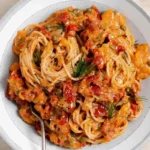
Creamy Sun-Dried Tomato Pasta with Capers and Dill
- Total Time: 30 minutes
- Yield: 2–3 servings 1x
- Diet: Vegetarian
Description
Delicious Creamy Sun-Dried Tomato Pasta Sauce with dill, and capers. This pasta dish is great on its own or with a choice of protein!
Ingredients
- 1 tbsp avocado oil
- 1 tsp vegan butter (optional)
- 1 medium yellow onion, finely chopped
- 6 cloves roasted garlic (or sub 4–6 raw cloves garlic, minced)
- ¼ cup vegetable broth
- 2 tbsp tomato paste
- ½ tsp dried parsley
- ⅓ cup sun-dried tomatoes in oil, drained, rinsed, and chopped
- 1 tbsp capers
- 1 heaping tbsp fresh dill
- ½ cup cashew milk
- 300g brown rice spaghetti
- microbial-rennet pecorino cheese or vegan parmesan for serving (optional)
Instructions
- Step: Start by heating the olive oil and vegan butter (if using) in a large pan over medium-high heat.
- Step: Add the chopped onion and saute for about 5 minutes until translucent. Lower the heat to medium.
- Step: Add the garlic. If roasted, just smash it to incorporate and immediately add the vegetable broth. If raw, cook stirring constantly for a minute.
- Step: Add vegetable broth and cook until almost evaporated.
- Step: Add the tomato paste, parsley, sun-dried tomatoes, capers, and fresh dill. Stir well. Add the cashew milk and stir again until everything’s incorporated. Take off heat until pasta is cooked.
- Step: While you make the sauce, cook the pasta according to package instructions. Reserve ½ cup of the cooking water, and drain and rinse the pasta.
- Step: Warm the sauce back up, add the pasta to the sauce and gently toss to coat. Add pasta water as necessary to loosen the sauce.
- Step: Serve immediately dusted with pecorino cheese or vegan parmesan if desired.
Notes
Store in an airtight container in the fridge for 2-3 days. Wait until it’s cool before storing. If you don’t eat cheese and don’t have vegan parmesan, you can also serve this pasta sprinkled with nutritional yeast.
- Prep Time: 10 minutes
- Cook Time: 20 minutes
- Category: Pasta
- Method: Cooking
- Cuisine: Italian
Nutrition
- Serving Size: 1 serving
- Calories: 510 kcal
- Sugar: 8 g
- Sodium: 820 mg
- Fat: 15 g
- Saturated Fat: 3 g
- Unsaturated Fat: 12 g
- Trans Fat: 0 g
- Carbohydrates: 78 g
- Fiber: 7 g
- Protein: 14 g
- Cholesterol: 0 mg
Keywords: creamy pasta, sun-dried tomato, vegan pasta, brown rice pasta, Italian dinner