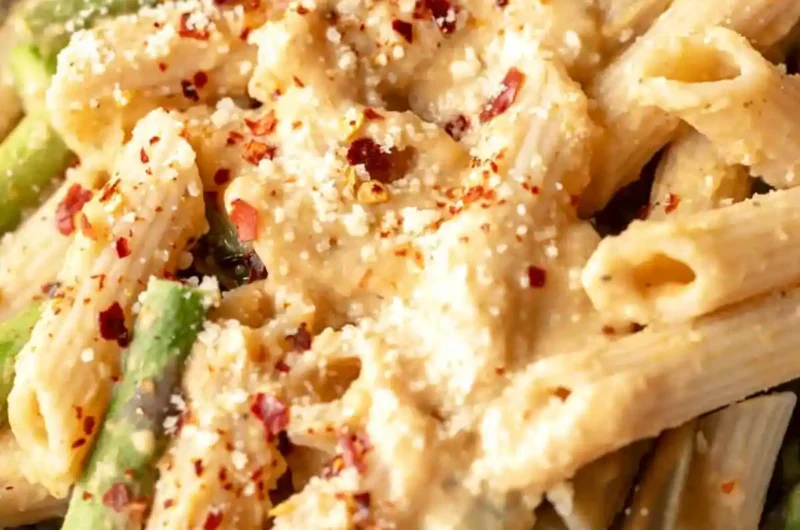
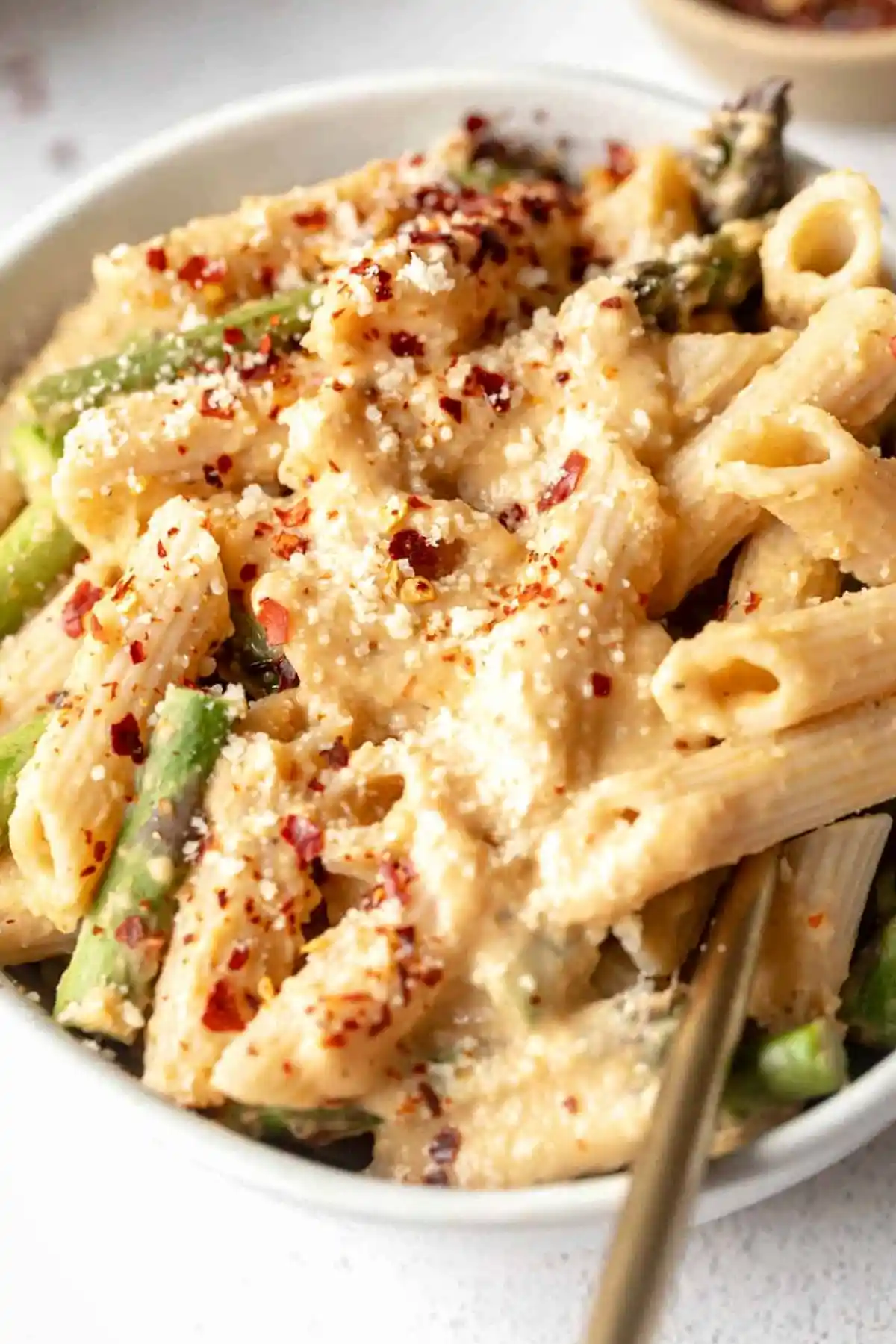
This protein-packed vegan pasta uses white beans to create a rich, creamy sauce without the need for dairy. It is a fast 20-minute dinner featuring bright lemon notes and fresh asparagus.
List of ingredients
- 12 ounces pasta of choice – any shape works well here.
- 1 bunch asparagus – trimmed and cut into bite-sized pieces.
- 1 15 ounce can small white beans (navy) – rinsed and drained.
- 1/4 cup plain non-dairy milk (almond) – ensure it is unsweetened.
- 4 tablespoons olive oil (divided) – used for both sautéing and the sauce.
- 3-4 tablespoons fresh lemon juice – freshly squeezed for best flavor.
- 1 large white or yellow onion (diced) – a larger onion provides more flavor.
- 6 cloves garlic (minced) – use fresh cloves for maximum potency.
- 1/4 cup cashew parmesan – homemade or store-bought.
- 1 teaspoon lemon zest – grated from the lemon being juiced.
- 1/2 teaspoon red pepper flakes – adds a subtle kick.
- 1/2 teaspoon dried parsley – for an earthy herbal touch.
- 1 teaspoon salt (or more to taste) – adjust based on your pasta water saltiness.
- 1/4 teaspoon black pepper – freshly ground is preferred.
step-by-step instructions
- Prepare the cheese: Prep the cashew parmesan if you haven’t already. If you are substituting this with nutritional yeast, you can skip this step.
- Cook the pasta: Bring a large pot of water to a boil and cook pasta according to the package instructions.
- Sauté the onion: Dice the onion and add it to a pan with 2 tablespoons of olive oil. Saute for about 5 minutes or until the onion becomes slightly golden brown.
- Cook the garlic: Add the minced garlic to the pan and saute for an additional 1-2 minutes.
- Prepare the beans: Drain and rinse the white beans, then add them to a food processor or high speed blender.
- Blend the sauce: Transfer the sautéed onion and garlic to the food processor. Add all remaining sauce ingredients, including the remaining olive oil, and process until completely smooth. Run the processor for 1-2 minutes to ensure no bean pieces remain.
- Season: Taste the blended sauce and adjust the salt, pepper, or lemon juice as desired.
- Cook the asparagus: Use the same pan that cooked the garlic and onion. Add the chopped asparagus and saute for 5-10 minutes. Cook for about 5 minutes if you prefer the asparagus to remain firm.
- Combine: Add the cooked asparagus to the cooked pasta and pour the bean sauce on top. Stir everything together until the pasta is well incorporated.
- Finish: Top the dish with red pepper flakes and extra nutritional yeast or cashew parmesan if desired.
Sauce Optimization Techniques
Achieving a Completely Smooth Texture
The secret to a professional-grade vegan cream sauce is the blending time. Run your food processor or high-speed blender for at least two full minutes to break down the bean skins entirely. This ensures a velvety consistency that mimics heavy cream.
Balancing the Citrus Acidity
Lemon juice varies in tartness depending on the fruit. Start with three tablespoons, taste the sauce, and then add the fourth if you prefer a sharper, more acidic profile. The lemon zest provides the aroma, while the juice provides the tang.
Choosing the Right Non-Dairy Milk
Always use unsweetened and unflavored non-dairy milk to avoid adding sugar or vanilla notes to a savory dish. Almond milk provides a neutral base, but soy milk can add more protein and a slightly thicker consistency to the final blend.
Ingredient Substitutions
Selecting the Best White Beans
Navy beans are ideal for their small size and mild flavor, which blend seamlessly. Cannellini beans or Great Northern beans are also excellent choices because they have a similar creamy texture. Avoid chickpeas or butter beans as they can leave the sauce feeling grainy.
Nut-Free Parmesan Alternatives
For those with nut allergies, replace the cashew parmesan with nutritional yeast. Nutritional yeast provides a similar salty and cheesy flavor without the use of nuts. You can also use a store-bought vegan parmesan made from coconut oil or potato starch.
Pasta Shape and Type Selection
While any pasta works, shapes with ridges or holes, such as fusilli, penne, or rigatoni, hold the creamy bean sauce better. If you are using gluten-free pasta, be careful not to overcook it, as gluten-free varieties can become mushy more quickly than wheat pasta.
Alternative Green Vegetable Options
If asparagus is out of season, you can substitute it with frozen peas, chopped broccoli florets, or sliced zucchini. Sauté these vegetables in the same manner as the asparagus to maintain the dish’s nutritional balance and color.
Cooking and Preparation Advice
Mastering the Aromatics
Do not rush the sautéing of the onion. Cooking the onion until it is golden brown creates a caramelized sweetness that balances the acidity of the lemon. This depth of flavor is essential for a rich-tasting sauce.
Timing the Garlic Addition
Garlic burns much faster than onion and can become bitter if overcooked. Always add the garlic after the onions have already softened. Sautéing for only 1-2 minutes is sufficient to release the oils without scorching the cloves.
Perfecting the Pasta Water
Heavily salt your pasta boiling water to season the noodles from the inside out. This is the only opportunity to flavor the pasta itself before it is combined with the sauce. The water should taste like the sea for the best results.
Controlling Asparagus Doneness
Asparagus can quickly go from crisp to limp. To keep the vegetables bright green and slightly firm, sauté them for only 5 minutes over medium-high heat. This provides a textural contrast to the creamy sauce.
Storage and Reheating Guidelines
Refrigeration and Shelf Life
Store the finished pasta in an airtight container in the refrigerator for 3 to 4 days. Because the sauce is made from beans and milk, it will thicken significantly as it cools and the pasta absorbs the moisture.
Best Stovetop Reheating Method
To restore the creamy consistency, reheat the pasta in a pan over medium heat. Add a splash of olive oil or a tablespoon of water or non-dairy milk to loosen the sauce. Stir gently until the dish is warmed through.
Microwave Reheating Tips
If using a microwave, place the pasta in a microwave-safe bowl and add a teaspoon of water. Cover the bowl with a damp paper towel to trap steam, which prevents the pasta from drying out. Heat in 30-second intervals, stirring in between.
Freezing the Sauce Separately
Freezing fully cooked pasta often leads to a mushy texture upon thawing. Instead, freeze only the bean sauce in a freezer-safe container. Thaw the sauce in the fridge overnight and then combine it with freshly cooked pasta and sautéed asparagus.
Serving and Presentation Ideas
Pairing with Side Dishes
This pasta is a complete meal, but it pairs beautifully with a crisp side salad. Use a simple vinaigrette with lemon and olive oil to complement the flavors of the main dish. Roasted cherry tomatoes also add a nice burst of sweetness.
Adding Extra Protein Boosts
To increase the protein content even further, add grilled tofu cubes or roasted chickpeas to the final mix. These additions provide more chew and make the meal even more filling for athletes or those on a high-protein diet.
Garnishing for Visual Appeal
Freshly chopped parsley or basil leaves added at the end provide a pop of color and a fresh taste. A final sprinkle of red pepper flakes on top adds a professional look and a hint of heat to the presentation.
Troubleshooting Common Issues
Fixing a Sauce That Is Too Thick
If the blended sauce seems too thick or paste-like, add a small amount of the reserved pasta cooking water. The starchy water emulsifies with the bean sauce, making it smoother and easier to coat the noodles.
Managing Excessive Lemon Tartness
If the sauce tastes too sour, you can balance the acidity by adding a pinch more salt or a small amount of nutritional yeast. In some cases, a tiny pinch of sugar or maple syrup can neutralize the sharp citrus notes.
Preventing Garlic from Burning
If you notice the garlic turning dark brown too quickly, immediately add the beans or a splash of water to the pan. This lowers the temperature and stops the burning process, preventing a bitter aftertaste in the sauce.
Correcting a Thin or Watery Sauce
If the sauce is too thin, let it simmer in the pan for a few minutes before adding the pasta. You can also blend in an extra tablespoon of cashew parmesan or a few more white beans to increase the viscosity.
Frequently Asked Questions
Can I use frozen asparagus in this recipe?
Yes, you can use frozen asparagus. Thaw it completely and pat it dry with a paper towel before sautéing to prevent the sauce from becoming watery.
Which non-dairy milk is best for the sauce?
Unsweetened almond, soy, or cashew milk work best. Avoid coconut milk unless you want a distinct coconut flavor, which may clash with the lemon.
Is this recipe gluten-free?
The recipe is naturally gluten-free as long as you choose a gluten-free pasta, such as one made from brown rice, corn, or chickpeas.
Can I use a different type of bean?
While navy and cannellini beans are best, you can use other white beans. However, avoid black beans or kidney beans as they will change the color of the sauce to a grey or purple hue.
Do I have to use a food processor?
A high-speed blender is a great alternative to a food processor. Just ensure you blend long enough to remove any lumps from the beans.
Print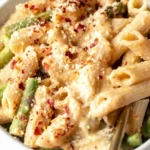
Creamy Vegan Lemon White Bean Pasta
- Total Time: 20 minutes
- Yield: 4 servings 1x
- Diet: Vegan, Gluten-Free
Description
This creamy, dairy free, lemon white bean pasta is a quick and easy high protein dinner that the whole family will love. It’s vegan, gluten free, and only takes 20 minutes to make!
Ingredients
- 12 ounces pasta of choice
- 1 bunch asparagus
- 1 15 ounce can small white beans
- 1/4 cup plain non-dairy milk
- 4 tablespoons olive oil
- 3–4 tablespoons fresh lemon juice
- 1 large white or yellow onion, diced
- 6 cloves garlic, minced
- 1/4 cup cashew parmesan
- 1 teaspoon lemon zest
- 1/2 teaspoon red pepper flakes
- 1/2 teaspoon dried parsley
- 1 teaspoon salt
- 1/4 teaspoon black pepper
Instructions
- Step: Prep the cashew parmesan if you haven’t already.
- Step: Bring a large pot of water to a boil and cook pasta according to package instructions.
- Step: Dice the onion, and add to a pan with 2 tablespoons of olive oil.
- Step: Saute for about 5 minutes or until slightly golden brown, then add in the garlic and saute 1-2 more minutes.
- Step: Drain and rinse the white beans and add to a food processor or high speed blender.
- Step: Transfer the onion and garlic to the food processor along with all remaining ingredients, including the remaining olive oil and process until completely smooth.
- Step: Taste and adjust seasonings as desired.
- Step: To the same pan that you cooked the garlic and onion in, add the chopped asparagus and saute for 5-10 minutes or until it is your desired doneness.
- Step: Add the asparagus to the cooked pasta and pour the sauce on top. Stir together until well incorporated.
- Step: Top with red pepper flakes and more nutritional yeast or cashew parm if desired.
Notes
Store in the fridge for 3-4 days. Use plain and unsweetened milk to avoid vanilla flavors. Cashew parmesan can be substituted with nutritional yeast or store-bought vegan parmesan.
- Prep Time: 5 minutes
- Cook Time: 15 minutes
- Category: Dinner
- Method: Stovetop
- Cuisine: American
Nutrition
- Serving Size: 1 bowl
- Calories: 427 kcal
- Sugar: 3.7 g
- Sodium: 710 mg
- Fat: 17.2 g
- Saturated Fat: 2.5 g
- Unsaturated Fat: 14.7 g
- Trans Fat: 0 g
- Carbohydrates: 62 g
- Fiber: 9.3 g
- Protein: 13.6 g
- Cholesterol: 0 mg
Keywords: vegan lemon pasta, white bean pasta, gluten free pasta, high protein vegan dinner, creamy vegan pasta