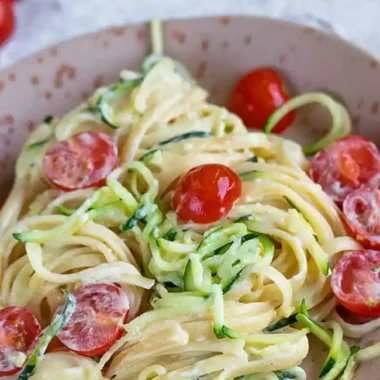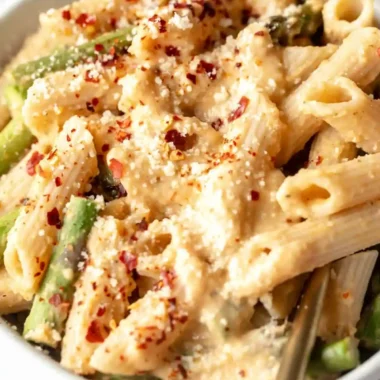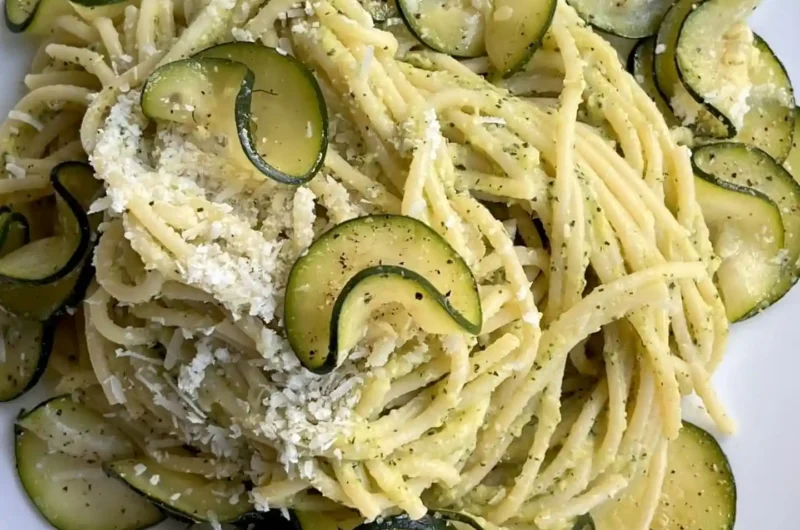
This refined Italian pasta dish features thinly sliced courgettes and a silky cheese sauce. It is a practical and flavorful meal that highlights the natural sweetness of summer vegetables.
List of ingredients
- 1 garlic clove – used to infuse the olive oil with aroma.
- 1 generous glug of olive oil – provides the frying medium for the vegetables.
- 2 courgettes – sliced into very thin rounds for quick cooking.
- Salt and pepper – essential for seasoning the vegetables and pasta water.
- 250 g spaghetti or bucatini – the primary pasta base for the dish.
- 80 g Parmesan (grated, microbial-rennet) – provides saltiness and thickness to the sauce.
- 1 knob unsalted butter (cold) – used to emulsify the sauce into a glossy finish.
step-by-step instructions
- Boil water: Put a large pot of water on to boil for the spaghetti.
- Infuse oil: In a pan over medium-high heat, add the garlic clove and olive oil so the mixture sizzles and the oil gets infused by the garlic. When just golden, remove the garlic and add the courgette rounds. Toss every now and then, letting them fry away until tender but not brown.
- Cook pasta: In the meantime, add salt to the boiling water, then place spaghetti in the pot.
- Prepare puree: Drain the courgette on paper towels and season with a pinch of salt and some freshly ground pepper. Keep warm. Blend together about a third of the courgette and about 60 ml (1/3 cup) of pasta water using a handheld blender. Set aside.
- Drain pasta: When the spaghetti is al dente (about 1 minute before the suggested cooking time on the packet), drain, saving about 1/2 cup of the pasta cooking water.
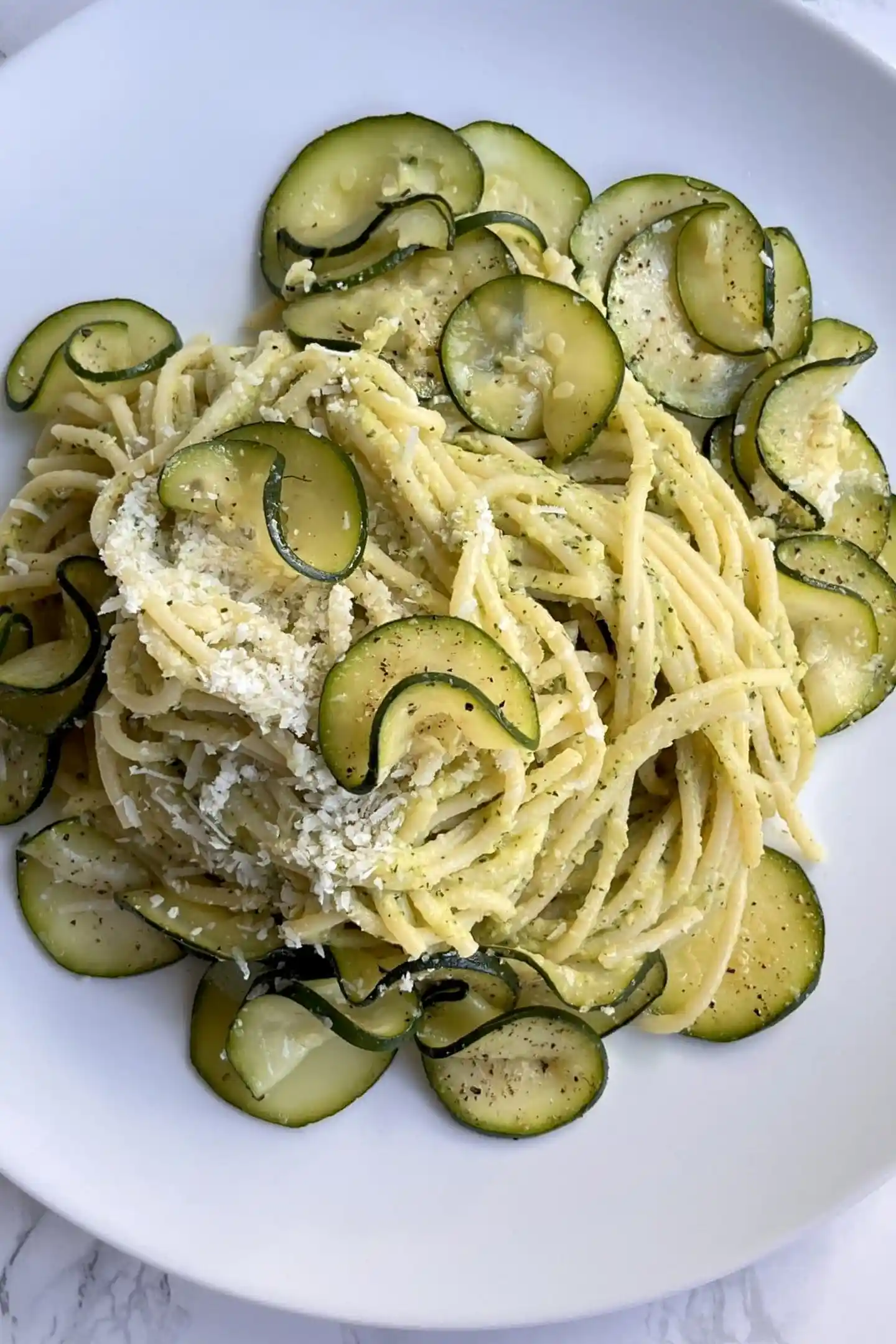
- Finish sauce: Return the spaghetti to the pan and toss it with the purée, the grated cheese, the fried courgette, and the cold knob of butter. Quickly toss using tongs or a spatula to help you. If it’s too dry, add pasta water a little at a time. Scoop into bowls and top with a little more parmesan and serve immediately.
Optimizing Your Ingredients
Selecting the Right Courgettes
Choose small to medium courgettes as they typically contain fewer seeds and less water. This ensures the slices maintain their structure during the frying process. Firm, bright green skin indicates freshness and better flavor.
Choosing the Best Pasta Shape
Spaghetti is the traditional choice, but bucatini is an excellent alternative due to its hollow center. The hole in bucatini allows the creamy courgette puree to coat the inside and outside of the pasta. This increases the overall flavor in every bite.
The Importance of Cold Butter
Using cold butter is essential for creating a stable emulsion. When cold fat hits the hot pasta and starchy water, it breaks down slowly, creating a creamy, glossy sauce. Melted butter will not provide the same silky texture.
Using Microbial-Rennet Parmesan
Ensure you use a Parmesan cheese produced with microbial rennet to keep the recipe suitable for all dietary preferences. This cheese provides the necessary salt and umami profile. Grating the cheese finely helps it melt quickly without clumping.
Garlic Infusion Techniques
Heat the garlic in olive oil over medium heat to extract the aromatic compounds without burning the clove. If the garlic turns dark brown, it can become bitter and overpower the courgettes. Remove the clove as soon as it is golden.
Mastering the Cooking Process
Achieving the Perfect Courgette Texture
The goal is to fry the courgette rounds until they are tender and translucent, not browned. Avoid high heat that causes searing, as this changes the flavor profile from sweet to nutty. Toss them occasionally to ensure even cooking.
The Science of Pasta Water Emulsification
Pasta water is rich in starch, which acts as a binding agent between the oil, butter, and cheese. This process is called emulsification, which prevents the sauce from separating. The starch creates a smooth, cohesive coating on the noodles.
Timing the Al Dente Stage
Drain the pasta approximately one minute before the package instructions suggest. This allows the pasta to finish cooking in the sauce, absorbing the flavors of the puree and butter. Overcooked pasta will become mushy during the final tossing stage.
Proper Blending for the Sauce Base
Use a handheld blender in a narrow glass jar to combine the fried courgettes and pasta water. This creates a concentrated puree that acts as the thickener for the final sauce. Ensure the mixture is completely smooth before adding it to the pan.
Vigorous Tossing for Glossiness
Toss the pasta rapidly with tongs to incorporate air and ensure the butter and cheese emulsify. This mechanical action is what transforms the separate ingredients into a creamy sauce. If the mixture looks dry, add the reserved pasta water one tablespoon at a time.
Alternative Ingredient Options
Substituting Courgettes with Zucchini
In many regions, zucchini and courgette are the same vegetable. If you find zucchini with a thicker skin, you may want to slice them even thinner. This ensures they cook at the same rate as traditional courgettes.
Using Different Hard Cheeses
Pecorino Romano can be used as a substitute for Parmesan for a saltier, sharper taste. If using Pecorino, reduce the amount of additional salt added to the courgettes. You can also use a blend of both cheeses for a more complex flavor.
Oil Alternatives for Frying
While olive oil is traditional, any neutral oil with a high smoke point can be used. Avocado oil or grapeseed oil are viable options if you prefer a more subtle flavor. Ensure the oil can handle medium-high heat without smoking.
Pasta Substitutes for Dietary Needs
Whole wheat spaghetti adds a nuttier flavor and more fiber to the dish. For gluten-free options, use a high-quality corn or brown rice pasta. Be aware that gluten-free pasta water has different starch levels and may require more butter for emulsification.
Serving and Presentation Ideas
Plating for Visual Appeal
Use a carving fork and a large ladle to twirl the pasta into a high nest in the center of the bowl. This creates height and professional presentation. Distribute the remaining whole fried courgette rounds around the base of the nest.
Pairing with Fresh Herbs
Add a few torn leaves of fresh basil or mint just before serving. These herbs provide a fresh, aromatic contrast to the richness of the butter and cheese. Fold them in at the last second to prevent them from wilting.
Recommended Side Dishes
A simple arugula salad with a lemon vinaigrette balances the creaminess of the pasta. The bitterness of the greens and the acidity of the lemon cut through the fat of the butter. Grilled asparagus is another complementary vegetable side.
Non-Alcoholic Beverage Pairings
Serve this dish with a chilled sparkling water infused with a slice of lime or lemon. The carbonation cleanses the palate between bites of the rich sauce. An iced herbal tea with mint also complements the summer flavors.
Storage and Reheating Guide
Storing Leftover Pasta
Place leftover pasta in an airtight container and refrigerate for up to three days. The sauce will thicken and lose its gloss as the butter and cheese cool. Ensure the container is sealed tightly to prevent the pasta from drying out.
Reheating to Maintain Creaminess
Reheat the pasta in a pan over low heat rather than in a microwave. Add a tablespoon of water or a small knob of butter to loosen the sauce. Toss gently until the emulsion reforms and the pasta is heated through.
Freezing Considerations
This dish is not recommended for freezing due to the emulsion of butter and cheese. Freezing often causes the sauce to break, resulting in a grainy texture upon thawing. It is best enjoyed fresh or from the refrigerator.
Advanced Troubleshooting
Fixing a Watery Sauce
If the sauce remains too watery, increase the heat slightly and continue tossing for another minute. Alternatively, add an extra tablespoon of grated Parmesan. The cheese will absorb excess moisture and thicken the consistency.
Resolving a Clumpy Cheese Texture
Cheese clumps occur when the pan is too hot, causing the proteins to seize. If this happens, remove the pan from the heat immediately and add a splash of pasta water. Toss vigorously to smooth out the sauce.
Preventing Overcooked Courgettes
If the courgettes are softening too quickly, remove them from the pan and drain them on paper towels immediately. This stops the cooking process. In the future, fry them in smaller batches to maintain a consistent temperature.
Frequently Asked Questions
Can I use a food processor instead of a blender?
Yes, a small food processor works well for blending the courgettes and pasta water. Pulse the mixture until it reaches a smooth, puree-like consistency. Ensure you do not over-process it into a liquid.
Should I peel the courgettes?
No, you should keep the skin on the courgettes. The skin provides structural integrity to the slices and contains a significant amount of the vegetable’s flavor. Peeling them would make the slices too soft.
Is it possible to make this dish vegan?
You can replace the butter with a plant-based butter and the Parmesan with nutritional yeast or a vegan hard cheese alternative. Use a small amount of potato starch in the pasta water to help the sauce emulsify.
Why do I need to remove the garlic?
The garlic is removed so that it does not burn while the courgettes are frying. Its purpose is to flavor the oil, not to be a primary texture in the final dish. Leaving it in could lead to burnt, bitter pieces.
How do I handle the pasta water if I use a different pot?
Always reserve the pasta water before draining the noodles. Using a measuring cup allows you to precisely add the water back into the sauce. This is the most critical step for achieving the correct sauce thickness.
Can I use a mandolin for slicing?
A mandolin is highly recommended for achieving perfectly thin and uniform slices. Uniform thickness ensures that all the courgette pieces cook at the same rate. Always use the safety guard to prevent injury.
What if I don’t have a handheld blender?
You can finely mash a portion of the fried courgettes with a fork until they form a paste. Gradually stir in the pasta water to create a rustic puree. While not as smooth as a blender, it still provides the necessary thickness.
How do I know when the pasta is al dente?
Taste the pasta a minute before the recommended time. It should be tender on the outside but have a slight, firm resistance in the center. This center will cook through during the final tossing stage.
Does the type of olive oil matter?
For frying, a refined olive oil is preferable as it has a higher smoke point. Extra virgin olive oil is great for flavor but may smoke at the temperatures needed for frying the courgettes. You can finish the dish with a drizzle of extra virgin oil for extra aroma.
Can I add other vegetables?
Adding a small amount of finely diced shallots or leeks can add depth. However, adding too many vegetables may dilute the concentrated flavor of the courgette. Stick to complementary aromatics to keep the dish authentic.
Print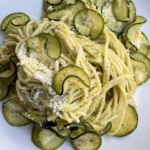
Creamy Courgette Spaghetti Alla Nerano
- Total Time: 30 minutes
- Yield: 2 servings 1x
- Diet: Vegetarian
Description
This is one of those pasta recipes that is very hyped but actually for good reason. I love this Spaghetti Alla Nerano, it really is a perfect blend of courgette, pasta and cheese, really just a delicious dinner all together.
Ingredients
- 1 garlic clove
- 1 generous glug of olive oil
- 2 courgettes, sliced into very thin rounds
- Salt and pepper
- 250 g spaghetti or bucatini
- 80 g microbial-rennet Parmesan, grated
- 1 knob unsalted butter, cold
Instructions
- Step: Put a large pot of water on to boil for the spaghetti.
- Step: In a pan over medium-high heat, add the garlic clove and olive oil so the mixture sizzles and the oil gets infused by the garlic. When just golden, remove the garlic and add the courgette rounds. Toss every now and then, letting them fry away until tender but not brown.
- Step: In the meantime, add salt to the boiling water, then place spaghetti in the pot.
- Step: Drain the courgette on paper towels and season with a pinch of salt and some freshly ground pepper. Keep warm. Blend together about a third of the courgette and about 60 ml (1/3 cup) of pasta water. Set aside.
- Step: When the spaghetti is al dente (about 1 minute before the suggested cooking time on the packet), drain, saving about 1/2 cup of the pasta cooking water.
- Step: Return the spaghetti to the pan and toss it with the purée, the grated cheese, the fried courgette, and the cold knob of butter. Quickly toss, using tongs or a spatula to help you. If it’s too dry, add pasta water a little at a time. Scoop into bowls and top with a little more parmesan and serve immediately.
Notes
The creaminess comes from whizzing some of the fried courgette with some pasta water and a little cold butter into a silky creamy sauce.
- Prep Time: 10 minutes
- Cook Time: 20 minutes
- Category: Pasta
- Method: Stovetop
- Cuisine: Italian
Nutrition
- Serving Size: 1 serving
- Calories: 420 kcal
- Sugar: 4 g
- Sodium: 650 mg
- Fat: 22 g
- Saturated Fat: 11 g
- Unsaturated Fat: 11 g
- Trans Fat: 0 g
- Carbohydrates: 41 g
- Fiber: 3 g
- Protein: 17 g
- Cholesterol: 45 mg
Keywords: Spaghetti Alla Nerano, Italian courgette pasta, Stanley Tucci pasta, Amalfi Coast