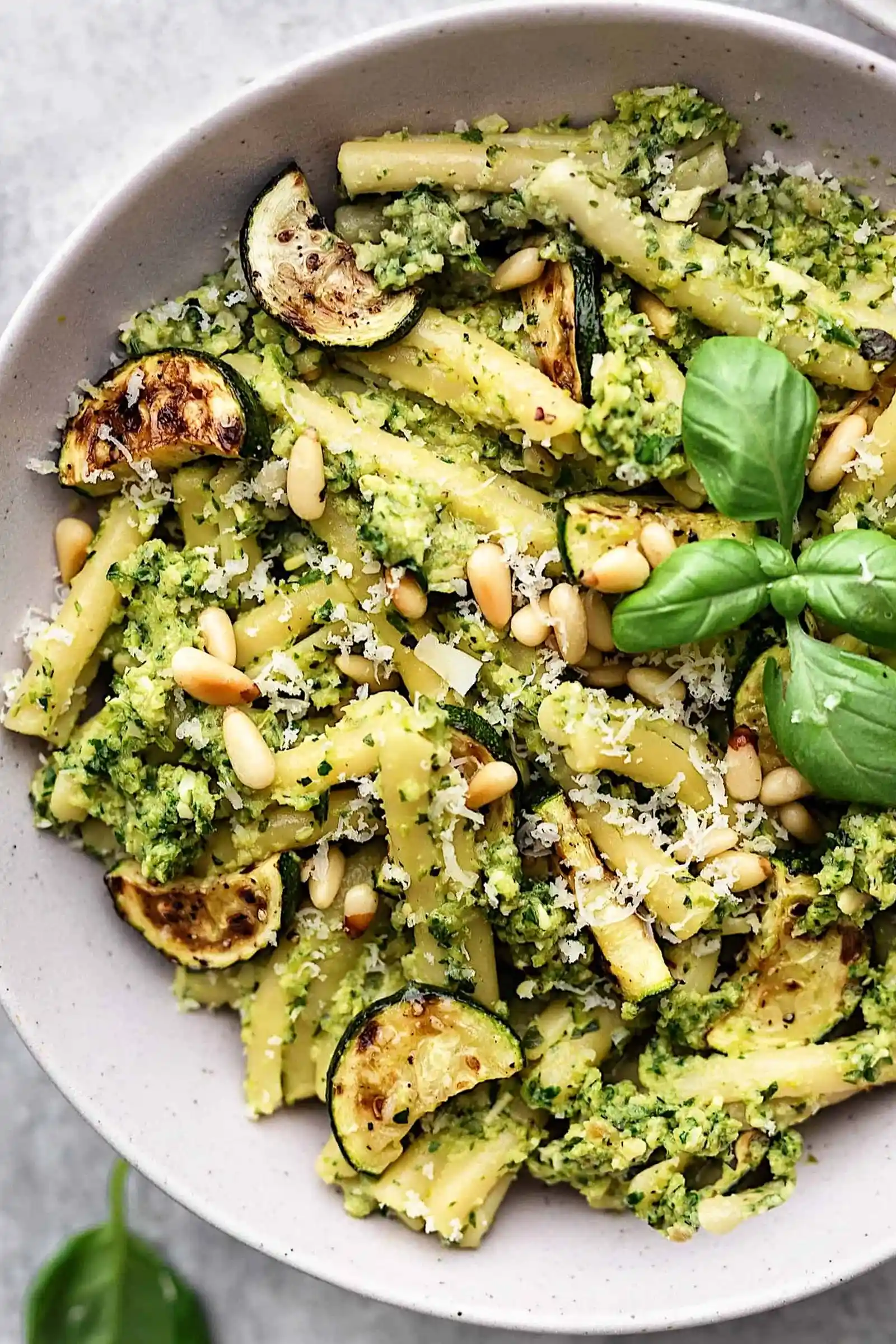
This creamy roasted courgette pesto pasta is a nutrient-dense vegan meal that uses roasted vegetables to create a rich sauce. It is a practical option for summer dining and relies on a few fresh ingredients to achieve a professional texture.
List of ingredients
- 2 medium/large courgettes – sliced into semi-circles for roasting.
- 50g pine nuts – toasted to enhance the nutty flavor.
- 2 handfuls spinach – adds deep green color and iron.
- 2 garlic cloves – used raw in the pesto for a sharp bite.
- Juice of half a lemon (~2 tbsp) – provides necessary acidity to balance the fats.
- 1 heaped tbsp vegan soft cheese – creates a smooth, creamy emulsion.
- 1/4 cup/3 tbsp vegan parmesan (or nutritional yeast) – adds a salty, savory depth.
- 1 cup loosely packed basil – fresh leaves for the classic pesto taste.
- 1/4 cup/3 tbsp olive oil – used for roasting and blending.
- 400g pasta – such as casarecce, penne, or fusilli.
step-by-step instructions
- Preheat Oven: Set your oven to 180C/350F to ensure it is fully heated before roasting.
- Prepare Courgettes: Cut the courgettes in half lengthways and then into semi-circle slices. Place them on a baking sheet, toss with a small amount of olive oil, salt, and pepper, and roast for approximately 15 minutes.
- Toast Pine Nuts: Place pine nuts in a small dry frying pan over medium heat. Toast for a few minutes until they turn golden brown, or place them in the oven for a short period.
- Cook Pasta: Boil a large pot of salted water and cook the pasta according to the packet instructions.
- Blend Pesto Base: Once the courgettes are golden brown and soft, remove them from the oven. Place them in a food processor with the toasted pine nuts, spinach, garlic, lemon juice, vegan soft cheese, vegan parmesan, and basil.
- Emulsify Sauce: Blitz the ingredients until they resemble a pesto. Slowly pour in the olive oil while giving the mixture a final blitz to emulsify the sauce. Taste and adjust the seasoning with salt and pepper.
- Combine with Pasta: Just before draining the pasta, scoop out 1/4 cup of the starchy pasta water. Drain the pasta, stir in the pesto, and then add the reserved pasta water to achieve a glossy and creamy consistency.
- Final Serve: Serve the pasta immediately and top with an extra sprinkle of vegan parmesan.
Optimization for Roasting
Uniform Slicing for Even Cooking
Cutting the courgettes into semi-circles of equal thickness ensures that every piece roasts at the same rate. This prevents some pieces from burning while others remain raw. Aim for a thickness of about 1 centimeter.
Managing Oven Temperature
Maintaining a steady 180C/350F is crucial for achieving the desired caramelization. If the oven is too hot, the courgettes will char on the outside without softening internally. If it is too low, they will steam rather than roast.
Avoiding Pan Overcrowding
Spread the courgette slices in a single layer on the baking sheet with space between them. Overcrowding causes moisture to trap between the vegetables, which leads to steaming. A single layer allows the dry heat to brown the edges effectively.
Alternative Ingredient Options
Swapping Pine Nuts for Walnuts
Walnuts are a great alternative if pine nuts are unavailable or too expensive. They provide a slightly more bitter, earthy flavor and a denser texture. Toast them similarly to pine nuts to bring out their oils.
Using Sunflower Seeds for Nut-Free Needs
For a nut-free version, replace pine nuts with toasted sunflower seeds. These seeds offer a similar creaminess when blended and keep the recipe accessible for those with allergies. They have a milder taste than pine nuts.
Nutritional Yeast as a Cheese Substitute
If you do not have vegan parmesan, nutritional yeast is the best alternative. Use an equal measurement to provide the same savory, cheesy profile. It also adds a boost of B-vitamins to the dish.
Selecting the Right Pasta Shape
Benefits of Ridged Pasta
Pasta shapes like casarecce or fusilli are ideal because their ridges and spirals trap the pesto. This ensures that every bite is well-coated in the sauce. Smooth pastas may allow the sauce to slide off.
Using Whole Grain Varieties
Whole grain or spelt pasta adds a nuttier flavor and more fiber to the meal. Because these pastas have a heartier texture, they pair well with the density of the roasted courgette sauce. Ensure you cook them according to the specific package timings.
Gluten-Free Pasta Tips
When using gluten-free pasta, be careful not to overcook it, as it can become mushy quickly. Reserve slightly more pasta water than requested, as gluten-free starches can sometimes absorb more liquid from the sauce.
Enhancing the Pesto Flavor
Balancing the Lemon Acidity
The amount of juice in a lemon can vary, so add it gradually. Taste the pesto after the first tablespoon to see if the acidity is balanced. Too much lemon can overpower the delicate taste of the roasted courgettes.
Adjusting Garlic Intensity
For a milder garlic flavor, you can roast the garlic cloves alongside the courgettes. This removes the sharp raw bite and replaces it with a sweet, mellow aroma. Keep them raw if you prefer a traditional pesto punch.
Incorporating Fresh Parsley
Adding a handful of fresh flat-leaf parsley along with the basil can add a brighter, more herbal note. This is particularly useful if your basil leaves are very strong. It also increases the overall nutrient profile of the sauce.
Storage and Preservation
Refrigeration Guidelines
Store any leftover pasta and pesto in an airtight container in the refrigerator for up to three days. The sauce may thicken significantly as it cools. This is normal and can be fixed during the reheating process.
Freezing the Pesto Sauce
If you make a double batch of pesto, you can freeze the sauce without the pasta. Store it in ice cube trays or small freezer bags. Thaw in the fridge overnight before mixing it with fresh pasta.
Preventing Basil Oxidation
To stop the pesto from turning brown in the fridge, pour a thin layer of olive oil over the top of the sauce. This creates a seal that prevents oxygen from reaching the basil leaves. This keeps the color vibrant green.
Reheating Instructions
Stovetop Reheating Method
The best way to reheat this dish is in a pan over low heat. Add a splash of water or a teaspoon of olive oil to restore the emulsion. Stir gently to avoid breaking the pasta pieces.
Microwave Reheating Tips
When using a microwave, heat the pasta in short 30-second intervals. Stir between each interval to ensure the heat is distributed evenly. Adding a tablespoon of water prevents the sauce from drying out.
Temperature Control for Freshness
Avoid overheating the pesto to a boil during reheating. High heat can cause the fresh basil to lose its flavor and the oil to separate from the solids. Warm it through gently until it is just steaming.
Serving and Pairing Ideas
Adding Roasted Cherry Tomatoes
Roast a handful of cherry tomatoes on the same tray as the courgettes. Their burst of acidity and sweetness provides a great contrast to the creamy pesto. Stir them in at the very end.
Topping with Toasted Seeds
Garnish the finished dish with extra toasted pine nuts or pumpkin seeds for added crunch. This creates a texture contrast against the soft pasta and creamy sauce. A sprinkle of fresh basil leaves also adds visual appeal.
Combining with Plant-Based Proteins
To make the meal more filling, add grilled tofu cubes or canned chickpeas. These proteins absorb the pesto flavor well and make the dish a complete meal. Toss them in the pan with the pasta and sauce.
Troubleshooting Common Issues
Fixing a Watery Sauce
If the pesto seems too thin, add an extra tablespoon of vegan parmesan or nutritional yeast. These dry ingredients act as thickeners. You can also blend in a few more toasted pine nuts.
Correcting a Grainy Texture
A grainy texture usually means the pine nuts or garlic were not fully blended. Process the sauce for an additional minute in the food processor. If you prefer a rustic texture, this is not an issue.
Managing Overly Strong Basil
If the basil flavor is too dominant, balance it by adding a small amount more of the vegan soft cheese. The fats in the cheese help to mellow out the strong herbal notes of the basil.
Frequently Asked Questions
Can I use frozen courgettes?
It is not recommended to use frozen courgettes for this recipe. Frozen vegetables release significantly more water during cooking, which would prevent them from roasting and would make the pesto too thin.
Is this recipe suitable for nut allergies?
Yes, you can make this nut-free by substituting the pine nuts with toasted sunflower seeds or pumpkin seeds. The flavor will be slightly different but the creamy texture will remain the same.
What is the best substitute for vegan parmesan?
Nutritional yeast is the best substitute for vegan parmesan. It provides a similar salty and cheesy flavor. For a more realistic texture, you can blend nutritional yeast with a pinch of salt and some ground cashews.
Print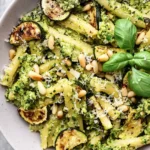
Roasted Courgette Pesto Pasta
- Total Time: 30 minutes
- Yield: 4 servings 1x
- Diet: Vegan
Description
Roasted courgettes are blended into a creamy, fresh pesto sauce. Along with spinach, basil, toasted pine nuts and vegan parmesan. It’s the perfect summer pasta!
Ingredients
- 2 medium/large courgettes
- 50g pine nuts
- 2 handfuls spinach
- 2 garlic cloves
- Juice of half a lemon (~2 tbsp)
- 1 heaped tbsp vegan soft cheese
- 1/4 cup/3 tbsp vegan parmesan (or sub nutritional yeast)
- 1 cup loosely packed basil
- 1/4 cup/3 tbsp olive oil
- 400g pasta
Instructions
- Preheat: Preheat oven to 180C/350F.
- Roast: Cut courgettes in half lengthways and then cut into semi circle slices. Place on a baking sheet, toss in some olive oil, salt and pepper and place in the oven for around 15 minutes.
- Toast: Place pine nuts in a small dry frying pan on medium heat and toast for a few minutes until turning golden brown. Alternatively place in the oven for a few minutes.
- Boil: Cook pasta according to packet instructions.
- Process: When the courgettes are golden brown, soft and starting to fall apart remove from the oven and place in a food processor with the pine nuts and remaining ingredients apart from the oil.
- Blend: Blitz until the nuts are blended and it resembles a pesto. Slowly pour in the olive oil whilst giving it a final blitz. Taste and season with salt and pepper.
- Combine: Once the pasta is done, scoop out 1/4 cup of pasta water. Drain pasta and add the pesto, mix and then add the pasta water. It should be nice and creamy and glossy.
- Serve: Serve and top with some extra parmesan!
Notes
I used casarecce pasta, but any will work! Will make around 2 cups pesto.
- Prep Time: 5 minutes
- Cook Time: 25 minutes
- Category: Mains
- Method: Roasting
- Cuisine: Italian
Nutrition
- Serving Size: 1 serving
- Calories: 657 kcal
- Sugar: 13 g
- Sodium: 528 mg
- Fat: 35 g
- Saturated Fat: 6 g
- Unsaturated Fat: 26 g
- Trans Fat: 0 g
- Carbohydrates: 64 g
- Fiber: 5 g
- Protein: 24 g
- Cholesterol: 0 mg
Keywords: courgette, healthy, Pasta, pesto