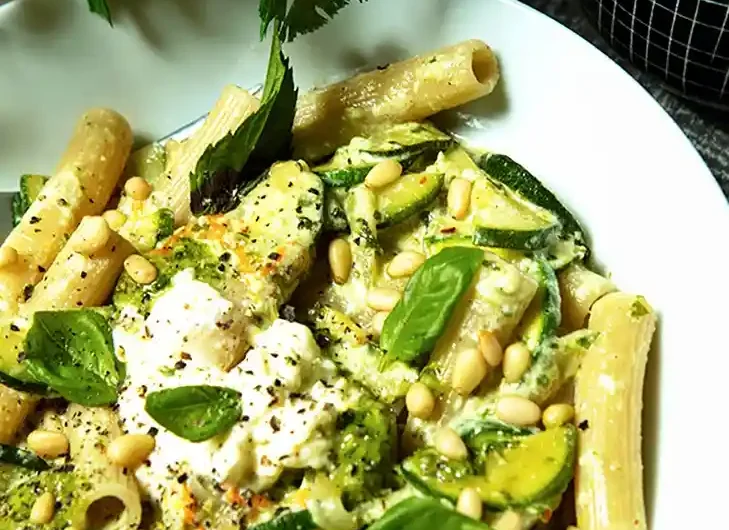
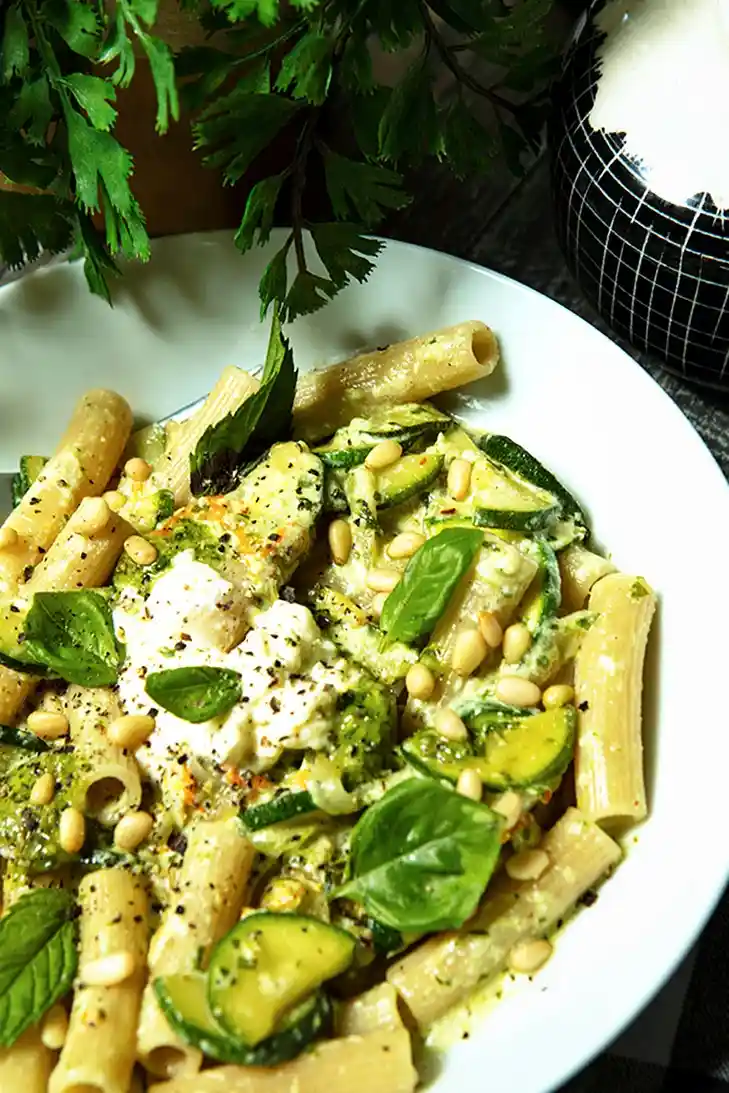
This vibrant pasta dish combines tender zucchini and creamy ricotta cheese with a fresh basil pesto. It is a nutrient-dense meal that highlights the flavors of summer produce in under an hour.
List of ingredients
- 3 Tablespoons Olive Oil – for sautéing vegetables.
- 1 Small Onion, Finely Chopped – adds a sweet aromatic base.
- 2 Pounds Small Zucchini, Sliced in 1/4-inch Pieces – provides the main vegetable component.
- Salt & Pepper To Taste – for fundamental seasoning.
- 2 Large Garlic Cloves, Minced – for the pesto base.
- 2 Cups Fresh Basil Leaves, Washed & Dried – the primary herb for the pesto.
- 1/3 Cup Pecorino Romano Cheese (microbial-rennet) – adds salty depth to the pesto.
- 1/4 Cup Extra Virgin Olive Oil – to emulsify the pesto.
- Salt & Pepper To Taste – for pesto seasoning.
- 1 Pound Dried Pasta (Rigatoni or Penne) – shapes that hold the creamy sauce well.
- 8 Ounces Full Fat Ricotta Cheese (About 1 Cup) – creates the creamy sauce base.
- Red Chili Flakes – for a hint of spicy warmth.
- Zest From 1 Lemon – provides brightness to cut through the richness.
- Cracked Black Pepper – for finishing and garnish.
- 1 Cup Grated Pecorino Romano Cheese (microbial-rennet) – for the final mix and serving.
- 1/2 Cup Ricotta Cheese – for the final dollop garnish.
- 1/4 Cup Lightly Toasted Pine Nuts – adds a buttery crunch.
step-by-step instructions
- Boil Water: Bring a large pot of lightly salted water to a boil.
- Sauté Onion: Heat olive oil in a skillet over medium heat and cook the onion until translucent, about 5 minutes.
- Cook Zucchini: Add the zucchini, season with salt and pepper, and continue to cook until the zucchini is tender, about 10 minutes.
- Blend Pesto Base: Place the garlic, basil, and Pecorino cheese in a food processor or blender and pulse until blended.
- Finish Pesto: Season with salt and pepper, then drizzle the olive oil in while pulsing.
- Reserve Pesto: Scoop the basil pesto into a small bowl and set aside a couple of teaspoons full for garnishing.
- Prepare Pasta: Cook the pasta according to package directions, then drain, reserving 1 cup of pasta water.
- Combine Pasta and Veggies: Return the pasta to the pot with the zucchini and onion mixture and turn heat to medium.
- Create Creamy Sauce: Add 1/2 cup cooking water, ricotta cheese, chili flakes, and lemon zest.
- Emulsify: Stir to coat the pasta, adding additional water as needed to achieve a smooth consistency.
- Final Mix: Add the basil pesto, half the grated Pecorino cheese, and stir to mix thoroughly.
- Plate the Dish: Serve in individual bowls topped with a sprinkling of pine nuts, a dollop of ricotta cheese, and a drizzle of pesto over each bowl.
- Serve: Offer additional grated cheese and black pepper at the table.
Optimizing Zucchini Preparation
Selecting the Best Zucchini Size
Opt for small to medium zucchini rather than the oversized varieties. Smaller zucchini have a firmer flesh and fewer seeds, which prevents the pasta from becoming overly watery. They also maintain their structural integrity better during the sautéing process.
Achieving Uniform Slices
Cut the zucchini into consistent 1/4-inch pieces to ensure they cook evenly. If the pieces vary in size, some will become mushy while others remain raw. Using a mandoline slicer can help achieve this precision quickly.
Managing Moisture Levels
Zucchini has a high water content that can dilute the ricotta sauce. To prevent this, avoid overcrowding the skillet during the sautéing phase. Sautéing in batches allows the moisture to evaporate and the edges to brown slightly.
Mastering the Basil Pesto
Preserving the Vibrant Green Color
To keep the pesto from oxidizing and turning brown, blend the ingredients quickly. Avoid over-processing the basil, as the heat from the blender blades can dull the color. If making it in advance, a thin layer of olive oil on top helps seal out air.
Adjusting Pesto Thickness
If the pesto is too thick to drizzle, add an extra teaspoon of olive oil or a splash of lemon juice. If it is too thin, pulse in a small amount of additional grated Pecorino cheese. The goal is a thick but pourable consistency.
Toasting Pine Nuts for Maximum Flavor
Dry toast the pine nuts in a small skillet over medium-low heat for 3-5 minutes. Shake the pan constantly, as pine nuts contain high oil content and can burn in seconds. Toasted nuts provide a deeper, nuttier contrast to the fresh basil.
Pasta Selection and Cooking Tips
Choosing the Right Pasta Shape
Rigatoni and penne are ideal because their hollow centers and outer ridges trap the creamy ricotta and pesto. Smaller shapes like macaroni may not provide enough surface area for the chunky zucchini. Avoid long, thin pastas like spaghetti which can cause the zucchini pieces to slide off.
The Role of Reserved Pasta Water
Pasta water contains starch that acts as a binder between the fat in the cheese and the water-based liquids. Adding this water gradually allows you to control the creaminess of the sauce without adding more heavy dairy. It creates a professional, glossy finish.
Cooking to Al Dente Texture
Cook the pasta for one minute less than the package instructions. Since the pasta is returned to the pot with the zucchini and heated further, it will finish cooking in the sauce. This prevents the pasta from becoming overcooked and mushy.
Working with Ricotta Cheese
Using Full-Fat Ricotta for Texture
Full-fat ricotta is recommended for its superior creaminess and mouthfeel. Low-fat versions can sometimes break or separate when heated, leading to a grainy sauce. The fat content helps the cheese melt smoothly into the pasta water.
Straining Ricotta for Thickness
If your ricotta seems too watery, let it sit in a fine-mesh strainer for 30 minutes before using. This removes excess whey and results in a denser, richer sauce. This is particularly helpful if you are using a more liquid brand of ricotta.
Temperature Control for Cheese
Add the ricotta cheese at the end of the cooking process over medium to low heat. High heat can cause the cheese to clump or separate. Gently stirring it into the warm pasta ensures a velvety integration.
Flavor Variations and Substitutions
Adding Fresh Baby Spinach
Fold in two cups of fresh baby spinach during the final mixing stage. The residual heat of the pasta will wilt the spinach without overcooking it. This adds extra nutrients and a complementary green color to the dish.
Substituting Pine Nuts for Walnuts
If pine nuts are unavailable or too expensive, toasted walnuts are an excellent alternative. They provide a similar crunch and earthy flavor profile. Ensure the walnuts are finely chopped to maintain a balanced texture.
Integrating Sun-Dried Tomatoes
Chopped sun-dried tomatoes add a concentrated sweetness and tartness that contrasts the creamy ricotta. Stir them in with the zucchini and onion. This creates a more complex flavor profile while remaining within the Italian theme.
Adjusting the Heat Level
For a milder flavor, reduce the red chili flakes to a pinch or omit them entirely. If you prefer a spicier dish, add a pinch of cayenne pepper or increase the chili flakes. The heat should complement, not overpower, the delicate lemon zest.
Storage and Reheating Guidelines
Refrigeration and Shelf Life
Store the leftover pasta in an airtight container in the refrigerator for up to three days. The ricotta sauce may thicken significantly as it cools. Keep the garnish (extra pesto and pine nuts) in separate containers to maintain freshness.
Preventing Pasta from Drying Out
When storing, add a small splash of olive oil or extra pasta water to the container. This prevents the pasta from absorbing all the moisture from the sauce. It makes the reheating process much more effective.
Best Reheating Methods
Reheat the pasta in a skillet over medium heat rather than in the microwave. Add a tablespoon of water or milk to loosen the ricotta sauce as it warms. Stir gently to avoid breaking the zucchini pieces.
Troubleshooting Common Issues
Fixing a Sauce that is Too Thick
If the sauce feels too heavy or sticky, stir in additional reserved pasta water one tablespoon at a time. Continue stirring over low heat until the sauce coats the pasta smoothly. Avoid adding too much water at once to prevent the sauce from becoming runny.
Preventing Mushy Zucchini
Avoid covering the skillet with a lid while sautéing the zucchini. Covering the pan traps steam, which boils the vegetable rather than searing it. Keep the pan open to allow moisture to escape and the zucchini to maintain a slight bite.
Balancing the Lemon Zest
If the lemon flavor is too dominant, balance it by adding a small amount of extra Pecorino cheese. The saltiness of the cheese offsets the acidity of the zest. Always zest the lemon carefully, avoiding the bitter white pith.
Frequently Asked Questions
Can I use frozen zucchini?
Frozen zucchini is not recommended for this recipe as it releases significantly more water upon thawing. This can lead to a watery sauce and a mushy texture. Fresh, firm zucchini is essential for the best result.
Can I make this dish vegan?
To make this vegan, replace the ricotta with a cashew-based ricotta and use nutritional yeast or a vegan hard cheese instead of Pecorino. Use vegan-certified pasta and ensure the pesto is made with oil and nuts without cheese.
How do I toast pine nuts without burning them?
Use a light-colored skillet so you can see the color change. Keep the heat at medium-low and move the nuts constantly with a spatula. Remove them from the heat the moment they turn golden brown, as they continue to cook for a moment after removal.
What other pasta shapes work well?
Fusilli or Farfalle (bow-tie pasta) are also good options because they have nooks and crannies that hold the sauce. Avoid very smooth pasta like Linguine, as the ricotta and pesto may slide off the noodles.
Print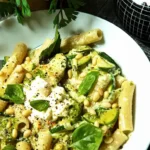
Creamy Zucchini and Ricotta Pasta with Basil Pesto
- Total Time: 35 minutes
- Yield: 4 servings 1x
- Diet: Vegetarian
Description
A creamy pasta dish made with fresh zucchini and creamy ricotta sauce.
Ingredients
- 3 Tablespoons Olive Oil
- 1 Small Onion, Finely Chopped
- 2 Pounds Small Zucchini, Sliced in 1/4-inch Pieces
- Salt & Pepper To Taste
- 2 Large Garlic Cloves, Minced
- 2 Cups Fresh Basil Leaves, Washed & Dried
- 1/3 Cup Microbial-rennet Pecorino Romano Cheese
- 1/4 Cup Extra Virgin Olive Oil
- 1 Pound Dried Pasta (Rigatoni or Penne)
- 8 Ounces Full Fat Ricotta Cheese (microbial-rennet), About 1 Cup
- Red Chili Flakes
- Zest From 1 Lemon
- Cracked Black Pepper
- 1 Cup Grated Microbial-rennet Pecorino Romano Cheese
- 1/2 Cup Ricotta Cheese (microbial-rennet)
- 1/4 Cup Lightly Toasted Pine Nuts
Instructions
- Step: Bring a large pot of lightly salted water to a boil.
- Step: Heat olive oil in a skillet over medium heat and cook the onion until translucent, about 5 minutes.
- Step: Add the zucchini, season with salt and pepper, and continue to cook until the zucchini is tender, about 10 minutes.
- Step: Place the garlic, basil, and Pecorino cheese in a food processor or blender and pulse until blended.
- Step: Season with salt and pepper, then drizzle the olive oil in while pulsing.
- Step: Scoop the basil pesto into a small bowl and setting aside a couple of teaspoons full.
- Step: Cook the pasta according to package directions, then drain, reserving 1 cup of pasta water.
- Step: Return the pasta to the pot with the zucchini and onion mixture and turn heat to medium.
- Step: Add 1/2 cup cooking water, ricotta cheese, chili flakes, and lemon zest.
- Step: Stir to coat the pasta, adding additional water as needed.
- Step: Add the basil pesto, half the grated Pecorino cheese, and stir to mix.
- Step: Serve in individual bowls topped with a sprinklng of pine nuts, a dollop of ricotta cheese and a drizzle of pesto over each bowl.
- Step: Offer additional grated cheese, and black pepper at the table.
Notes
For best results, use a good quality ricotta cheese and small, firm zucchini.
- Prep Time: 10 minutes
- Cook Time: 25 minutes
- Category: Dried Pasta – Cheese
- Method: Stovetop
- Cuisine: Italian
Nutrition
- Serving Size: 1 serving
- Calories: 680 kcal
- Sugar: 7 g
- Sodium: 890 mg
- Fat: 34 g
- Saturated Fat: 14 g
- Unsaturated Fat: 20 g
- Trans Fat: 0 g
- Carbohydrates: 58 g
- Fiber: 6 g
- Protein: 26 g
- Cholesterol: 95 mg
Keywords: pasta, zucchini, ricotta, basil pesto, Italian