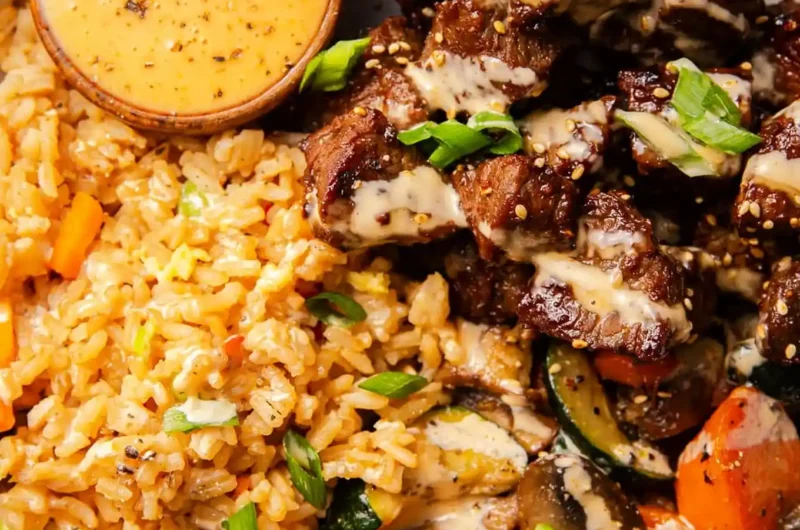
These Hibachi Steak Bowls feature tender sirloin, crisp sautéed vegetables, and savory fried rice. They offer a restaurant-style experience that is simple to prepare at home for a weeknight dinner. This meal is excellent for those who enjoy bold Asian-inspired flavors and efficient meal prepping.
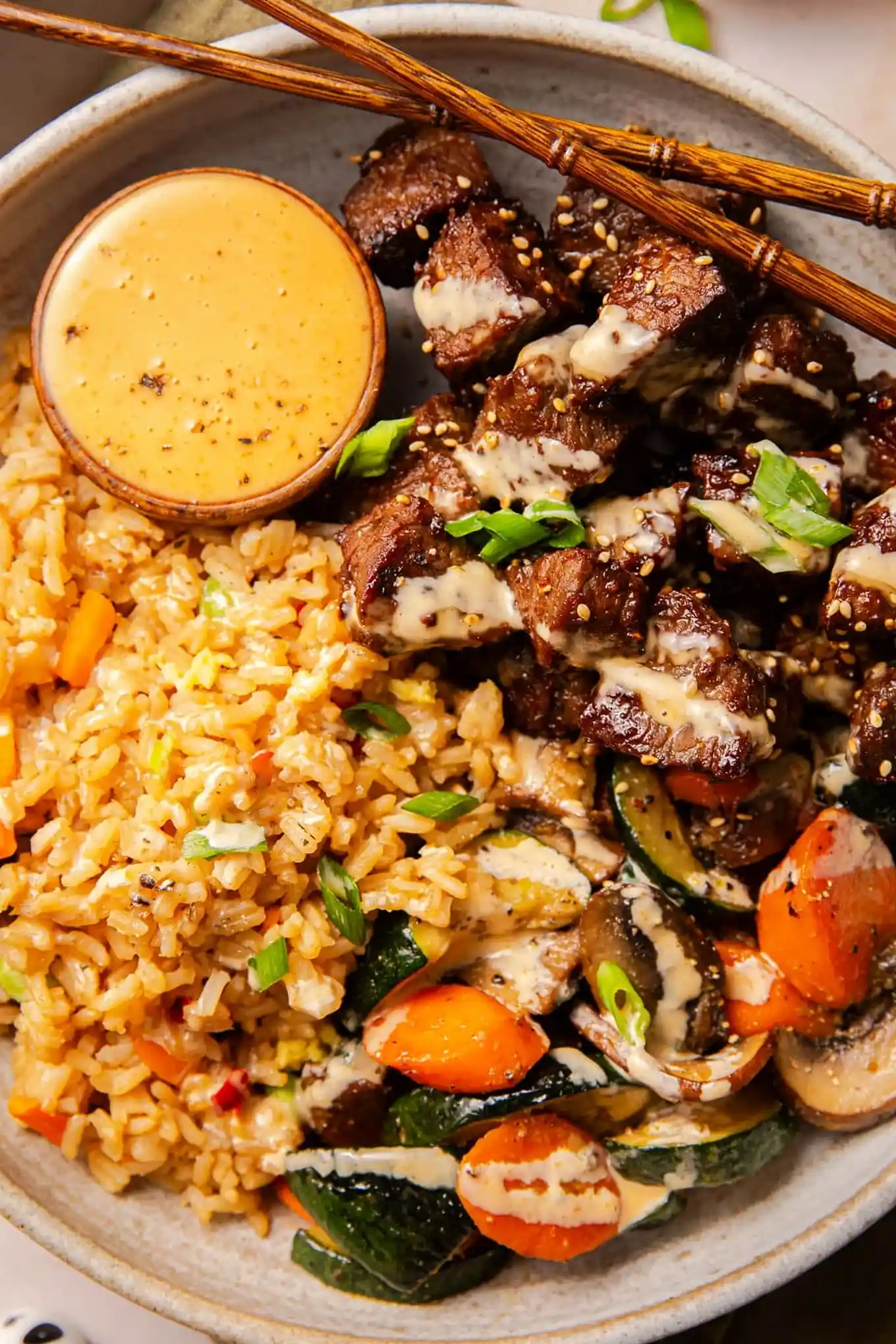
List of ingredients
- 2 lbs top sirloin steak, cut into rough chunks – a lean and tender choice for quick searing.
- 1 tablespoon non-alcoholic mirin substitute (honey mixed with water) – adds a subtle sweetness and depth.
- 6 cloves of garlic, finely minced or pressed – provides a strong aromatic base.
- 2 teaspoons ginger paste – adds a zesty, warm flavor profile.
- 2 tablespoons plus 1 teaspoon sesame oil, divided – used for both marinating and cooking for a nutty aroma.
- ½ teaspoon ground white pepper (or black pepper) – provides a sharp, traditional heat.
- Kosher salt, to taste – used to enhance all the natural flavors.
- 4 tablespoons unsalted butter, divided – adds richness and helps with browning.
- 3 medium carrots, thinly cut on a bias – sliced diagonally for faster and more even cooking.
- 2 medium zucchinis, sliced in half lengthwise & then cut into half moons – ensures a consistent texture.
- 4-5 ounces sliced mushrooms (baby bella) – adds an earthy, savory element.
- ½ teaspoon garlic powder – used for extra seasoning on the vegetables.
- 1-2 tablespoons teriyaki sauce or Japanese BBQ Sauce – glazes the steak for a glistening finish.
- For serving: Fried rice & store-bought Yum Yum Sauce – completes the bowl with a creamy, tangy contrast.
step-by-step instructions
- Marinate the beef: Place the sirloin into a large bowl or a large plastic baggie. Add the non-alcoholic mirin substitute, garlic, ginger, 1 teaspoon sesame oil, white pepper (or black pepper), and salt to taste. Toss all ingredients to fully combine, ensuring steak chunks are thoroughly coated, and set aside to marinate for at least 30 minutes.
- Sauté the vegetables: In a wok or large skillet, heat 2 tablespoons of butter and 1 tablespoon of sesame oil over medium heat. When hot, add the carrots, zucchini, and mushrooms, tossing often until tender and golden brown, which takes about 10-15 minutes. Season the vegetables with garlic powder and salt or pepper to taste, then transfer them to a clean plate. Carefully wipe the pan clean with a damp paper towel if needed.
- Sear the steak: In the same pan, add the remaining 2 tablespoons of butter and 1 tablespoon of sesame oil over medium-high heat. When hot, add the marinated steak and cook, tossing frequently, until nicely seared for about 3-4 minutes. Remove the pan from the heat, drizzle in the teriyaki or Japanese BBQ sauce, and toss well to coat the steak until the chunks are glistening.
- Assemble the bowls: Evenly divide the cooked steak and sautéed vegetables into shallow bowls along with the fried rice. Finish the bowls with a drizzle of store-bought Yum Yum sauce, either on top or served on the side.
Meat Selection Tips
Choosing Top Sirloin Steak
Top sirloin is highly recommended because it is lean yet flavorful. It holds its shape well when cut into chunks and cooks quickly without becoming overly chewy. This makes it ideal for high-heat searing.
Using New York Strip
New York strip is a more marbled alternative that provides a richer taste. If using this cut, trim excess exterior fat before cubing. Be sure to slice against the grain to maximize tenderness.
Selecting Ribeye Steak
Ribeye offers the most tenderness due to its high fat content. Use slightly smaller chunks to ensure the fat renders properly during the short cooking time. This cut provides a more indulgent, buttery flavor to the bowl.
Cutting Against the Grain
Always identify the muscle fibers of the steak and cut perpendicular to them. This shortens the fibers, making the meat much easier to chew. Consistent chunk sizes ensure that every piece cooks at the same rate.
Vegetable Preparation Techniques
Cutting Carrots on a Bias
Slicing carrots diagonally increases the surface area of each piece. This allows the carrots to cook faster and brown more effectively. It also creates a visually appealing shape common in hibachi restaurants.
Slicing Zucchini Half Moons
Cutting zucchinis into half moons prevents them from curling or shrinking too much. This method maintains a bit of a snap in the center of the vegetable. It also allows the butter and sesame oil to coat every side evenly.
Preparing Baby Bella Mushrooms
Baby bella mushrooms provide a deeper, more savory flavor than white button mushrooms. Clean them with a damp paper towel rather than soaking them in water to prevent them from becoming soggy. Slice them into thick pieces so they don’t disappear during sautéing.
Ensuring Even Vegetable Sizes
Try to keep all the vegetable pieces roughly the same thickness. This prevents the zucchini from overcooking while the carrots are still hard. Consistent sizing leads to a uniform golden-brown color across the mix.
Cooking Equipment and Heat Management
Using a Carbon Steel Wok
A wok is the ideal tool for this recipe due to its sloping sides and ability to distribute high heat. It allows for constant tossing, which prevents the meat and vegetables from sticking. The high heat creates the characteristic sear found in professional kitchens.
Using a Cast Iron Skillet
A cast iron skillet is an excellent alternative if you do not own a wok. It retains heat exceptionally well, which is critical for getting a deep brown crust on the steak. Just ensure the pan is fully preheated before adding the fats.
Avoiding Pan Crowding
If you are cooking for a large group, sauté the vegetables and steak in batches. Overcrowding the pan lowers the temperature and causes the food to steam rather than sear. This results in grey meat and mushy vegetables.
Maintaining High Heat for Searing
The steak should sizzle immediately upon hitting the pan. Keep the heat at medium-high and avoid stirring too constantly for the first minute. This allows the Maillard reaction to occur, creating a savory crust on the outside.
Flavor and Ingredient Substitutions
Non-Alcoholic Mirin Alternatives
Since mirin is a sweet rice wine, you can replace it with a mixture of honey and water. A ratio of one part honey to one part water mimics the sweetness and viscosity. This maintains the balance of the marinade without using alcohol.
Replacing White Pepper with Black Pepper
White pepper has a more fermented, earthy punch and is standard in Japanese cooking. If you don’t have it, ground black pepper is a suitable replacement. Black pepper provides a sharper, more floral heat that still complements the beef.
Using Fresh Ginger Instead of Paste
If you prefer fresh ginger, peel a small knob and grate it finely. Use about one tablespoon of freshly grated ginger for every two teaspoons of paste. Fresh ginger offers a brighter, more pungent aroma.
Choosing a Japanese BBQ Sauce
Look for sauces that list soy sauce and ginger as primary ingredients. Japanese BBQ sauces are typically thinner and saltier than American BBQ sauces. This ensures the steak is glazed rather than coated in a thick, sugary paste.
Rice and Base Options
Preparing Frozen Fried Rice
Using high-quality frozen fried rice is a great time-saver for weeknight meals. Sauté it in a pan with a small knob of butter to refresh the texture. Heat until steaming through and slightly crisp on the edges.
Making Fresh Jasmine Fried Rice
For the best homemade fried rice, use day-old chilled jasmine rice. Cold rice is drier, which prevents the grains from clumping together in the pan. Stir-fry with soy sauce, sesame oil, and scrambled eggs for authenticity.
Using Brown Rice for More Fiber
Brown rice is a nutritious alternative that adds a nutty flavor to the bowl. Since brown rice takes longer to cook, prepare it in advance and let it cool. This ensures it fries properly without becoming mushy.
Cauliflower Rice for Low Carb
To make this recipe low-carb, substitute the fried rice with cauliflower rice. Sauté the cauliflower rice on high heat with a bit of sesame oil and soy sauce. Be sure to squeeze out excess moisture from the cauliflower before cooking.
Storage and Meal Prep Guide
Refrigeration and Shelf Life
Store the steak, vegetables, and rice in airtight containers in the refrigerator. These bowls will stay fresh for up to four days. Keep the Yum Yum sauce in a separate container to prevent the rice from absorbing it.
Freezing for Long Term Storage
You can freeze these bowls for up to three months. Portion them into individual freezer-safe containers and cool them completely before sealing. Thaw them in the refrigerator overnight before reheating.
Reheating in the Microwave
Place a damp paper towel over the bowl before microwaving to trap steam. This prevents the steak from drying out and keeps the rice moist. Heat in 1-minute intervals, stirring in between.
Reheating on the Stovetop
For a better texture, reheat the steak and vegetables in a skillet over medium heat. Add a splash of water or beef broth to loosen the sauce. Toss until heated through to regain some of the original sear.
Troubleshooting and Common Mistakes
Fixing Tough or Chewy Steak
Tough steak is usually the result of overcooking. Sirloin cooks very quickly, so remove it from the heat as soon as a brown crust forms. Aim for a medium-rare to medium internal temperature for maximum tenderness.
Preventing Watery Vegetables
Watery vegetables happen when the pan temperature drops too low. Ensure the butter and oil are shimmering before adding the vegetables. Do not cover the pan with a lid, as this traps steam and makes the veggies soft.
Adjusting Sauce Saltiness
If the teriyaki glaze is too salty, add a teaspoon of honey or brown sugar. This balances the sodium with sweetness. You can also add a squeeze of fresh lime juice to brighten the overall flavor.
Managing Butter Burn Points
Butter can burn quickly at high temperatures. Combine it with sesame oil, which has a higher smoke point, to protect the butter. If the butter starts to turn dark brown too quickly, lower the heat slightly.
Frequently Asked Questions
Can I use chicken instead of beef?
Yes, you can use chicken breast or thighs. Cut the chicken into bite-sized pieces and follow the same marinating and cooking process, though chicken may require an extra minute or two of cooking to ensure it is fully done.
How long should I marinate the steak?
Thirty minutes is the minimum for the flavors to penetrate the meat. For deeper flavor, you can marinate for up to 24 hours in the refrigerator. Avoid marinating longer than 24 hours as the acid can change the texture of the beef.
Where can I find Yum Yum sauce?
Yum Yum sauce is typically found in the international or Asian aisle of most grocery stores. It is often labeled as Hibachi sauce. If unavailable, it can be made by mixing mayonnaise, tomato paste, sugar, and paprika.
Can I cook the vegetables and meat together?
It is not recommended to cook them in the same batch. Vegetables release water and take longer to cook, which would prevent the steak from searing. Cooking them separately ensures the steak stays tender and the vegetables stay crisp.
Print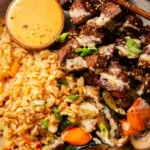
Homemade Hibachi Steak Bowls
- Total Time: 35 minutes
- Yield: 4 servings 1x
- Diet: General
Description
These Hibachi Steak Bowls are loaded with tender, flavorful pieces of sirloin, sautéed vegetables, and fried rice. Inspired by Japanese steakhouses, this recipe is easy and perfect for a delicious weeknight-friendly dinner or meal prepping!
Ingredients
- 2 lbs top sirloin steak, cut into rough chunks
- 1 tablespoon white grape juice
- 6 cloves of garlic, finely minced or pressed
- 2 teaspoons ginger paste
- 2 tablespoons plus 1 teaspoon sesame oil, divided
- ½ teaspoon ground white pepper (or black pepper)
- Kosher salt, to taste
- 4 tablespoons unsalted butter, divided
- 3 medium carrots, thinly cut on a bias
- 2 medium zucchinis, sliced in half lengthwise and then cut into half moons
- 4–5 ounces sliced mushrooms
- ½ teaspoon garlic powder
- 1–2 tablespoons teriyaki sauce or Japanese BBQ Sauce
- Fried rice, for serving
- Yum Yum Sauce, for serving
Instructions
- Marinate: Place the sirloin into a large bowl (or inside a large plastic baggie). Add the white grape juice, garlic, ginger, 1 teaspoon sesame oil, white pepper (or black pepper), and salt-to taste. Toss all ingredients to fully combine, ensuring steak chunks are thoroughly coated. Then set the steak aside to marinate for at least 30 minutes.
- Sauté Veggies: In a wok or large skillet, heat 2 tablespoons of butter and 1 tablespoon of sesame oil over medium heat. When hot, add the carrots, zucchini, and mushrooms. Cook the veggies, tossing often, until tender and golden brown, about 10-15 minutes. Season the veggies with garlic powder and salt/pepper- to taste. Then transfer the sautéed veggies to a clean plate and set aside. If needed, carefully wipe the pan clean with a damp paper towel.
- Cook Steak: In the same pan, add remaining 2 tablespoons butter and 1 tablespoon sesame oil over medium-high heat. When hot, add the steak. Cook, tossing beef often, until nicely seared, about 3-4 minutes- careful not to overcook steak into toughness. Then remove from heat, and drizzle in the teriyaki sauce or Japanese BBQ sauce, toss well to coat steak in sauce until chunks are glistening.
- Assemble: Evenly divide the cooked steak and sautéed veggies into shallow bowls, along with fried rice. Finish off bowls with a drizzle of store-bought Yum Yum sauce (or feel free to serve it on the side) to complete these hibachi steak bowls.
Notes
Store-bought Yum Yum Sauce is typically found in the international section of your local grocery store. To keep the recipe quick and easy, you can use store-bought frozen fried rice that just needs to be heated, or make your own.
- Prep Time: 10 minutes
- Cook Time: 25 minutes
- Category: Main Dishes
- Method: Stovetop
- Cuisine: Asian-Inspired
Nutrition
- Serving Size: 1 bowl
- Calories: 1050 kcal
- Sugar: 12 g
- Sodium: 1200 mg
- Fat: 45 g
- Saturated Fat: 15 g
- Unsaturated Fat: 30 g
- Trans Fat: 0 g
- Carbohydrates: 65 g
- Fiber: 6 g
- Protein: 55 g
- Cholesterol: 180 mg
Keywords: hibachi steak bowls, Japanese steakhouse, stir fry beef, easy dinner, meal prep