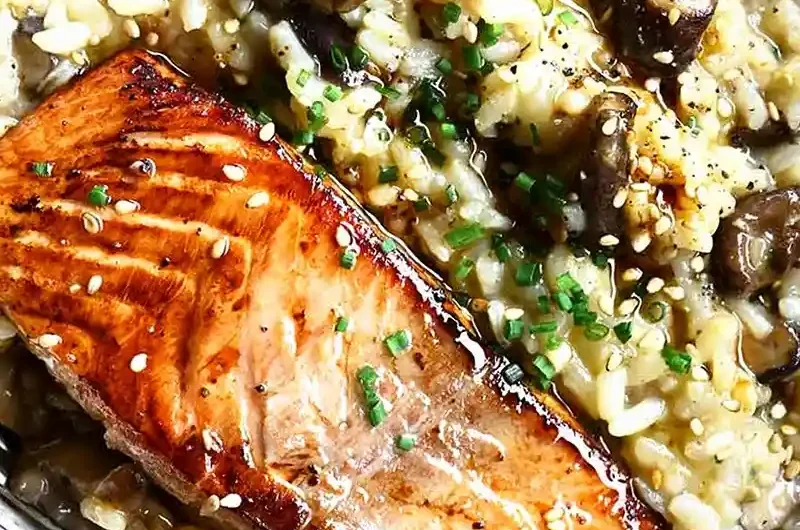
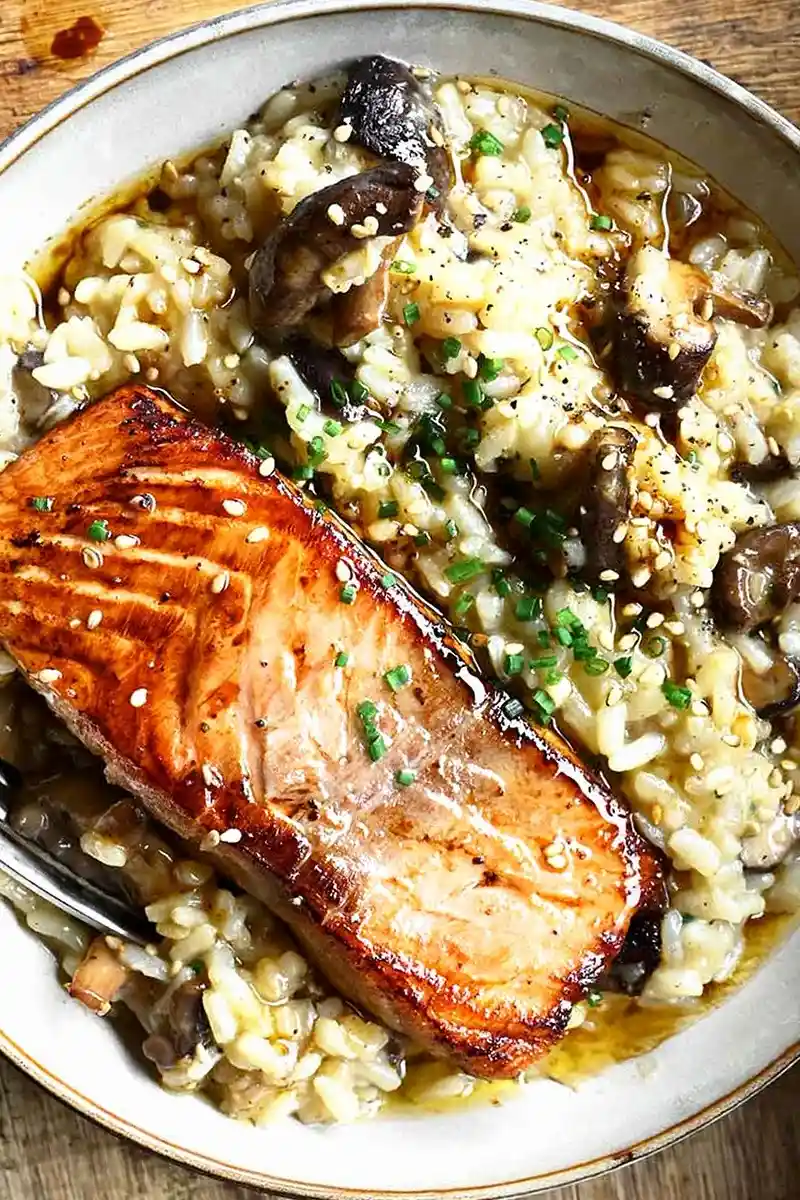
Experience a fusion of flavors with this savory miso-infused risotto topped with perfectly glazed salmon fillets. This dish balances earthy shiitake mushrooms with a rich, creamy rice base for a sophisticated dinner.
List of ingredients
- 3 tbsp olive oil, divided – used for sautéing mushrooms and aromatics.
- 10.5 ounces shiitakes, torn into pieces – provides an earthy, umami base.
- 1 tbsp low sodium soy sauce – adds a salty depth to the mushrooms.
- 1 small yellow onion, diced – provides a sweet aromatic foundation.
- 1 celery stalk, diced – adds a subtle crispness and flavor.
- 1 garlic clove, minced – enhances the savory profile.
- 1 cup rice, such as sushi rice or Arborio – ensures a creamy consistency.
- 1/4 cup dry white grape juice or vegetable broth – used for deglazing instead of wine.
- 5 cups hot chicken broth – the primary cooking liquid for the rice.
- 1 tbsp white miso paste – the key ingredient for Japanese umami flavor.
- black pepper – for final seasoning.
- chives – for a fresh, oniony garnish.
- sesame seeds – for a nutty finish and texture.
- 5 tbsp low sodium soy sauce – used for the salmon marinade.
- 1 tbsp white grape juice – helps balance the marinade flavors.
- 1 tsp brown sugar – creates a caramelized glaze on the salmon.
- 4 skinless salmon fillets – the main protein source.
- 1 tbsp olive oil – for searing the fish.
- 1 tbsp unsalted butter – adds richness and prevents sticking during searing.
step-by-step instructions
- Marinate the salmon: In a shallow dish, combine soy sauce, white grape juice, and brown sugar. Add the salmon fillets, ensuring both sides are well coated, and set aside to marinate.
- Prepare vegetables: Tear the shiitakes into small pieces, finely dice the celery stalk, mince the garlic, and finely chop the onion.
- Cook the mushrooms: Heat 1 tablespoon of oil over high in a heavy-bottomed pot or skillet. Add the shiitakes and cook until they release their moisture, then add another tablespoon of oil and cook until they start to brown. Stir in 1 tablespoon of soy sauce, cook for one more minute, and then remove them from the skillet.
- Sauté aromatics and toast rice: Reduce heat to medium-low and add the final tablespoon of oil. Add the celery, onion, and garlic, cooking for 2 minutes until fragrant. Add the rice and toast for 1 minute.
- Deglaze the pan: Pour in the white grape juice or vegetable broth and simmer for 2 minutes. Use a wooden spoon to scrape up any brown bits from the bottom of the skillet.
- Simmer the risotto: Add the hot chicken broth 2 ladles at a time, stirring frequently. Wait until the broth is almost completely absorbed before adding the next 2 ladles. Continue this for about 15 minutes until the rice is almost al dente.
- Finalize the risotto: Stir the cooked shiitakes back into the rice. Dissolve the miso paste with 2 tablespoons of hot broth and stir it into the risotto. Simmer for about 5 minutes more, adding extra broth if needed to reach your desired consistency.
- Sear the salmon: Heat olive oil and butter over medium-high in a nonstick skillet. Add the marinated salmon and sear for 4 minutes per side until golden and cooked through.
- Plate and serve: Spoon the miso risotto into bowls and place the seared salmon on top. Garnish with black pepper, fresh chives, and sesame seeds.
Expert Tips for Optimal Texture
Avoid Rinsing the Rice
Unlike when cooking plain steamed rice, you should not rinse the rice for risotto. The surface starch is what creates the creamy, velvety sauce as the grains rub together during the stirring process. Rinsing would remove this starch and result in a watery dish.
Maintain a High Broth Temperature
Keep your chicken broth in a separate pot on low heat throughout the cooking process. Adding cold broth to the hot pan lowers the temperature of the rice and disrupts the cooking cycle. Hot broth ensures the rice cooks evenly and maintains a consistent simmer.
Stir Regularly to Release Starch
Frequent stirring is essential for the chemistry of a good risotto. This action physically knocks the starch off the rice grains, which then emulsifies with the broth and miso. This is what gives the dish its characteristic thickness without needing heavy cream.
Control the Heat for Even Cooking
Maintain a medium-low heat after the initial toasting of the rice. If the heat is too high, the broth will evaporate too quickly before the center of the grain is cooked. If it is too low, the rice will not release starch properly and may become mushy.
Ingredient Substitutions and Variations
Alternative Rice Choices
While sushi rice or Arborio are recommended, you can use Carnaroli rice for an even creamier result. Carnaroli has a higher starch content and is more forgiving if you overcook it slightly. Avoid using long-grain rice like Basmati, as it will not produce the necessary creaminess.
Using Different Mushroom Varieties
If shiitakes are unavailable, cremini or button mushrooms are excellent alternatives. Cremini mushrooms offer a similar earthy tone, though they are slightly less intense than shiitakes. You can also use a mix of wild mushrooms for a more complex flavor profile.
Vegetable-Based Broth Options
For a lighter flavor or different dietary preference, replace the chicken broth with a high-quality vegetable broth. To maintain the depth of flavor, you can add a teaspoon of mushroom powder to the vegetable broth. Dashi is another authentic Japanese option that pairs perfectly with miso.
Miso Paste Varieties
White miso is used here for its mild, slightly sweet flavor. If you prefer a bolder, saltier taste, you can use red miso, but reduce the amount of soy sauce in the recipe to avoid over-salting. Yellow miso serves as a middle ground between the two.
Salmon Searing Strategies
Achieving a Perfect Caramelized Crust
The combination of brown sugar and soy sauce in the marinade creates a glaze that caramelizes quickly. Use a nonstick skillet and ensure the pan is hot before adding the fish. This prevents the salmon from sticking and creates those desired dark, flavorful edges.
Managing Skin-On Fillets
If using salmon with the skin on, start by searing the skin side down first. Press the fillet gently with a spatula for the first 30 seconds to ensure full contact with the pan. This results in a crispy skin that provides a nice textural contrast to the soft risotto.
Preventing Overcooked Fish
Salmon can go from perfect to dry very quickly. Use a meat thermometer to check the internal temperature, aiming for about 135-140 degrees Fahrenheit for a medium finish. Remove the fish from the heat just before it reaches the target temp, as it will continue to cook while resting.
Using Butter for Flavor and Heat
Mixing butter with olive oil is a professional technique to get the best of both worlds. The oil raises the smoke point, allowing you to sear at a higher temperature, while the butter adds a rich, nutty flavor to the crust of the salmon.
Flavor Enhancement and Customization
Boosting the Umami Profile
To intensify the savory notes, you can add a small amount of tomato paste or a splash of Worcestershire sauce to the aromatic base. Adding a pinch of MSG or a bit of nutritional yeast can also deepen the savory quality of the risotto. Ensure you taste as you go to balance the saltiness.
Adding Fresh Vegetable Components
Stirring in some baby spinach or frozen peas during the last 2 minutes of simmering adds color and nutrition. Sautéed leeks can also replace the onion for a milder, more sophisticated onion flavor. These additions break up the richness of the miso and butter.
Adjusting the Glaze Sweetness
If you prefer a less sweet salmon, reduce the brown sugar to half a teaspoon. For a more traditional Japanese flavor, you can substitute the brown sugar with a small amount of honey. Honey provides a different kind of floral sweetness that pairs well with soy.
Using Citrus for Balance
A squeeze of fresh lemon juice over the salmon just before serving cuts through the richness of the risotto. The acidity brightens the entire dish and highlights the fresh taste of the fish. You can also add lemon zest to the garnish for an aromatic lift.
Serving and Presentation Suggestions
Plating for Visual Appeal
Use wide, shallow bowls to present the risotto, allowing it to spread naturally. Place the salmon fillet centrally on top of the rice, slightly overlapping. This creates a professional look and ensures every bite of fish is accompanied by the creamy base.
Recommended Side Dishes
Pair this meal with a side of steamed bok choy or sautéed snap peas for a fresh contrast. A small bowl of pickled ginger or a simple cucumber salad with rice vinegar also cleanses the palate between bites of the rich risotto.
Creative Garnish Options
Beyond chives and sesame seeds, try adding thinly sliced scallions or microgreens for a modern touch. A few drops of toasted sesame oil drizzled around the plate can add an inviting aroma. Toasted nori strips can also be added for an extra oceanic flavor.
Serving as an Appetizer
To serve this as a starter, reduce the portion size significantly. Use a small ramekin or a tasting spoon for the risotto and top it with a small cube of seared salmon. This makes it an elegant choice for a multi-course dinner party.
Storage and Reheating Guide
Refrigerating Leftovers
Store the leftover risotto and salmon in separate airtight containers in the refrigerator. The risotto will thicken significantly as it cools because the rice continues to absorb liquid. It can be stored safely for up to 24 hours.
Best Practices for Reheating Risotto
When reheating risotto, add a splash of water, chicken broth, or milk to the pan. Heat it slowly over medium-low, stirring constantly to break up the starch and restore the creamy texture. Avoid the microwave if possible, as it can create uneven hot spots and dry out the rice.
Reheating the Salmon
To avoid drying out the salmon, reheat it gently in a pan over low heat with a small pat of butter. Alternatively, use a low-power microwave setting for 30-60 seconds. Overheating the fish will make it tough and lose its flaky texture.
Freezing Considerations
Risotto is generally not recommended for freezing because the emulsion of starch and fat often breaks. This results in a grainy texture upon thawing. If you must freeze it, do so in small portions and reheat very slowly with plenty of extra liquid.
Make-Ahead Planning
Preparing the Marinade in Advance
The salmon marinade can be made up to 24 hours in advance and stored in the fridge. Marinating the fish for a few hours allows the soy and sugar to penetrate deeper into the flesh. This results in a more intense glaze and more flavorful fish.
Mise en Place Efficiency
You can chop the onion, celery, garlic, and mushrooms several hours before you begin cooking. Keep them in separate containers or one large bowl to save time during the active cooking phase. This prevents the stress of chopping while the pan is heating up.
Par-cooking the Risotto
If you are hosting guests, you can cook the risotto until the rice is about 75% done. Spread the rice on a baking sheet to cool it quickly, then refrigerate. When ready to serve, simply add the remaining broth and miso and finish the simmering process.
Pre-heating the Broth
Always have your broth hot and ready before you start sautéing the aromatics. This ensures that the transition from toasting the rice to simmering is seamless. It eliminates the waiting time and keeps the cooking process efficient.
Troubleshooting Common Issues
Fixing Overly Thick Risotto
If the risotto becomes too thick or pasty, simply stir in a few tablespoons of hot broth or water. Do this gradually until the rice reaches a ‘wavy’ consistency that flows slowly on the plate. Remember that risotto continues to thicken as it sits.
Correcting Grainy Rice Texture
Graininess usually occurs if the rice wasn’t stirred enough or if the heat was too high. To fix this, add a small amount of hot liquid and stir vigorously for a minute. The physical action of stirring helps release the remaining starch to smooth out the sauce.
Dealing with a Burnt Glaze
Because of the sugar in the marinade, the salmon can burn if the heat is too high. If the glaze looks too dark or tastes bitter, wipe the pan clean and reduce the heat slightly. You can also add a teaspoon of water to the pan to loosen the caramelized bits.
Managing Too Much Salt
Since miso and soy sauce are both salty, it is easy to over-season. If the dish is too salty, stir in a small amount of unsalted butter or a splash of lemon juice. The fat and acidity help to mask and balance the excess sodium.
Frequently Asked Questions
Can I use a different type of miso?
Yes, you can use red or yellow miso. White miso is the mildest and sweetest, while red miso is more pungent and salty. If using red miso, reduce the soy sauce in the recipe to maintain a balanced flavor.
Is this dish suitable for a quick weeknight meal?
Yes, with a total time of 40 minutes, it is practical for weeknights. Most of the time is spent simmering the rice, during which you can prepare the salmon or clean up your workspace.
Which pan is best for searing salmon?
A nonstick skillet is highly recommended to prevent the sugary marinade from sticking. A cast-iron skillet also works well for a deeper sear, but you will need to use a bit more oil or butter to protect the fish.
Can I use brown rice for this recipe?
Brown rice is not recommended for risotto because it lacks the necessary surface starch to create a creamy texture. It also takes significantly longer to cook, which would change the entire timing and consistency of the dish.
Print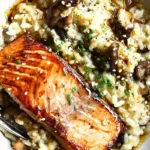
Japanese Style Risotto with Seared Salmon
- Total Time: 40 minutes
- Yield: 4 servings 1x
- Diet: General
Description
Savory, delicious and super flavorful. Soy glazed salmon piled over miso-flavored risotto packed with shiitake mushrooms. Made with simple ingredients and ready in about 40 minutes. A perfect dish to transform your dinner into a next-level flavor bomb!
Ingredients
- 3 tbsp olive oil (divided)
- 10.5 ounces shiitakes (torn into pieces)
- 1 tbsp low sodium soy sauce
- 1 small yellow onion (diced)
- 1 celery stalk (diced)
- 1 garlic clove (minced)
- 1 cup rice (like sushi rice or Arborio)
- ¼ cup non-alcoholic white wine
- 5 cups hot chicken broth
- 1 tbsp white miso paste
- black pepper (for serving)
- chives (for serving)
- sesame seeds (for serving)
- 5 tbsp low sodium soy sauce
- 1 tbsp non-alcoholic white wine
- 1 tsp brown sugar
- 4 skinless salmon fillets
- 1 tbsp olive oil
- 1 tbsp unsalted butter
Instructions
- Step: In a shallow dish, combine soy sauce, non-alcoholic white wine and brown sugar. Add salmon fillets, coat both sides. Set aside to marinate.
- Step: Tear the shiitakes into small pieces, finely dice the celery stalk, mince the garlic and finely chop the onion.
- Step: Heat 1 tablespoon oil over high in a heavy bottomed pot or skillet. Add shiitakes and cook until they release their moisture. Add 1 tablespoon oil and cook until they start to brown. Stir in soy sauce and cook for 1 minute more. Remove from skillet.
- Step: Reduce heat to medium low and add 1 tablespoon oil. Then add the celery, onion and garlic. Cook for 2 minutes until fragrant. Add rice and toast for 1 minute. Deglaze with non-alcoholic white wine, simmer for 2 minutes while scraping up the brown bits from the bottom of the skillet using a wooden spoon.
- Step: Add 2 ladles chicken broth at a time, stirring frequently, until the broth has been almost completely absorbed before adding the next 2 ladles. Cook until the rice is almost al dente, about 15 minutes. Stir in shiitakes. Dissolve miso with 2 tablespoons hot broth and add to risotto. Simmer about 5 minutes until the risotto is ready, add more broth if needed.
- Step: Heat oil and butter over medium high in a nonstick skillet. Add salmon and sear 4 minutes per side.
- Step: Serve salmon over risotto, top with black pepper, chives and sesame seeds.
Notes
Never rinse the rice before cooking it, because rice starch is so valuable when making risotto.
- Prep Time: 10 minutes
- Cook Time: 30 minutes
- Category: Dinner
- Method: Searing
- Cuisine: Japanese Fusion
Nutrition
- Serving Size: 1 serving
- Calories: 627 kcal
- Sugar: 3 g
- Sodium: 1109 mg
- Fat: 29 g
- Saturated Fat: 6 g
- Unsaturated Fat: 23 g
- Trans Fat: 0.1 g
- Carbohydrates: 46 g
- Fiber: 3 g
- Protein: 42 g
- Cholesterol: 101 mg
Keywords: Japanese style risotto, seared salmon, miso risotto, shiitake mushrooms, Asian fusion