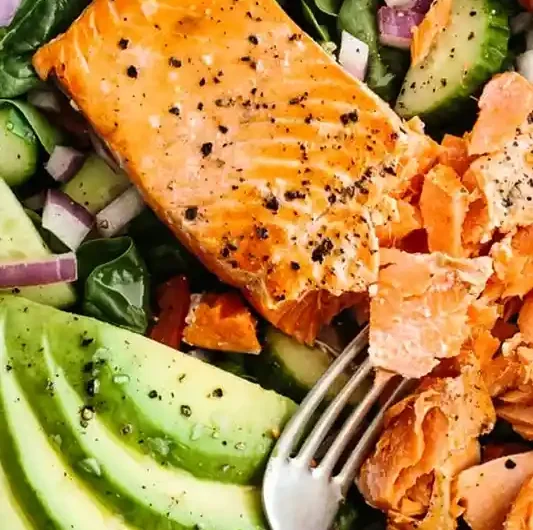
This Salmon Avocado Salad is a fast, nutrient-dense meal perfect for a healthy lunch or dinner. It combines pan-seared salmon with fresh greens and a zesty lemon vinaigrette for a balanced dish.
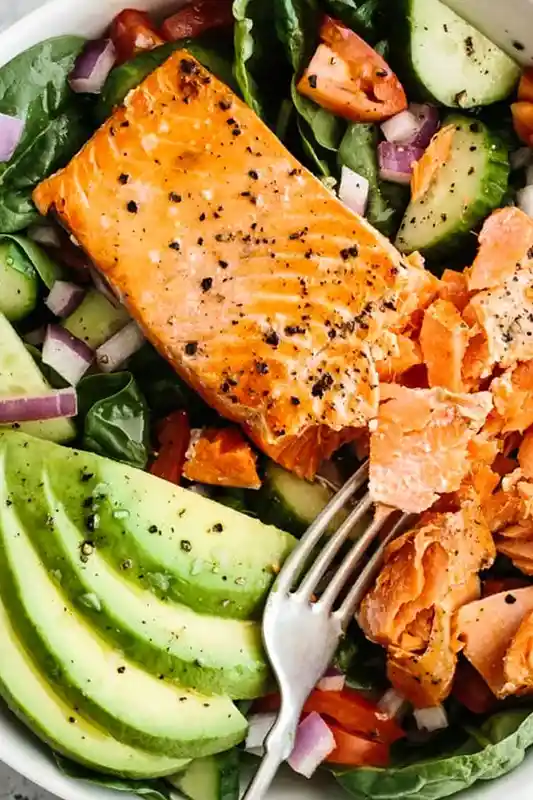
List of ingredients
- 4 cups baby spinach – provides a nutrient-rich base.
- 2 tomatoes, chopped – adds freshness and acidity.
- 1 avocado, diced – adds healthy fats and creaminess.
- 1 cucumber, peeled and sliced – adds a crisp texture.
- 1/4 cup red onion, chopped – provides a sharp, savory contrast.
- 2 tablespoon olive oil – used for searing the fish.
- 2 salmon filets – the primary protein source.
- salt and pepper, to taste – for basic seasoning.
- 1 recipe lemon vinaigrette – for the final flavor layer.
step-by-step instructions
- Prepare the pan: Heat olive oil in a large pan over medium-high heat. Season the salmon filets with salt and pepper.
- Sear the salmon: Add the salmon filets top side down and cook for 4-5 minutes.
- Finish cooking: Flip the salmon and cook for an additional 2-3 minutes or until the salmon is mostly opaque, with just a smidge of softness still in the middle.
- Assemble the salad: Divide all of the other salad ingredients between two bowls, then place the cooked salmon on top.
- Add dressing: Mix the dressing ingredients together in a small bowl and drizzle on top.
Guidelines for Choosing Quality Salmon
Wild-Caught Sockeye and King Salmon
Wild-caught salmon, such as Sockeye or King, typically offers a healthier fatty acid profile. These fish feed on natural organisms in their environment, resulting in a richer flavor. They often have a deeper color than farmed varieties.
Understanding Farmed Salmon Options
Farmed salmon are raised in controlled environments and fed specific diets. While more available, they may have different nutritional profiles compared to wild fish. Always check the sourcing to ensure sustainable farming practices.
Fresh Versus Flash-Frozen Filets
Frozen wild Alaskan salmon is often a safer bet than store-bought fresh filets. Flash-freezing preserves the fish at the peak of freshness immediately after catch. This prevents the degradation that can happen during long transport times.
Identifying Freshness via Scent and Texture
Fresh salmon should have a mild, sea-like scent rather than a strong fishy odor. The flesh should be firm to the touch and spring back when pressed. Avoid filets that look dull or have slimy surfaces.
Pro Techniques for Searing Salmon
Removing Surface Moisture
Always pat your salmon filets dry with a paper towel before seasoning. Removing excess water prevents the fish from steaming in the pan. This is the key to achieving a golden-brown, crispy exterior crust.
Selecting High Smoke Point Oils
While olive oil is used here, ensure it is a refined version for higher heat. For even higher temperatures, avocado oil or grapeseed oil are excellent choices. These oils prevent smoking and burning at medium-high heat levels.
Managing Pan Temperature
Wait until the oil is shimmering before adding the fish. Adding salmon to a cold pan leads to sticking and an uneven sear. You should hear a distinct sizzle the moment the fish hits the surface.
Avoiding Overcooking the Protein
Salmon continues to cook for a few minutes after being removed from the pan. Aim for a center that is slightly translucent or soft. This ensures the fish remains moist and flaky rather than dry and chalky.
Handling the Filets Carefully
Use a wide spatula to flip the salmon in one confident motion. Avoid pressing down on the filets, as this pushes out the natural juices. Gentleness preserves the structure of the delicate fish flakes.
Customizing Salad Greens and Vegetables
Alternative Leafy Green Bases
While baby spinach is the standard, arugula provides a peppery kick that complements the fatty salmon. Kale is another hardy option, though it should be massaged with a bit of oil first. Romaine offers a classic crunch if you prefer a lighter base.
Optimizing Tomato Selection
Cherry or grape tomatoes are ideal for this salad as they maintain their shape. If using large vine-ripened tomatoes, remove the watery seeds before chopping. This prevents the salad from becoming too soggy at the bottom.
Adding Extra Crunch with Different Veggies
Sliced radishes or shredded carrots can add extra texture and color to the bowl. Red bell peppers provide a sweetness that balances the sharp red onion. Always slice vegetables uniformly for a better distribution of flavors.
Substituting the Avocado
If avocado is unavailable, a dollop of hummus or a sprinkle of feta cheese provides similar creaminess. Toasted walnuts or slivered almonds offer a different kind of richness and healthy fats. Ensure the substitute doesn’t overpower the lemon vinaigrette.
Taming the Red Onion Flavor
If raw red onion is too pungent, soak the chopped pieces in cold water for ten minutes. Drain them and pat dry before adding to the salad. This removes the harsh sulfur bite while keeping the crunch.
Vinaigrette Variations and Enhancements
Integrating Dijon Mustard
Adding a teaspoon of Dijon mustard to your lemon vinaigrette acts as an emulsifier. This helps the oil and lemon juice stay blended together longer. It also adds a sophisticated, tangy depth to the dressing.
Substituting with Champagne Vinegar
For a milder and more elegant flavor, replace some of the lemon juice with champagne vinegar. This creates a lighter acidity that doesn’t compete with the salmon. It works particularly well during summer months.
Adjusting for Whole30 Compliance
To make the dressing Whole30 compliant, omit any added sweeteners like honey or maple syrup. The natural acidity of the lemon is often enough to balance the oil. You can add a pinch of extra salt to compensate for the lost sweetness.
Adding Herbaceous Notes
Freshly chopped dill or parsley stirred into the dressing enhances the seafood profile. Basil provides a Mediterranean twist that pairs well with the tomatoes and cucumber. Always add fresh herbs just before serving to keep them bright.
Storage and Freshness Management
Preventing Avocado Oxidation
Toss diced avocado in a small amount of the lemon vinaigrette immediately after cutting. The citric acid prevents the fruit from turning brown. This keeps the salad looking fresh if you are preparing it slightly in advance.
Proper Storage for Cooked Salmon
Store leftover cooked salmon in an airtight glass container in the refrigerator. It will remain safe and tasty for up to three days. Keep the salmon separate from the greens to prevent wilting.
Maintaining Green Leafy Freshness
Store the spinach and chopped vegetables in a container lined with a paper towel. The towel absorbs excess moisture, which prevents the leaves from becoming slimy. Keep the dressing in a separate small jar.
Freezing Considerations for Salmon
Do not freeze the assembled salad, as the vegetables will lose their structure. However, you can freeze raw salmon filets individually wrapped in parchment paper. Thaw them slowly in the fridge overnight before searing.
Managing Vinaigrette Separation
It is normal for homemade vinaigrettes to separate over time. Simply shake the jar vigorously or whisk it again before drizzling. Store the dressing in the fridge for up to one week.
Meal Prep and Make-Ahead Strategies
Pre-Chopping Vegetables
Cucumber, red onion, and tomatoes can be chopped and stored in separate containers. This reduces the assembly time to just a few minutes. Avoid mixing them too early to maintain the individual textures.
Preparing the Salmon in Batches
You can sear several salmon filets at once and store them for the week. When ready to eat, allow the salmon to come to room temperature or warm it slightly. This makes the salad an excellent option for weekday lunches.
The Best Way to Reheat Salmon
To avoid drying out the fish, reheat salmon in a low oven at 275F for a few minutes. Avoid the microwave, as it often makes the fish rubbery. Alternatively, serve the salmon cold or at room temperature for a refreshing meal.
Batch-Making the Lemon Vinaigrette
Make a large batch of the dressing and store it in a mason jar. This vinaigrette can also be used as a marinade for chicken or shrimp. It stays fresh and potent for several days in cold storage.
Assembling the Bowl for Transport
If taking this salad to work, place the dressing at the bottom of the container. Layer the hard vegetables next, then the spinach, and finally the salmon. Shake or stir the container only when you are ready to eat.
Serving Ideas and Pairings
Adding Texture with Seeds and Nuts
Sprinkle toasted sesame seeds or pepitas over the top for an added crunch. Sliced almonds complement the avocado’s creaminess. These additions increase the nutritional value and visual appeal of the dish.
Pairing with Complex Carbohydrates
Serve the salad alongside a scoop of cooked quinoa or farro for a heartier meal. A slice of toasted sourdough bread with a rub of garlic also pairs well. This transforms the salad from a light lunch into a full dinner.
Creating a Platter Style Presentation
Instead of bowls, arrange the spinach on a large platter and place the salmon in the center. Scatter the avocado, tomatoes, and cucumbers around the fish. This is an excellent way to serve the recipe for guests.
Complementary Side Drinks
Pair this salad with sparkling water infused with cucumber or mint. A chilled herbal tea also complements the citrus notes of the dressing. Avoid heavy drinks that might overshadow the light flavors of the salad.
Cooking Troubleshooting and FAQs
Why is my salmon sticking to the pan?
Sticking usually happens if the pan isn’t hot enough or if the fish was added too early. Ensure the oil is shimmering and give the fish a minute to sear before attempting to flip it. A good non-stick or cast-iron pan helps significantly.
How do I know when the salmon is perfectly done?
Press the thickest part of the filet with your finger. It should feel firm but have a slight give, similar to the feel of your cheek. If it is hard, it is likely overcooked.
Can I use a different type of oil for searing?
Yes, any oil with a high smoke point will work. Avocado oil is highly recommended for its neutral taste and high heat tolerance. Avoid using extra-virgin olive oil for very high heat as it can smoke and turn bitter.
Can I use frozen salmon for this recipe?
Yes, but ensure the filets are completely thawed. Thaw them in the refrigerator overnight for the best texture. Pat them very dry after thawing to ensure a proper sear.
What is the best way to keep spinach from wilting?
Do not add the hot salmon directly onto the spinach if you plan to store it. Let the salmon cool for a few minutes first. Additionally, only drizzle the dressing immediately before consuming.
How can I make the salad more filling?
Add a boiled egg or a half-cup of chickpeas to increase the protein and fiber. You can also increase the portion of avocado. These additions provide satiety without compromising the healthy nature of the salad.
Print
Nutrient-Rich Salmon and Avocado Salad
- Total Time: 20 minutes
- Yield: 2 servings 1x
- Diet: Pescatarian
Description
This salmon avocado salad is a healthy salad recipe that’s big on nutrients and flavor. It comes together easily with just a handful of ingredients!
Ingredients
- 4 cups baby spinach
- 2 tomatoes, chopped
- 1 avocado, diced
- 1 cucumber, peeled and sliced
- 1/4 cup red onion, chopped
- 2 tablespoon olive oil
- 2 salmon filets
- salt and pepper, to taste
- 1 recipe lemon vinaigrette
Instructions
- Step 1: Heat olive oil in a large pan over medium-high heat. Season the salmon filets with salt and pepper. Add the salmon filets top side down and cook for 4-5 minutes.
- Step 2: Flip the salmon and cook for an additional 2-3 minutes or until the salmon is mostly opaque, with just a smidge of softness still in the middle.
- Step 3: Divide all of the other salad ingredients between two bowls, then place the cooked salmon on top.
- Step 4: Mix the dressing ingredients together in a small bowl and drizzle on top.
Notes
You can use the leftover dressing on future salads or as a marinade for meat. To make this Whole30, leave the sweetener out of the dressing.
- Prep Time: 10 minutes
- Cook Time: 10 minutes
- Category: Salad
- Method: Pan Searing
- Cuisine: American
Nutrition
- Serving Size: 1 serving
- Calories: 732 kcal
- Sugar: 8 g
- Sodium: 140 mg
- Fat: 56 g
- Saturated Fat: 9 g
- Unsaturated Fat: 47 g
- Trans Fat: 0 g
- Carbohydrates: 21 g
- Fiber: 11 g
- Protein: 40 g
- Cholesterol: 94 mg
Keywords: salmon avocado salad, healthy salad, pan seared salmon, summer salad, nutrient-dense