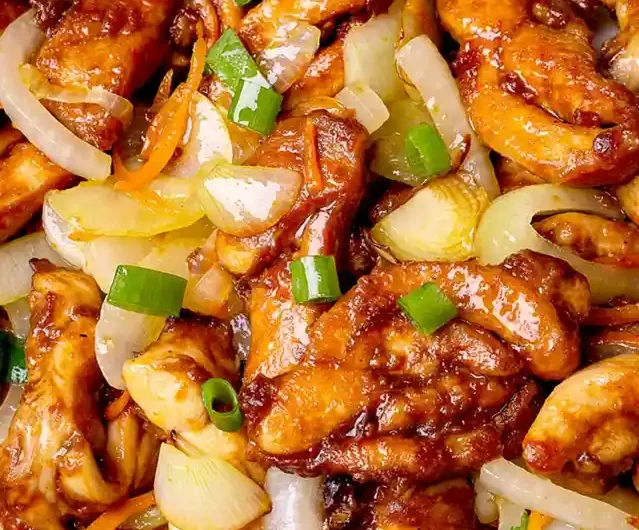
This fast stir fry uses chicken thighs to ensure a juicy and tender result every time. It combines fresh vegetables and a savory marinade to create a balanced, protein-rich meal in under thirty minutes.
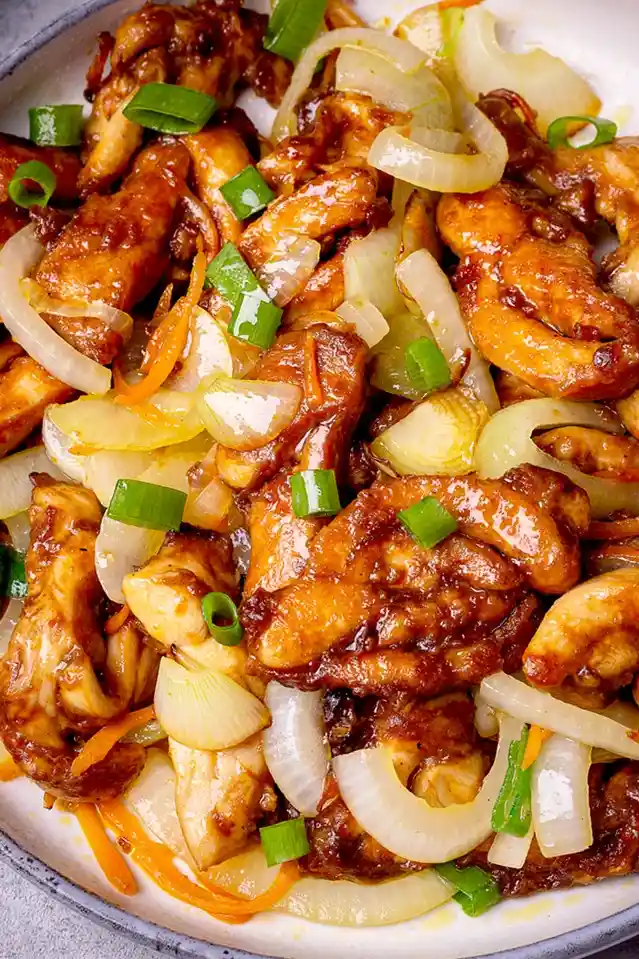
List of ingredients
- 300 g boneless chicken thighs – cut into 2cm strips for fast, even cooking.
- 3/4 cup sliced onion – adds a subtle sweetness to the base.
- 1/4 cup shredded carrot – provides color and a slight crunch.
- 1 tablespoon soy sauce – the primary seasoning for salt and umami.
- 1 teaspoon dark soy sauce – optional, used primarily for a rich brown color.
- 3 tablespoon vegetable broth – used as a flavor enhancer and tenderizer.
- 3 tablespoon oil – for sautéing and searing.
- 2 tablespoon chopped spring onion – added at the end for freshness.
- 2 tablespoon cornstarch – essential for locking in juices.
- 2 clove garlic – minced finely to distribute flavor.
step-by-step instructions
- Marinate the chicken: Combine the chicken strips with soy sauce, dark soy sauce, minced garlic, cornstarch, and 2 tablespoons of vegetable broth. Let it sit for 15 minutes; if the mixture seems too dry, stir in one teaspoon of water to ensure full coverage.
- Cook the chicken: Heat one tablespoon of oil in a non-stick pan over medium heat. Add the marinated chicken strips and stir frequently to separate them as they cook. Sauté for approximately 5 minutes until fully cooked through, then remove the chicken from the pan and set it aside.
- Cook the vegetables: Increase the oil in the same pan by adding two more tablespoons. Toss in the sliced onions and shredded carrots, stir frying until they are wilted and softened, which usually takes about 5 minutes.
- Combine all ingredients: Return the cooked chicken to the pan along with the chopped spring onions. Stir fry over high heat for 20-30 seconds to sear everything together. Splash one final tablespoon of vegetable broth into the pan, turn off the heat immediately, and serve.
Meat Preparation Secrets
Choosing Chicken Thighs Over Breast
Chicken thighs are superior for stir frying because they contain more intramuscular fat than breasts. This higher fat content prevents the meat from drying out when exposed to high heat. Thighs maintain a silken texture and a deeper flavor profile regardless of the cooking speed.
The Science of Cornstarch Coating
Coating the meat in cornstarch is a professional technique known as velveting. This creates a thin protective barrier that locks in the natural juices of the chicken. It also prevents the meat from toughening and helps the sauce cling better to each piece.
Optimal Marinating Duration
A 15-minute marinating window is sufficient for the flavors to penetrate the surface of the chicken strips. Marinating for too long in salt-heavy soy sauce can sometimes break down the protein too much, altering the texture. This short window ensures the meat remains tender without becoming mushy.
Achieving Uniform Slices
Cutting the chicken into 2cm strips ensures that every piece cooks at the same rate. If pieces are uneven, some will overcook and become tough while others remain raw. Use a sharp chef’s knife to create consistent strips for a professional result.
Vegetable Mastery
Precision Slicing for Onions
Slicing onions into uniform widths ensures they soften evenly in the pan. If some pieces are too thick, they will remain raw while the thinner slices burn. Aim for thin, consistent strips that can wilt quickly under medium-high heat.
Shredding Carrots for Quick Cooking
Shredding carrots instead of chopping them into chunks increases their surface area. This allows them to cook through in the same amount of time as the onions. Shredded carrots also blend more seamlessly with the chicken strips during the final toss.
Preserving Spring Onion Freshness
Spring onions are added in the final 30 seconds of cooking to preserve their vibrant green color and sharp aroma. Overcooking them leads to a loss of flavor and a limp texture. Adding them at the very end provides a fresh contrast to the savory sauce.
Managing the Sauté Process
Stir frying requires constant movement to prevent the vegetables from steaming in their own moisture. Use a spatula to keep the onions and carrots moving across the hot surface. This ensures they sear and brown slightly rather than boiling in the pan.
Flavor Enhancements
Selecting the Right Cooking Oil
While olive oil is a healthy choice, using an oil with a high smoke point like grapeseed or canola oil prevents the oil from breaking down at high temperatures. If the oil smokes excessively, it can introduce a bitter taste to the dish. Choose an oil based on the heat level of your pan.
Substituting Dark Soy Sauce
Dark soy sauce is primarily used for a deep mahogany color and a hint of sweetness. If you do not have it, you can use regular soy sauce mixed with a tiny pinch of brown sugar. This mimics the color and thickness without altering the salty balance of the dish.
Incorporating Spicy Elements
For those who prefer heat, adding a teaspoon of chili flakes or a drizzle of chili oil during the vegetable sauté stage works well. This infuses the oil with spice, which then coats the chicken and vegetables. Alternatively, add sliced fresh jalapeños for a brighter, sharper heat.
Expanding the Vegetable Variety
While onions and carrots are classic, you can add broccoli florets, snap peas, or red bell peppers. If adding harder vegetables like broccoli, sauté them for 2-3 minutes before adding the onions. This ensures every vegetable is cooked perfectly according to its density.
Tool and Equipment Guide
Benefits of Using Non-Stick Pans
A non-stick pan is ideal for home cooks as it requires less oil and prevents the cornstarch-coated chicken from sticking. This makes the process less stressful and easier to clean. It allows for a smoother slide of ingredients during the final mixing phase.
Using a Wok for Professional Results
A carbon steel wok is designed for high-heat cooking and rapid evaporation. The sloped sides allow you to toss ingredients easily while concentrating heat at the bottom. This creates a characteristic ‘breath of the wok’ or smoky flavor that flat pans cannot replicate.
Essential Stir Fry Utensils
Use a wide silicone spatula or a wooden spoon to move the ingredients quickly. These tools are heat-resistant and won’t scratch the surface of your non-stick pan. A wide spatula is especially helpful for flipping large batches of chicken strips efficiently.
Controlling Pan Temperature
Wait for the oil to shimmer before adding the chicken to ensure an immediate sear. If the pan is too cold, the chicken will release its juices and boil rather than fry. If it is too hot, the cornstarch may burn before the chicken is cooked through.
Pairing and Serving
Pairing with Steamed White Rice
Serving this stir fry over steamed jasmine or basmati rice is the most traditional option. The neutral flavor of the rice balances the salty soy marinade. The rice also absorbs the extra sauce from the pan, ensuring no flavor is wasted.
Serving Over Egg Noodles
For a heartier meal, toss the finished stir fry with cooked egg noodles or rice noodles. The noodles add a different chewiness and make the dish more filling. Ensure the noodles are drained well before adding them to the pan to avoid a watery sauce.
Adding a Side of Steamed Greens
Pair the dish with steamed bok choy or gai lan to increase the nutritional value. The bitterness of the greens cuts through the richness of the chicken thighs. A light drizzle of sesame oil on the greens complements the savory stir fry.
Garnishing for Visual Appeal
Top the final dish with toasted sesame seeds for a nutty flavor and professional look. A few extra slices of fresh red chili can add a pop of color. These small additions enhance the presentation without overwhelming the primary flavors.
Preservation and Reheating
Airtight Refrigeration Methods
Store leftovers in a glass airtight container to keep the moisture locked in. Allow the stir fry to cool slightly before sealing the lid to prevent excess condensation. This prevents the vegetables from becoming overly soggy during storage.
Maximum Storage Timeline
This dish is best consumed within 3 to 4 days when kept in the refrigerator. Because of the cornstarch and vegetable components, the texture may change slightly over time. Always ensure the refrigerator is kept at 40°F (4°C) or below.
Microwave Reheating Tips
When reheating in a microwave, add a tablespoon of water or vegetable broth to the container. This creates steam that re-hydrates the chicken and prevents it from becoming rubbery. Heat in short 30-second bursts, stirring in between.
Stove-top Reheating Method
For the best texture, reheat the stir fry in a pan over medium heat with a teaspoon of oil. This restores the sear on the chicken and prevents the vegetables from getting mushy. Toss constantly until heated through to maintain the glaze.
Planning and Prep
Pre-Cutting Vegetables
You can slice the onions and shred the carrots up to 24 hours in advance. Store them in separate airtight bags or containers in the fridge. This reduces the active prep time on the day of cooking to just a few minutes.
Advanced Marinating Strategies
While 15 minutes is standard, you can marinate the chicken for up to 4 hours for deeper flavor. If marinating overnight, reduce the amount of soy sauce slightly to prevent the meat from curing. Keep the chicken refrigerated at all times during this process.
Pre-Mixing the Sauce Components
Mix the soy sauce, dark soy, and vegetable broth in a small jar before starting. Having the liquid ready to pour prevents you from fumbling with measuring spoons while the pan is at high heat. This ensures the cooking process remains fluid and fast.
Common Troubleshooting
Handling Excess Liquid in the Pan
If the pan seems too watery during the vegetable stage, increase the heat to high. This encourages the liquid to evaporate quickly, allowing the vegetables to fry rather than stew. Do not add more oil if there is already excess moisture.
Preventing Overcooked Chicken
Avoid overcrowding the pan, as this drops the temperature and leads to longer cooking times. Cook the chicken in batches if necessary to ensure a quick sear. Remove the meat the moment it loses its pink center to keep it juicy.
Solving Cornstarch Clumping
If the marinade is too thick or clumpy, stir in one teaspoon of water at a time. The goal is a smooth paste that coats the chicken without forming lumps. Lumps of cornstarch can burn in the pan and create unsightly brown spots.
Avoiding Burnt Garlic
Garlic burns quickly and becomes bitter if exposed to high heat for too long. By including the garlic in the marinade rather than frying it separately, you protect it from direct high heat. This ensures a mellow, infused garlic flavor throughout the dish.
Frequently Asked Questions
How can you tell if the chicken is done?
The best method is the fork test; a fork should pierce the thickest part of the chicken strip easily. Additionally, when you cut into a piece, the juices should run clear with no pinkness remaining in the center.
Can I use bone-in chicken thighs?
Yes, you can use bone-in thighs, but they require a significantly longer cooking time. It is recommended to brown them first and then simmer them in a covered pan or oven before slicing the meat off the bone for the final stir fry.
What is the best substitute for dark soy sauce?
Regular soy sauce is the best substitute, although the color will be lighter. To mimic the richness of dark soy, you can add a tiny amount of molasses or brown sugar to the regular soy sauce.
Print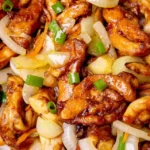
Tender Chicken Thigh Stir Fry
- Total Time: 30 minutes
- Yield: 2 servings 1x
- Diet: Low Fat
Description
Chicken Thigh Stir Fry – Discover the Secret to Achieving Tender Chicken, Just Like in Chinese Takeaways.
Ingredients
- 300 g boneless Chicken thighs (cut into 2cm strips)
- 3/4 cup sliced onion
- 1/4 cup shredded carrot
- 1 tablespoon soy sauce
- 1 teaspoon dark soy sauce (optional)
- 3 tablespoon alcohol-free rice wine flavor
- 3 tablespoon oil
- 2 tablespoon chopped spring onion
- 2 tablespoon cornstarch
- 2 clove garlic (minced)
Instructions
- Marinating chicken: Marinate the chicken with soy sauce, dark soy sauce, minced garlic, cornstarch and 2 tablespoon of alcohol-free rice wine flavor for 15 minutes. (add one teaspoon of water if it is too dry)
- Cooking chicken: Heat one tablespoon of oil in a non-stick pan over medium heat. Add the chicken strips, and separate them as they cook. Cook for 5 minutes, until cooked through. Set the chicken aside.
- Cooking vegetables: Add two tablespoons of oil to the pan and add the onions and carrots. Stir fry until all wilted and cooked, approximately 5 minutes.
- Adding all together: Add the chicken and spring onion to the pan and stir fry over high heat for 20-30 seconds. Splash a tablespoon of alcohol-free rice wine flavor to the pan, turn off the heat and serve.
Notes
Use a nonstick pan to reduce oil and stress. Cut chicken into thin strips or cubes for quick cooking. Marinating with cornstarch locks in juices. Optionally add chili flakes or chili oil for more heat.
- Prep Time: 20 minutes
- Cook Time: 10 minutes
- Category: dinner
- Method: Stir Fry
- Cuisine: asian
Nutrition
- Serving Size: 1 serving
- Calories: 593 kcal
- Sugar: 4 g
- Sodium: 802 mg
- Fat: 46 g
- Saturated Fat: 8 g
- Unsaturated Fat: 35 g
- Trans Fat: 0.2 g
- Carbohydrates: 17 g
- Fiber: 2 g
- Protein: 27 g
- Cholesterol: 147 mg
Keywords: chicken stir fry, asian dinner, quick chicken thighs, tender chicken