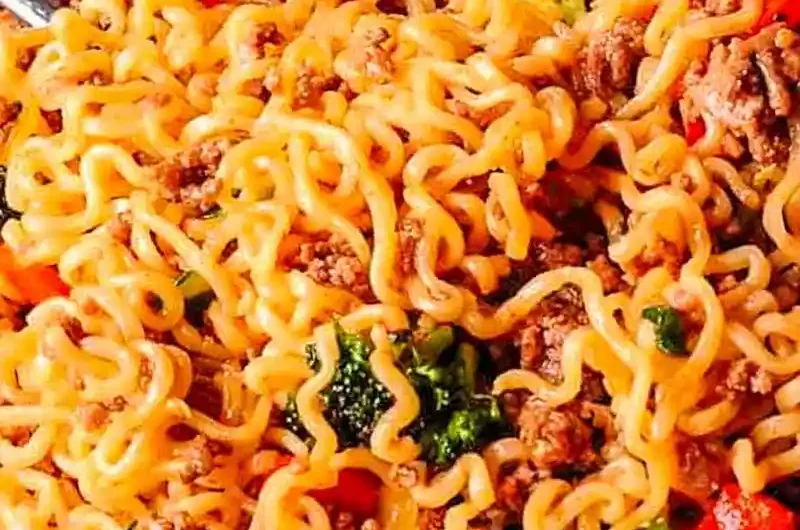
This beef ramen stir fry transforms basic instant noodles into a nutrient-dense meal using fresh vegetables and a zesty homemade sauce. It is a budget-friendly option that avoids the high sodium of seasoning packets while delivering bold flavor in under 25 minutes.
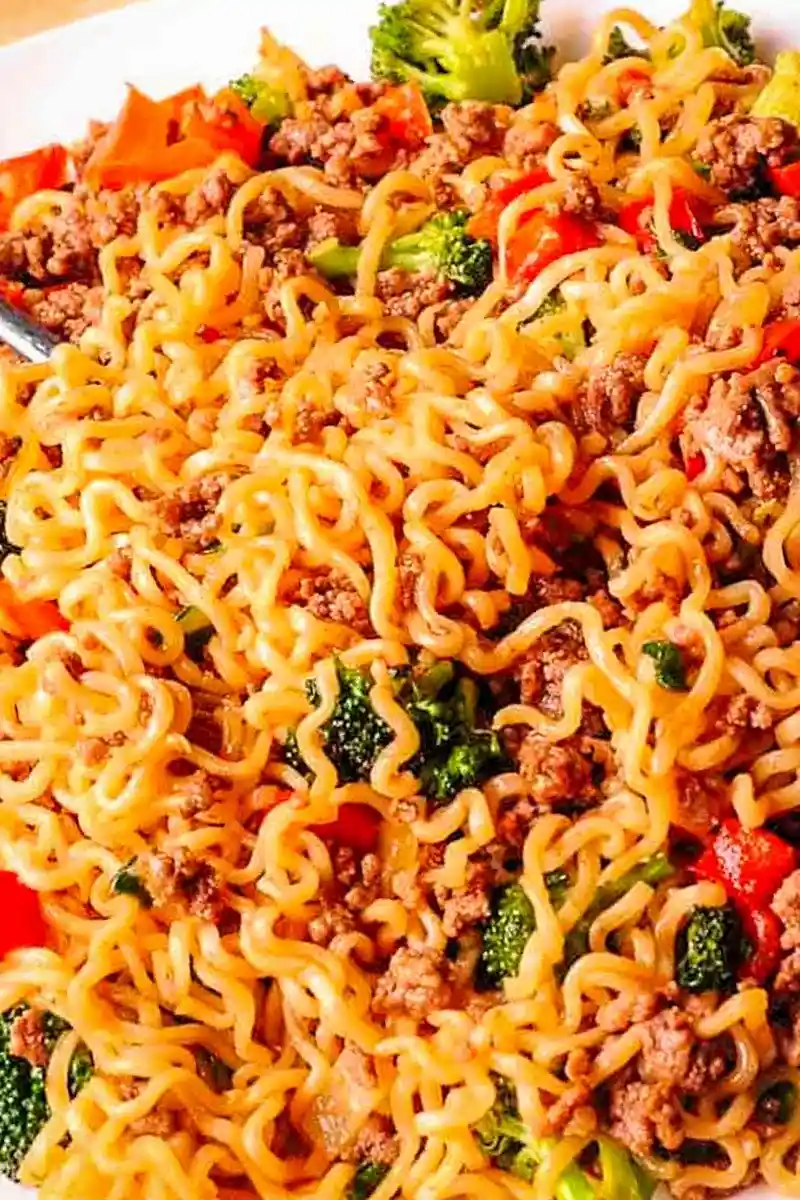
List of ingredients
- 1 tbsp. vegetable oil (such as canola oil) – used for searing vegetables and beef.
- 1 large onion (chopped) – provides a sweet, aromatic base.
- 1 red bell pepper (chopped) – adds color and a mild sweetness.
- 1/2 head broccoli (cut into florets) – contributes a fresh, crunchy texture.
- 1 lb. ground beef – preferably 90-93% lean for better sauce absorption.
- 6 oz ramen noodles (2 packets, seasoning packets discarded) – the base of the dish.
- Salt and pepper (to taste) – for basic seasoning of the beef.
- 1/4 cup soy sauce – provides the savory umami backbone of the sauce.
- 1 tbsp. brown sugar – balances the salt and heat.
- 1 tbsp. apple cider vinegar – adds a necessary acidic brightness.
- 2 tsp. sriracha – gives the dish a spicy kick.
- 1 clove garlic (minced) – adds depth and pungent flavor.
- 1 scallion (chopped, optional) – used for a fresh final garnish.
step-by-step instructions
- Make sriracha sauce: In a medium bowl, whisk together the soy sauce, brown sugar, apple cider vinegar, sriracha, and minced garlic. Set this mixture aside so the flavors can meld while you prepare the other components.
- Cook ramen noodles: Bring a medium saucepan of water to a boil. Add the ramen noodles and cook for about one minute less than the package instructions suggest. Drain them immediately and rinse under cold water to stop the cooking process and remove excess starch.
- Saute veggies: Heat the vegetable oil in a large skillet or wok over medium-high heat until shimmering. Add the chopped onion and cook for two minutes, then stir in the garlic, bell pepper, and broccoli florets. Cook until just tender, then remove the vegetables from the pan and set them aside.
- Cook beef: Using the same pan, add the ground beef and season with salt and pepper. Cook and break the meat apart until it is fully browned and no pink remains. Drain any excess liquid or fat from the pan, then return the sauteed vegetables to the skillet with the beef.
- Final assembly: Reduce the heat to low and add the cooked ramen noodles to the skillet. Pour the prepared sriracha sauce over the mixture and toss gently for 60-90 seconds until every noodle is coated. Garnish with chopped scallions and serve immediately.
Mastering the Noodle Texture
Undercook for Al Dente Results
Pull the ramen noodles out of the boiling water about one minute before the package recommends. Since they finish cooking in the pan with the sauce, this prevents them from becoming mushy. This technique ensures the noodles maintain a springy, restaurant-quality bite.
Rinse with Cold Water
Immediately rinse the drained noodles under cold running water until they are cool to the touch. This process stops the carry-over cooking and washes away the surface starch. Removing this starch prevents the noodles from sticking together or becoming gummy in the pan.
Use Low Heat for the Final Toss
Once the noodles are added to the beef and vegetables, drop the skillet heat to low. Gently toss the noodles with the sauce just until they are heated through. High heat at this stage can break the delicate noodles or cause the sauce to burn and clump.
Protein and Vegetable Optimization
Choose Lean Ground Beef
Use 90-93% lean ground beef to avoid excessive grease in the final dish. Leaner beef browns more cleanly and absorbs the Sriracha sauce more effectively than fattier cuts. This ensures the sauce clings to the meat rather than sliding off.
Prioritize Fresh Broccoli
Fresh broccoli florets hold their structure better during the stir fry process. If you must use frozen broccoli, pat the florets completely dry before adding them to the hot oil. This prevents the vegetables from steaming and allows them to sear for better flavor.
Searing for Maximum Color
Keep the pan heat medium-high when cooking the onions and peppers. Searing the vegetables quickly ensures they stay tender-crisp rather than becoming soft. This contrast in texture is essential for a professional-style stir fry.
Customizing the Sauce Profile
Adjusting the Heat Level
The amount of sriracha can be easily adjusted based on your spice preference. For a milder dish, reduce the sriracha to one teaspoon or use a mild chili garlic sauce. To increase the heat, add more sriracha or a pinch of crushed red pepper flakes.
Balancing Sweetness and Acid
If the sauce tastes too salty, add an extra pinch of brown sugar to balance the flavors. If it feels too heavy or sweet, a small splash of additional apple cider vinegar or a squeeze of fresh lime juice will brighten the profile.
Using Low Sodium Soy Sauce
To reduce the overall salt content, substitute the regular soy sauce with a low-sodium version. This allows you to control the seasoning more precisely with salt and pepper. It is a healthier alternative that doesn’t sacrifice the savory umami taste.
Ingredient Substitutions
Replacing Soy Sauce with Coconut Aminos
For those avoiding soy, coconut aminos are an excellent alternative that provides a similar savory flavor. Coconut aminos are naturally sweeter and less salty than soy sauce. You may need to slightly reduce the brown sugar when using this substitute.
Using Tamari for a Deeper Flavor
Tamari is a great alternative to soy sauce that often offers a richer, more concentrated taste. It is naturally gluten-free and works perfectly with the other sauce ingredients. Start with slightly less than the called-for amount and adjust to taste.
Making the Dish Vegetarian
Substitute the ground beef with extra-firm tofu, tempeh, or a plant-based ground alternative. If using tofu, press out the moisture and sear the cubes in the pan until golden before adding the vegetables. Follow the rest of the recipe exactly as written.
Swapping the Noodle Type
While instant ramen is traditional for this recipe, brown rice noodles are a great alternative for a different texture. These noodles hold onto the sauce well and provide a heartier feel. Adjust the boiling time according to the specific rice noodle package instructions.
Storage and Reheating Advice
Refrigeration Guidelines
Store leftover beef ramen in an airtight container in the refrigerator for 3 to 4 days. The noodles will naturally absorb more sauce and firm up as they sit. This is normal and can be easily fixed during the reheating process.
Proper Stovetop Reheating
To reheat on the stove, add 2 to 4 tablespoons of beef or vegetable broth to the pan. Heat gently over low heat, tossing the noodles until the sauce loosens and becomes glossy again. This restores the original texture without overcooking the noodles.
Microwave Reheating Method
When using a microwave, sprinkle a small amount of water or broth over the noodles and cover the dish loosely. Reheat in short 30-second bursts, stirring in between. This prevents the noodles from drying out or becoming rubbery in the center.
Avoid Freezing Ramen
Freezing this dish is not recommended as the noodles often become mealy and soft upon thawing. The springy texture that defines the dish is lost in the freezer. Instead, freeze the homemade sauce and prepare the beef and noodles fresh.
Troubleshooting Common Issues
What to do if the Stir Fry is Too Salty?
If the dish is over-salted, you can dilute the flavor by adding a splash of unsalted broth or water. A squeeze of fresh lime juice or a small amount of extra vinegar can also neutralize the perceived saltiness. Increasing the amount of vegetables can also help balance the salt per bite.
Preventing Mushy or Rubbery Noodles
Mushy noodles are usually the result of overboiling before they enter the skillet. Ensure you pull them out a minute early and rinse them with cold water. Rubberiness occurs if the noodles are not rinsed, allowing excess starch to create a gummy coating.
Solving Bland Flavor Profiles
Blandness usually indicates a lack of salt, acid, or heat. Add a small amount of additional soy sauce for salt, a dash of vinegar for brightness, or more sriracha for heat. A drizzle of toasted sesame oil at the end can add depth to a flat-tasting sauce.
How to Avoid a Greasy Finish
Grease usually comes from skipping the step of draining the beef. Even with lean meat, always pour off the rendered fat before returning the vegetables to the pan. Using only a tablespoon of oil for the vegetables also keeps the dish light.
Stopping Noodles from Sticking to the Pan
Sticking happens if the pan is too dry or the heat is too high during the final assembly. Ensure the sauce is poured over the noodles immediately upon adding them to the pan. If sticking persists, add a tablespoon of water or broth to loosen the mixture.
Frequently Asked Questions
Can I use frozen vegetables instead of fresh?
Yes, frozen vegetables work well in a pinch. However, you must pat them completely dry before adding them to the pan. If they are too wet, they will steam rather than sear, which can make the final dish watery.
Is it possible to make this recipe spicier?
Absolutely. You can increase the amount of sriracha in the sauce or add a teaspoon of chili garlic sauce. For an extra kick, garnish the finished dish with sliced fresh jalapeños or red chili flakes.
Which cut of beef is best for this recipe?
Ground beef is recommended for its ability to break into small pieces that distribute evenly. Specifically, 90% lean ground beef is ideal because it provides great flavor without adding too much excess fat to the sauce.
Can I add other vegetables to the mix?
Yes, you can add spinach, carrots, snap peas, or water chestnuts. Simply sauté them along with the broccoli and bell peppers. Ensure the harder vegetables, like carrots, are sliced thinly so they cook at the same rate as the others.
How do I keep the broccoli from getting too soft?
Sauté the broccoli over medium-high heat for a shorter duration. Remove the vegetables from the pan as soon as they are tender-crisp. They will continue to soften slightly when returned to the pan at the end.
Print
Savory Beef Ramen Stir Fry with Homemade Sriracha Sauce
- Total Time: 25 minutes
- Yield: 4 servings 1x
- Diet: General
Description
A quick weeknight beef ramen stir fry made with 90% lean ground beef, fresh broccoli, and a from-scratch Sriracha sauce — no flavor packets. A tested undercook-and-rinse noodle method keeps every bite springy.
Ingredients
- 1 tbsp. vegetable oil
- 1 large onion, chopped
- 1 red bell pepper, chopped
- 1/2 head broccoli, cut into florets
- 1 lb. ground beef
- 6 oz ramen noodles (seasoning packets discarded)
- Salt and pepper to taste
- 1/4 cup soy sauce
- 1 tbsp. brown sugar
- 1 tbsp. apple cider vinegar
- 2 tsp. sriracha
- 1 clove garlic, minced
- 1 scallion, chopped (optional)
Instructions
- Make sriracha sauce: In a medium bowl whisk together soy sauce, brown sugar, apple cider vinegar, Sriracha, and garlic. Set aside.
- Cook ramen noodles: Boil ramen noodles for one minute less than package directions, drain immediately and rinse under cold water.
- Saute veggies: Heat oil in a large skillet over medium heat; add onions, peppers, and broccoli and cook until tender. Remove from the pan.
- Cook beef: Add ground beef, season with salt and pepper, and cook until no longer pink. Drain beef fat and return vegetables to the skillet.
- Final assembly: Add cooked ramen noodles to the skillet with beef and veggies, pour over prepared sauce, and stir fry over low heat until completely combined. Garnish with scallions.
Notes
Use grass-fed beef for better color and flavor. Low sodium soy sauce can be used. Try adding spinach or green onions for more variety. Increase Sriracha for more heat.
- Prep Time: 5 minutes
- Cook Time: 20 minutes
- Category: Main Course
- Method: Stir Fry
- Cuisine: Asian
Nutrition
- Serving Size: 1 cup
- Calories: 394 kcal
- Sugar: 7 g
- Sodium: 327 mg
- Fat: 26 g
- Saturated Fat: 11 g
- Unsaturated Fat: 15 g
- Trans Fat: 0 g
- Carbohydrates: 14 g
- Fiber: 3 g
- Protein: 23 g
- Cholesterol: 40 mg
Keywords: Beef ramen noodle stir fry, ground beef ramen, ramen noodle stir fry, ramen stir fry sauce