These savory chicken bites are quick to prepare and deliver a concentrated garlic and cheese flavor. They serve as an excellent high-protein appetizer or a versatile topping for salads and pasta dishes.
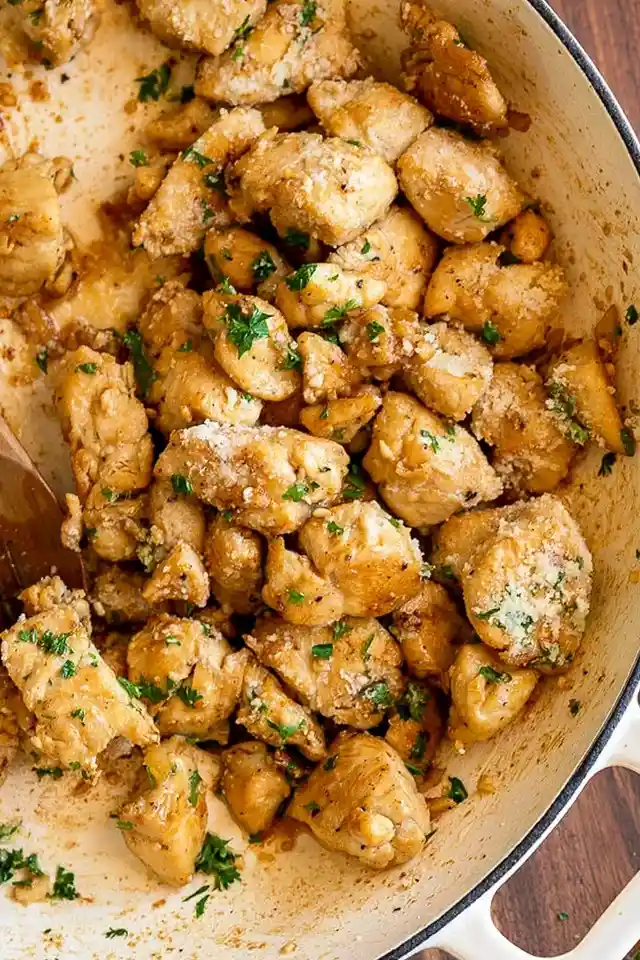
List of ingredients
- 1 ½ lb boneless skinless chicken thighs, cut into bite-size pieces – provides juiciness and flavor.
- ½ tsp garlic powder – adds a base layer of savory seasoning.
- ¼ tsp salt – enhances the overall flavor profile.
- ⅛ tsp black pepper – provides a subtle spicy warmth.
- 2 tbsp Butter with Olive Oil & Sea Salt – used for searing and creating a rich sauce.
- 2 tsp minced garlic – delivers a fresh, pungent garlic aroma.
- ¼ cup finely grated Parmesan cheese (microbial-rennet) – adds a salty, nutty finish.
- 2 tbsp parsley, chopped – provides a fresh herb contrast.
step-by-step instructions
- Heat the Pan: Place a large skillet over medium-high heat. If using chicken breasts or tenders, add 1 to 2 tsp of oil to prevent sticking.
- Season and Brown: Toss the chicken pieces with garlic powder, salt, and pepper. Add them to the hot skillet and cook for 5 to 7 minutes until browned and cooked through.
- Create the Garlic Butter: Stir in the butter with olive oil and sea salt, allowing it to melt and coat the meat. Add the minced garlic and sauté for about 30 seconds until fragrant.
- Finish and Serve: Remove the pan from the heat immediately. Stir in the grated Parmesan cheese and chopped parsley, tossing quickly to coat before serving.
Essential Equipment Guidelines
Choose a Heavy-Bottomed Skillet
A cast iron or stainless steel skillet is ideal for this recipe because of its superior heat retention. These materials maintain a consistent temperature, which is necessary for browning the chicken effectively. Avoid very thin pans that may create hot spots and burn the garlic.
Utilize a Meat Thermometer
To ensure the chicken is safe to eat without overcooking it, use an instant-read thermometer. The internal temperature should reach 165°F (74°C). This prevents the chicken from becoming dry or rubbery.
Use a Silicone Spatula
A silicone or rubber spatula is useful for scraping the browned bits from the bottom of the pan. These bits, known as fond, integrate into the garlic butter sauce for extra depth. Silicone is also heat-resistant and won’t scratch your pan.
Select a Fine Grater
Use a microplane or a fine grater for the Parmesan cheese. Finely grated cheese melts much faster and coats the chicken more evenly than pre-shredded versions. This results in a smoother sauce consistency.
Protein Selection and Preparation
Benefits of Using Chicken Thighs
Chicken thighs contain more fat than breasts, which makes them more forgiving during high-heat cooking. They stay juicy even if cooked slightly longer and provide a richer flavor. Thighs also release natural fats that help sear the meat.
Adjusting for Chicken Breasts
When using breasts, it is critical to add a small amount of oil to the pan first. Breasts lack the fat content of thighs and are prone to sticking. Cook them carefully to avoid drying out the meat, as they cook faster than thighs.
Preparing Chicken Tenders
Tenders are a great middle-ground option for a tender texture. Cut them into uniform one-inch pieces to ensure they all cook at the same rate. Like breasts, tenders require a bit of starting oil in the skillet.
Ensuring Uniform Cut Sizes
Cut all chicken pieces into roughly the same size to guarantee even cooking. If some pieces are significantly larger than others, the smaller ones will overcook before the larger ones are done. Aim for bite-sized cubes approximately one inch in diameter.
Ingredient Substitutions and Variations
Alternative Cheese Options
If Parmesan is unavailable, Pecorino Romano is a suitable substitute for a saltier, sharper taste. Grana Padano offers a milder, nuttier profile that also works well. Ensure any cheese used is made with microbial rennet for suitability.
Replacing the Butter Blend
You can use a combination of standard unsalted butter and a drizzle of extra virgin olive oil. If avoiding dairy, a high-quality plant-based butter substitute works effectively. Adjust the salt levels if using unsalted butter.
Using Fresh Garlic vs Powder
This recipe uses both for a layered flavor effect. If you only have fresh garlic, increase the minced amount slightly but be careful not to burn it. Garlic powder provides a consistent crust, while fresh garlic provides the aromatic finish.
Switching the Fresh Herbs
Fresh parsley is used for color and brightness, but chopped cilantro can be used for a different flavor profile. Dried parsley can be substituted in a 1:3 ratio, though it should be added earlier in the cooking process. Fresh chives are another excellent option.
Serving and Pairing Suggestions
Adding to Fresh Salads
These chicken bites are a perfect addition to a classic Caesar salad. The salty parmesan coating complements the creamy dressing and crisp romaine lettuce. Place the warm chicken directly on top of the chilled greens for a temperature contrast.
Topping Creamy Pasta
Serve these bites over fettuccine alfredo or a creamy pesto pasta. The garlic butter sauce from the pan can be drizzled over the pasta for extra flavor. This turns a simple side into a complete, hearty meal.
Creating an Appetizer Platter
Serve the bites on a platter with toothpicks for easy guest access. Pair them with a side of marinara sauce or a garlic aioli for dipping. This makes them an ideal choice for parties or game-day snacks.
Pairing with Low-Carb Sides
For a healthy meal, serve the chicken with steamed broccoli or roasted cauliflower. The richness of the Parmesan butter complements the earthy flavor of cruciferous vegetables. Sautéed spinach is another quick and nutritious pairing.
Storage and Preservation
Refrigeration Process
Store leftover chicken bites in an airtight container in the refrigerator. They will remain fresh and safe to eat for up to 3 to 4 days. Ensure the chicken is cooled slightly before sealing the container to prevent excess moisture buildup.
Freezing Guidelines
You can freeze these chicken bites by placing them on a baking sheet to flash-freeze individually first. Once frozen, transfer them to a vacuum-sealed bag or a heavy-duty freezer bag. They can be stored in the freezer for up to 3 months.
Thawing Instructions
The best way to thaw frozen chicken bites is to move them to the refrigerator 24 hours before use. This preserves the texture and prevents the meat from becoming mushy. Avoid thawing them at room temperature to maintain food safety.
Effective Reheating Methods
Stovetop Reheating
Place the chicken in a skillet over low to medium heat with a small knob of butter. Heat gently until the chicken is warmed through and the cheese begins to soften. This method best preserves the original texture of the sear.
Oven Reheating
Spread the bites on a baking sheet and cover them with aluminum foil to trap moisture. Heat in a preheated oven at 300°F (150°C) for about 10 minutes. This prevents the chicken from drying out compared to uncovered roasting.
Microwave Reheating
Place the chicken in a microwave-safe dish and add a teaspoon of water or butter. Cover the dish with a damp paper towel to steam the meat and keep it juicy. Heat in 30-second intervals to avoid overcooking the protein.
Make-Ahead Strategies
Preparing the Mise en Place
Cut the chicken and mince the garlic several hours before you plan to cook. Store them in separate containers in the fridge. Having all ingredients measured and ready reduces the total active cooking time to just a few minutes.
Pre-Seasoning the Meat
You can toss the chicken in the garlic powder, salt, and pepper ahead of time. Store the seasoned chicken in the refrigerator for up to 24 hours. This allows the seasonings to penetrate the meat more deeply.
Partial Batch Cooking
You can sear the chicken in the skillet and store it in the fridge without the butter and cheese. When ready to serve, follow the final two steps of the recipe. This ensures the garlic and cheese are fresh and not clumped from reheating.
Troubleshooting Common Issues
Preventing Chicken Sticking
Ensure the pan is fully heated before adding the chicken. If the pan is too cold, the meat will stick to the surface instead of searing. Use a small amount of oil if you are not using chicken thighs.
Avoiding Burnt Garlic
Minced garlic burns very quickly at high temperatures. Only add the fresh garlic after the chicken is browned and the butter has melted. Cook it for no more than 30 to 60 seconds before removing the pan from the heat.
Fixing Clumpy Cheese
If the Parmesan cheese clumps together, it is likely because the pan was too hot. Always remove the skillet from the heat source before adding the cheese. The residual heat is enough to melt the cheese without burning it.
Preventing Overcooked Meat
Overcooking chicken thighs leads to a rubbery texture. Avoid overcrowding the pan, as this lowers the temperature and causes the chicken to steam rather than sear. Cook in batches if necessary to maintain high heat.
Frequently Asked Questions
Can I use frozen chicken for this recipe?
Yes, but the chicken must be completely thawed before cooking. Cooking frozen chicken will release too much moisture, preventing the meat from browning. Thaw it overnight in the refrigerator for the best results.
Is this recipe gluten-free?
This recipe is naturally gluten-free as it uses butter and cheese rather than flour. Always check the labels on your butter and Parmesan cheese to ensure no gluten-containing additives are present.
How do I know when the chicken is fully cooked?
The chicken is done when the juices run clear and the internal temperature reaches 165°F. The exterior should be a deep golden brown. Using a meat thermometer is the most accurate method.
Can I use dried parsley instead of fresh?
Dried parsley can be used, but it has a different flavor and appearance. Use one teaspoon of dried parsley for every tablespoon of fresh. Add it slightly earlier in the process so the dried herbs can rehydrate in the butter.
What if I don’t have a skillet?
A wide frying pan or a sauté pan will work just as well. The most important factor is that the pan has enough surface area to prevent the chicken from piling up. This ensures every piece gets a proper sear.
Print
Savory Garlic Parmesan Chicken Bites
- Total Time: 15 minutes
- Yield: 6 servings 1x
- Diet: General
Description
These quick-cooking Garlic Parmesan Chicken Bites are perfect as an appetizer or for topping salads and pasta!
Ingredients
- 1 ½ lb boneless skinless chicken thighs, cut into bite-size pieces
- ½ tsp garlic powder
- ¼ tsp salt
- ⅛ tsp black pepper
- 2 tbsp butter with olive oil and sea salt
- 2 tsp minced garlic
- ¼ cup finely grated microbial-rennet Parmesan cheese
- 2 tbsp parsley, chopped
Instructions
- Heat: Heat a large skillet over medium-high heat.
- Season: Season the chicken pieces with garlic powder, salt and pepper, then add into hot skillet. Cook until the chicken is browned and cooked through, about 5 to 7 minutes.
- Sauté: Add in the butter with olive oil and sea salt and stir, allowing it to melt and coat the chicken. Toss in the minced garlic and cook until fragrant, about 30 seconds.
- Finish: Remove the pan from the heat and quickly add in the Parmesan cheese and parsley. Toss to coat the chicken and serve immediately.
Notes
If using boneless skinless chicken tenders or breasts, add 1 to 2 tsp of oil to the pan before adding the chicken to prevent sticking.
- Prep Time: 5 minutes
- Cook Time: 10 minutes
- Category: Main Dish
- Method: Sautéing
- Cuisine: Italian
Nutrition
- Serving Size: 1 serving
- Calories: 154 kcal
- Sugar: 1 g
- Sodium: 266 mg
- Fat: 6 g
- Saturated Fat: 2 g
- Unsaturated Fat: 4 g
- Trans Fat: 0 g
- Carbohydrates: 1 g
- Fiber: 0 g
- Protein: 23 g
- Cholesterol: 111 mg
Keywords: Chicken, Chicken Thighs, Garlic, Parmesan, tenders