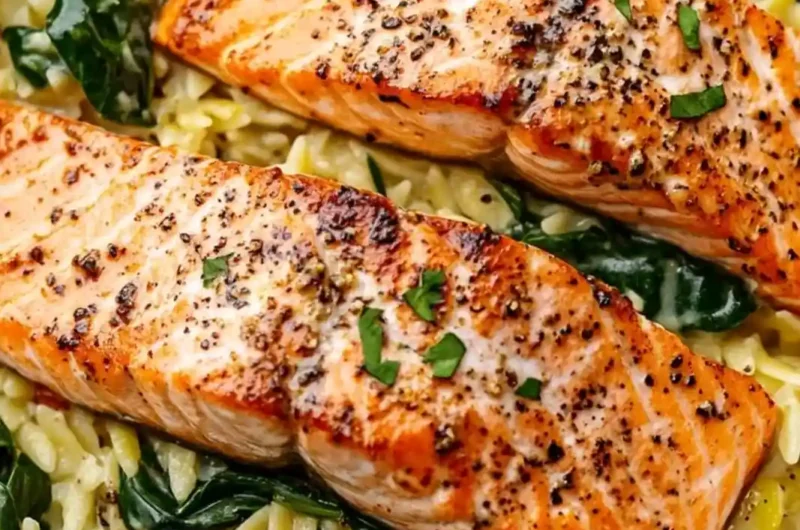
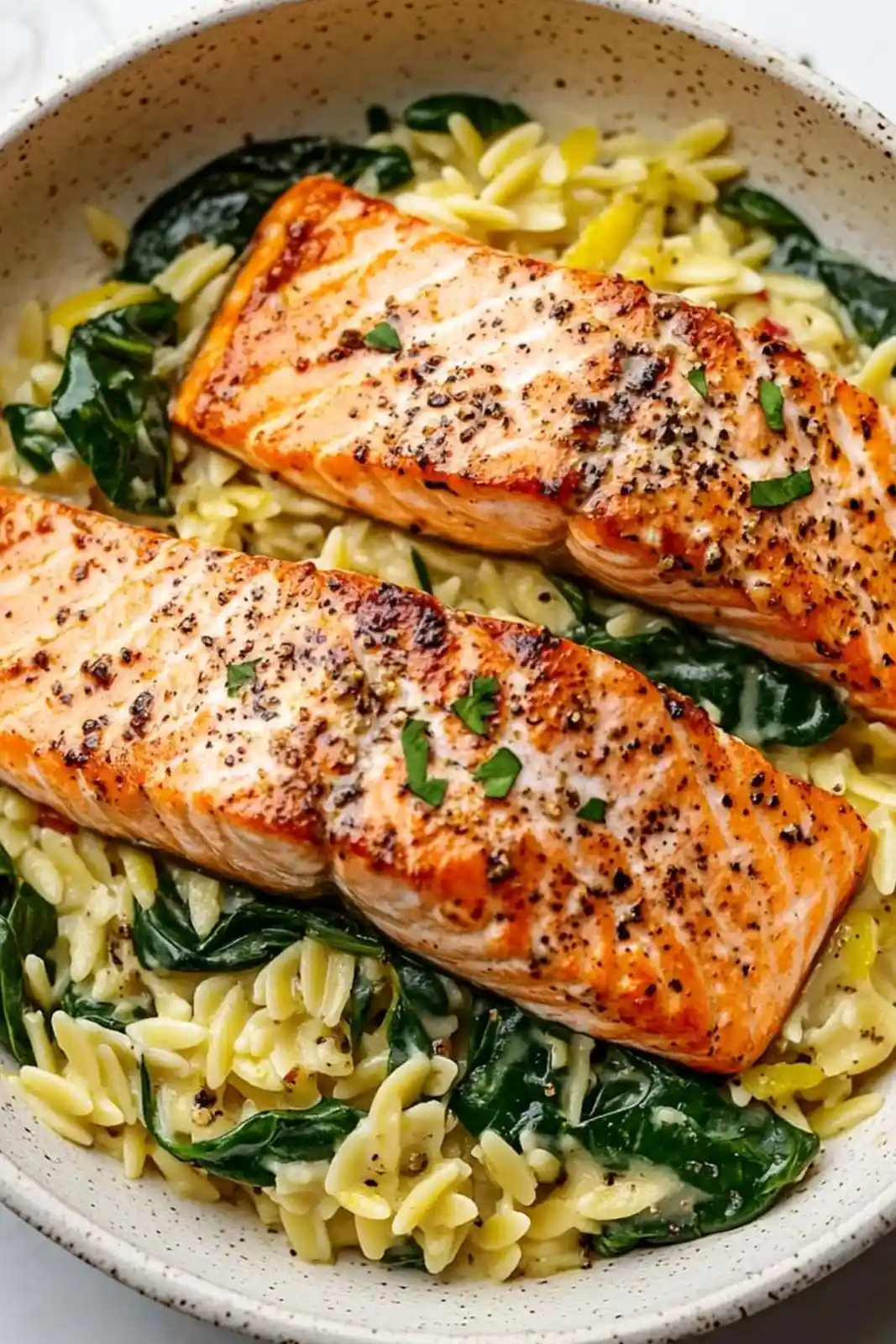
This efficient one-pan meal combines tender seared salmon with a creamy, zesty orzo pasta and fresh spinach. It is a nutrient-dense dinner that minimizes cleanup while delivering bold Mediterranean flavors. Perfect for busy weeknights when you need a healthy, sophisticated meal in half an hour.
List of ingredients
- 4 Salmon Fillets – skinless, about 6 oz each for even cooking.
- 2 tbsp Olive Oil – used for searing the fish to prevent sticking.
- Salt and Pepper – added to taste for basic seasoning.
- 1 tsp Garlic Powder or Italian Seasoning – provides a savory aromatic base.
- 2 tbsp Butter – for sautéing the aromatics.
- 3 cloves Garlic – minced finely to distribute flavor.
- 1 small Shallot – finely chopped for a mild onion taste.
- 1/4 cup Vegetable Broth – used for deglazing the pan in place of wine.
- 2 1/2 cups Chicken Broth – or vegetable broth for a meat-free base.
- 1 1/2 cups Orzo Pasta – small rice-shaped pasta.
- 1/2 cup Heavy Cream – creates a rich and creamy texture.
- 1/2 cup Grated Parmesan Cheese – plus extra for garnish.
- 1 tbsp Fresh Lemon Juice – provides a bright, acidic balance.
- 2 cups Fresh Baby Spinach – packed tightly for added nutrients.
- 1/2 cup Diced Bell Peppers – for extra color and vitamins.
- 1/2 cup Cherry Tomatoes – halved, optional for bursts of sweetness.
- 1 tsp Lemon Zest – optional for concentrated citrus aroma.
- 2 tbsp Fresh Parsley – chopped for a fresh finish.
step-by-step instructions
- Season and Sear: Rub the salmon fillets with salt, pepper, and garlic powder or Italian seasoning. Heat olive oil in a large skillet over medium-high heat, then sear the fillets for 2 minutes per side until a golden crust forms. Remove the salmon and set it aside on a plate.
- Sauté Aromatics: Melt the butter in the same skillet over medium heat. Add the minced garlic and chopped shallots, cooking for 1-2 minutes until fragrant.
- Deglaze the Pan: Pour in the vegetable broth and scrape the bottom of the pan with a spoon to release the browned salmon bits.
- Simmer the Base: Add the chicken or vegetable broth to the skillet and bring the mixture to a gentle simmer.
- Cook the Orzo: Stir in the orzo pasta and cook for about 10 minutes. Stir occasionally to ensure the pasta does not stick and the liquid is absorbed.
- Create the Cream Sauce: Once the orzo is tender, stir in the heavy cream, grated parmesan cheese, and fresh lemon juice until smooth.
- Finish the Dish: Return the seared salmon fillets to the pan. Fold in the fresh baby spinach and let it wilt for 2-3 minutes.
- Garnish and Serve: Sprinkle with freshly chopped parsley and optional lemon zest before serving immediately.
Salmon Cooking Mastery
Internal Temperature Control
To ensure the salmon is cooked perfectly, aim for an internal temperature of 145°F (63°C). Use an instant-read meat thermometer inserted into the thickest part of the fillet. This prevents the fish from drying out while ensuring it is safe to eat.
Visual Cues for Doneness
Look for the flesh to change from translucent raw pink to an opaque, lighter pink hue. The salmon is done when the meat flakes easily when pressed with a fork. If the fish resists flaking, it needs another minute of heat.
Choosing the Right Salmon Variety
Wild-caught salmon is generally leaner and has a more intense flavor, but it can overcook quickly. Farm-raised Atlantic salmon has a higher fat content, making it more forgiving during the searing process. Choose based on your preference for richness versus lean protein.
Managing the Sear
Pat the salmon fillets completely dry with paper towels before seasoning. Moisture on the surface creates steam, which prevents the fish from developing a golden-brown crust. High heat and a dry surface are the keys to a professional sear.
Ingredient Substitutions and Adjustments
Alternative Protein Options
You can replace the salmon with shrimp, cod, or halibut fillets for a different seafood profile. For a non-seafood version, use sliced chicken breasts or thighs. Adjust the searing time according to the thickness of the protein used.
Different Leafy Green Mix-ins
If you do not have baby spinach, chopped kale or Swiss chard are excellent hearty alternatives. Frozen peas or chopped broccoli florets also work well, though broccoli should be added a few minutes earlier to ensure it softens. These options add different textures and colors to the dish.
Dairy-Free Modifications
Substitute the heavy cream with full-fat coconut milk or a cashew-based cream for a dairy-free version. Replace the parmesan cheese with nutritional yeast or a plant-based parmesan alternative. These swaps maintain the creamy consistency without using animal dairy.
Broth Selection Tips
Vegetable broth is a great all-purpose choice that works for both meat and plant-based versions. Fish stock can be used instead of chicken broth to deepen the seafood flavor. Ensure the broth is low-sodium if you are monitoring your salt intake.
Pro Cooking Techniques
The Science of Deglazing
Deglazing involves adding liquid to a hot pan to loosen the browned food particles known as fond. These bits are concentrated flavor bombs from the seared salmon. Using broth instead of wine provides the necessary liquid to incorporate these flavors into the final sauce.
Achieving the Perfect Orzo Texture
Orzo should be cooked until al dente, meaning it still has a slight bite. Constant stirring is not necessary, but occasional agitation helps release the pasta’s starches. This naturally thickens the sauce, making it creamier before you even add the cream.
Emulsifying the Cream Sauce
Add the parmesan cheese and heavy cream gradually while stirring constantly. This ensures the cheese melts evenly into the sauce without clumping. The acidity from the lemon juice helps cut through the richness of the fats, creating a balanced emulsion.
Balancing Citrus Flavors
Add lemon juice at the very end of the cooking process to preserve its bright, fresh taste. Heating lemon juice for too long can cause it to lose its zestiness or become slightly bitter. Taste the sauce before serving and add more juice if a sharper tang is desired.
Storage and Preservation
Optimal Refrigeration
Store the leftover lemon orzo and salmon in separate airtight containers. This prevents the salmon from overcooking during the reheating process. The dish will stay fresh in the refrigerator for up to three days.
Freezer Safety Guide
While the orzo can be frozen for up to three months, the texture of the salmon may change. If freezing, undercook the salmon slightly so that it does not become rubbery upon reheating. Freeze in vacuum-sealed bags to prevent freezer burn.
Maintaining Texture during Reheating
To reheat, place the orzo in a pan over low heat with a tablespoon of water or broth to restore the creaminess. Warm the salmon separately in a low oven at 275°F for about 15 minutes. Avoid using high-power microwave settings, as they can toughen the fish.
Serving and Pairing Ideas
Fresh Vegetable Side Dishes
Pair this meal with a crisp side salad of arugula, cucumber, and a light vinaigrette. Roasted asparagus or sautéed artichokes complement the lemon flavors of the orzo. These sides add a refreshing contrast to the rich cream sauce.
Professional Plating Tips
Place a generous scoop of lemon orzo in the center of a shallow bowl. Nestled the seared salmon fillet on top of the pasta. Garnish with a sprig of fresh parsley and a thin slice of lemon to make the dish visually appealing for guests.
Beverage Pairings
Since this is an alcohol-free recipe, pair it with a chilled sparkling water infused with cucumber and mint. A tart lemonade or an iced green tea also complements the acidity of the lemon and the richness of the salmon.
Troubleshooting and FAQ
What if the orzo is too dry?
If the liquid is absorbed before the orzo is tender, add an extra quarter cup of broth. Stir gently and continue simmering until the desired consistency is reached. Always keep a bit of extra broth on hand when cooking pasta in a skillet.
Why did my salmon stick to the pan?
Sticking usually happens if the pan is not hot enough or if the oil has not reached its smoke point. Ensure the oil is shimmering before adding the fish. Also, avoid moving the salmon too early; let it develop a crust, and it will naturally release from the surface.
Can I use frozen salmon fillets?
Yes, but they must be completely thawed and patted dry before searing. Cooking frozen fillets directly in the pan will release too much water, preventing a proper sear. Thaw them slowly in the refrigerator overnight for the best results.
How do I prevent the sauce from breaking?
Ensure the heat is reduced to low or medium when adding the cream and cheese. Adding dairy to a boiling pan can cause the fats to separate, resulting in a greasy sauce. A gentle simmer is all that is needed to melt the parmesan.
Can I use a different pasta?
While orzo is traditional for this texture, you can use small pearls of couscous or acini di pepe. Keep in mind that these alternatives have different cooking times and liquid absorption rates. Adjust the broth quantity accordingly to avoid a soup-like consistency.
Print
30-Minute Seared Salmon with Lemon Orzo
- Total Time: 30 minutes
- Yield: 4 servings 1x
- Diet: General
Description
Tender salmon fillets paired with creamy lemon orzo, fresh spinach, and parmesan cheese, making it a perfect choice for hectic weeknights or dinner guests.
Ingredients
- 4 salmon fillets (skinless, about 6 oz each)
- 2 tbsp olive oil
- Salt and pepper to taste
- 1 tsp garlic powder or Italian seasoning
- 2 tbsp butter
- 3 cloves garlic, minced
- 1 small shallot, finely chopped
- ¼ cup white grape juice or vegetable broth
- 2 ½ cups chicken broth or vegetable broth
- 1 ½ cups orzo pasta
- ½ cup heavy cream
- ½ cup grated parmesan cheese
- 1 tbsp fresh lemon juice
- 2 cups fresh baby spinach, packed
- ½ cup diced bell peppers
- ½ cup cherry tomatoes, halved
- 1 tsp lemon zest
- 2 tbsp fresh parsley, chopped
Instructions
- Step: Season the salmon fillets with salt, pepper, and garlic powder or Italian seasoning.
- Step: Heat olive oil in a large skillet over medium-high heat, sear salmon for 2 minutes on each side, then remove and set aside.
- Step: Melt butter in the same skillet over medium heat, then sauté minced garlic and shallots for 1-2 minutes.
- Step: Stir in white grape juice or vegetable broth to deglaze the pan, scraping up any browned bits.
- Step: Pour in chicken or vegetable broth and bring to a simmer.
- Step: Stir in orzo pasta and cook for 10 minutes, stirring occasionally, until tender and broth is absorbed.
- Step: Stir in heavy cream, grated parmesan cheese, and fresh lemon juice.
- Step: Return the seared salmon fillets to the skillet and add fresh spinach leaves, cooking for another 2-3 minutes.
- Step: Garnish with chopped parsley and serve.
Notes
For the best results, use salmon fillets of similar size and thickness for even cooking. You can substitute salmon with shrimp or chicken breasts if desired.
- Prep Time: 10 minutes
- Cook Time: 20 minutes
- Category: Dinner
- Method: Searing
- Cuisine: Mediterranean
Nutrition
- Serving Size: 1 serving
- Calories: 425 kcal
- Sugar: 4 g
- Sodium: 371 mg
- Fat: 17 g
- Saturated Fat: 3 g
- Unsaturated Fat: 14 g
- Trans Fat: 0 g
- Carbohydrates: 32 g
- Fiber: 3 g
- Protein: 35 g
- Cholesterol: 95 mg
Keywords: seared salmon, lemon orzo, one-pan dinner, Mediterranean, creamy pasta