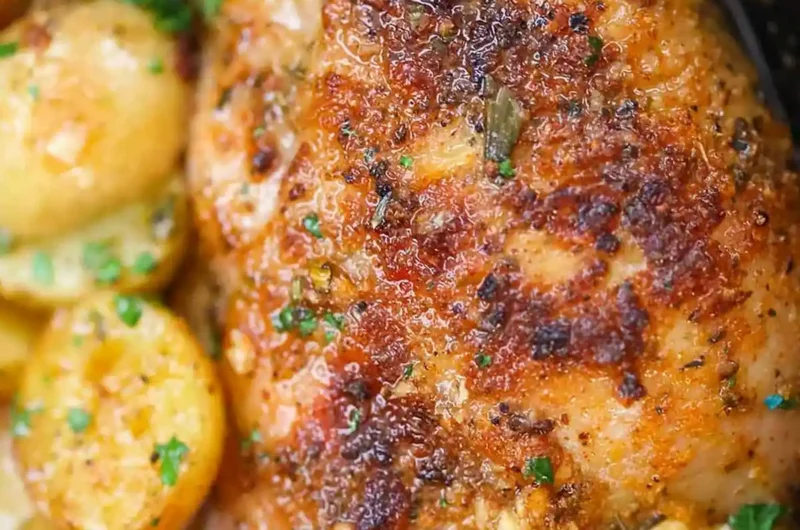
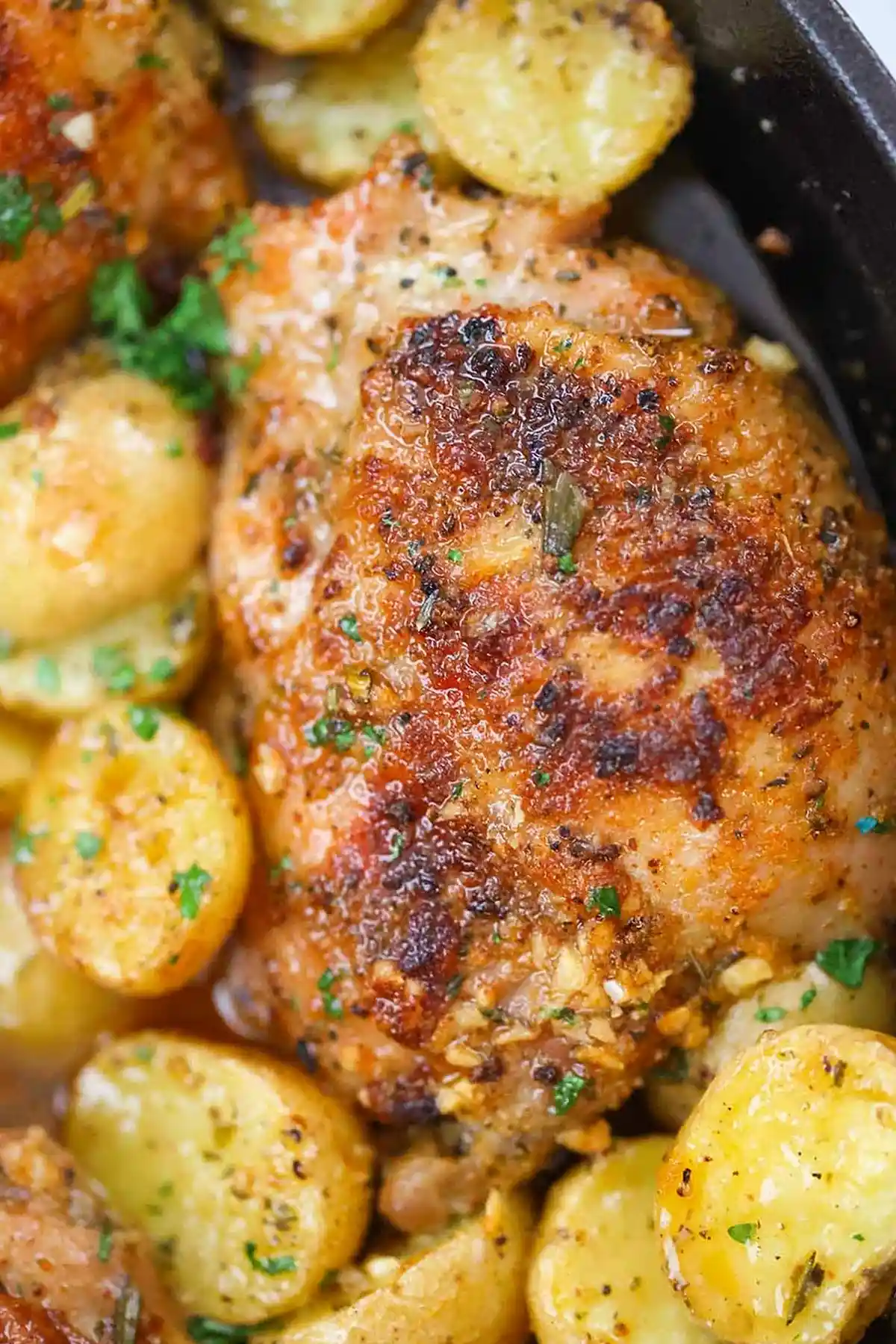
This one-pan meal combines succulent roasted chicken and buttery potatoes for a simple and satisfying dinner. It utilizes high heat to ensure the skin is crispy while the interior remains juicy and tender.
List of ingredients
- 2 lbs bone-in skin-on chicken thighs – provides maximum flavor and juiciness.
- 1 tablespoon olive oil – used for coating the chicken.
- 2 teaspoons Kosher salt – or adjust to your personal taste.
- ½ teaspoon black pepper – adds a mild spicy bite.
- ½ teaspoon paprika – gives the chicken a rich color.
- 1 teaspoon onion powder – adds a savory depth.
- 1 teaspoon garlic powder – complements the fresh garlic.
- 1 teaspoon Italian seasoning – provides a blend of classic herbs.
- ¼ teaspoon cayenne pepper – adds a subtle heat.
- 2 garlic cloves, finely minced – adds pungent fresh aroma.
- 1 lemon, juiced – cuts through the richness of the meat.
- 2 cups baby potatoes, halved – quick-cooking and buttery.
- 1 teaspoon rosemary, finely minced – adds an earthy fragrance.
- ¼ cup parmesan cheese – creates a salty crust on potatoes.
- 1 tablespoon olive oil – used for coating the potatoes.
- salt and pepper to taste – season the potatoes generously.
step-by-step instructions
- Prepare the oven and meat: Preheat your oven to 425 degrees F. Pat the chicken thighs completely dry with a paper towel to ensure the skin crisps up.
- Create the spice blend: In a small bowl, combine 2 teaspoons of Kosher salt, ½ teaspoon of black pepper, cayenne pepper, Italian seasoning, garlic powder, paprika, and onion powder.
- Season the chicken: Coat the chicken thighs with olive oil and apply the spice blend. Be sure to rub some seasoning under the skin for deeper flavor, then place them skin side up in a cast iron skillet or baking dish.
- Add aromatics and initial bake: Mix the lemon juice and minced garlic in a small bowl. Pour this mixture over the chicken, cover the pan, and bake for 20 minutes.
- Prepare the potatoes: Slice the baby potatoes in half. In a bowl, toss them with olive oil, minced rosemary, and parmesan cheese, seasoning them generously with salt and pepper.
- Combine and finish roasting: Remove the cover from the chicken and add the prepared potatoes to the skillet. Return the skillet to the oven uncovered and cook for another 25 minutes, or until the chicken reaches an internal temperature of 165 degrees F.
- Crisp the skin: Turn on the broiler and cook for 2-3 minutes to achieve a deep golden-brown color on the chicken skin.
- Rest and serve: Let the chicken and potatoes rest for at least 5 minutes. This allows the juices to redistribute before serving.
Optimizing Your Preparation
Removing Surface Moisture
Use clean paper towels to pat the chicken skin completely dry before adding oil. Excess moisture on the surface creates steam during the roasting process, which prevents the skin from becoming crispy. This step is essential for achieving a professional golden-brown finish.
The Importance of Room Temperature Meat
Allow the chicken to sit at room temperature for about 20 to 25 minutes before cooking. This ensures the meat cooks more evenly from the outside in. Cold meat can cause the exterior to overcook before the center reaches a safe temperature.
Measuring Spices Accurately
Use standard measuring spoons to ensure the balance of salt and heat is correct. While tasting as you go is helpful, consistent measurements prevent the cayenne pepper from overpowering the other savory herbs. This maintains a balanced flavor profile.
Preparing the Cast Iron Skillet
A cast iron skillet is ideal because it retains heat exceptionally well and can transition from the oven to the table. If using a baking dish, ensure it is oven-safe up to 450 degrees F. The heavy base helps the potatoes sear in the chicken fats.
Ingredient Alternatives and Swaps
Using Dried Instead of Fresh Rosemary
If you do not have fresh rosemary, you can substitute it with dried rosemary. Use about one-third of the amount of dried herbs compared to fresh. Rub the dried herbs between your palms to release the essential oils before adding them to the potatoes.
Substituting Parmesan with Other Hard Cheeses
While parmesan provides a salty, nutty flavor, you can use Pecorino Romano or Grana Padano. Pecorino is slightly saltier, so you may want to reduce the additional salt used on the potatoes. These aged cheeses melt well and create a savory crust.
Replacing Lemon Juice with Vinegar
If lemons are unavailable, a small amount of apple cider vinegar or white wine vinegar can provide the necessary acidity. Use the same volume as the lemon juice. The acidity helps tenderize the meat and balances the richness of the olive oil.
Choosing Alternative Cooking Oils
Avocado oil is a great substitute for olive oil due to its higher smoke point. Grapeseed oil also works well for high-heat roasting. Avoid using butter for the initial coating as it may burn at 425 degrees F.
Flavor Profile Adjustments
Increasing the Spicy Kick
For those who prefer more heat, increase the cayenne pepper to a half teaspoon. You can also add a pinch of crushed red pepper flakes to the potato mixture. This distributes the heat across both the protein and the starch.
Adding Earthy Tones with Cumin
Adding a half teaspoon of ground cumin to the chicken spice blend introduces an earthy, warm note. This complements the paprika and garlic powder. It transforms the dish into a more robust, savory meal.
Introducing a Hint of Sweetness
A small drizzle of honey or maple syrup over the chicken before the final broil adds a caramelized glaze. This sweetness contrasts beautifully with the salty parmesan potatoes. Apply it only in the last 3 minutes to prevent burning.
Enhancing the Garlic Intensity
If you love garlic, increase the fresh minced cloves to four. You can also add sliced garlic cloves among the potatoes. These will roast and become mellow and sweet during the baking process.
Cooking Technique Improvements
Achieving the Perfect Skin Crisp
The combination of patting the skin dry and the final broiling step is key. Ensure the chicken is not crowded in the pan, as this allows hot air to circulate. If the thighs are too close, they will steam rather than roast.
Preventing Potato Overcooking
Cut the baby potatoes into uniform halves so they cook at the same rate. If using larger potatoes, dice them into one-inch chunks. This ensures the centers are tender by the time the chicken is done.
Managing Oven Hot Spots
Every oven has areas that are hotter than others. Rotate your skillet 180 degrees halfway through the second baking period. This ensures the potatoes on the edges do not burn while the center stays undercooked.
Using a Meat Thermometer for Precision
Relying on time alone can be risky due to variations in chicken size. Use an instant-read thermometer to check the thickest part of the thigh. Remove the pan once it hits 165 degrees F to prevent the meat from drying out.
Serving and Pairing Recommendations
Adding Steamed Green Vegetables
Serve this meal with steamed broccoli, sautéed spinach, or roasted asparagus. The brightness of green vegetables cuts through the richness of the roasted chicken. These can be prepared quickly while the meat is resting.
Creating a Fresh Herb Garnish
Top the finished dish with freshly chopped parsley or chives just before serving. This adds a pop of color and a fresh, grassy contrast to the heavy seasonings. It makes the presentation look more professional.
Pairing with a Crisp Side Salad
A simple arugula or romaine salad with a lemon vinaigrette pairs well with this dish. The acidity of the salad cleanses the palate between bites of buttery potatoes. Keep the salad dressing light to avoid overwhelming the main course.
Choosing the Right Serving Platter
If you used a cast iron skillet, you can serve the meal directly from the pan on a heat-resistant trivet. This keeps the food warm throughout the meal. Otherwise, transfer to a wide platter to avoid piling the chicken on top of the potatoes.
Storage and Long-Term Preservation
Refrigeration Guidelines for Leftovers
Store leftover chicken and potatoes in an airtight glass or plastic container. Ensure the food has cooled slightly before sealing to prevent excessive condensation. They will remain fresh and safe to eat for up to four days.
Preventing Moisture Buildup in Containers
Place a piece of paper towel at the bottom of your storage container. This absorbs excess moisture that can make the potato skins soggy. Keep the container in the coldest part of the refrigerator.
Freezing and Thawing the Dish
While roasted potatoes lose some texture when frozen, the chicken freezes well. Wrap portions tightly in foil and place them in a freezer bag. Thaw overnight in the refrigerator before reheating to maintain the best quality.
Identifying Signs of Spoilage
Check for an off-smell or a slimy texture on the chicken skin before reheating. If the potatoes have become excessively mushy or developed a sour scent, discard them. Always ensure the food is reheated to an internal temperature of 165 degrees F.
Reheating Strategies
Restoring Texture in the Air Fryer
The air fryer is the best tool for reheating this dish. Place the chicken and potatoes at 350 degrees F for 4-5 minutes. This restores the crispiness of the skin and the exterior of the potatoes.
Using the Oven for Large Batches
For larger amounts of leftovers, use the oven at 325 degrees F. Place the food in a baking dish and cover it with foil to retain moisture. Remove the foil for the last 5 minutes to crisp the surfaces.
Quick Microwave Reheating Methods
Use the microwave for speed, but be aware that the skin will lose its crunch. Heat on medium power in 1-minute intervals. Place a damp paper towel over the meat to prevent it from drying out.
Avoiding Overcooking During Reheat
Heat the food only until it is steaming hot. Overheating the chicken during the second cooking process can make the meat tough and rubbery. Use a low and slow approach for the best results.
Common Troubleshooting Fixes
Fixing Undercooked Potatoes
If the chicken is done but the potatoes are still firm, remove the chicken to a plate. Return the potatoes to the oven for another 5-10 minutes. Increase the heat slightly to finish them off.
Dealing with Burnt Cheese
If the parmesan cheese browns too quickly during the broiling phase, cover the potatoes with a piece of foil. This protects the cheese while allowing the chicken skin to continue crisping. Keep a close eye on the oven.
Correcting Dry Chicken Meat
If the chicken seems dry, you may have overcooked it. To fix this, serve it with a side of gravy or a drizzle of extra lemon butter. This adds moisture back into the meat during consumption.
Adjusting for High-Altitude Cooking
At high altitudes, liquids evaporate faster. You may need to add an extra tablespoon of olive oil or lemon juice to the pan. Monitor the roasting time closely as oven temperatures can vary.
Frequently Asked Questions
Can I use boneless chicken thighs?
Yes, you can use boneless thighs, but the cooking time will be shorter. Check the internal temperature after 15-20 minutes of the second bake. Be careful not to overcook them as they lack the bone’s protection.
What if I don’t have a cast iron skillet?
A standard rimmed baking sheet or a ceramic baking dish works perfectly. If using a baking sheet, make sure the potatoes are spread out in a single layer. This ensures they roast rather than steam.
Can I use frozen baby potatoes?
It is better to use fresh potatoes, but frozen ones can work. Thaw and pat them dry completely before tossing them in oil and spices. Be aware that frozen potatoes may release more water, potentially making the chicken skin less crispy.
Is Kosher salt interchangeable with table salt?
Kosher salt has larger grains and is less salty by volume. If using table salt, reduce the amount to about 1.5 teaspoons. This prevents the dish from becoming overly salty.
Print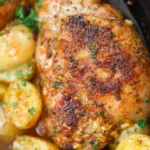
One-Pan Roasted Chicken Thighs and Potatoes
- Total Time: 58 minutes
- Yield: 4 servings 1x
- Diet: General
Description
These roasted chicken thighs and potatoes cook perfectly in one skillet in the oven. The chicken is juicy on the inside and crispy on the outside while the potatoes are buttery and tender!
Ingredients
- 2 lbs bone-in skin-on chicken thighs
- 1 tablespoon olive oil
- 2 teaspoons Kosher salt
- ½ teaspoon black pepper
- ½ teaspoon paprika
- 1 teaspoon onion powder
- 1 teaspoon garlic powder
- 1 teaspoon Italian seasoning
- ¼ teaspoon cayenne pepper
- 2 garlic cloves, finely minced
- 1 lemon, juiced
- 2 cups baby potatoes, halved
- 1 teaspoon rosemary, finely minced
- ¼ cup parmesan cheese
- 1 tablespoon olive oil
- salt and pepper to taste
Instructions
- Preheat: Preheat your oven to 425 degrees F. and pat dry the chicken thighs with a paper towel.
- Mix Spices: In a small bowl, combine 2 teaspoons of Kosher salt, ½ teaspoon of black pepper, cayenne pepper, Italian seasoning, garlic powder, paprika, and onion powder.
- Season Chicken: Coat the chicken thighs with olive oil and season with the spice blend. Make sure to season under the skin as well. Place the chicken thighs, skin side up in a cast iron skillet or baking dish.
- Initial Bake: In a small bowl, combine the lemon juice and garlic. Pour the mixture over the chicken thighs. Cover the chicken and bake for 20 minutes.
- Prepare Potatoes: Slice the potatoes in half and coat them with olive oil, rosemary, and parmesan cheese. Season generously with salt and pepper.
- Final Bake: Once the 20 minutes are up, uncover the chicken and place the potatoes in the same skillet. Place the skillet back into the oven uncovered, and cook for an additional 25 minutes or until the chicken reaches an internal temperature of 165 degrees F.
- Broil: Once the 25 minutes are up, broil for 2-3 minutes.
- Rest: Allow the chicken and potatoes to rest for at least 5 minutes before serving and enjoy!
Notes
Potatoes can be super bland if you don’t season them generously. Make sure to season the potatoes very generously with salt and pepper. Season the chicken under the skin for maximum flavor! Once the chicken and potatoes are fully cooked through, broil for 2-3 minutes to get the chicken skin nice and crispy. Allow the chicken to rest at room temperature for at least 25 minutes before cooking.
- Prep Time: 10 minutes
- Cook Time: 48 minutes
- Category: Entree
- Method: Roasting
- Cuisine: American
Nutrition
- Serving Size: 1 serving
- Calories: 584 kcal
- Sugar: 1 g
- Sodium: 1418 mg
- Fat: 41 g
- Saturated Fat: 11 g
- Unsaturated Fat: 27 g
- Trans Fat: 0.2 g
- Carbohydrates: 18 g
- Fiber: 3 g
- Protein: 36 g
- Cholesterol: 193 mg
Keywords: baked chicken thighs, chicken and potatoes, roasted chicken thighs and potatoes