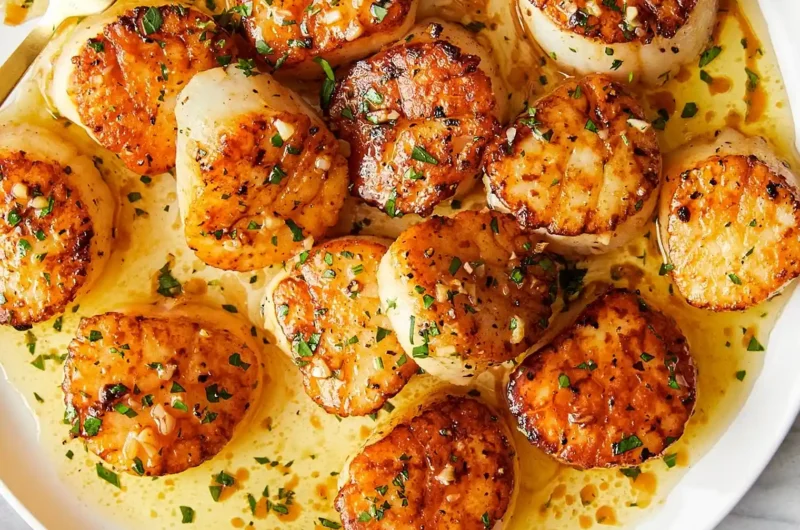
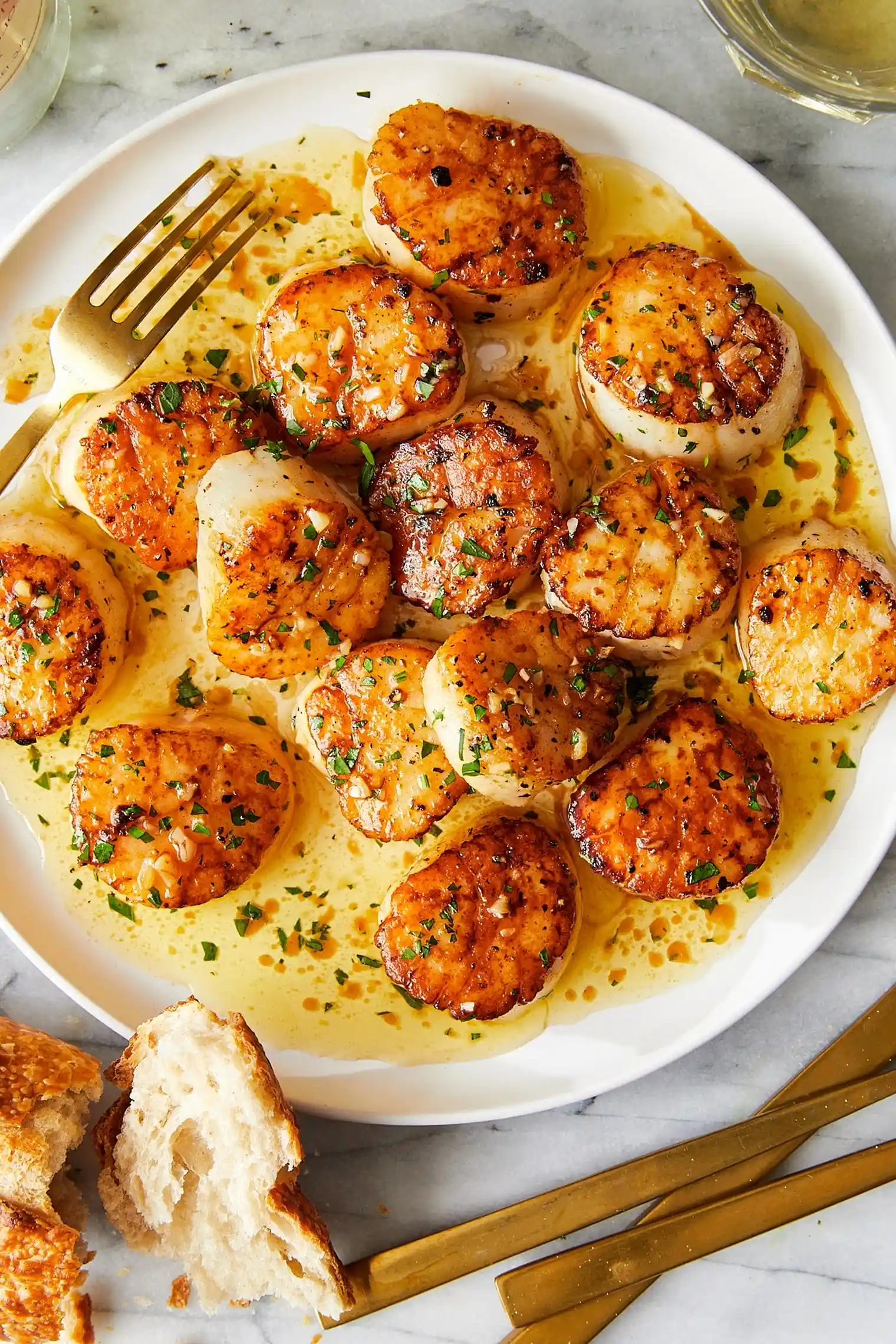
Create a restaurant-quality seafood dinner in just twenty minutes. These scallops are seared to golden perfection and coated in a rich, zesty garlic butter sauce.
List of ingredients
- 1 tablespoon unsalted butter – used for searing the scallops.
- 1 pound sea scallops – ensure they are patted dry for the best crust.
- Kosher salt and freshly ground black pepper – to taste for seasoning.
- 2 tablespoons unsalted butter – for the garlic lemon sauce.
- 3 cloves garlic, minced – provides a savory aromatic base.
- 3 tablespoons freshly squeezed lemon juice – adds brightness and acidity.
- Kosher salt and freshly ground black pepper – to taste for the sauce.
- 2 tablespoons chopped fresh parsley leaves – used for a fresh garnish.
step-by-step instructions
- Heat the pan: Melt 1 tablespoon of butter in a large cast iron skillet over medium high heat until foaming.
- Prepare the scallops: Gently remove the small side muscle from each scallop, rinse them with cold water, and pat them thoroughly dry with paper towels.
- Season: Apply kosher salt and freshly ground black pepper to both sides of the scallops according to your taste preference.
- Sear: Working in batches to avoid overcrowding, place scallops in the skillet in a single layer. Cook for about 2-3 minutes per side, flipping only once, until they are golden brown on the outside and translucent in the center. Remove and keep warm.
- Make the sauce: In the same skillet, melt 2 tablespoons of butter. Add the minced garlic and cook, stirring frequently, for about 1 minute until fragrant.
- Finish the sauce: Stir in the lemon juice and season with salt and pepper to taste.
- Plate: Serve the seared scallops immediately, drizzled with the lemon butter sauce and garnished with chopped parsley.
Choosing the Best Scallops
Sea Scallops vs Bay Scallops
Sea scallops are significantly larger, usually about 2 inches in diameter, and have a firmer, meatier texture. Bay scallops are much smaller and sweeter, making them better for pasta or chowders than for pan-searing.
Identifying Dry-Packed Scallops
Dry scallops are natural and untreated, meaning they have a slightly ivory or tan color. These are the gold standard for searing because they lack excess moisture, allowing for a deep golden-brown crust.
Avoiding Wet-Packed Scallops
Wet scallops are treated with sodium tripolyphosphate, which causes them to absorb excess water and appear snow-white. This chemical treatment prevents them from caramelizing properly, often resulting in scallops that steam in the pan rather than sear.
Expert Searing Techniques
The Importance of Total Dryness
Moisture is the enemy of a good sear. Use heavy-duty paper towels to press firmly on every side of the scallop to remove surface water, which ensures the Maillard reaction happens quickly.
Removing the Abductor Muscle
The small, tough piece of muscle on the side of the scallop is the abductor muscle. While edible, it remains chewy even after cooking, so pinching and pulling it off improves the overall tenderness of the dish.
Managing Pan Temperature
The skillet must be hot enough that the butter sizzles immediately upon contact. If the pan is too cool, the scallops will leak juices and boil in their own liquid instead of developing a crust.
Preventing Pan Overcrowding
Adding too many scallops at once drops the temperature of the cast iron skillet. Cook in smaller batches so there is plenty of space between each piece, allowing steam to escape and the surface to brown.
Knowing When to Flip
Avoid moving the scallops frequently. Once they are placed in the pan, let them sear undisturbed for 2-3 minutes; they will naturally release from the pan surface once a proper crust has formed.
Ingredient Substitutions and Variations
Using Ghee for Higher Smoke Point
If you prefer an even higher searing temperature, replace the first tablespoon of butter with ghee or clarified butter. Ghee removes the milk solids that burn, allowing you to get a deeper sear without the butter turning brown too quickly.
Alternative Fresh Herbs
While parsley is traditional, fresh chives or dill provide a wonderful contrast to the lemon butter. Finely chop the herbs and stir them in at the very end to maintain their bright color and flavor.
Substituting Lime for Lemon
If you prefer a slightly different citrus profile, lime juice can be used in place of lemon juice. Lime offers a more tropical acidity that pairs well with a pinch of paprika added to the scallops.
Garlic Powder for Convenience
In a pinch, you can use 1 teaspoon of garlic powder instead of fresh cloves. However, fresh garlic provides a more complex, pungent flavor that defines the sauce.
Serving and Pairing Suggestions
Pairing with Grains
Serve these scallops over a bed of creamy parmesan risotto or buttery basmati rice. The grains absorb the extra lemon butter sauce, making the meal more filling and balanced.
Ideal Vegetable Sides
Roasted asparagus, sautéed spinach, or glazed carrots complement the richness of the butter sauce. These vegetables add color and a fresh, earthy element to the plate.
Complementary Salad Options
A light arugula salad with a simple vinaigrette or a classic Caesar salad provides a crisp contrast to the tender scallops. The acidity in the salad helps cut through the richness of the butter.
Non-Alcoholic Beverage Pairings
Pair this dish with a sparkling mineral water with a twist of lime or a chilled white grape juice. These refreshing options cleanse the palate between bites of buttery seafood.
Storage and Reheating Guide
Proper Refrigeration Methods
Store leftover scallops and sauce in separate airtight containers to maintain quality. This prevents the scallops from absorbing too much liquid and becoming mushy in the fridge.
Safe Storage Duration
Cooked scallops should be consumed within 24 hours for optimal taste and safety. Seafood degrades faster than other proteins, so prompt consumption is recommended.
Oven Reheating for Best Texture
To reheat, place the scallops on a baking sheet and cover them loosely with aluminum foil. Warm them in a 200°F oven until just heated through to avoid overcooking the centers.
Avoiding the Microwave
Avoid reheating scallops in the microwave, as the uneven heating quickly turns the delicate proteins rubbery. The oven provides a gentler heat that preserves the texture better.
Troubleshooting Common Issues
Preventing Rubberiness
Rubberiness is usually a result of overcooking. Keep a close eye on the clock and remove the scallops as soon as they are opaque and firm around the edges but still slightly translucent in the center.
Achieving a Golden Crust
If your scallops are pale, your pan temperature is likely too low or the scallops were too wet. Increase the heat and ensure you are using dry-packed scallops for the next batch.
Managing Excess Liquid
If the pan fills with liquid during searing, you are likely overcrowding the skillet. Remove a few scallops and let the liquid evaporate before adding the rest of the batch.
Frequently Asked Questions
Can I use frozen scallops?
Yes, but they must be thawed completely in the refrigerator overnight or under lukewarm running water. The most critical step is to pat them extremely dry after thawing to ensure a proper sear.
How do I know when scallops are done?
Scallops are cooked when they feel firm to the touch and the center has changed from translucent to opaque. They should have a golden-brown crust on both the top and bottom surfaces.
Why use unsalted butter?
Using unsalted butter gives you total control over the sodium levels of the dish. This prevents the sauce from becoming too salty, especially when reducing the lemon juice and butter.
Can I use a non-stick pan?
While a non-stick pan works, a cast iron or stainless steel skillet is superior for scallops. These materials hold heat more effectively, which is essential for creating a professional restaurant-style sear.
Print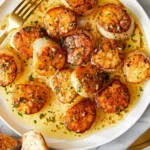
Garlic Lemon Butter Scallops
- Total Time: 20 minutes
- Yield: 4 servings 1x
- Diet: Gluten-Free
Description
All you need is 5 ingredients + 10 minutes for the most amazing, buttery scallops ever. So easy, so simple, so fancy!
Ingredients
- 1 tablespoon unsalted butter
- 1 pound sea scallops
- Kosher salt and freshly ground black pepper, to taste
- 2 tablespoons unsalted butter
- 3 cloves garlic, minced
- 3 tablespoons freshly squeezed lemon juice
- Kosher salt and freshly ground black pepper, to taste
- 2 tablespoons chopped fresh parsley leaves
Instructions
- Searing: Melt butter in a large cast iron skillet over medium high heat.
- Prep: Remove the small side muscle from the scallops, rinse with cold water and thoroughly pat dry.
- Cook: Season scallops with salt and pepper, to taste. Working in batches, add scallops to the skillet in a single layer and cook, flipping once, until golden brown and translucent in the center, about 2-3 minutes per side. Set aside and keep warm.
- Sauce Base: Melt butter in the skillet.
- Aromatics: Add garlic and cook, stirring frequently, until fragrant, about 1 minute.
- Finish Sauce: Stir in lemon juice; season with salt and pepper, to taste.
- Serving: Serve scallops immediately with lemon butter sauce, garnished with parsley, if desired.
Notes
For the best results, use dry scallops rather than wet scallops to ensure a golden brown sear. To reheat leftovers, use an oven at 200°F covered in aluminum foil to avoid a rubbery texture.
- Prep Time: 10 minutes
- Cook Time: 10 minutes
- Category: Main Course
- Method: Pan Searing
- Cuisine: American
Nutrition
- Serving Size: 1 serving
- Calories: 210 kcal
- Sugar: 2 g
- Sodium: 480 mg
- Fat: 11 g
- Saturated Fat: 7 g
- Unsaturated Fat: 4 g
- Trans Fat: 0 g
- Carbohydrates: 4 g
- Fiber: 1 g
- Protein: 23 g
- Cholesterol: 75 mg
Keywords: lemon butter scallops, sea scallops, pan seared scallops, quick seafood dinner, buttery scallops