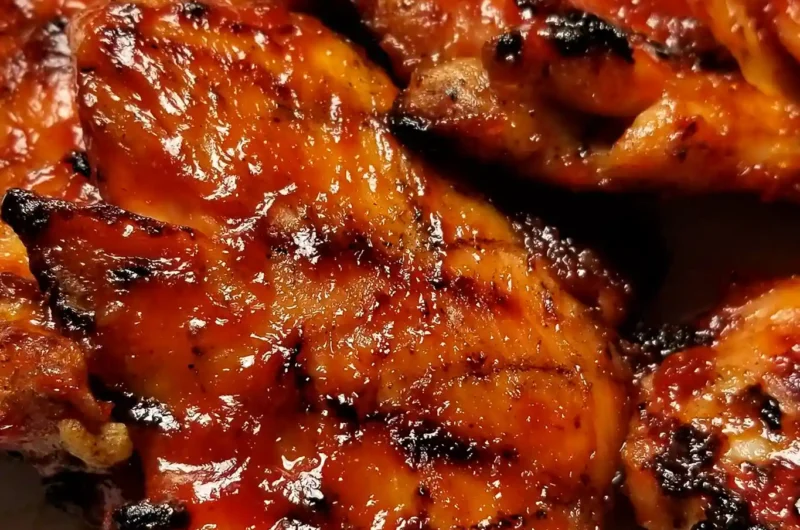
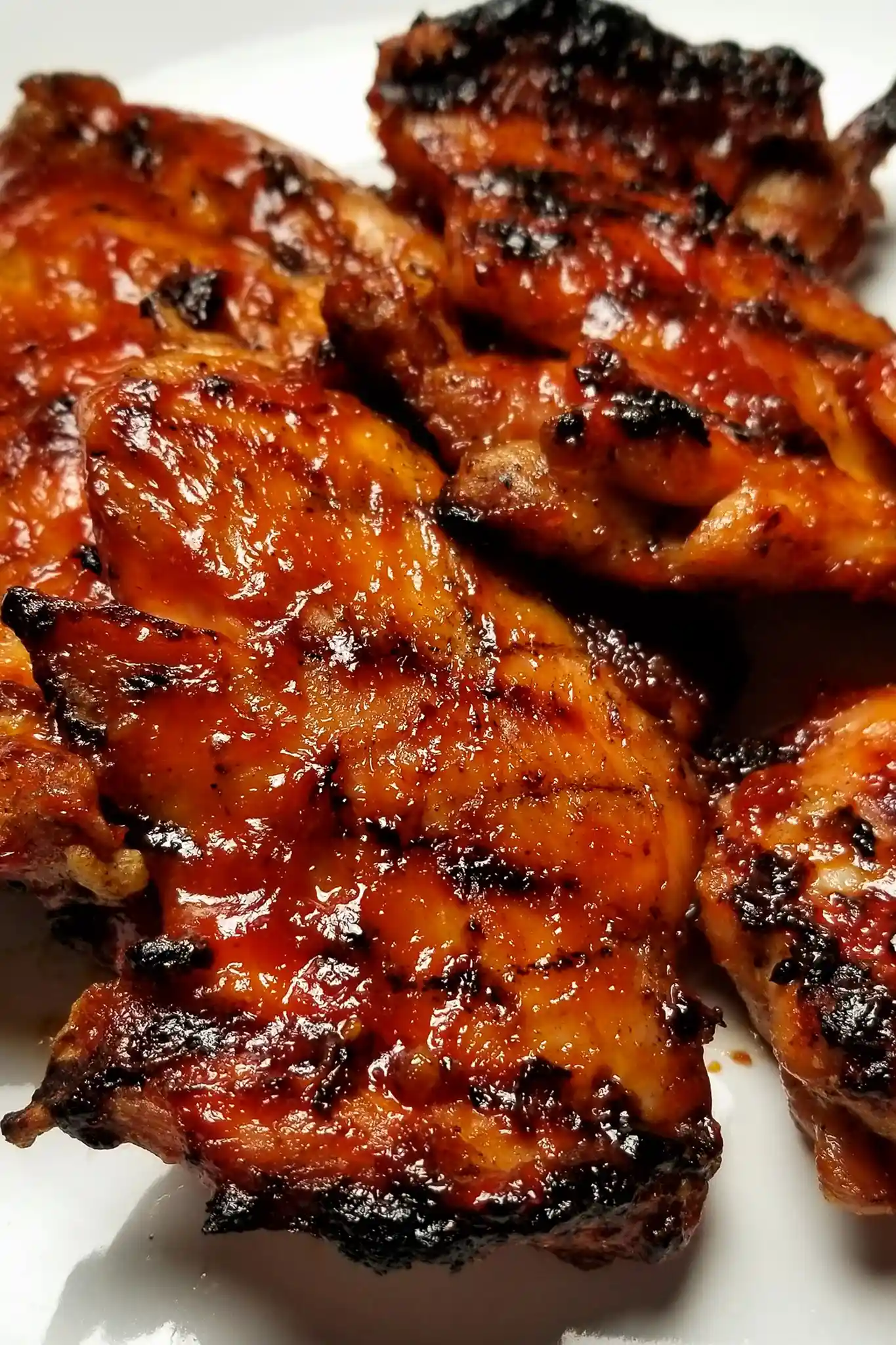
These juicy grilled chicken thighs are coated in a bold, homemade spicy barbecue sauce for a perfect balance of heat and sweetness. Following a low and slow cooking method ensures the meat remains tender and succulent throughout.
List of ingredients
- 2 lbs. boneless skinless chicken thighs – chosen for their juiciness.
- 2 tsp olive oil – prevents sticking on the grill.
- 1 tsp salt – enhances the natural flavors of the meat.
- 1 tsp black pepper – adds a subtle earthy spice.
- 2 tbsp butter – provides a rich base for the sauce.
- 2 tbsp yellow onion, finely chopped – adds aromatic depth.
- 1 clove garlic, minced – adds a pungent, savory note.
- 1/4 cup apple cider vinegar – provides the necessary acidic tang.
- 1/4 cup water – thins the sauce for a smoother simmer.
- 1/2 cup ketchup – creates a thick, sweet tomato base.
- 1 tsp paprika – adds color and a mild sweetness.
- 2 tsp sriracha – introduces a sharp, vinegary heat.
- 2 tsp hot chili paste (sambal oelek or sriracha) – adds texture and spice.
- 1/2 tbsp chili powder – deepens the spicy profile.
- 2 tsp mustard – adds a tangy, sharp contrast.
- 1 tsp worcestershire sauce – brings an umami richness to the glaze.
step-by-step instructions
- Prepare the BBQ sauce: Place butter and chopped onions in a small saucepan over medium heat. Sauté until the onions become tender and translucent.
- Add aromatics: Stir in the minced garlic and cook for approximately one minute until it becomes fragrant.
- Simmer the sauce: Mix in the apple cider vinegar, water, ketchup, paprika, sriracha, hot chili paste, chili powder, mustard, and worcestershire sauce. Bring the mixture to a low simmer and cook for about 15 minutes, stirring occasionally, until the sauce thickens. Remove from heat and set aside.
- Season the meat: Rub olive oil, salt, and black pepper evenly over all sides of the chicken thighs.
- Preheat the grill: Set your grill to medium-low heat and allow it to reach the desired temperature.
- Initial grilling: Place the chicken thighs on the grill with the smooth side facing down.
- Cook low and slow: Flip the chicken thighs every 3 to 4 minutes. This gradual cooking process ensures the interior stays moist.
- Final check: Continue grilling until the internal temperature reaches between 165-170 degrees and the juices run clear.
- Baste with sauce: During the last few turns on the grill, generously brush the homemade spicy BBQ sauce onto the thighs to create a sticky glaze.
Mastering the Grilling Process
Maintaining a Medium-Low Temperature
Using medium-low heat is essential to prevent the outside of the chicken from burning before the inside is cooked. High heat can sear the exterior too quickly, leaving the center raw. This slower approach allows the fat to render properly.
Achieving the Perfect Internal Temperature
Use a digital meat thermometer to ensure the chicken reaches 165-170 degrees Fahrenheit. Thighs are more forgiving than breasts, but overcooking them can still lead to dryness. Pulling them off at exactly 165 degrees allows for carry-over cooking.
Optimizing Basting Timing
Wait until the final few minutes of cooking to apply the barbecue sauce. Because the sauce contains sugar from the ketchup, it can burn and turn bitter if exposed to heat for too long. Basting at the end creates a glossy, sticky coating without charring.
Preventing Meat from Sticking
Ensure the grill grates are clean and lightly oiled before adding the chicken. Rubbing the chicken thighs with olive oil before seasoning creates a barrier between the meat and the metal. This makes flipping the chicken easier and keeps the meat intact.
Customizing the Spicy BBQ Sauce
Adjusting the Heat Levels
To make the sauce milder, reduce the amount of sriracha and hot chili paste by half. If you prefer more heat, add a pinch of cayenne pepper or extra sambal oelek. Always taste the sauce after simmering to adjust the spice to your preference.
Balancing the Acidity
The apple cider vinegar provides a sharp contrast to the sweetness of the ketchup. If the sauce tastes too acidic, add a small amount of brown sugar or honey. Conversely, a splash more vinegar can brighten the flavor if it feels too heavy.
Enhancing the Smoky Profile
For a deeper, wood-fired taste, replace standard paprika with smoked paprika. You can also add a drop of liquid smoke to the simmering sauce. This is especially useful if you are using a gas grill instead of charcoal.
Achieving the Ideal Sauce Consistency
The 15-minute simmer time is crucial for reducing the water content and thickening the glaze. If the sauce remains too thin, simmer it for an additional 5 minutes over medium-low heat. A thicker sauce will cling to the chicken more effectively during basting.
Practical Ingredient Substitutions
Alternative Chili Pastes
If you cannot find sambal oelek, sriracha is the most practical substitute. For a different flavor profile, you can use Gochujang for a fermented, sweeter heat. Just be mindful that Gochujang is thicker and may require a teaspoon of extra water.
Switching the Meat Cut
While boneless skinless thighs are recommended, you can use bone-in thighs or drumsticks. Increase the cooking time by 10 to 15 minutes to ensure the meat near the bone is fully cooked. Use a thermometer to verify the internal temperature.
Dairy-Free Butter Alternatives
To make this recipe dairy-free, replace the butter in the sauce with an equal amount of olive oil or a plant-based butter substitute. This change does not significantly alter the final taste of the spicy glaze. The oil will still help sauté the onions effectively.
Mustard Variety Choices
Yellow mustard provides a classic American BBQ tang, but Dijon mustard offers a more sophisticated, sharp flavor. Whole grain mustard can be used for added texture in the sauce. Each variety changes the depth of the sauce slightly.
Serving and Pairing Ideas
Complementary Creamy Side Dishes
Pair the spicy chicken with a creamy potato salad or a classic coleslaw. The coolness of the mayonnaise-based sides balances the heat from the sriracha and chili powder. This creates a refreshing contrast on the palate.
Grilled Vegetable Accompaniments
Corn on the cob grilled in the husk is a traditional pairing for BBQ chicken. Zucchini spears or bell pepper strips can also be grilled alongside the thighs. Use the same olive oil and salt seasoning for the vegetables.
Using Chicken in Tacos
Slice the grilled thighs into strips and serve them in warm corn or flour tortillas. Top them with fresh cilantro, diced white onions, and a squeeze of lime juice. The spicy BBQ glaze acts as a flavorful marinade for the taco filling.
Pairing with Hearty Grains
Serve the chicken over a bed of steamed white rice or quinoa to soak up any extra sauce. A side of garlic mashed potatoes is another filling option. These neutral grains help temper the spiciness of the chicken.
Storage and Preservation
Refrigeration Guidelines
Store leftover chicken in an airtight container in the refrigerator for up to 4 days. Keep the remaining sauce in a separate glass jar to maintain its consistency. Ensure the chicken is completely cooled before sealing the lid to prevent moisture buildup.
Freezing Cooked Chicken
Wrap individual pieces of chicken tightly in foil and place them in a freezer-safe bag for up to 3 months. Label the bag with the date for freshness. Thaw the chicken in the refrigerator overnight before reheating.
Best Reheating Methods
Avoid the microwave if possible, as it can make the chicken rubbery. Instead, reheat the thighs in an oven at 325 degrees Fahrenheit until warmed through. A splash of water or a bit of extra sauce helps keep the meat moist.
Reviving the BBQ Sauce
When reheating stored sauce, it may have thickened significantly in the fridge. Add a teaspoon of water or apple cider vinegar while heating it in a small pan. Stir constantly over low heat until it reaches a pourable consistency.
Make-Ahead Preparation
Preparing the Sauce in Advance
The BBQ sauce can be made up to a week before you plan to grill the chicken. Store it in the refrigerator in a sealed jar. Cold sauce is easier to apply in thin layers, which can help prevent premature burning on the grill.
Pre-Seasoning the Chicken
You can rub the olive oil, salt, and pepper onto the thighs a few hours before cooking. Store them in the refrigerator on a tray covered with plastic wrap. This allows the salt to penetrate the meat, enhancing the overall flavor.
Organizing Your Grill Station
Prepare your basting brush, tongs, and meat thermometer before starting the grill. Having the sauce in a bowl next to the heat source prevents you from leaving the grill unattended. This ensures the chicken is flipped exactly every 3 to 4 minutes.
Common Troubleshooting
Fixing Burnt Sauce
If the sauce chars too quickly, immediately move the chicken to a cooler part of the grill. Use a knife to gently scrape off the burnt bits. Reduce the heat of the grill and apply a fresh layer of sauce only in the final minute.
Solving the Issue of Tough Meat
Tough chicken usually results from cooking on too high a heat or overcooking the meat. Stick strictly to the medium-low temperature setting. If the meat feels tough, ensure you are using thighs rather than breasts, as thighs have more connective tissue that tenderizes over time.
Correcting Overly Salty Sauce
If the sauce tastes too salty, stir in a small amount of apple cider vinegar or a teaspoon of brown sugar. The acidity and sweetness will mask the saltiness. Avoid adding more water, as this will dilute the flavor too much.
Handling Underdone Centers
If the outside looks done but the center is undercooked, lower the heat further and continue flipping. Cover the grill with a lid to trap heat and cook the center more evenly. Always rely on the thermometer rather than the color of the juices.
Frequently Asked Questions
Can I make this recipe in an oven?
Yes, you can bake the chicken at 375 degrees Fahrenheit on a baking sheet. Bake for about 25-30 minutes, flipping halfway through. Baste with the sauce during the last 10 minutes of cooking.
How do I know when the chicken is perfectly done?
The most reliable method is using a meat thermometer to hit 165-170 degrees Fahrenheit. Visually, the juices should run clear when the thickest part of the thigh is pierced.
Can the sauce be made without a saucepan?
You can simmer the ingredients in a slow cooker on high for 2 hours. However, a saucepan is recommended for the fastest results and better control over the thickness.
Is boneless skinless the only chicken option?
You can use bone-in thighs for more flavor, but they require a longer cooking time. Increase the grilling time by roughly 10-15 minutes to ensure the meat reaches a safe internal temperature.
Print
Grilled Spicy BBQ Chicken Thighs
- Total Time: 40 minutes
- Yield: 4 servings 1x
- Diet: General
Description
Juicy grilled chicken thighs basted in a spicy homemade barbecue sauce are the perfect addition to your summer cook-outs!
Ingredients
- 2 lbs. boneless skinless chicken thighs
- 2 tsp olive oil
- 1 tsp salt
- 1 tsp black pepper
- 2 tbsp butter
- 2 tbsp yellow onion, finely chopped
- 1 clove garlic, minced
- 1/4 cup apple cider vinegar
- 1/4 cup water
- 1/2 cup ketchup
- 1 tsp paprika
- 2 tsp sriracha
- 2 tsp hot chili paste (sambal oelek or sriracha)
- 1/2 tbsp chili powder
- 2 tsp mustard
- 1 tsp worcestershire sauce
Instructions
- Make Sauce: In a small saucepan over medium heat, add butter and onions. Cook until onions are tender.
- Sauté Garlic: Add garlic and cook for another minute until fragrant.
- Simmer Sauce: Add remaining sauce ingredients and bring to a low simmer.
- Thicken: Let cook for about 15 minutes or until sauce thickens up, stirring occasionally, then remove from heat and set aside.
- Season Chicken: Season chicken thighs with salt, pepper and oil on all sides.
- Heat Grill: Heat your grill to medium-low heat.
- Grill Chicken: Place the chicken thighs on smooth side down.
- Cook Low and Slow: Turn the chicken thighs over every 3-4 minutes until chicken juices run clear and the internal temperature is between 165-170 degrees.
- Baste: Baste the chicken thighs with the homemade spicy bbq sauce during the last few turns.
Notes
If you don’t have Sambal Oelek, you can substitute sriracha.
- Prep Time: 20 minutes
- Cook Time: 20 minutes
- Category: Main Course
- Method: Grilling
- Cuisine: American
Nutrition
- Serving Size: 1 serving
- Calories: 587 kcal
- Sugar: 12 g
- Sodium: 950 mg
- Fat: 30 g
- Saturated Fat: 10 g
- Unsaturated Fat: 20 g
- Trans Fat: 0 g
- Carbohydrates: 18 g
- Fiber: 2 g
- Protein: 45 g
- Cholesterol: 150 mg
Keywords: spicy grilled bbq chicken thighs