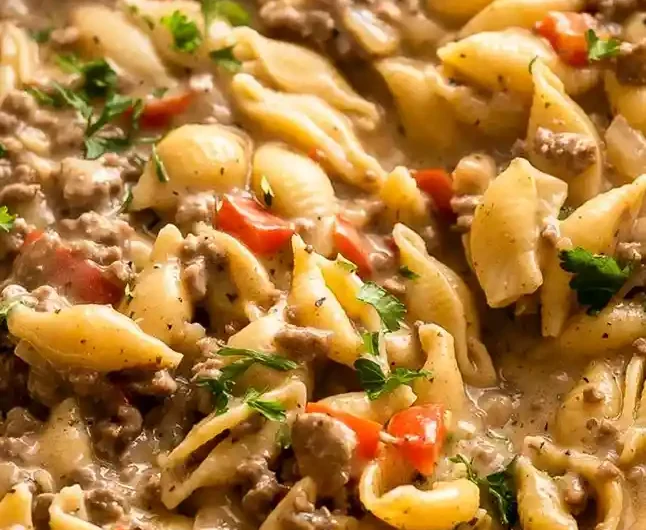
This creamy beef and shells dinner is a fast, one-pan meal perfect for busy weeknights. It combines savory ground beef and pasta shells in a rich, cheesy sauce for a comforting family meal.
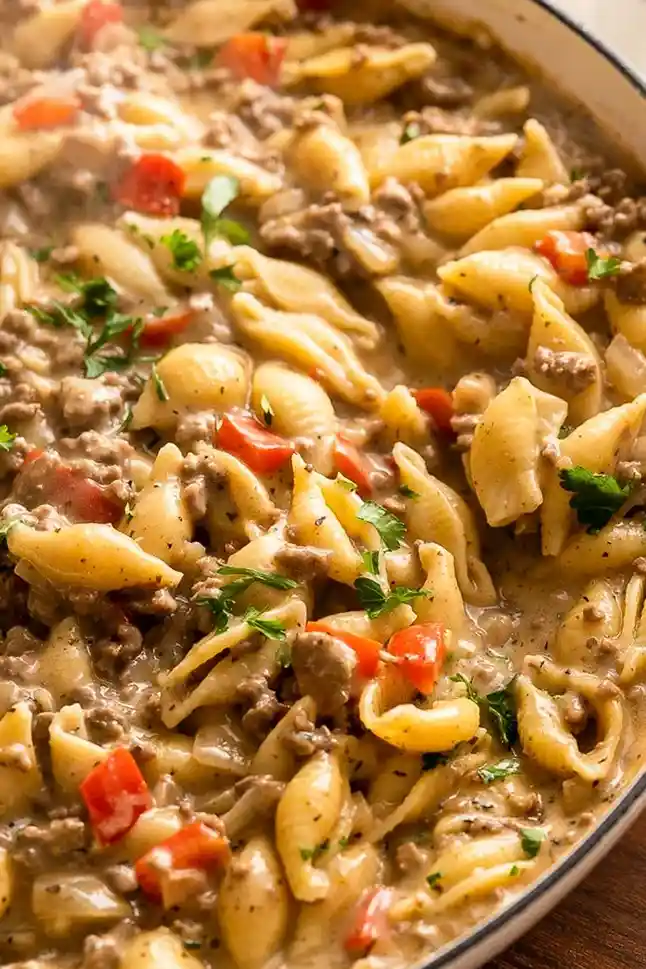
List of ingredients
- 3 cups medium pasta shells, uncooked – the shape helps hold the creamy sauce.
- 1 lb. ground beef – use a lean blend to reduce excess fat.
- 1 medium red bell pepper, diced – adds a subtle sweetness and color.
- ½ large onion, diced – provides a savory base flavor.
- 1 tsp garlic, minced – adds aromatic depth to the sauce.
- 1 tbsp Italian seasoning – a blend of herbs for a classic taste.
- 1 tsp salt – enhances all the other flavors.
- ½ tsp black pepper – provides a mild spicy kick.
- 3 tbsp Land O Lakes® Butter with Olive Oil & Sea Salt – creates a rich roux.
- ¼ cup all-purpose flour – thickens the sauce to a creamy consistency.
- 2 cups beef broth – the liquid base for the savory gravy.
- ½ cup sour cream – adds tanginess and creaminess.
- 1 cup mild cheddar cheese – provides a melty, cheesy finish.
- 2 tbsp parsley, chopped – used as a fresh garnish.
step-by-step instructions
- Cook the Pasta: Bring a large pot of salted water to a boil and cook pasta shells according to package instructions, until tender. Drain and set aside.
- Brown the Base: Meanwhile, in a large pan over medium heat, brown ground beef, red bell pepper and onion until beef is cooked through and crumbled. Drain any fat and return pan to heat.
- Season and Sauté: Add in garlic, Italian seasoning, salt and pepper and stir until fragrant.
- Create the Roux: Stir in Land O Lakes® Butter with Olive Oil & Sea Salt until melted, then whisk in flour and cook about 1 minute, until flour is absorbed.
- Build the Sauce: Gradually stir in beef broth, until mixture is slightly thickened.
- Finish the Dish: Stir in sour cream and mild cheddar cheese until combined, then stir in pasta shells. Garnish with parsley and enjoy!
Mastering the Cooking Process
Achieving a Proper Beef Sear
Ensure your skillet is preheated over medium heat before adding the ground beef. This prevents the meat from steaming in its own juices and allows it to brown properly. A good sear develops a deeper flavor profile known as the Maillard reaction.
Managing Vegetable Texture
Dice your onions and red bell peppers into uniform pieces of about a quarter-inch. This ensures that they soften at the same rate and integrate evenly into the sauce. Avoid overcooking them to maintain a slight structural bite.
Creating a Smooth Flour Roux
Whisk the flour into the melted butter vigorously to ensure there are no clumps. Cooking the flour for one full minute removes the raw flour taste. This step is critical for a professional, velvety sauce texture.
Incorporating Beef Broth Slowly
Pour the beef broth in small increments while stirring constantly. Adding the liquid too quickly can cause the roux to separate or create lumps. Slow integration ensures a smooth, cohesive gravy.
Tempering the Sour Cream
Lower the heat before stirring in the sour cream to prevent it from curdling. If the pan is too hot, the dairy may separate, affecting the sauce’s appearance. Stir quickly and thoroughly to blend it into the beef mixture.
Integrating Pasta Shells Gently
Fold the cooked pasta shells into the sauce using a gentle stirring motion. This prevents the shells from breaking or becoming mushy. Ensure every piece of pasta is fully coated in the cheese sauce.
Ingredient Customizations and Alternatives
Selecting the Right Beef Fat Ratio
For a richer taste, use 80/20 ground beef, but be sure to drain the excess fat thoroughly. For a lighter version, 90/10 or 93/7 lean beef works well. If using very lean beef, you may need an extra tablespoon of butter to keep the sauce moist.
Substituting Ground Turkey
Ground turkey is a great lean alternative to beef in this recipe. Since turkey has a milder flavor, you may want to add an extra pinch of salt or a dash of Worcestershire sauce. Follow the same browning and sautéing steps as the beef.
Using Different Pasta Shapes
While medium shells are traditional because they scoop up the sauce, other shapes work too. Rotini, penne, or fusilli are excellent alternatives that hold onto the creamy sauce. Always cook your chosen pasta to al dente to prevent overcooking during the final mix.
Swapping Cheddar Varieties
Mild cheddar provides a classic taste, but sharp cheddar offers a more bold, tangy flavor. For a spicy kick, use Pepper Jack or a blend of Monterey Jack and Cheddar. Always grate your cheese from a block for a smoother melt.
Alternative Thickening Agents
If you need a gluten-free version, replace the all-purpose flour with a 1:1 gluten-free flour blend or cornstarch. When using cornstarch, mix it with a small amount of cold broth first to create a slurry before adding it to the pan. This prevents clumps from forming.
Exploring Different Herb Blends
If you do not have Italian seasoning, use a mix of dried oregano, basil, and thyme. Fresh herbs added at the end, such as chopped basil or chives, can also brighten the dish. Adjust the quantities based on the potency of your herbs.
Recommended Side Dish Pairings
Balancing Richness with Fresh Salads
A crisp Caesar salad or a simple garden salad with a lemon vinaigrette cuts through the richness of the cheese sauce. The acidity from the dressing cleanses the palate between bites. Use fresh romaine or spinach for the best crunch.
Adding Nutrients with Roasted Vegetables
Honey roasted carrots or roasted broccoli provide a sweet and earthy contrast to the savory beef. Roast them at 400°F (200°C) with olive oil, salt, and pepper. This adds a healthy element to the meal.
Serving with Garlic Breadsticks
Warm, buttery garlic breadsticks are ideal for soaking up any remaining sauce on the plate. You can use store-bought frozen breadsticks or bake your own with fresh garlic and parsley. Toast them until the edges are golden brown.
Complementing with Sautéed Zucchini
Quickly sautéed zucchini slices with a hint of lemon and garlic pair well with the creamy texture of the pasta. Keep the zucchini slightly crisp to provide a textural contrast. This is a great way to incorporate more greens into the dinner.
Storage and Long-Term Preservation
Refrigerating Leftovers
Allow the beef and shells to cool slightly before transferring them to an airtight container. Store them in the back of the refrigerator where the temperature is most consistent. The dish will stay fresh and tasty for 3 to 4 days.
Freezing for Future Meals
This recipe freezes well if you undercook the pasta by two minutes. Portion the meal into freezer-safe bags or containers and flatten them for efficient stacking. The dish can be stored in the freezer for up to three months.
Preventing Sauce Separation
When storing, the pasta may absorb more sauce over time, making it seem dry. To prevent this, you can stir in an extra tablespoon of beef broth before refrigerating. This keeps the sauce more fluid during storage.
Thawing Frozen Portions
Thaw frozen portions in the refrigerator overnight for the best results. Avoid thawing at room temperature to ensure food safety. If you are in a rush, use the defrost setting on your microwave.
Effective Reheating Techniques
Stovetop Reheating for Best Texture
Place the leftovers in a skillet over low to medium heat. Add a small splash of beef broth or water to loosen the sauce. Stir gently until the cheese is melted and the pasta is heated through.
Microwave Instructions for Speed
Heat the pasta in a microwave-safe bowl, covering it with a damp paper towel to retain moisture. Microwave in 1-minute intervals, stirring in between. This ensures the heat is distributed evenly and the sauce doesn’t break.
Oven Reheating for Large Batches
For larger quantities, transfer the food to a baking dish and cover it tightly with foil. Heat at 325°F (160°C) for about 15 to 20 minutes. The foil prevents the top from drying out while the center warms up.
Restoring the Creaminess
If the sauce looks thick or grainy after reheating, stir in a teaspoon of butter or a splash of milk. This re-emulsifies the fats and brings back the original creamy consistency. Do this over low heat to avoid boiling the dairy.
Troubleshooting Common Issues
Fixing a Lumpy Sauce
If your sauce has flour clumps, you can use a whisk to blend them in over medium heat. If clumps persist, you can carefully strain the sauce through a mesh sieve before adding the pasta. In the future, ensure the broth is added more slowly.
Adjusting Overly Thick Consistency
If the sauce becomes too thick, stir in additional beef broth one tablespoon at a time. Continue stirring until the desired consistency is reached. Be careful not to add too much, or the sauce will become watery.
Correcting Excess Saltiness
If the dish is too salty, add a small amount of unsalted sour cream or a squeeze of fresh lemon juice. The acidity and creaminess help neutralize the salt. You can also add more unsalted vegetables to balance the flavor.
Preventing Mushy Pasta
Avoid overcooking the shells in the initial boiling stage. Cook them for 1 to 2 minutes less than the package directions indicate. Since the pasta continues to cook in the hot sauce, this ensures a perfect al dente texture.
Frequently Asked Questions
Can I use a different type of cheese?
Yes, you can use Gruyere, Fontina, or Mozzarella for a different flavor profile. However, cheddar is recommended for the classic sharp taste and excellent melting properties.
How long does this last in the fridge?
When stored in an airtight container, this dish lasts for 3 to 4 days. Ensure it is cooled before sealing the lid to prevent condensation.
Can I make this in a slow cooker?
This specific recipe is designed for the stovetop to achieve a proper sear and roux. While you can slow cook beef and vegetables, the thickening process with flour is most effective in a pan.
Is this dish suitable for meal prep?
Yes, this is an excellent meal prep option. Simply divide the finished pasta into containers and reheat them throughout the week using the suggested reheating methods.
What if I don’t have beef broth?
You can substitute beef broth with vegetable broth or a mixture of water and a bit of beef bouillon. Vegetable broth will provide a lighter flavor, while bouillon keeps the savory beef profile.
Print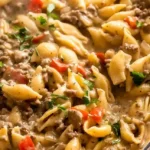
Creamy Beef and Shells Dinner
- Total Time: 20 minutes
- Yield: 6 servings 1x
- Diet: General
Description
This super easy Creamy Beef and Shells recipe comes together in about 20 minutes and is perfect for those busy weeknights!
Ingredients
- 3 cups medium pasta shells (uncooked)
- 1 lb. ground beef
- 1 medium red bell pepper (diced)
- ½ large onion (diced)
- 1 tsp garlic (minced)
- 1 tbsp Italian seasoning
- 1 tsp salt
- ½ tsp black pepper
- 3 tbsp butter with olive oil & sea salt
- ¼ cup all-purpose flour
- 2 cups beef broth
- ½ cup sour cream
- 1 cup mild cheddar cheese
- 2 tbsp parsley (chopped)
Instructions
- Step 1: Bring a large pot of salted water to a boil and cook pasta shells according to package instructions, until tender. Drain and set aside.
- Step 2: Meanwhile, in a large pan over medium heat, brown ground beef, red bell pepper and onion until beef is cooked through and crumbled. Drain any fat and return pan to heat.
- Step 3: Add in garlic, Italian seasoning, salt and pepper and stir until fragrant. Stir in butter with olive oil & sea salt until melted, then whisk in flour and cook about 1 minute, until flour is absorbed.
- Step 4: Gradually stir in beef broth, until mixture is slightly thickened. Stir in sour cream and mild cheddar cheese until combined, then stir in pasta shells. Garnish with parsley and enjoy!
Notes
Ground beef can be substituted with ground turkey for a lighter version of this meal.
- Prep Time: 5 minutes
- Cook Time: 15 minutes
- Category: Main Dish
- Method: Stovetop
- Cuisine: American
Nutrition
- Serving Size: 1 serving
- Calories: 580 kcal
- Sugar: 3 g
- Sodium: 924 mg
- Fat: 32 g
- Saturated Fat: 16 g
- Unsaturated Fat: 12 g
- Trans Fat: 1 g
- Carbohydrates: 45 g
- Fiber: 3 g
- Protein: 27 g
- Cholesterol: 98 mg
Keywords: 20 minute, Ground Beef, Pasta