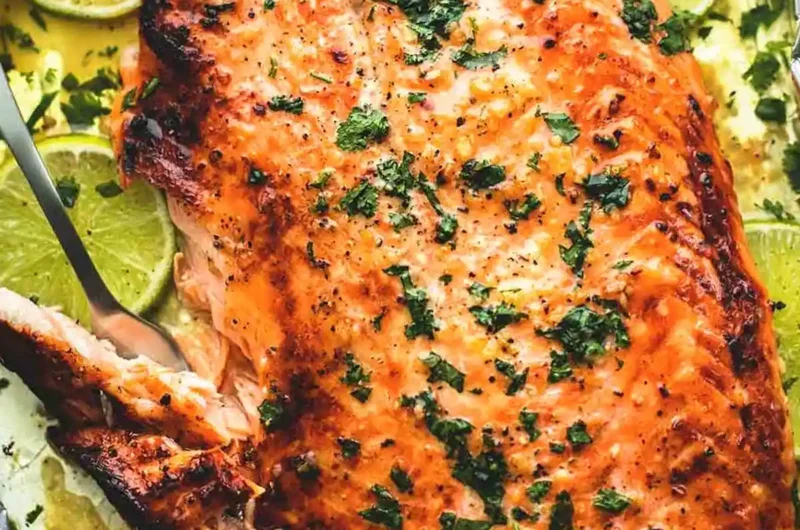
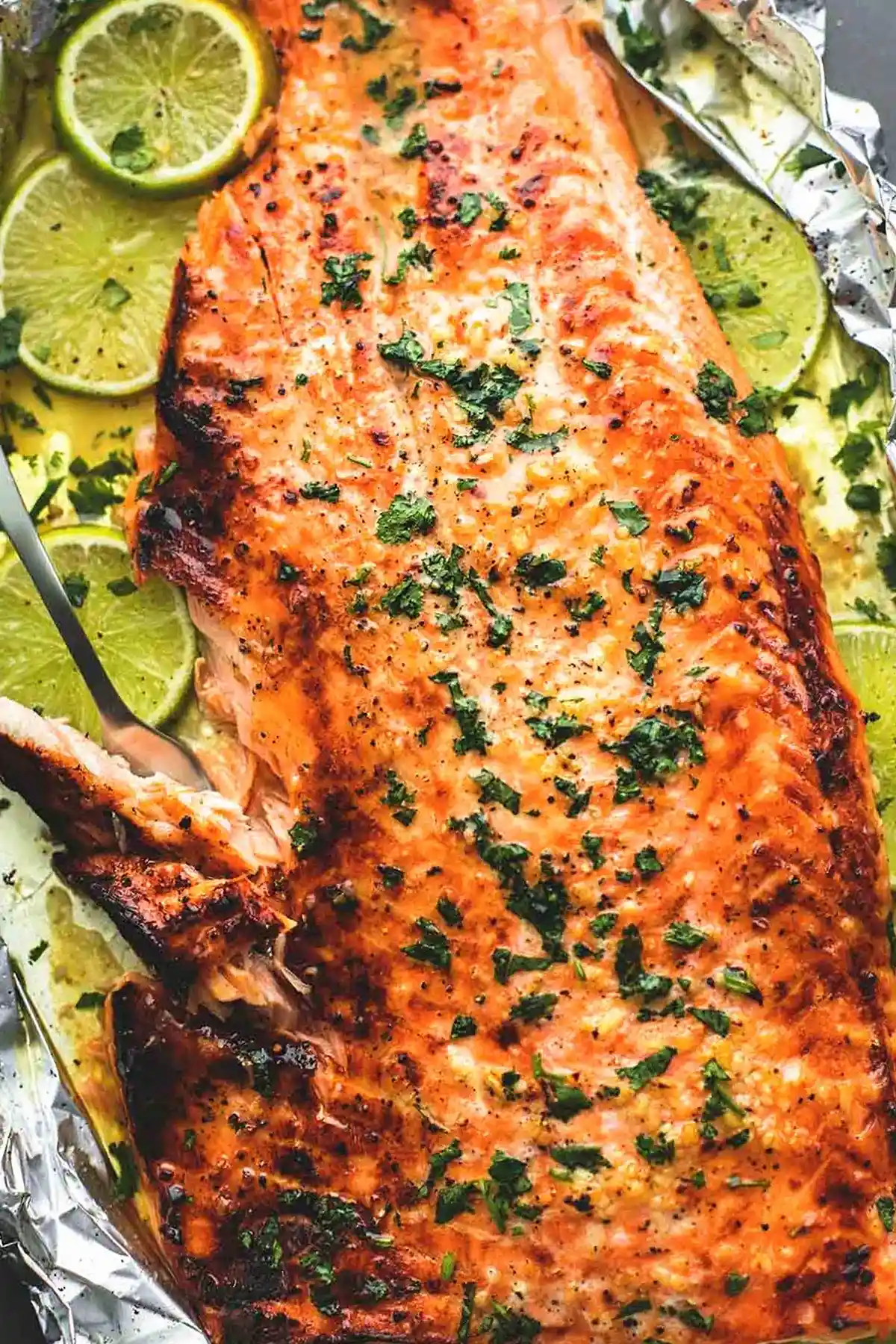
This easy salmon dish uses a honey-lime glaze to ensure moist fish with a bright, citrusy flavor profile. Cooking in foil minimizes cleanup and preserves the natural juices during the baking process.
List of ingredients
- 1 large salmon fillet – can be substituted with several smaller fillets of similar thickness.
- salt and pepper – used to taste for basic seasoning.
- 1/2 cup butter, melted – provides richness and helps the glaze adhere.
- juice of 2 limes – adds acidity and brightness.
- 1 lime, thinly sliced – placed under the fish for extra flavor and a cooking barrier.
- 4 tablespoons honey – adds sweetness and helps create a caramelized top.
- 1 tablespoon minced garlic – adds a savory depth to the glaze.
- 1/3 cup cilantro, roughly chopped – used for a fresh finish.
step-by-step instructions
- Prepare Oven and Pan: Preheat your oven to 350 degrees. Line a large baking sheet with foil and grease the foil to prevent sticking.
- Season Salmon: Place the salmon fillet on the foil and season both sides with salt and pepper according to your preference.
- Add Lime Base: Carefully slip the thinly sliced lime pieces underneath the salmon fillet to infuse flavor from the bottom.
- Create Glaze: In a bowl, stir together the melted butter, lime juice, honey, and minced garlic until well combined.
- Apply Glaze: Pour the honey-lime mixture evenly over the top of the salmon. Fold the sides of the foil up around the fish, though it does not need to be completely sealed.
- Bake: Place the pan in the oven and bake for 15-20 minutes.
- Broil: Switch the oven setting to broil and cook the salmon for an additional 5 minutes to caramelize the top.
- Finish: Remove from the oven and sprinkle the chopped cilantro over the salmon before serving.
Optimal Salmon Selection
Wild-Caught vs Farmed Salmon
Wild-caught salmon typically has a deeper red color and a more robust, ‘fishy’ flavor due to its natural diet. Farmed salmon is often lighter in color and has a milder taste with a higher fat content.
Both options work well for this recipe, but wild salmon may require slightly less cooking time to avoid dryness. Choose based on your flavor preference and budget.
Identifying Freshness
Fresh salmon should have a mild, clean scent rather than a strong fishy odor. The flesh should be vibrant in color and firm to the touch, bouncing back when pressed.
Avoid fillets with dull colors or any slimy residue on the surface. Ensure the packaging is tightly sealed and the fish is stored at a safe temperature.
Choosing the Right Cut
A center-cut fillet is ideal for this recipe because it provides a consistent thickness for even cooking. If you use a tail piece, be aware that it cooks faster than the thicker center.
If using individual fillets, try to choose pieces that are roughly the same size. This prevents smaller pieces from overcooking while larger ones remain raw.
Preparation Techniques
Drying the Surface
Always pat the salmon dry with paper towels before adding salt and pepper. Removing surface moisture allows the seasonings to stick better to the fish.
Dry skin also helps the salmon achieve a better sear and prevents it from steaming too much. This creates a better contrast between the moist interior and the glazed top.
Proper Seasoning Application
Apply salt and pepper evenly on both the top and the bottom of the fillet. Seasoning both sides ensures that the flavor is integrated throughout the meat.
Avoid over-salting if you are using salted butter in your glaze. Taste your glaze mixture first to determine if additional salt is necessary.
Handling the Foil
Using a large piece of heavy-duty foil prevents leaks and helps contain the glaze. Greasing the foil with oil or non-stick spray ensures the skin does not tear when you lift the fish.
Folding the sides of the foil creates a shallow basin that keeps the butter and honey from running off the baking sheet. This keeps the fish poaching in its own juices.
Cooking Precision
Oven Temperature Stability
Ensure your oven is fully preheated to 350 degrees before inserting the salmon. Inserting food into a cold oven can lead to uneven cooking and a loss of moisture.
Avoid opening the oven door frequently, as this lets heat escape and increases the total cooking time. Use the oven window to monitor the progress of the fish.
Using a Meat Thermometer
The most accurate way to determine doneness is using an instant-read thermometer. Salmon is typically cooked to an internal temperature of 145 degrees Fahrenheit.
For a more tender and moist result, some prefer to pull the salmon at 130-135 degrees. Carry-over cooking will raise the temperature slightly as the fish rests.
The Role of Broiling
Broiling at the end of the process uses high, direct heat to caramelize the sugars in the honey.
This creates a golden-brown crust and concentrates the flavors of the lime and garlic. Keep a close eye on the fish during this stage, as the sugar can burn quickly.
Flavor Modifications
Adding Spicy Elements
For a bit of heat, stir in a pinch of cayenne pepper or crushed red pepper flakes into the butter glaze. This balances the sweetness of the honey.
Alternatively, you can slice a jalapeño and place the rounds under the salmon with the lime slices. This adds a subtle, infused heat to the bottom of the fillet.
Adjusting the Sweetness
If you prefer a less sweet profile, reduce the honey to two tablespoons. This allows the acidity of the lime to become more prominent.
You can also substitute the honey with maple syrup for a different kind of sweetness. Maple syrup provides a woody flavor that pairs well with the butter.
Using Different Herbs
While cilantro is traditional for this flavor profile, fresh parsley is a great substitute for those who dislike cilantro. Parsley offers a clean, peppery taste.
Adding a teaspoon of dried oregano or thyme to the glaze can provide an earthy undertone. Fresh dill is another excellent option that pairs naturally with salmon.
Pairing and Serving Suggestions
Complementary Grains
Serve this salmon over a bed of fluffy quinoa or brown rice to soak up the extra glaze. These grains provide a nutty contrast to the sweet and sour sauce.
Wild rice is another great choice due to its firm texture. Couscous can also be used for a lighter, faster side dish option.
Fresh Vegetable Sides
Roasted asparagus or sautéed spinach works perfectly with the citrus notes of the dish. You can roast the asparagus on the same tray if you have enough room.
Steamed broccoli or snap peas provide a crunch that complements the tender texture of the fish. Toss them in a bit of lemon juice and salt to mirror the lime in the salmon.
Salad Combinations
A fresh Greek salad with cucumbers, tomatoes, and feta cheese provides a salty contrast to the honey glaze. The acidity of the salad dressing cuts through the richness of the butter.
A kale salad with a light vinaigrette and toasted almonds also pairs well. The bitterness of the kale balances the sweetness of the honey.
Storage and Food Safety
Cooling Before Storage
Allow the cooked salmon to cool slightly before transferring it to a storage container. Placing hot fish in a sealed container can create condensation, which makes the fish soggy.
Avoid leaving the salmon at room temperature for more than two hours. Prompt refrigeration is essential to prevent the growth of harmful bacteria.
Maximum Refrigeration Time
Store the cooked salmon in an airtight container in the refrigerator for up to three to four days. Ensure the container is sealed tightly to prevent the fish from absorbing other odors.
Check the fish for any changes in smell or texture before eating. If the fish becomes overly slimy or smells sour, discard it immediately.
Freezing Possibilities
While cooked salmon can be frozen, the texture may change slightly upon thawing. Wrap the fish tightly in plastic wrap and place it in a freezer-safe bag.
Cooked salmon can be kept in the freezer for up to two months. Thaw it slowly in the refrigerator overnight before reheating.
Reheating Strategies
Low-Temperature Oven Method
To maintain the moisture, reheat the salmon in the oven at 275 degrees Fahrenheit. Place the fish back in its foil packet and add a teaspoon of water or butter.
Heat for 10-15 minutes or until the fish is warmed through. This slow method prevents the protein from tightening and becoming tough.
Quick Microwave Method
If you are short on time, use a microwave on a medium power setting. Cover the salmon with a damp paper towel to trap steam and prevent drying.
Heat in 30-second intervals, checking frequently. Overheating in the microwave can make salmon rubbery and intensify the fishy smell.
Air Fryer Refresh
An air fryer can restore some of the caramelization on the top of the salmon. Place the fillet in the basket at 350 degrees for 3-5 minutes.
This method is excellent for getting the glaze tacky and warm again. Be careful not to overcook, as the fish is already cooked.
Common Troubleshooting
Addressing Albumin
You may notice a white, opaque substance leaking from the salmon as it cooks. This is called albumin, a protein that is pushed out of the muscle fibers.
Albumin is completely safe to eat and does not mean the fish is overcooked. However, you can gently wipe it away with a paper towel for a cleaner presentation.
Preventing Overcooking
Overcooked salmon becomes dry, chalky, and loses its flakey texture. To prevent this, start checking the internal temperature 5 minutes before the minimum suggested time.
If you don’t have a thermometer, press the thickest part of the fillet with a fork. If the flakes separate easily, the fish is done.
Fixing a Burnt Glaze
If the honey glaze burns during the broiling phase, gently scrape off the charred bits with a knife. The burnt sugar can leave a bitter taste.
To avoid this in the future, reduce the broiling time or move the oven rack to a lower position. You can also add a small amount of fresh butter to the top to mellow the flavor.
Frequently Asked Questions
Do I need to wash salmon before cooking?
Washing salmon is not strictly necessary, but rinsing it under cold water can remove any surface debris. Always pat the fish completely dry after rinsing to ensure the seasoning adheres.
Can I use individual fillets instead of one large piece?
Yes, this recipe works perfectly with individual fillets. Just be mindful that smaller pieces may cook faster than a large fillet, so check them for doneness earlier.
Should the foil be completely sealed?
No, the foil does not need to be completely sealed. Leaving the top slightly open allows some steam to escape and helps the top of the salmon roast rather than steam.
Print
Honey Cilantro Lime Baked Salmon in Foil
- Total Time: 25 minutes
- Yield: 6 servings 1x
- Diet: Gluten-Free
Description
Baked honey cilantro lime salmon baked in foil is cooked to tender, flaky perfection in just 30 minutes with a flavorful garlic and honey lime glaze.
Ingredients
- 1 large salmon fillet
- salt and pepper to taste
- ½ cup butter, melted
- juice of 2 limes, plus one lime, thinly sliced
- 4 tablespoons honey
- 1 tablespoon minced garlic
- ⅓ cup cilantro, roughly chopped
Instructions
- Prep: Preheat oven to 350 degrees. Line and grease a large baking sheet with foil. Lay salmon on foil and season with salt and pepper on both sides to taste. Slip lime slices underneath the salmon.
- Glaze: Stir together butter, lime juice, honey, and garlic. Pour mixture over salmon. Fold sides of foil up over the salmon.
- Bake: Bake for 15-20 minutes. Switch oven to broil and cook another 5 minutes. Sprinkle chopped cilantro over the top and serve.
Notes
The recipe is flexible regarding the size of the salmon fillet. For a lighter version, the butter can be reduced to 4 tablespoons.
- Prep Time: 5 minutes
- Cook Time: 20 minutes
- Category: Main Course
- Method: Baking
- Cuisine: American
Nutrition
- Serving Size: 1 serving
- Calories: 299 kcal
- Sugar: 12 g
- Sodium: 97 mg
- Fat: 11 g
- Saturated Fat: 2 g
- Unsaturated Fat: 9 g
- Trans Fat: 0 g
- Carbohydrates: 13 g
- Fiber: 1 g
- Protein: 35 g
- Cholesterol: 96 mg
Keywords: baked salmon, honey lime salmon, cilantro lime salmon, foil pack salmon, healthy dinner