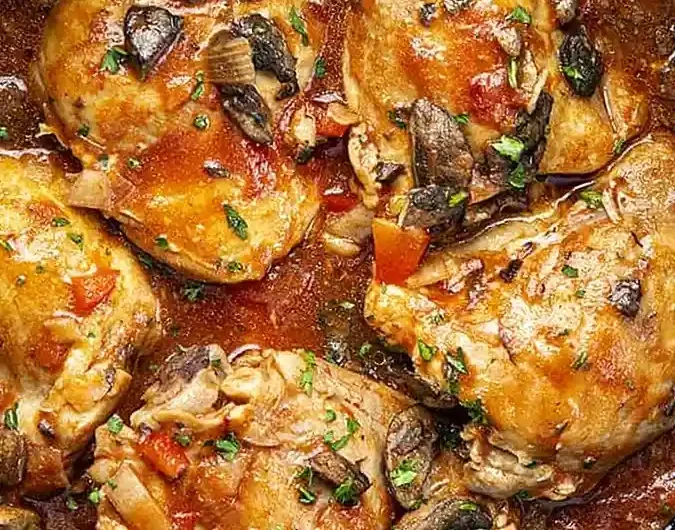
This slow cooker chicken cacciatore provides a hearty, flavor-packed meal with minimal active effort. The chicken thighs become tender and succulent as they simmer in a rich tomato and vegetable sauce.
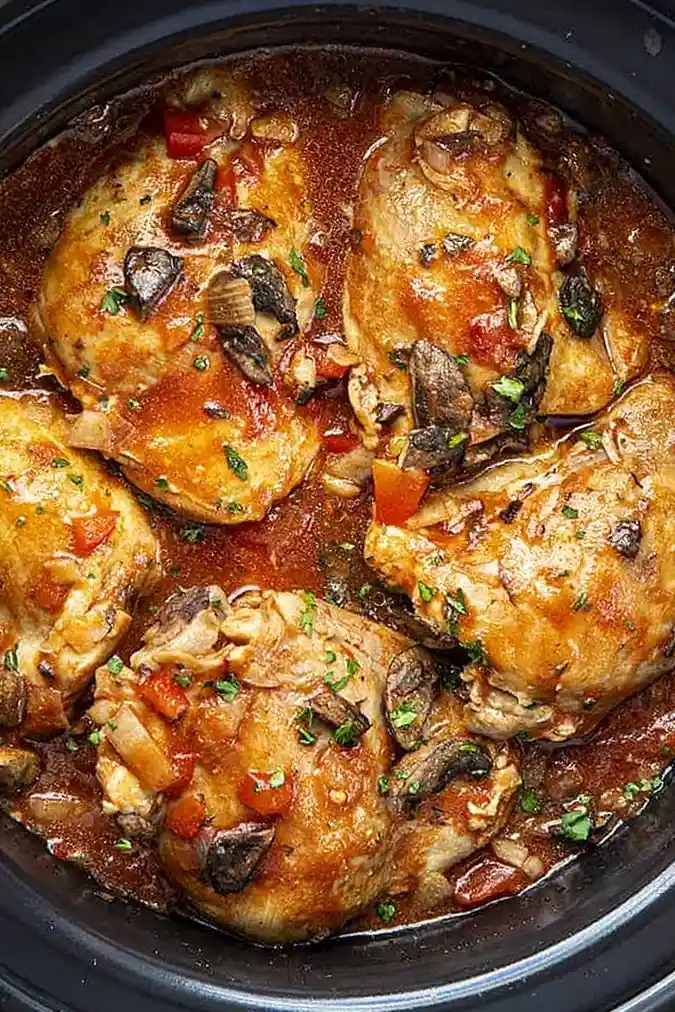
List of ingredients
- 8 skinless bone-in chicken thighs, washed and patted dry
- ½ teaspoon Kosher salt – enhances overall flavor
- ¼ teaspoon freshly ground black pepper – adds a subtle spice
- 1 teaspoon olive oil – prevents sticking and adds richness
- 1 can (6 ounces) tomato paste – thickens the base
- 1 tablespoon garlic, minced – provides aromatic depth
- 1 small yellow onion, diced – adds sweetness and body
- 1 red bell pepper, diced – contributes color and mild flavor
- 8 ounces baby Bella mushrooms, sliced – adds an earthy quality
- 1 can (14.5 ounces) diced tomatoes – creates the sauce volume
- 1 teaspoon fresh rosemary, diced – adds a piney aroma
- 1 teaspoon fresh thyme, diced – provides a subtle earthy note
- 1 teaspoon fresh oregano, diced – adds a classic Italian flavor
- ½ teaspoon red pepper flakes – provides a hint of heat
- 1 ½ cups chicken broth – creates the braising liquid
- ¼ cup chopped fresh parsley – used for garnish
- 1 box (16 ounces) spaghetti noodles – the base for serving
step-by-step instructions
- Prepare the chicken: Wash and pat dry each chicken thigh.
- Season: Season chicken evenly with salt and pepper and add to slow cooker.
- Combine ingredients: Add oil, tomato paste, garlic, onion, diced red bell pepper, mushrooms, tomatoes, rosemary, thyme, oregano, red pepper, and chicken broth.
- Slow cook: Cover and cook on low for 6-8 hours, or until chicken is fall-off-the-bone tender.
- Prepare pasta: Serve the cooked chicken and sauce over cooked spaghetti noodles.
- Garnish: Garnish with fresh parsley.
Meat Selection and Preparation
Benefits of Bone-In Chicken Thighs
Using bone-in thighs ensures the meat remains moist and tender throughout the long cooking process. The bone releases marrow and collagen, which adds a deeper richness to the sauce. Thighs are less prone to drying out compared to white meat in a slow cooker.
Substituting Chicken Breasts
If you prefer chicken breasts, be aware that they cook faster and can become dry if left too long. Reduce the cooking time to 4-6 hours on low to avoid a stringy texture. You may also want to cut the breasts into larger chunks to maintain some moisture.
The Importance of Patting Meat Dry
Removing excess moisture from the surface of the chicken is essential for flavor absorption. While this recipe does not require searing, dry meat ensures that salt and pepper adhere better. It also prevents the sauce from becoming too watery due to excess surface liquid.
Vegetable and Herb Customizations
Using Different Mushroom Varieties
Baby Bella mushrooms provide a great balance, but Cremini or Shiitake mushrooms are excellent alternatives. Shiitakes offer a more intense, smoky flavor that complements the tomato base. Oyster mushrooms can be used for a softer, more delicate texture.
Swapping Bell Pepper Colors
While red bell peppers are the most traditional choice for their sweetness, yellow or orange peppers work well. Yellow peppers offer a milder, more citrusy taste. Orange peppers provide a middle ground between the sweetness of red and the mildness of yellow.
Converting Fresh Herbs to Dried
If fresh herbs are unavailable, use a ratio of one-third teaspoon of dried herbs for every teaspoon of fresh. Dried rosemary, thyme, and oregano are more concentrated in flavor. Add dried herbs at the beginning of the cooking process to allow them to hydrate.
Adjusting the Spice Level
The red pepper flakes provide a gentle heat that can be adjusted to preference. For a milder dish, reduce the amount to a pinch or omit it entirely. For those who prefer a spicier meal, increase the flakes to one full teaspoon.
Sauce Consistency and Texture
Reducing Sauce with High Heat
To achieve a thicker sauce, switch the slow cooker to the high setting for the final hour of cooking. Remove the lid during this time to allow excess moisture to evaporate. This concentrates the flavors and results in a more syrupy consistency.
Creating a Cornstarch Slurry
A slurry is a fast way to thicken the sauce without altering the cooking time significantly. Mix 2 tablespoons of cornstarch with 1 tablespoon of cold water until smooth. Stir this mixture into the pot during the last 20 minutes of cooking.
Blending Vegetables for Thickness
For a smoother and thicker sauce, scoop out a portion of the cooked vegetables and sauce. Blend them in a food processor or with an immersion blender until smooth, then stir them back into the pot. This incorporates the vegetable fibers into the liquid.
Serving and Pairing Options
Choosing the Right Pasta Shape
Spaghetti is the classic choice, but wider noodles like Pappardelle or Fettuccine can better support the heavy chunks of chicken and vegetables. Rigatoni or Penne are also excellent because the sauce gets trapped inside the tubes. Always cook pasta separately to avoid it becoming mushy.
Low-Carb Base Alternatives
Zucchini noodles, or zoodles, are a great low-carb alternative to traditional pasta. Sauté them briefly in olive oil before topping with the chicken cacciatore. Cauliflower rice or a bed of steamed spinach also work well for a lighter meal.
Pairing with Crusty Breads
A side of toasted garlic bread or warm focaccia is ideal for soaking up the remaining sauce. Use a baguette brushed with garlic butter and toasted in the oven until golden. This adds a crunchy textural contrast to the tender chicken.
Adding Fresh Cheese Garnishes
Grated Parmesan or Pecorino Romano cheese adds a salty, sharp finish to the dish. For a creamier experience, dollop a spoonful of ricotta cheese on top of each serving. Fresh mozzarella pearls can also be melted into the sauce during the final minutes of cooking.
Storage and Preservation
Refrigerating Leftovers
Store leftover chicken cacciatore in airtight glass or plastic containers. Ensure the chicken is fully submerged in the sauce to prevent the meat from drying out. The dish remains fresh and safe to eat for 3 to 4 days in the refrigerator.
Freezing Instructions
This recipe freezes well for up to three months. Place the chicken and sauce in freezer-safe bags or containers, leaving a small amount of space for expansion. Thaw the meal completely in the refrigerator overnight before reheating.
Safe Reheating Methods
The stovetop is the best method for reheating to maintain the texture of the chicken. Heat over medium-low heat, adding a splash of water or broth if the sauce has thickened too much. If using a microwave, cover the dish to trap steam and prevent the meat from toughening.
Make-Ahead Strategies
Prepping Vegetables in Advance
You can chop the onions, peppers, and mushrooms up to two days before cooking. Store them in separate airtight containers or a single large bag. This reduces the prep time on the day of cooking to just a few minutes.
Marinating the Chicken
Seasoning the chicken with salt and pepper several hours in advance allows the flavors to penetrate deeper into the meat. Store the seasoned thighs in the refrigerator until you are ready to place them in the slow cooker. This step improves the overall seasoning of the dish.
Freezing the Sauce Base
Combine the tomato paste, garlic, and dried herbs into a paste and freeze it in portions. When ready to cook, simply add the frozen paste block to the slow cooker with the other fresh ingredients. This streamlines the process for busy weeknights.
Troubleshooting Common Issues
Fixing a Watery Sauce
If the sauce is too thin, it is often due to excess moisture from the vegetables. Use the cornstarch slurry method mentioned earlier for an immediate fix. Alternatively, simmer the sauce in a wide skillet on the stove to reduce the liquid quickly.
Balancing High Acidity
Tomato-based sauces can sometimes taste too acidic depending on the brand of canned tomatoes used. Add a small pinch of brown sugar or a teaspoon of honey to balance the tartness. This neutralizes the acid without making the sauce taste sweet.
Preventing Overcooked Chicken
To ensure the chicken does not become overcooked, use a digital meat thermometer. The internal temperature should reach 165°F. If you are using a slow cooker that runs hot, check the chicken an hour before the scheduled end time.
Frequently Asked Questions
Can I use frozen chicken thighs?
It is safer to thaw chicken completely before adding it to a slow cooker. Frozen meat takes longer to reach a safe temperature, which can leave the chicken in the danger zone for too long. Thaw them in the refrigerator overnight for the best results.
Do I need to sear the chicken first?
Searing is not required for this recipe, as the slow cooking process develops flavor over time. However, if you prefer a deeper brown color on the meat, you can sear the thighs in a pan before adding them. This adds an extra layer of savory flavor.
Can I add more vegetables?
Yes, you can add carrots, celery, or zucchini to this recipe. Add hard vegetables like carrots at the start and softer vegetables like zucchini during the last two hours of cooking. This ensures every vegetable is cooked to the proper texture.
How do I prevent the mushrooms from shrinking?
Mushrooms naturally release water and shrink during slow cooking. To maintain more volume, you can sauté them in a pan with a bit of oil before adding them to the pot. This locks in some of the structure and enhances the flavor.
What if I don’t have chicken broth?
You can substitute chicken broth with vegetable broth or water mixed with a bouillon cube. In a pinch, water will work, although the sauce will have a slightly less complex flavor. You may want to add an extra pinch of salt if using plain water.
Print
Slow Cooker Chicken Cacciatore
- Total Time: 8 hours 10 minutes
- Yield: 4 servings 1x
- Diet: General
Description
Slow Cooker Chicken Cacciatore is seasoned chicken thighs nestled and slow-cooked in a tomato-based sauce full of herbs and vegetables.
Ingredients
- 8 skinless bone-in chicken thighs
- ½ teaspoon Kosher salt
- ¼ teaspoon freshly ground black pepper
- 1 teaspoon olive oil
- 1 can (6 ounces) tomato paste
- 1 tablespoon garlic, minced
- 1 small yellow onion, diced
- 1 red bell pepper, diced
- 8 ounces baby Bella mushrooms, sliced
- 1 can (14.5 ounces) diced tomatoes
- 1 teaspoon fresh rosemary, diced
- 1 teaspoon fresh thyme, diced
- 1 teaspoon fresh oregano, diced
- ½ teaspoon red pepper flakes
- 1 ½ cups chicken broth
- ¼ cup chopped fresh parsley
- 1 box (16 ounces) spaghetti noodles
Instructions
- Step: Wash and pat dry each chicken thigh.
- Step: Season chicken evenly with salt and pepper and add to slow cooker.
- Step: Add oil, tomato paste, garlic, onion, diced red bell pepper, mushrooms, tomatoes, rosemary, thyme, oregano, red pepper, and chicken broth.
- Step: Cover and cook on low for 6-8 hours, or until chicken is fall-off-the-bone tender.
- Step: Serve over spaghetti noodles.
- Step: Garnish with fresh parsley.
Notes
To thicken the sauce, you can adjust the slow cooker to high and simmer for about an hour with the cover off, or stir in a slurry made of 2 tablespoons corn starch and 1 tablespoon cold water, cooking for an additional 20 minutes.
- Prep Time: 10 minutes
- Cook Time: 8 hours
- Category: Dinner
- Method: Slow Cooking
- Cuisine: American
Nutrition
- Serving Size: 1 serving
- Calories: 306 kcal
- Sugar: 6 g
- Sodium: 820 mg
- Fat: 12 g
- Saturated Fat: 3 g
- Unsaturated Fat: 9 g
- Trans Fat: 0 g
- Carbohydrates: 25 g
- Fiber: 4 g
- Protein: 32 g
- Cholesterol: 115 mg
Keywords: Slow Cooker Chicken Cacciatore