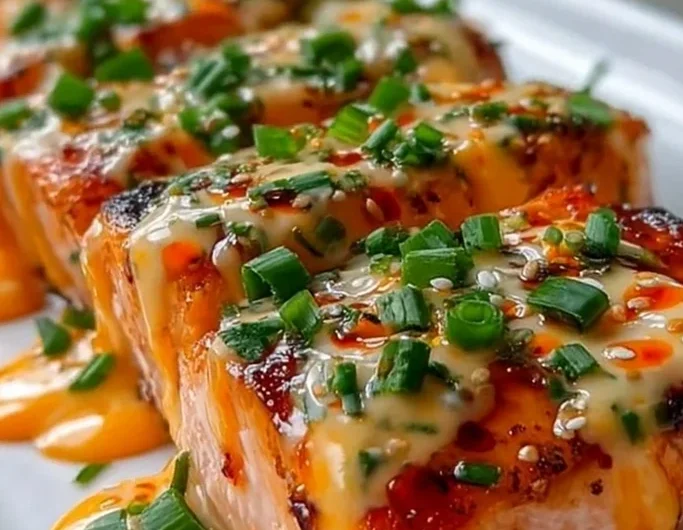
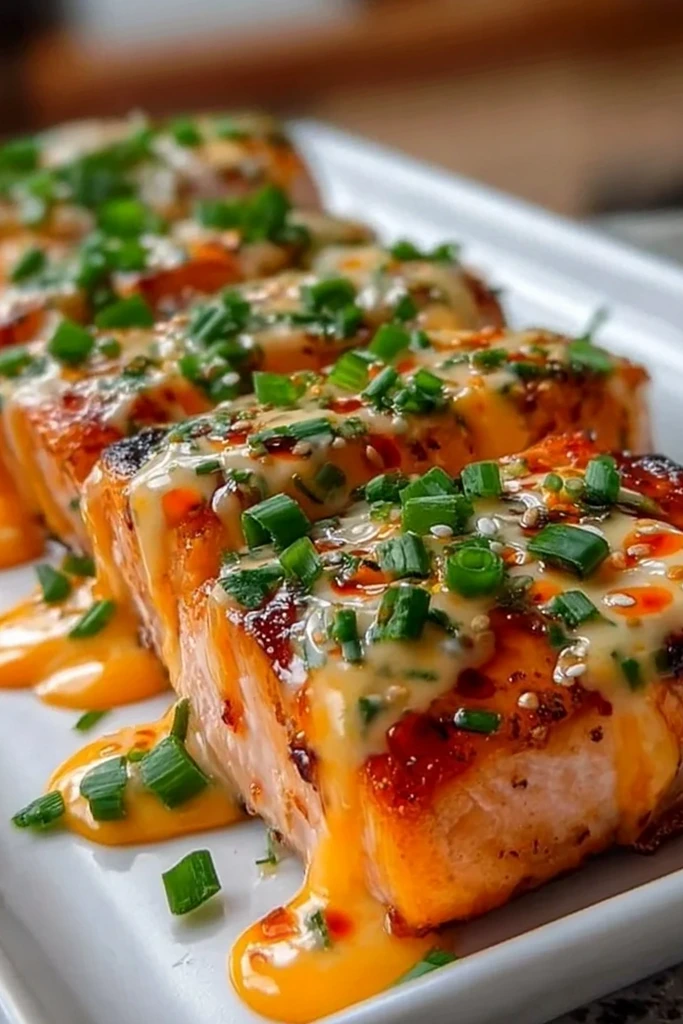
This quick salmon recipe delivers a spicy and sweet glaze in under 30 minutes. It is a nutrient-dense meal perfect for busy weeknights when you need something flavorful and healthy.
List of ingredients
- 4 salmon fillets (6 oz each) – use wild-caught for a richer taste.
- 1/4 cup mayonnaise – provides the creamy base for the sauce.
- 2 tablespoons sriracha – adds a spicy kick; adjust to your heat preference.
- 1 tablespoon honey – balances the heat with subtle sweetness.
- 1 tablespoon rice vinegar – adds a necessary acidic brightness.
- 1 tablespoon soy sauce – provides deep umami flavor.
- 1 teaspoon sesame oil – adds a distinct nutty aroma.
- 2 green onions, thinly sliced – used for a fresh, crunchy garnish.
step-by-step instructions
- Prepare Oven: Preheat your oven’s broiler to high and line a baking sheet with parchment paper to prevent sticking.
- Mix Sauce: In a small bowl, whisk together the mayonnaise, sriracha, honey, rice vinegar, and soy sauce. Stir in the sesame oil until well combined.
- Coat Salmon: Place the salmon fillets on the baking sheet and generously brush them with the bang bang sauce, coating both sides thoroughly.
- Broil Fish: Broil the salmon for 8-10 minutes, monitoring closely until the fillets flake easily with a fork.
- Garnish and Serve: Garnish the cooked fillets with sliced green onions and serve immediately.
Cooking Techniques for Perfect Fish
Adjusting the Oven Rack for Perfect Broiling
Place your oven rack about 6 inches away from the broiler element to ensure even cooking. If the rack is too close, the honey in the sauce may burn before the fish is cooked through. Monitor the fillets constantly as broiling happens very quickly.
Cooking Bang Bang Salmon in an Air Fryer
Set your air fryer to 400°F and cook the sauced fillets for 8-10 minutes. This method creates a slightly crispier exterior while keeping the inside tender. Check the internal temperature to ensure it reaches 145°F.
Baking Salmon without a Broiler
If you do not have a broiler, bake the salmon at 400°F for approximately 15-20 minutes. Cover the pan with foil for the first 10 minutes to lock in moisture. Remove the foil for the final few minutes to let the sauce caramelize.
Ingredient Substitutions and Variations
Using Greek Yogurt as a Lighter Mayo Substitute
Replace the mayonnaise with plain Greek yogurt for a lower-calorie, higher-protein version. Greek yogurt adds a tangier flavor that complements the sriracha well. Stir the sauce thoroughly to ensure a smooth consistency.
Modifying Sriracha Levels for Different Heat Preferences
For a milder flavor, reduce the sriracha to one tablespoon or swap it for a sweet chili sauce. If you prefer an extra fiery kick, add an extra tablespoon of sriracha or a pinch of cayenne pepper. Always taste the sauce before brushing it on the fish.
Replacing Honey with Maple Syrup for a Vegan Option
Maple syrup serves as an excellent plant-based alternative to honey, providing a similar sweetness and viscosity. Agave nectar is another suitable substitute that works well in this recipe. This change keeps the glaze sticky and flavorful.
Using Tamari or Coconut Aminos for Gluten-Free Needs
Swap the soy sauce for tamari or coconut aminos to make this dish gluten-free. Tamari offers a very similar saltiness and depth to traditional soy sauce. Coconut aminos are slightly sweeter and lower in sodium.
Substituting Apple Cider Vinegar for Rice Vinegar
If rice vinegar is unavailable, apple cider vinegar or white distilled vinegar can be used. Apple cider vinegar provides a fruity acidity that pairs well with the honey. Use the same quantity to maintain the flavor balance.
Using Olive Oil when Sesame Oil is Unavailable
Olive oil can replace sesame oil if you do not have it in your pantry. While you will lose the signature nutty flavor, the olive oil still helps the sauce adhere to the fish. You can add a drop of toasted sesame seeds later to compensate.
Preparation Tips for Best Results
Patting Salmon Dry for Better Sauce Adhesion
Use paper towels to thoroughly pat the salmon fillets dry before applying the glaze. Removing surface moisture prevents the sauce from sliding off during the broiling process. This ensures a thicker, more concentrated layer of flavor on the fish.
Thawing Frozen Fillets Safely and Completely
Always thaw frozen salmon in the refrigerator overnight for the safest and most even results. If you are in a rush, place the vacuum-sealed fillets in a bowl of cold water, changing the water every 30 minutes. Cooking frozen fish often leads to uneven textures and rubbery flesh.
Preparing the Bang Bang Sauce in Advance
You can whisk the sauce together up to a week in advance and store it in an airtight container in the fridge. Give the sauce a vigorous stir before using it to re-incorporate any separated oils. This is a great way to save time on busy weeknights.
Serving Ideas and Pairings
Pairing with Coconut Rice for Tropical Flavor
Cook jasmine rice using a mixture of coconut milk and water for a creamy, aromatic side. The subtle sweetness of the coconut rice balances the spicy sriracha glaze perfectly. Add a pinch of salt to enhance the coconut flavor.
Serving with Steamed Broccoli and Roasted Asparagus
Steamed broccoli provides a fresh, crisp contrast to the rich, creamy sauce of the salmon. Roasted asparagus with a squeeze of lemon juice also works well to cut through the richness. These vegetables add essential nutrients and vibrant color to the plate.
Adding a Fresh Asian-Style Slaw Side
Create a slaw using shredded cabbage, carrots, and a light dressing of rice vinegar and sesame oil. The crunch of the raw vegetables complements the tender texture of the broiled fish. This side dish adds a refreshing element to the meal.
Using Sesame Seeds and Lime for Extra Garnish
Sprinkle toasted sesame seeds over the fillets for added texture and visual appeal. A fresh squeeze of lime juice just before serving brightens the entire dish. These small additions elevate the presentation to restaurant quality.
Storage and Reheating Guidelines
Storing Leftover Salmon in the Refrigerator
Place leftover Bang Bang Salmon in an airtight container and store it in the refrigerator for up to three days. Ensure the fish has cooled slightly before sealing the container to prevent excess moisture. Keep the garnish separate if possible to maintain the crunch.
Freezing Cooked Salmon for Long-Term Storage
Cooked salmon can be frozen for up to three months if wrapped tightly in foil and placed in a freezer bag. Thaw the fillets slowly in the refrigerator overnight before reheating. This prevents the fish from becoming dry during the defrosting process.
Reheating Salmon Gently in the Oven
To reheat, place the fillets in a 350°F oven for about 10 minutes. Avoid using a microwave, as it can make the salmon rubbery and overcook the edges. Adding a teaspoon of water to the pan can help keep the fish moist.
Common Troubleshooting
Monitoring Sugar Content to Prevent Burnt Glaze
The honey and mayonnaise in the sauce can burn quickly under a high broiler. If you notice the sauce darkening too rapidly, move the oven rack down one level. You can also lightly cover the fish with foil to protect the surface.
Using a Meat Thermometer to Avoid Overcooking
Use an instant-read thermometer to check the thickest part of the fillet. Salmon is perfectly cooked when it reaches an internal temperature of 145°F. Removing the fish slightly before this point allows carry-over cooking to finish the process.
Frequently Asked Questions
Can I use frozen salmon?
Yes, you can use frozen salmon, but it must be fully thawed before cooking. Cooking from frozen will result in uneven cooking and a less desirable texture.
What if I don’t have a broiler?
You can bake the salmon at 400°F for 15-20 minutes. Covering it with foil for the first half of the cooking time helps retain moisture.
Can I make this dish spicier?
Yes, simply increase the amount of sriracha or add crushed red pepper flakes to the sauce mixture for more heat.
What other fish can I use?
This sauce works great with other firm fish like cod, halibut, or tilapia. Adjust the cooking time based on the thickness of the fillets.
Can I substitute the mayonnaise?
Greek yogurt is a fantastic alternative that keeps the sauce creamy while adding a tangy flavor and extra protein.
Print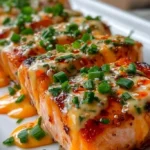
Quick Spicy Glazed Bang Bang Salmon
- Total Time: 25 minutes
- Yield: 4 servings 1x
- Diet: Pescatarian
Description
A quick and flavorful Bang Bang Salmon recipe featuring a creamy, spicy sauce that complements tender salmon fillets.
Ingredients
- 4 salmon fillets (6 oz each)
- 1/4 cup mayonnaise
- 2 tablespoons sriracha
- 1 tablespoon honey
- 1 tablespoon rice vinegar
- 1 tablespoon soy sauce
- 1 teaspoon sesame oil
- 2 green onions, thinly sliced
Instructions
- Step 1: Preheat your oven’s broiler to high and line a baking sheet with parchment paper.
- Step 2: In a small bowl, whisk together the mayonnaise, sriracha, honey, rice vinegar, and soy sauce. Stir in the sesame oil.
- Step 3: Place the salmon fillets on the baking sheet and generously brush them with the bang bang sauce, coating both sides.
- Step 4: Broil the salmon for 8-10 minutes, monitoring closely until the fillets flake easily with a fork.
- Step 5: Garnish with sliced green onions and serve immediately.
Notes
Make the bang bang sauce in advance and store in the fridge. Avoid overcooking the salmon for the best texture.
- Prep Time: 15 minutes
- Cook Time: 10 minutes
- Category: Main Course
- Method: Broiling
- Cuisine: Asian
Nutrition
- Serving Size: 1 serving
- Calories: 350 kcal
- Sugar: 5 g
- Sodium: 400 mg
- Fat: 24 g
- Saturated Fat: 4 g
- Unsaturated Fat: 18 g
- Trans Fat: 0 g
- Carbohydrates: 10 g
- Fiber: 0 g
- Protein: 30 g
- Cholesterol: 70 mg
Keywords: salmon, quick recipe, easy dinner, seafood, spicy sauce, Asian flavors