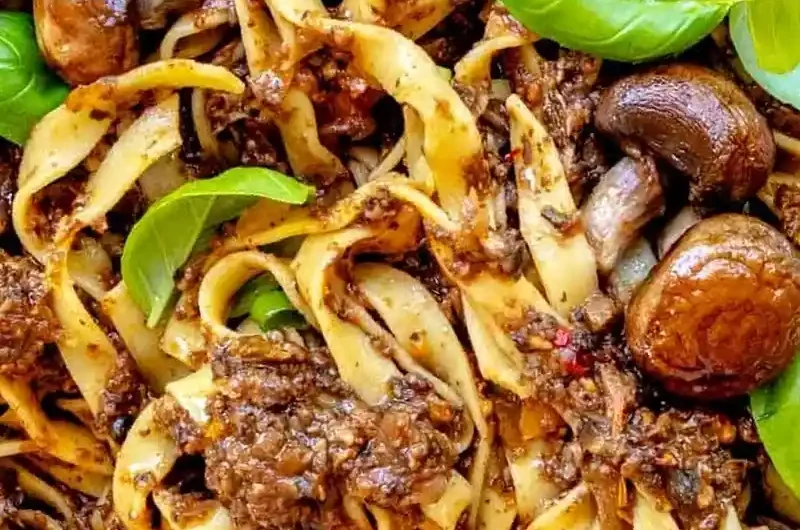
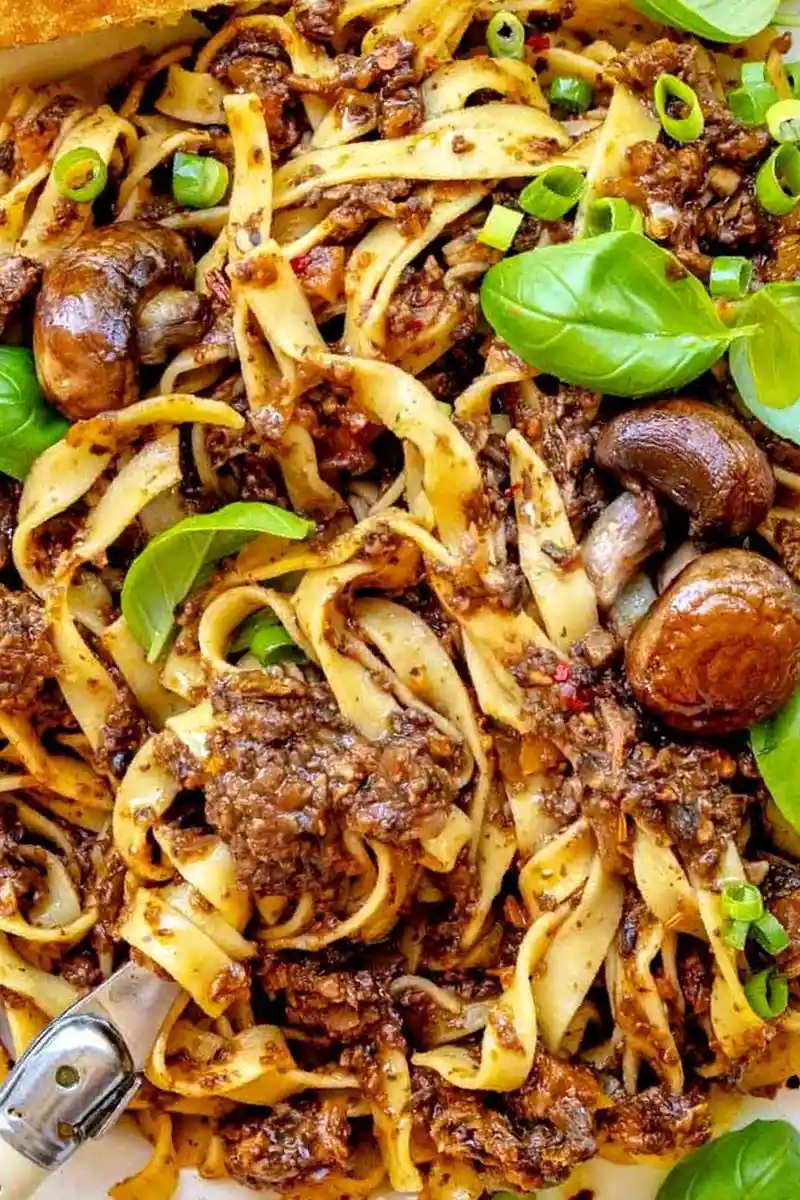
This mushroom ragu is a bold and hearty sauce that delivers deep, savory flavors without the need for meat. It is a versatile dish that pairs excellently with pasta, polenta, or gnocchi for a satisfying weeknight meal.
List of ingredients
- 2 tablespoons extra virgin olive oil – used to sauté the aromatic base.
- 1 large onion – provides a sweet, foundational flavor.
- 2 medium carrots – adds natural sweetness and color.
- 1 large stalk celery – adds a subtle earthy, salty note.
- 3 cloves garlic – adds pungent depth when grated or minced.
- ½ teaspoon rosemary – brings a woody, pine-like aroma.
- 3 bay leaves – infuses the sauce with a subtle herbal quality.
- ½ cup tomato paste – the thick concentrate used for rich umami and color.
- 2 pounds mushrooms (1 pound white, 1 pound brown) – the main protein substitute for texture and earthiness.
- 1 teaspoon salt – adjusts the seasoning to taste.
- &frac1}{8} teaspoon black pepper – adds a slight spicy kick.
- 1 tablespoon balsamic vinegar – balances the richness with a touch of acidity.
- 10 leaves fresh basil – used as a fresh finishing garnish.
- 12 ounces pasta (fettuccine) – the ideal vessel for the thick sauce.
- Parmesan cheese (optional) – use a microbial-rennet variety for a salty finish.
step-by-step instructions
- Prepare the vegetables: Coarsely chop the 2 pounds of mushrooms using a knife or a food processor. If utilizing a food processor, work in 3 or 4 small batches to avoid over-processing the mushrooms into a paste. Coarsely chop the onion, carrots, and celery, or pulse them together in the food processor until finely diced.
- Make the flavor base: Heat 2 tablespoons of extra virgin olive oil in a large skillet or a Dutch oven over medium heat. Add the chopped onion, carrots, and celery, sautéing for approximately 5 minutes while stirring frequently. Add the grated garlic, rosemary, bay leaves, and tomato paste, then sauté for another 3 minutes until the paste darkens in color.
- Add the mushrooms: Stir in the chopped mushrooms and season with 1 teaspoon of salt and &frac1}{8} teaspoon of black pepper. Cook on medium-high heat for about 20 minutes, ensuring you stir occasionally until all the moisture released by the mushrooms has completely evaporated. Stir in the balsamic vinegar, turn off the heat, and adjust the salt to achieve a thick, creamy, and savory consistency.
- Serving suggestions: Boil 12 ounces of pasta in a large pot of salted water according to the package directions. Before draining, reserve one cup of the starchy pasta cooking water. Drain the pasta and add it to the skillet with the ragu, adding &frac1}{4} cup of the reserved water. Toss on medium heat for several seconds until the sauce emulsifies and clings to the pasta. Garnish with fresh basil leaves, a drizzle of olive oil, and optional grated parmesan cheese.
Optimizing Vegetable Preparation
Selecting High-Quality Mushroom Varieties
A blend of white button and brown cremini mushrooms provides a balanced flavor and texture profile. For a more complex taste, consider adding a small handful of shiitake or oyster mushrooms. These varieties introduce a deeper woodiness and a meatier chew that enhances the overall experience of the ragu.
Efficient Chopping Techniques
Using a food processor is the fastest way to achieve a consistent, coarse texture across two pounds of mushrooms. To prevent the mushrooms from becoming too wet, pulse the machine quickly rather than running it continuously. If using a knife, aim for small, uneven chunks to provide a more rustic feel to the final sauce.
The Importance of the Soffritto Base
The combination of onion, carrot, and celery is known as a soffritto and is the cornerstone of Italian cooking. Sautéing these vegetables slowly allows their natural sugars to caramelize, creating a sweet contrast to the earthy mushrooms. Ensure they are softened completely before adding the aromatics to avoid a raw vegetable taste.
Mastering the Flavor Profile
Developing Umami with Tomato Paste
Sautéing the tomato paste after the vegetables is a critical step known as pinning. This process removes the raw metallic taste of the paste and concentrates the sugars, resulting in a deeper red color and a more intense savory flavor. This creates the ‘meatiness’ typically found in a traditional bolognese.
Balancing Acidity with Balsamic Vinegar
Balsamic vinegar provides a sweet yet tart finish that cuts through the richness of the olive oil and mushrooms. The acidity brightens the overall dish and prevents the sauce from tasting flat. If you prefer a sharper taste, you can increase the amount or substitute it with a splash of red wine vinegar.
Using Fresh versus Dried Herbs
Fresh rosemary provides a vibrant, aromatic quality that permeates the oil during the sautéing phase. If only dried rosemary is available, use half the quantity to avoid an overpowering flavor. The fresh basil should only be added at the end to preserve its delicate flavor and bright green color.
Perfecting the Pasta Integration
Choosing the Right Pasta Shape
Long, flat noodles like fettuccine, tagliatelle, or pappardelle are ideal because their wide surface area allows the thick ragu to cling effectively. For a different experience, rigatoni or penne can be used, as the hollow centers trap the small bits of mushroom. Always match the pasta weight to the sauce volume to ensure every bite is coated.
The Science of Pasta Water
Reserved pasta water is rich in starch, which acts as a natural emulsifier when combined with the fats in the sauce. Adding a small amount of this liquid while tossing the pasta helps the sauce bind to the noodles instead of sliding off. This technique results in a glossy, professional finish that mimics restaurant-quality dishes.
Achieving the Perfect Al Dente Texture
Cook your pasta for one to two minutes less than the package instructions indicate. The pasta will finish cooking inside the skillet with the ragu, absorbing the flavors of the sauce without becoming mushy. This ensures the noodles maintain a slight bite, which is the hallmark of authentic Italian pasta.
Customizations and Substitutions
Plant-Based Protein Additions
To increase the protein content, you can stir in cooked brown lentils or finely chopped walnuts. Lentils provide a texture very similar to ground meat, while walnuts add a rich, nutty creaminess. These additions make the meal even more filling without compromising the mushroom-forward flavor.
Adjusting for Dietary Restrictions
For a gluten-free version, replace the wheat pasta with brown rice pasta or chickpea noodles. If you are avoiding all dairy, simply omit the parmesan cheese or use a vegan alternative made from nutritional yeast and cashews. These swaps maintain the structural integrity of the meal while catering to various needs.
Adding Heat and Spice
For those who enjoy a spicy kick, add a pinch of crushed red pepper flakes during the sautéing of the garlic. This introduces a subtle heat that complements the earthiness of the mushrooms. You can also stir in a teaspoon of smoked paprika to add a subtle charcoal-like depth to the sauce.
Storage and Reheating Guidance
Refrigeration Best Practices
Store leftover ragu in an airtight glass container in the refrigerator for up to four days. It is highly recommended to store the sauce separately from the pasta to prevent the noodles from absorbing too much liquid and becoming overcooked. If already mixed, the dish should be consumed within 24 hours.
Freezing and Long-Term Preservation
This ragu freezes exceptionally well for up to three months. Portion the sauce into freezer-safe bags or containers, leaving a small amount of headspace for expansion. This makes it an excellent option for batch cooking and quick weeknight dinners.
The Best Way to Reheat
To reheat, place the sauce in a small pot over medium-low heat and add a tablespoon of water or vegetable broth to loosen the consistency. Avoid reheating in the microwave on high power, as this can cause the sauce to separate or the mushrooms to toughen. Stir frequently until heated through.
Common Cooking Troubleshooting
Managing Excess Mushroom Moisture
Mushrooms release a significant amount of water as they cook, which can turn a sauté into a stew. To prevent this, keep the heat at medium-high and avoid crowding the pan too much. Wait until the liquid has completely evaporated and the mushrooms begin to brown before adding the final seasonings.
Fixing a Sauce That Is Too Acidic
If the tomato paste or balsamic vinegar makes the sauce taste too sharp, add a tiny pinch of sugar or a small knob of unsalted vegan butter. This neutralizes the acidity and rounds out the flavor profile. Always taste the sauce after each adjustment to avoid over-correcting.
Correcting a Bland Flavor Profile
If the ragu lacks ‘oomph,’ it is usually due to a lack of salt or acidity. Start by adding another teaspoon of balsamic vinegar to brighten the flavors. If it still tastes flat, add a small amount of salt or a splash of soy sauce to enhance the umami levels.
Frequently Asked Questions
Can I use dried mushrooms?
Yes, you can incorporate dried porcini or shiitakes for a more intense flavor. Soak them in warm water for 20 minutes, chop them, and add them to the pan along with the fresh mushrooms. You can also add a few tablespoons of the filtered soaking liquid to the sauce for extra depth.
Is this sauce suitable for meal prep?
This sauce is ideal for meal prep because the flavors continue to develop as it sits. Prepare a large batch and freeze portions for easy access. Just remember to boil fresh pasta each time you serve to ensure the best texture.
What are the best dairy-free cheese alternatives?
Nutritional yeast is a great option for adding a cheesy, nutty flavor without the dairy. Alternatively, use a store-bought vegan parmesan or a homemade cashew-based crumble. These options provide the salty contrast needed to balance the earthy mushrooms.
Print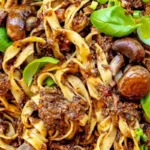
Savory Mushroom Ragu
- Total Time: 35 minutes
- Yield: 4 servings 1x
- Diet: Vegetarian
Description
Mushroom ragu is a bold, rich, flavor-packed sauce recipe for your favorite pasta, polenta, gnocchi, or lasagna. Perfect for everyday family dinners.
Ingredients
- 2 tablespoons extra virgin olive oil
- 1 large onion
- 2 medium carrots
- 1 large stalk celery
- 3 cloves garlic
- ½ teaspoon rosemary
- 3 bay leaves
- ½ cup tomato paste
- 2 pounds mushrooms (1 pound white, 1 pound brown)
- 1 teaspoon salt
- ⅛ teaspoon black pepper
- 1 tablespoon balsamic vinegar
- 10 leaves fresh basil
- 12 ounces pasta (fettuccine)
- parmesan cheese (optional)
Instructions
- PREPARE THE VEGETABLES: Coarsely chop 2 pounds mushrooms with a knife or in a food processor. If you use a food processor, pulse mushrooms in 3 or 4 batches. Set aside in a bowl. Coarsely chop 1 large onion, 2 medium carrots, and 1 large stalk celery with a knife or pulse them in a food processor.
- MAKE THE FLAVOR BASE: Heat 2 tablespoons extra virgin olive oil oil in a large skillet or Dutch oven. Add the chopped vegetables and sauté for 5 minutes, stirring often. Now, add 3 cloves garlic (grated), ½ teaspoon rosemary, 3 bay leaves, and ½ cup tomato paste Sauté for 3 more minutes until the tomato paste turns darker.
- ADD THE MUSHROOMS: Add the chopped mushrooms, season with 1 teaspoon salt and ⅛ teaspoon black pepper Cook on medium-high heat for about 20 minutes, or until all water from the mushrooms has evaporated. Stir in 1 tablespoon balsamic vinegar, then turn the heat off, taste, and adjust for salt.
- SERVING SUGGESTIONS: Cook 12 ounces pasta in a large pot of salted boiling water as per package instructions. When the pasta is al dente (cooked but with a bite), reserve one cup of pasta cooking water and drain the pasta. Add the pasta to the pan with the ragu, add ¼ cup of pasta water. Toss on medium heat for a few seconds until the pasta and the sauce are well combined. Serve with 10 leaves fresh basil, a drizzle of olive oil, and grated or shaved parmesan cheese.
Notes
Store leftovers in an airtight container in the refrigerator for four days. Can be frozen for up to three months.
- Prep Time: 10 minutes
- Cook Time: 25 minutes
- Category: Dinner, Sauce
- Method: Sautéing
- Cuisine: American Italian
Nutrition
- Serving Size: 1 serving
- Calories: 489 kcal
- Sugar: 15 g
- Sodium: 886 mg
- Fat: 9 g
- Saturated Fat: 1 g
- Unsaturated Fat: 8 g
- Trans Fat: 0 g
- Carbohydrates: 85 g
- Fiber: 8 g
- Protein: 20 g
- Cholesterol: 0 mg
Keywords: mushroom ragu, mushroom bolognese, meatless pasta sauce, vegetarian dinner