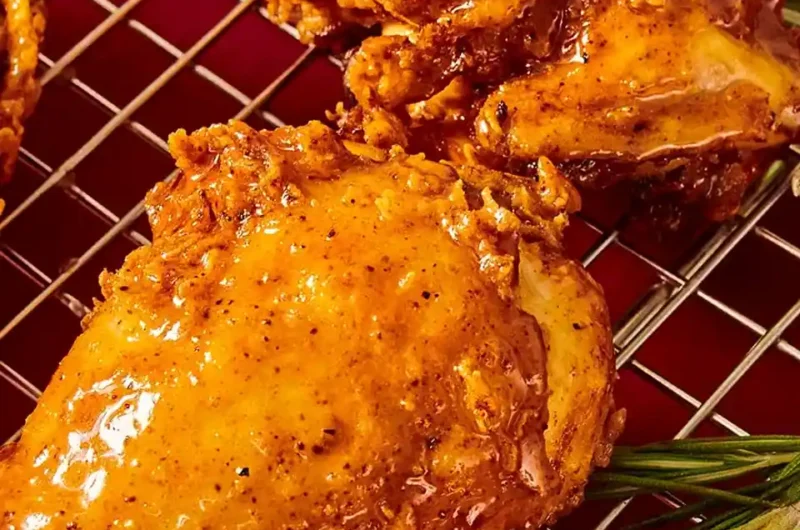
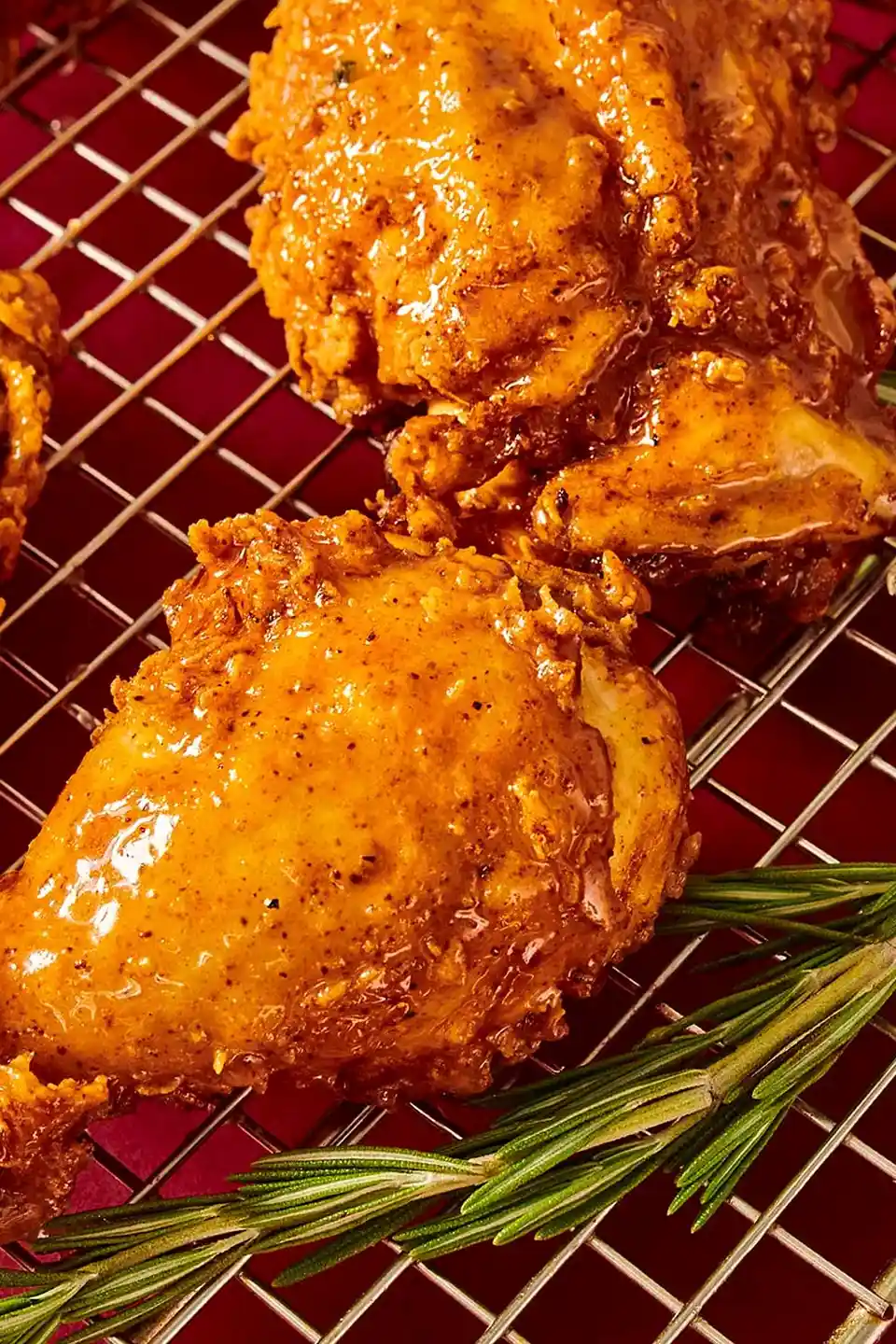
Achieve a perfect balance of crunch and moisture with this honey butter fried chicken. This method uses a specific resting technique to ensure a thick, golden crust that stays attached to the meat.
List of ingredients
- 6-8 mixed pieces of chicken (dark and white meat)
- 3 cups all purpose flour
- 3/4 cup cornstarch – helps create a crispier exterior
- 5-6 cups vegetable oil (canola or corn oil) – for frying
- 1 1/2 packets of Sazon Seasoning (or 3 tablespoons of paprika)
- 2 tablespoons garlic powder
- 2 tablespoons salt
- 1 tablespoon black pepper
- 1 quart buttermilk (or heavy cream)
- 1/4 teaspoon cayenne pepper – adds a subtle heat
- 2 tablespoons honey – for the final glaze
- 1 tablespoon butter – for the final glaze
step-by-step instructions
- Marinate: Season the chicken pieces with cayenne pepper, garlic powder, and salt. Pour in the buttermilk and one packet of sazon seasoning, mix well, and refrigerate for at least one hour.
- Temper: Remove the chicken from the refrigerator and let it sit at room temperature for one hour before frying.
- Prepare Coating: In a medium bowl, combine the flour, cornstarch, half a packet of sazon, 1 tablespoon of garlic powder, 1 tablespoon of pepper, and 1 tablespoon of salt.
- Dredge: Coat each piece of room-temperature chicken in the flour mixture, shaking off any excess powder.
- Set the Crust: Place the coated chicken on a rack and let it sit at room temperature for twenty minutes.
- Heat Oil: Preheat 5-6 cups of oil to 350 degrees Fahrenheit in a deep pot or fryer.
- Fry: Carefully drop the chicken into the hot oil, flipping occasionally, until the internal temperature reaches 165 degrees or the skin is golden brown.
- Glaze: Melt the honey and butter together and drizzle the mixture over the finished chicken before serving.
Optimizing the Frying Process
Use a Deep-Sided Cooking Vessel
A Dutch oven or a dedicated deep fryer is ideal for this recipe. Deeper vessels allow the chicken to be more submerged, resulting in a more consistent golden color across the entire piece.
Shallow pans often lead to uneven cooking and require more frequent flipping. A deeper pot maintains a more stable oil volume, which prevents drastic temperature drops when meat is added.
Maintain a Precise Oil Temperature
Using a clip-on thermometer is the most effective way to keep the oil at 350 degrees Fahrenheit. If the oil is too hot, the outside will burn before the inside is cooked through.
If the oil is too cool, the chicken will absorb too much fat, resulting in a greasy texture. Consistent heat ensures the cornstarch and flour set immediately into a crispy shell.
Implement the Double-Resting Method
Allowing the marinated chicken to reach room temperature before dredging prevents the oil temperature from crashing. Cold meat causes the oil to cool rapidly, which can lead to a soggy crust.
The second rest, occurring after the flour coating is applied, allows the flour to hydrate. This creates a stronger bond between the breading and the meat, reducing the chance of the crust peeling off during frying.
Ingredient Substitutions and Variations
Replacing Buttermilk with Heavy Cream
Heavy cream is an excellent substitute if buttermilk is unavailable. While it lacks the acidity of buttermilk, the high fat content still helps tenderize the meat and allows the flour to adhere.
For a more acidic profile without buttermilk, you can add a tablespoon of lemon juice or white vinegar to regular whole milk. Let it sit for five minutes before using it as a marinade.
Using Paprika Instead of Sazon
Sazon provides a distinct savory and salty profile common in Latin cooking. If you cannot find it, three tablespoons of paprika provide a similar color and a mild, earthy sweetness.
To closer mimic the Sazon flavor, you can combine paprika with a pinch of ground cumin and extra salt. This ensures the fried chicken maintains its depth of flavor.
Dairy-Free Butter Alternatives
For those avoiding dairy, a plant-based butter stick or a neutral oil mixed with honey works well. The honey provides the primary sweetness and viscosity for the glaze.
Ensure the plant-based butter has a high melting point so the glaze remains glossy. Avoid using margarine with high water content, as it may separate when mixed with honey.
Cornstarch for Extra Crunch
The addition of cornstarch to the all-purpose flour is essential for a professional-style crunch. Cornstarch prevents gluten development, which leads to a lighter and crispier texture.
If you prefer a harder, more traditional crust, you can reduce the cornstarch and increase the flour. However, the current ratio is optimized for a shattering crispness.
Advanced Cooking Tips for Success
Avoid Overcrowding the Pot
Fry the chicken in batches rather than filling the pot. Overcrowding lowers the oil temperature significantly, which forces the chicken to simmer in oil rather than fry.
Leave at least two inches of space between each piece of chicken. This allows hot oil to circulate freely around the entire surface area of the meat.
Patting Meat Dry Before Dredging
While the chicken is marinated in buttermilk, it is important to let excess liquid drip off before it hits the flour. Too much moisture can create clumps of dough on the skin.
Using a wire rack for the final 20-minute rest allows air to circulate under the chicken. This prevents the bottom side from becoming soggy before it hits the oil.
Choosing the Right Chicken Cuts
Using a mix of dark and white meat provides a variety of textures. Thighs and drumsticks remain juicy longer due to higher fat content, while breasts offer a leaner profile.
If using large breast pieces, consider slicing them in half or pounding them to an even thickness. This ensures the thickest part of the meat reaches 165 degrees without burning the outside.
Serving and Pairing Suggestions
Balance with Acidic Side Dishes
The richness of fried chicken and honey butter pairs well with acidic flavors. A vinegar-based coleslaw or pickled cucumbers cuts through the fat and cleanses the palate.
A side of sliced tomatoes with a light vinaigrette also provides a fresh contrast. This balance prevents the meal from feeling overly heavy.
Complementary Starch Options
Garlic mashed potatoes or creamy mac and cheese are traditional pairings that complement the savory notes of the chicken. For a lighter option, consider a corn casserole.
Sweet potato fries or honey-glazed carrots can mirror the sweetness of the butter drizzle. These sides enhance the overall flavor profile of the dish.
Fresh Vegetable Pairings
Steamed broccoli or sautéed kale adds necessary nutrients and a bitter contrast to the sweet glaze. These greens help balance the meal’s nutritional value.
A simple garden salad with a lemon-tahini dressing is another great option. The citrus notes in the dressing highlight the honey flavor in the chicken.
Storage and Reheating Guide
Proper Refrigeration Methods
Place leftover chicken on a plate or in a shallow container, allowing it to cool completely before covering. This prevents steam from trapping moisture against the crust.
Store the chicken in an airtight container in the refrigerator for up to three to four days. Keep the honey butter glaze in a separate small container to maintain the crust’s integrity.
Reheating for Maximum Crispiness
Avoid using a microwave for reheating, as it makes the breading soft and rubbery. An oven or air fryer is the best way to restore the crunch.
Heat the oven to 375 degrees Fahrenheit and bake for 10-15 minutes. If using an air fryer, 350 degrees for 5 minutes is usually sufficient to crisp the skin.
Freezing Fried Chicken
Flash-freeze the chicken pieces on a baking sheet for one hour before transferring them to a freezer bag. This prevents the pieces from sticking together in a solid block.
The chicken will stay high-quality in the freezer for up to two months. Thaw the chicken in the refrigerator overnight before reheating in the oven.
Troubleshooting Common Issues
Fixing Flour That Won’t Stick
If the flour is sliding off the chicken, it is likely because the meat was too wet or too cold. Ensure the chicken is patted slightly and has rested at room temperature.
Adding a small amount of the buttermilk marinade into the flour mix to create a few ‘clumps’ can also help. These clumps adhere to the meat and create extra crunchy bits.
Preventing the Coating from Falling Off
The most common cause of peeling breading is skipping the 20-minute rest after dredging. This resting period allows the flour to hydrate and bond to the protein.
Avoid moving the chicken too aggressively once it is coated. Handle the pieces gently to ensure the flour layer remains undisturbed until it is submerged in oil.
Managing Oil That Smokes Too Quickly
If the oil begins to smoke, it has exceeded its smoke point and may impart a bitter taste. Immediately lower the heat or remove the pot from the burner for a moment.
Using oils with higher smoke points, such as refined corn or canola oil, prevents this issue. Avoid using extra virgin olive oil or butter for the primary frying process.
Frequently Asked Questions
Can I use a different oil for frying?
Yes, any neutral oil with a high smoke point will work. Canola, corn, peanut, and grapeseed oils are all suitable alternatives to vegetable oil.
Why do I need to let the chicken rest after coating?
Resting allows the moisture from the chicken to be absorbed by the flour. This creates a paste-like bond that locks the breading in place, preventing it from separating during frying.
Can I bake this instead of frying?
While you can bake it at 400 degrees Fahrenheit, the texture will be significantly different. You will lose the signature crunch that comes from deep frying in oil.
Do I have to use buttermilk?
Buttermilk is preferred for its acidity, which tenderizes the meat. However, you can use heavy cream or a mixture of milk and lemon juice as a substitute.
How do I know when the chicken is safely cooked?
The only certain way is to use a digital meat thermometer. The internal temperature must reach 165 degrees Fahrenheit in the thickest part of the meat.
Print
Crispy Honey Butter Fried Chicken
- Total Time: 145 minutes
- Yield: 4 servings 1x
- Diet: General
Description
Honey Butter Crunchy Fried Chicken
Ingredients
- 6–8 mixed pieces of chicken (dark and white meat)
- 3 cups all purpose flour
- 3/4 cup cornstarch
- 5–6 cups vegetable oil for frying
- 1 1/2 packets of Sazon Seasoning (or 3 tbsps paprika)
- 2 tbsps garlic powder
- 2 tbsps salt
- 1 tbsps black pepper
- 1 quart buttermilk (or heavy cream)
- 1/4 tsp cayenne pepper
- 2 tbps honey
- 1 tbps butter
Instructions
- Step 1: Season chicken with cayenne pepper, garlic powder, and salt, pour in buttermilk and 1 packet of sazon and mix, then marinate in the refrigerator for at least an hour and rest at room temperature for another hour.
- Step 2: In a medium sized bowl, combine flour, cornstarch, 1/2 pack sazon, 1 tbsp of garlic powder, 1 tbsp of pepper and 1 tbsp of salt.
- Step 3: Coat chicken in flour mix and shake off any excess.
- Step 4: Let the coated chicken rest at room temperature for twenty minutes.
- Step 5: Preheat oil to 350 degrees.
- Step 6: Drop the chicken in hot oil, flipping occasionally, and cook until there’s an internal temperature of 165 degrees or until golden brown.
- Step 7: Combine melted honey and butter, then drizzle over chicken before serving.
Notes
Use a deep frying vessel like a Dutch oven for consistent results. Ensure chicken is at room temperature and patted dry before coating. Letting the flour-coated chicken rest for 20 minutes is the secret to a super crunchy crust. Use a thermometer to keep oil stabilized at 350 degrees.
- Prep Time: 120 minutes
- Cook Time: 25 minutes
- Category: Main Course
- Method: Deep Frying
- Cuisine: American
Nutrition
- Serving Size: 2 pieces of chicken
- Calories: 850 kcal
- Sugar: 12 g
- Sodium: 1200 mg
- Fat: 48 g
- Saturated Fat: 14 g
- Unsaturated Fat: 34 g
- Trans Fat: 0 g
- Carbohydrates: 38 g
- Fiber: 2 g
- Protein: 42 g
- Cholesterol: 185 mg
Keywords: honey butter fried chicken, crunchy chicken, soul food, deep fried chicken