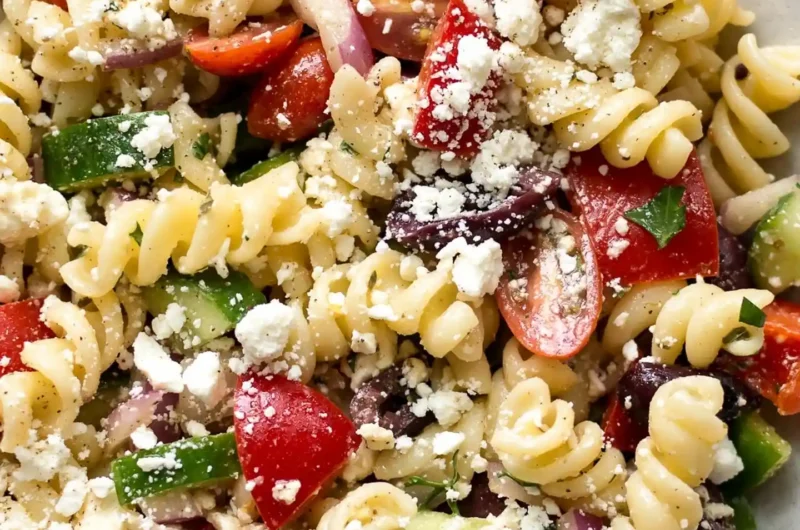
This Greek pasta salad is a fresh and hearty dish ideal for picnics, summer barbecues, or side servings. It combines crisp Mediterranean vegetables with a tangy homemade vinaigrette for a perfectly balanced flavor profile.
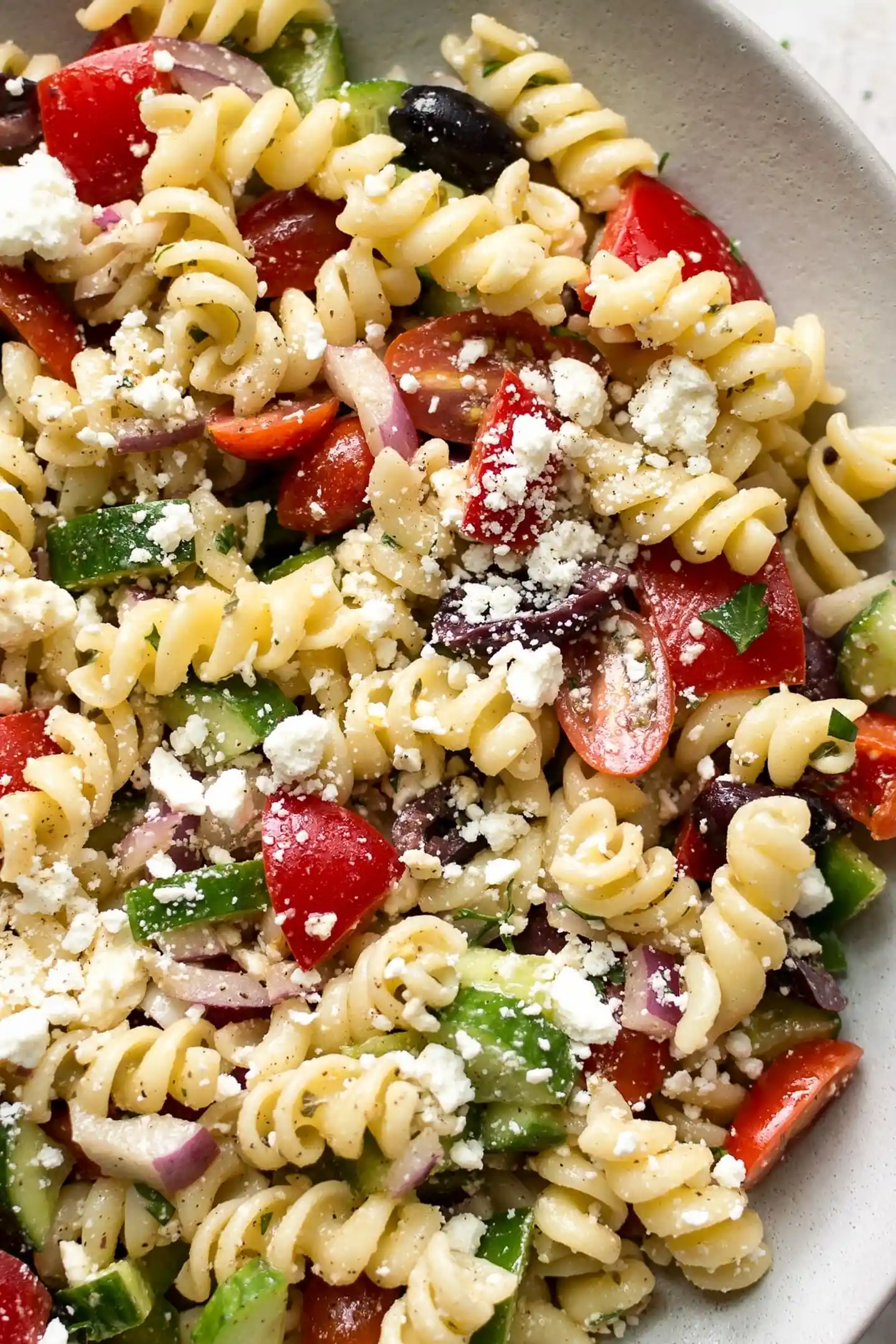
List of ingredients
- 3 cups uncooked pasta – rotini or fusilli are recommended for better dressing adhesion.
- 1 red bell pepper, chopped – adds sweetness and color.
- 1 green bell pepper, chopped – provides a classic crisp taste.
- 1 small red onion, chopped – adds a mild, sharp bite.
- 1/2 cup Kalamata olives – briny and traditional for Greek salads.
- 3 mini cucumbers (or 3/4 English cucumber), chopped – ensures a refreshing crunch.
- 1 cup little tomatoes (grape or cherry), halved – adds bursts of juicy sweetness.
- 5 ounces crumbled feta – provides a creamy, salty finish.
- Salt and pepper, to taste – essential for balancing the overall flavor.
- 2 tablespoons red wine vinegar – the primary acidic base for the dressing.
- 3 tablespoons olive oil – adds richness and smooths the texture.
- 1/2 teaspoon Dijon mustard – helps emulsify the vinaigrette.
- 1 clove garlic, minced – provides a savory, pungent depth.
- 1 teaspoon fresh parsley, chopped – adds a bright, herby note.
- 1/2 teaspoon dried oregano – a staple herb for Mediterranean flavor.
- 1 teaspoon packed brown sugar – cuts the sharp acidity of the vinegar.
step-by-step instructions
- Cook the pasta: Boil a large pot of salted water and cook the pasta until al dente according to the package directions. Drain the pasta and immediately run it under cool water to stop the cooking process, then let it drain thoroughly.
- Prepare the dressing: While the pasta is cooking, gather all dressing ingredients. Combine the red wine vinegar, olive oil, Dijon mustard, minced garlic, chopped parsley, dried oregano, and brown sugar in a jar and shake vigorously until well combined.
- Assemble the salad: Place the cooled pasta and all chopped vegetables, olives, and feta in a large mixing bowl. Pour the dressing over the mixture and toss gently to coat all ingredients evenly.
- Season and serve: Taste the salad and add salt and pepper as needed. Serve the salad immediately or place it in the refrigerator to allow the flavors to meld together before serving.
Optimal Ingredient Selection
Choosing Spiraled Pasta Shapes
Rotini or fusilli are the best choices for this recipe because their spirals trap the vinaigrette more effectively. This prevents the dressing from settling at the bottom of the bowl and ensures every bite is seasoned.
Selecting the Right Cucumbers
Mini Persian cucumbers are ideal because they have thinner skins and fewer seeds. If you use an English cucumber, it provides a similar crispness and mild flavor without the need for peeling.
Picking Quality Feta Cheese
Look for a high-quality feta made from sheep or goat milk for an authentic taste. To keep the ingredients clean, choose brands that use microbial rennet rather than animal-derived enzymes.
Selecting Briny Kalamata Olives
Kalamata olives provide the characteristic salty, vinegary punch essential to Greek cuisine. Pitting them before adding them to the salad makes the dish easier to eat and more family-friendly.
Using Small Tomato Varieties
Grape or cherry tomatoes are preferred over large sliced tomatoes because they hold their shape. Halving them allows some juice to escape and mix with the dressing without making the pasta soggy.
Selecting Crisp Bell Peppers
Ensure your red and green bell peppers are firm and free of soft spots. Their crisp texture provides a necessary contrast to the soft pasta and creamy feta cheese.
Vinaigrette Customization and Tips
Balancing Acidity with Brown Sugar
The small amount of brown sugar does not make the dressing sweet. Instead, it acts as a balancer that removes the harsh edge of the red wine vinegar for a smoother taste.
The Role of Dijon Mustard
Dijon mustard serves as an emulsifier, which binds the oil and vinegar together into a stable sauce. This prevents the dressing from separating and ensures a consistent coating on the vegetables.
Enhancing Garlic Flavor
Freshly minced garlic is far superior to garlic powder in this recipe. Using a garlic press or a fine mince releases the essential oils that provide a savory depth to the salad.
Incorporating Dried Oregano
Dried oregano is the signature scent of Greek salads. For maximum potency, rub the dried herbs between your palms before adding them to the jar to release their aromatic oils.
Choosing the Right Olive Oil
Use a high-quality extra-virgin olive oil to provide a fruity, peppery base. Avoid refined oils that lack flavor, as the oil is a primary component of the overall taste profile.
Advanced Preparation Techniques
Achieving Perfect Al Dente Pasta
Cooking the pasta slightly under the package directions ensures it maintains its structure. Overcooked pasta becomes mushy and breaks apart when you toss it with the heavy vegetables.
The Importance of Cold Rinsing
Rinsing the pasta under cold water removes excess surface starch. This prevents the noodles from sticking together and stops the residual heat from wilting the fresh vegetables.
Uniform Vegetable Chopping
Aim for consistent, bite-sized pieces for all the vegetables. Uniformity ensures that you get a mix of all the ingredients in every spoonful and improves the visual presentation.
Emulsifying the Dressing
Shaking the dressing in a sealed jar is more effective than stirring it with a fork. The vigorous motion creates a temporary emulsion that clings better to the pasta and produce.
Ensuring Thorough Drainage
Make sure the pasta is completely drained before adding it to the bowl. Excess water will dilute the vinaigrette, resulting in a bland salad that lacks intensity.
Flavor Variations and Add-ins
Adding Plant-Based Protein with Chickpeas
Adding a can of rinsed chickpeas transforms this side dish into a filling main meal. They complement the Mediterranean flavors and add an extra layer of texture and nutrition.
Incorporating Briny Capers
For those who enjoy a stronger salt profile, a tablespoon of capers is a great addition. Capers enhance the briny quality of the Kalamata olives and add a sophisticated tang.
Using Sun-Dried Tomatoes
Replacing or supplementing fresh tomatoes with oil-packed sun-dried tomatoes adds a concentrated, sweet-tart depth. This is especially useful when making the salad in the winter months.
Experimenting with Different Cheeses
While feta is traditional, you can use cubed halloumi or fresh mozzarella for a different creamy experience. Be mindful that these cheeses may change the salt balance of the dish.
Adding Fresh Leafy Greens
Folding in a handful of fresh baby spinach or arugula just before serving adds color and a peppery note. Avoid adding these too early, as they will wilt under the acidity of the dressing.
Serving Suggestions and Pairings
Serving as a Standalone Lunch
This salad is hearty enough to serve as a main course for lunch. Pair it with a side of fresh, crusty sourdough bread to soak up any remaining dressing.
Pairing with Grilled Proteins
The acidity of the salad cuts through the richness of grilled chicken breasts or roasted fish. It serves as a refreshing counterbalance to charred, smoky flavors from the grill.
Complementary Mediterranean Sides
Serve this salad alongside warm pita bread and a side of hummus or tzatziki. This creates a complete Mediterranean platter that is visually appealing and flavor-dense.
Best Bread Accompaniments
Warm focaccia or toasted ciabatta works beautifully with this recipe. The airy structure of these breads complements the density of the pasta and the crunch of the vegetables.
Storage and Food Safety
Refrigeration Guidelines
Store the completed salad in an airtight glass container in the refrigerator. Glass prevents the pasta from absorbing odors from other foods and keeps the vegetables crisp.
Preventing Dressing Absorption
Pasta continues to absorb liquid as it sits, which can leave the salad dry. If you are making the salad in advance, reserve a small amount of dressing to stir in just before serving.
Storing Ingredients Separately
For maximum freshness, store the chopped vegetables and the dressing in separate containers. Combine them with the pasta only a few hours before the event to prevent sogginess.
Understanding Maximum Shelf Life
This salad is best consumed within three to four days. Beyond this point, the vegetables lose their crunch and the pasta may become too soft from the vinegar.
Reheating and Refreshing
Serving at Room Temperature
While chilled is traditional, serving the salad at room temperature allows the flavors of the olive oil and herbs to become more pronounced. Take it out of the fridge 30 minutes before eating.
Refreshing Dried-Out Pasta
If the salad has been stored for a few days and seems dry, add a splash of olive oil and red wine vinegar. Gently toss the salad to redistribute the moisture and revive the flavor.
Adjusting the Dressing Before Serving
Always perform a final taste test before serving. You may find that the saltiness of the feta has mellowed, requiring a final pinch of salt or a crack of black pepper.
Troubleshooting Common Issues
Fixing a Dressing That Is Too Tart
If the vinaigrette tastes too acidic, add a tiny pinch more brown sugar or an extra teaspoon of olive oil. Stir well to integrate the new ingredients and balance the pH.
Addressing Watery Vegetables
If the salad becomes watery, it is usually due to poorly drained cucumbers or tomatoes. In the future, seed the cucumbers or pat the tomatoes dry with a paper towel before adding.
Preventing the Onion from Overpowering
If the red onion is too sharp, soak the chopped pieces in cold water for ten minutes before adding them. This removes the sulfurous bite while keeping the onion’s crisp texture.
Correcting Bland Pasta
If the pasta tastes bland despite the dressing, it is likely because the pasta water wasn’t salted enough. To fix this, add a small amount of extra salt directly to the finished salad.
Frequently Asked Questions
Can I use a different vinegar?
Apple cider vinegar can be used as a substitute, though it has a fruitier taste. White wine vinegar is also a good alternative that maintains the bright acidity of the original recipe.
Is this salad freezer-friendly?
No, this salad is not suitable for freezing. The fresh vegetables and feta cheese will lose their texture and separate, resulting in a mushy and unappealing consistency.
How do I make it vegan?
To make this vegan, omit the feta cheese or replace it with a plant-based feta alternative. You can also add diced avocado to provide the creaminess that the cheese normally offers.
Which pasta holds dressing best?
Spiral shapes like rotini, fusilli, and gemelli are the most effective. Their geometry allows the dressing to cling to the surface and settle into the grooves, ensuring maximum flavor.
Print
Easy Greek Pasta Salad
- Total Time: 30 minutes
- Yield: 6 servings 1x
- Diet: Vegetarian
Description
This Greek pasta salad recipe is the perfect salad for summer gatherings, BBQs, or potlucks. Mediterranean-inspired ingredients make it fresh, flavorful, and healthy!
Ingredients
- 3 cups uncooked pasta
- 1 red bell pepper, chopped
- 1 green bell pepper, chopped
- 1 small red onion, chopped
- 1/2 cup Kalamata olives
- 3 mini cucumbers (or 3/4 English cucumber), chopped
- 1 cup grape or cherry tomatoes, halved
- 5 ounces crumbled microbial-rennet feta
- Salt and pepper to taste
- 2 tablespoons red wine vinegar
- 3 tablespoons olive oil
- 1/2 teaspoon Dijon mustard
- 1 clove garlic, minced
- 1 teaspoon fresh parsley, chopped
- 1/2 teaspoon dried oregano
- 1 teaspoon packed brown sugar
Instructions
- Cook Pasta: Boil a large, salted pot of water and cook pasta al dente according to package directions. Once cooked, drain and run under cool water, then let it drain thoroughly.
- Prepare Dressing: Combine the dressing ingredients in a jar and shake vigorously.
- Assemble: Combine the pasta and prepared vegetables in a large bowl, toss with the dressing, and season with salt and pepper as needed. Serve immediately or refrigerate until flavors meld.
Notes
Feeds 6+, especially as a side dish. You may pit the Kalamata olives after measuring. Quantities can be adjusted to taste.
- Prep Time: 10 minutes
- Cook Time: 20 minutes
- Category: Side Dish
- Method: Mixing
- Cuisine: Greek
Nutrition
- Serving Size: 1 serving
- Calories: 380 kcal
- Sugar: 5 g
- Sodium: 458 mg
- Fat: 15 g
- Saturated Fat: 5 g
- Unsaturated Fat: 9 g
- Trans Fat: 0 g
- Carbohydrates: 50 g
- Fiber: 4 g
- Protein: 12 g
- Cholesterol: 21 mg
Keywords: Greek pasta salad, Mediterranean, summer salad, side dish, fresh vegetables