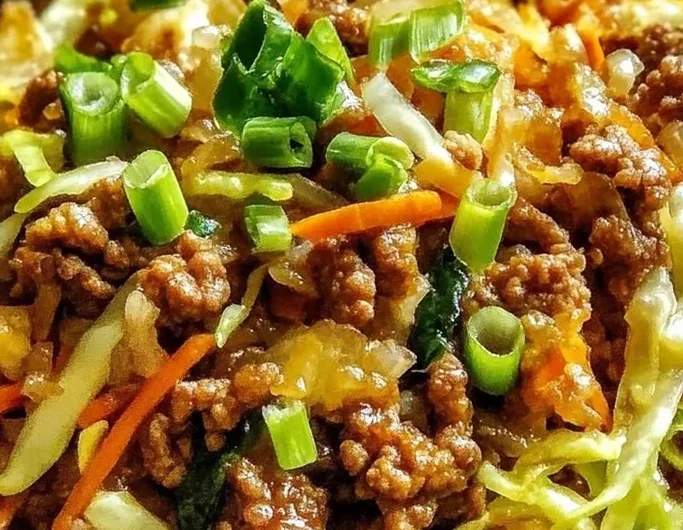
Enjoy a fast, one-pan meal that delivers the classic flavors of an egg roll without the frying. This dish is perfect for busy weeknights and requires minimal cleanup.
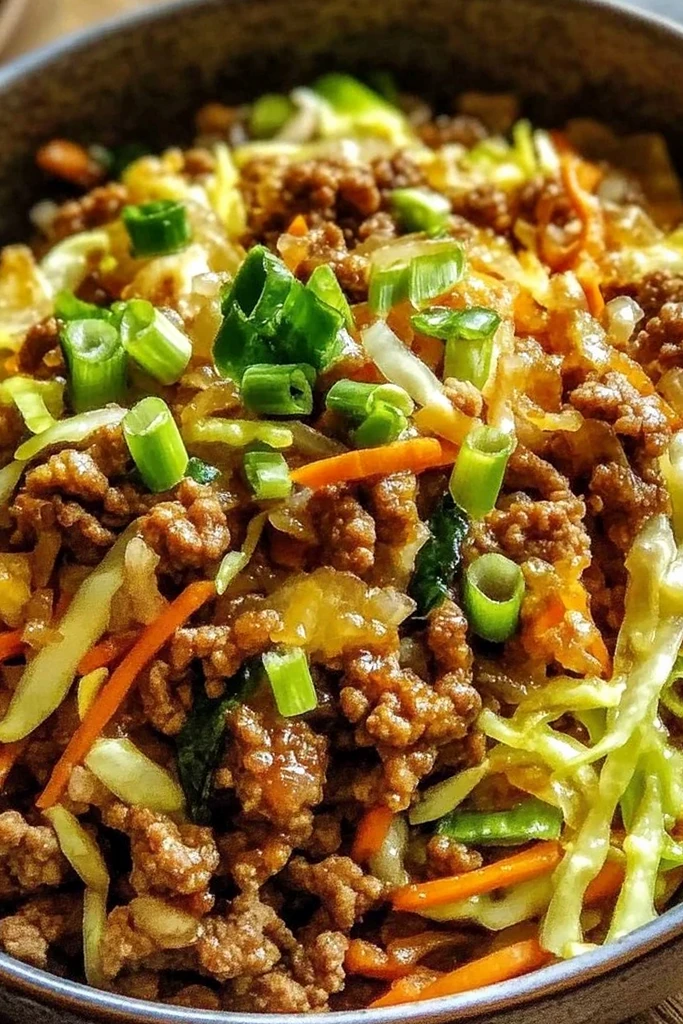
List of ingredients
- 1 lb ground chicken – lean protein base.
- 1 tbsp sesame oil – for a nutty aroma.
- 1 small onion, diced – provides mild sweetness.
- 3 cloves garlic, minced – adds pungent aromatics.
- 1 tbsp fresh ginger, grated (or 1 tsp ground ginger) – gives warmth and zing.
- 1 bag (14 oz) coleslaw mix (shredded cabbage and carrots) – provides the crunch.
- 3 tbsp soy sauce (or tamari) – for umami saltiness.
- 1 tbsp rice vinegar – balances richness with acidity.
- 1 tsp sriracha or chili paste (optional) – for a touch of heat.
- Salt and pepper, to taste – enhances all flavors.
- 2 green onions, sliced – for a fresh garnish.
- Sesame seeds, for garnish (optional) – adds a professional finish.
step-by-step instructions
- Brown the meat: Heat sesame oil in a large skillet over medium heat. Add ground chicken and cook until browned, breaking it up with a spatula.
- Sauté the aromatics: Stir in the diced onion, garlic, and ginger. Cook for 2–3 minutes until the mixture becomes fragrant.
- Cook the vegetables: Add the coleslaw mix to the skillet. Stir frequently and cook for 5–7 minutes until the cabbage softens and tenderizes.
- Season the dish: Pour in the soy sauce, rice vinegar, and sriracha. Stir well and cook for another 1–2 minutes to harmonize the flavors.
- Final touch: Remove the skillet from heat. Top with sliced green onions and sesame seeds before serving hot.
Protein Alternatives
Using Ground Turkey for Leaner Protein
Ground turkey is an excellent lean alternative that maintains the structure of the dish. It has a milder taste that allows the ginger and garlic to shine. Avoid overcooking to keep the meat moist.
Ground Beef for a Richer Profile
Lean ground beef adds a deeper, more savory flavor compared to poultry. It pairs exceptionally well with the crunch of shredded cabbage. Be sure to drain excess fat before adding the vegetables.
Tofu or Tempeh for Plant-Based Options
Crumbled extra-firm tofu or tempeh works well for those seeking a meat-free version. Sauté the tofu until golden brown to mimic the texture of ground meat. Season heavily with soy sauce for depth.
Vegetable Additions
Adding Diced Bell Peppers
Red or green bell peppers add vibrant color and a hint of sweetness. Sauté them along with the onions and garlic. They increase the nutritional value and texture of the bowl.
Including Extra Shredded Carrots
While the mix contains carrots, adding extra shredded carrots increases the natural sweetness. They soften slightly while maintaining a pleasant bite. Add them at the same time as the cabbage.
Incorporating Sliced Mushrooms
Sliced shiitake or button mushrooms contribute an earthy umami quality. Brown them early in the cooking process to release their moisture. They blend seamlessly with the shredded cabbage mix.
Adding Finely Diced Zucchini
Diced zucchini adds volume and a light, fresh flavor to the meal. Add it toward the end of the vegetable cooking phase. This ensures the zucchini doesn’t become too mushy.
Sauce Modifications
Using Tamari for Gluten-Free Needs
Tamari is a suitable soy sauce substitute for those avoiding gluten. It provides the same salty, rich color and deep flavor. Use it in a 1:1 ratio with the soy sauce.
Reducing Sodium with Low-Sodium Soy Sauce
To lower the salt content, opt for a low-sodium soy sauce version. You can adjust the seasoning with a small pinch of salt at the end. This makes the dish more heart-healthy.
Increasing Heat with Red Pepper Flakes
For those who prefer more heat than sriracha provides, add red pepper flakes. Toss them in with the garlic and ginger to infuse the oil. Adjust the amount based on your spice tolerance.
Balancing Acidity with Fresh Lime Juice
A squeeze of fresh lime juice just before serving adds a bright, zesty note. It cuts through the richness of the sesame oil. This complements the rice vinegar and elevates the dish.
Serving Suggestions
Pairing with Steamed White Rice
Serve the mixture over a bed of steamed jasmine or basmati rice. The rice absorbs the savory sauce and provides a satisfying base. It transforms the bowl into a more filling meal.
Serving Over Cauliflower Rice
For a low-carb or grain-free option, use sautéed cauliflower rice. It mimics the texture of rice without the additional calories. Steam it separately or stir it in at the end.
Using Zucchini Noodles as a Base
Spiralized zucchini provides a fresh and light foundation for the protein and cabbage. Lightly sauté the noodles for one minute before topping them. Avoid overcooking to prevent wateriness.
Adding a Fried Egg on Top
A sunny-side-up egg adds a rich and creamy element to the dish. The running yolk creates a natural sauce that coats the vegetables. This also increases the overall protein content.
Storage and Preservation
Refrigeration Guidelines for Leftovers
Store leftovers in an airtight glass container in the refrigerator. The dish stays fresh and tasty for up to four days. The flavors often meld and improve after a day.
Freezing the Mixture for Long-Term Storage
Let the mixture cool completely before transferring it to freezer-safe bags. It can be stored in the freezer for up to three months. Press out all air to avoid freezer burn.
Thawing Methods for Frozen Portions
Move the frozen portion to the refrigerator 24 hours before you plan to eat it. Alternatively, use the microwave defrost setting. This method helps preserve the vegetable texture better.
Reheating Techniques
Stovetop Reheating for Best Texture
Heat a small amount of oil in a skillet over medium heat. Add the leftovers and stir until heated through. This is the best method to keep the cabbage slightly crisp.
Microwave Reheating for Speed
Place the meal in a microwave-safe dish and cover it with a damp paper towel. Heat in 30-second intervals, stirring in between. This prevents the edges from drying out.
Using an Air Fryer for Crispy Edges
Spread the leftovers in an air fryer basket at 350 degrees Fahrenheit. Heat for 3-5 minutes to achieve slightly caramelized edges. This adds a unique, toasted flavor to the dish.
Meal Prep Strategies
Batch Cooking for the Week
Prepare double or triple portions on a Sunday to save time. Divide the cooked mixture into equal meal prep containers. This provides quick and healthy lunches for the work week.
Organizing Ingredients in Containers
Use BPA-free plastic or glass containers with secure locking lids. Glass is generally preferred for safe reheating in the microwave. Label each container with the date of preparation.
Maintaining Vegetable Crunch during Storage
To keep vegetables crunchy, undercook the cabbage slightly during the initial preparation. The reheating process will finish the cooking process. This prevents the cabbage from turning into mush.
Common Cooking Pitfalls
Preventing the Meat from Drying Out
Avoid cooking the ground chicken on high heat for an extended period. Brown the meat just until it is cooked through. Remove it from the pan if the vegetables need more time.
Avoiding Overcooked Cabbage
Do not cover the pan with a lid while sautéing the coleslaw mix. Trapped steam can make the cabbage too soft and watery. Keep the pan open to allow moisture to evaporate.
Managing Pan Overcrowding
Use a wide skillet to ensure the meat and vegetables brown rather than steam. If your pan is too small, cook the meat in batches. This ensures a better sear and deeper flavor.
Frequently Asked Questions
Can I use frozen coleslaw mix?
Yes, you can use frozen mixes, but you must thaw and drain them first. Squeeze out as much excess water as possible to prevent a soupy consistency. Fresh mix is preferred for texture.
How do I store this in the fridge?
Use a sealed, airtight container to prevent the dish from absorbing other odors. Keep it on a middle shelf where the temperature is most consistent. It lasts about four days.
What is the best substitute for sesame oil?
If you lack sesame oil, use a neutral oil like canola or vegetable oil. Add a drop of toasted sesame extract or extra toasted sesame seeds. The flavor will be slightly milder.
Can I add cornstarch to thicken the sauce?
Mix one teaspoon of cornstarch with a tablespoon of water and stir it in at the end. This thickens the sauce and makes it cling better to the vegetables. It creates a glossier finish.
Print
Savory Egg Roll in a Bowl
- Total Time: 30 minutes
- Yield: 4 servings 1x
- Diet: General
Description
A quick and delicious dish that combines the flavors of traditional egg rolls without the hassle of wrapping. This one-pan meal features ground turkey, crunchy vegetables, and a savory sauce, ready in just 30 minutes.
Ingredients
- 1 lb ground turkey
- 1 tbsp sesame oil
- 1 small onion, diced
- 3 cloves garlic, minced
- 1 tbsp fresh ginger, grated
- 1 bag (14 oz) coleslaw mix
- 3 tbsp soy sauce
- 1 tbsp rice vinegar
- 1 tsp sriracha
- Salt & pepper to taste
- 2 green onions, sliced
- Sesame seeds
Instructions
- Cook the meat: Heat sesame oil in a large skillet over medium heat. Add ground turkey and cook until browned, breaking it up with a spatula.
- Sauté aromatics: Add diced onion, garlic, and ginger. Cook for 2–3 minutes until fragrant.
- Add vegetables: Stir in the coleslaw mix. Cook for 5–7 minutes until the cabbage softens and the veggies tenderize, stirring occasionally.
- Flavor it up: Add soy sauce, rice vinegar, and sriracha. Stir well and cook another minute or two.
- Garnish and serve: Remove from heat. Top with green onions and sesame seeds. Serve hot.
Notes
Can be made in advance; it’s even better the next day as the flavors meld together. Serve with steamed rice or zucchini noodles for a refreshing take.
- Prep Time: 10 minutes
- Cook Time: 20 minutes
- Category: Dinner
- Method: Sautéing
- Cuisine: Asian Fusion
Nutrition
- Serving Size: 1 bowl
- Calories: 350 kcal
- Sugar: 6 g
- Sodium: 880 mg
- Fat: 16 g
- Saturated Fat: 4 g
- Unsaturated Fat: 12 g
- Trans Fat: 0 g
- Carbohydrates: 14 g
- Fiber: 4 g
- Protein: 28 g
- Cholesterol: 75 mg
Keywords: comfort food, Egg Roll in a Bowl, Healthy Meal, One-Pan Recipe, Quick Dinner