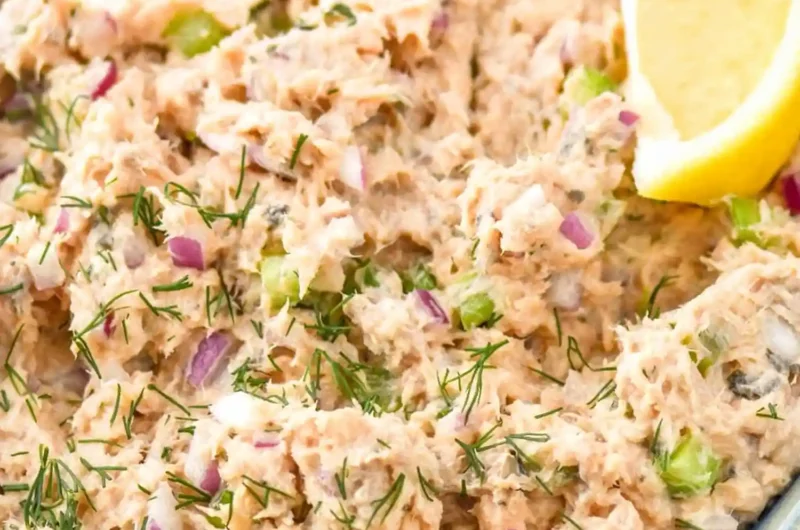
This quick salmon salad is a nutrient-dense meal that comes together in just ten minutes. It works perfectly as a filling sandwich filler or a light, low-carb lunch option.
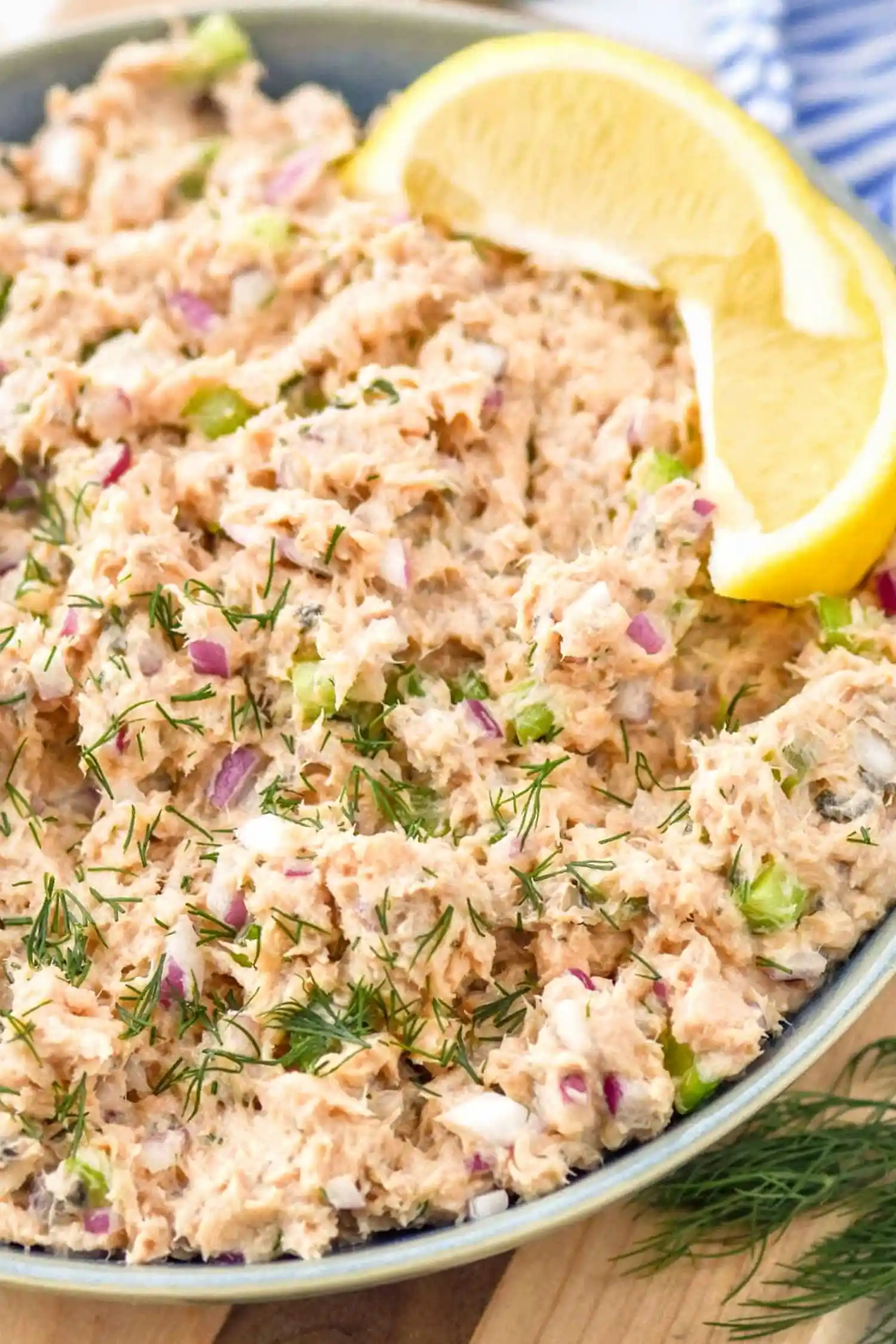
List of ingredients
- 15 ounces salmon – either canned or freshly cooked.
- 1/2 small red onion – diced small for even flavor distribution.
- 1 stalk celery – diced to add a fresh crunch.
- 1/2 cup mayonnaise – light mayonnaise is recommended for a lighter version.
- 1 tablespoon lemon juice – provides a necessary acidic balance.
- 1/2 tablespoon fresh dill – or substitute with 1 teaspoon of dried dill.
- 1/2 teaspoon kosher salt – reduce to 1/4 teaspoon if using standard table salt.
- black pepper – add to taste for a subtle heat.
step-by-step instructions
- Combine Base Ingredients: In a large mixing bowl, add the salmon, diced red onion, and diced celery.
- Prepare the Dressing: In a separate small bowl, whisk together the mayonnaise, lemon juice, fresh dill, and salt. Taste the mixture and add black pepper or additional salt as needed.
- Mix and Serve: Stir the prepared dressing into the bowl with the salmon and vegetables until fully coated. Serve immediately or store in the refrigerator.
Optimizing Your Salmon Choice
Handling Canned Salmon Bones
Canned salmon often contains small pieces of soft bone and cartilage. Place the fish in a bowl and use a fork to gently flake the meat, which allows you to identify and remove these pieces easily.
Using Pre-Cooked Salmon Fillets
If you prefer fresh fish, use leftover baked or poached salmon fillets. Flake the chilled fish into small pieces using a fork to ensure it mixes evenly with the dressing and vegetables.
Selecting the Best Salmon Type
Wild-caught salmon typically offers a bolder flavor and different nutrient profile than farmed salmon. Both work well in this recipe, but wild salmon may require slightly more lemon juice to balance its stronger taste.
Vegetable and Herb Customizations
Substituting Celery with Peas
If you do not enjoy the taste of celery, replace it with 1/2 cup of frozen peas. There is no need to thaw the peas first, as they will soften slightly once mixed with the dressing.
Managing Red Onion Pungency
To reduce the sharpness of the red onion, soak the diced pieces in cold water for ten minutes before adding them to the salad. Drain them thoroughly to avoid adding extra moisture to the mixture.
Converting Fresh Dill to Dried Herbs
When substituting fresh dill with the dried version, use a ratio of 1 teaspoon of dried dill for every 1/2 tablespoon of fresh. Dried herbs are more concentrated and provide a more muted, earthy flavor.
Modifying the Dressing Base
Replacing Mayonnaise with Greek Yogurt
For a higher-protein and lower-fat alternative, swap 1/4 cup of the mayonnaise for plain Greek yogurt. This change adds a tangier flavor and creates a creamier consistency without as much fat.
Using Light Mayonnaise for Fewer Calories
Light mayonnaise reduces the overall calorie count while maintaining the classic creamy texture. Ensure the light mayo is well-whisked with the lemon juice to prevent separation.
Adjusting the Citrus Acidity
If lemon juice is unavailable, you can use white wine vinegar or apple cider vinegar. Use the same measurement of one tablespoon, though the flavor profile will be slightly more pungent.
Creative Serving Methods
Low-Carb Lettuce Wrap Options
Use the inner ribs of Romaine lettuce for a sturdy, crunchy vessel. These act as natural scoops that keep the salad contained while removing the need for bread.
Stuffed Avocado Boat Presentation
Slice a ripe avocado in half and remove the pit to create a natural bowl. Spoon the salmon salad into the center for a meal rich in healthy fats and creamy texture.
Tomato Shell Servings
Scoop out the seeds and flesh from a large beefsteak tomato to create a hollow shell. Fill the tomato with the salmon mixture for a refreshing and visually appealing appetizer.
Traditional Sandwich Bread Pairings
Serve the salad on toasted whole-grain bread or a buttery croissant for a classic lunch experience. Adding a leaf of crisp lettuce between the bread and the salad prevents the bread from becoming soggy.
Storage and Meal Prep Advice
Maximum Refrigeration Time
This salad remains fresh and safe to eat for three to four days when stored properly. Ensure it is kept at a constant cold temperature to maintain the quality of the fish and mayo.
Air-Tight Container Selection
Use a glass or BPA-free plastic container with a tight-sealing lid. This prevents the salmon from absorbing other odors in the refrigerator and stops the salad from drying out.
Refreshing the Salad Before Serving
Because ingredients can settle over time, give the salad a thorough stir before serving. You may add a small squeeze of fresh lemon juice to brighten the flavors if it has been stored for several days.
Troubleshooting Texture and Flavor
Fixing a Watery Salad
If the salad seems too thin, it is often due to excess moisture from the canned salmon or vegetables. Drain the salmon more thoroughly next time or stir in an extra tablespoon of mayonnaise to thicken the bind.
Balancing Excessive Saltiness
If the mixture tastes too salty, add a small amount of unsweetened Greek yogurt or more diced celery. The extra bulk and creaminess help neutralize the salt concentration.
Improving the Overall Consistency
For a smoother texture, mash a portion of the salmon with a fork before adding the diced vegetables. This creates a more cohesive bind that clings better to bread or lettuce wraps.
Frequently Asked Questions
Can I use canned tuna instead?
Yes, this recipe works almost identically with canned tuna. Simply replace the salmon with an equal amount of drained tuna, keeping all other ingredients the same.
Is this recipe freezer-friendly?
No, this salad should not be frozen. The mayonnaise and fresh vegetables will separate and lose their texture upon thawing, resulting in a watery and unappealing consistency.
How do I prevent the onion from overpowering the fish?
Ensure the red onion is diced very small so that you get a tiny bit of flavor in every bite rather than large, pungent chunks. You can also reduce the amount to 1/4 of an onion.
Can I add other seeds or nuts?
Adding toasted sunflower seeds or slivered almonds can provide an extra layer of crunch. Stir them in just before serving to ensure they remain crisp.
What are the best side dishes for salmon salad?
Pair this dish with a side of fresh fruit, a simple green salad, or sliced cucumbers. These light accompaniments complement the richness of the mayonnaise-based dressing.
Can I make this without any mayonnaise?
You can replace the mayonnaise entirely with mashed avocado or a mixture of olive oil and lemon juice. Note that the texture will be less creamy and more like a traditional vinaigrette salad.
Does the type of salt matter?
Kosher salt has larger grains than table salt, meaning you need a larger volume to achieve the same saltiness. Always adjust the quantity based on the specific type of salt you are using.
How can I add more protein to this meal?
You can serve the salmon salad alongside a hard-boiled egg or mix in some cooked chickpeas. These additions increase the satiety of the meal without altering the primary flavor profile.
Print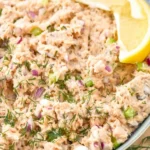
Easy Salmon Salad Recipe
- Total Time: 10 minutes
- Yield: 4 servings 1x
- Diet: Low Carb
Description
Salmon Salad is an easy delicious meal that makes for a healthy sandwich. Serve it in lettuce cups for a great low carb lunch!
Ingredients
- 15 ounces salmon
- 1/2 small red onion, diced small
- 1 stalk celery, diced
- 1/2 cup light mayonnaise
- 1 tablespoon lemon juice
- 1/2 tablespoon fresh dill
- 1/2 teaspoon kosher salt
- black pepper to taste
Instructions
- Combine: In a large bowl, combine the salmon, red onion, and celery.
- Whisk: In a small bowl whisk together the mayonnaise, lemon juice, fresh dill, and salt. Taste and add pepper to taste, or more salt if needed.
- Mix: Stir the dressing into the main ingredients and serve.
Notes
This recipe can be stored in the refrigerator for up to four days in an air tight container. If using canned salmon, remove any bone pieces. For a lighter version, swap 1/4 cup of mayonnaise for plain Greek yogurt.
- Prep Time: 10 minutes
- Cook Time: 0 minutes
- Category: Side Dish
- Method: Mixing
- Cuisine: American
Nutrition
- Serving Size: 0.5 cup
- Calories: 145 kcal
- Sugar: 1 g
- Sodium: 696 mg
- Fat: 8 g
- Saturated Fat: 1 g
- Unsaturated Fat: 6 g
- Trans Fat: 0 g
- Carbohydrates: 5 g
- Fiber: 1 g
- Protein: 14 g
- Cholesterol: 10 mg
Keywords: salmon salad, healthy lunch, low carb, seafood salad