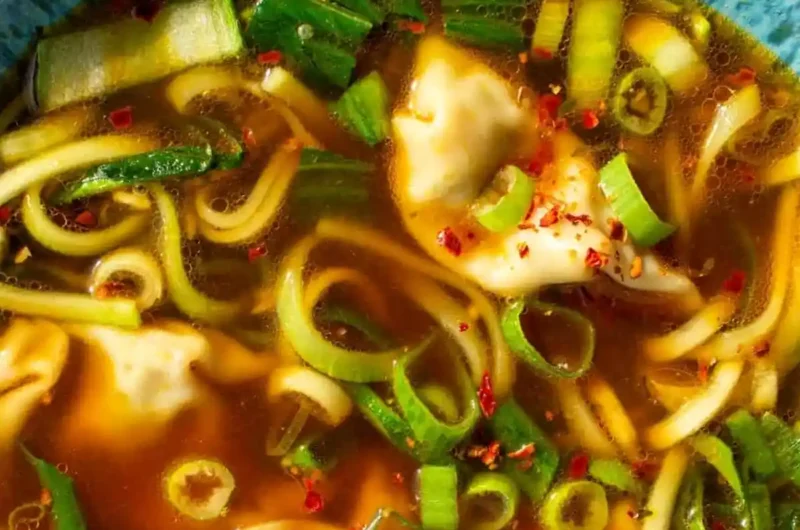
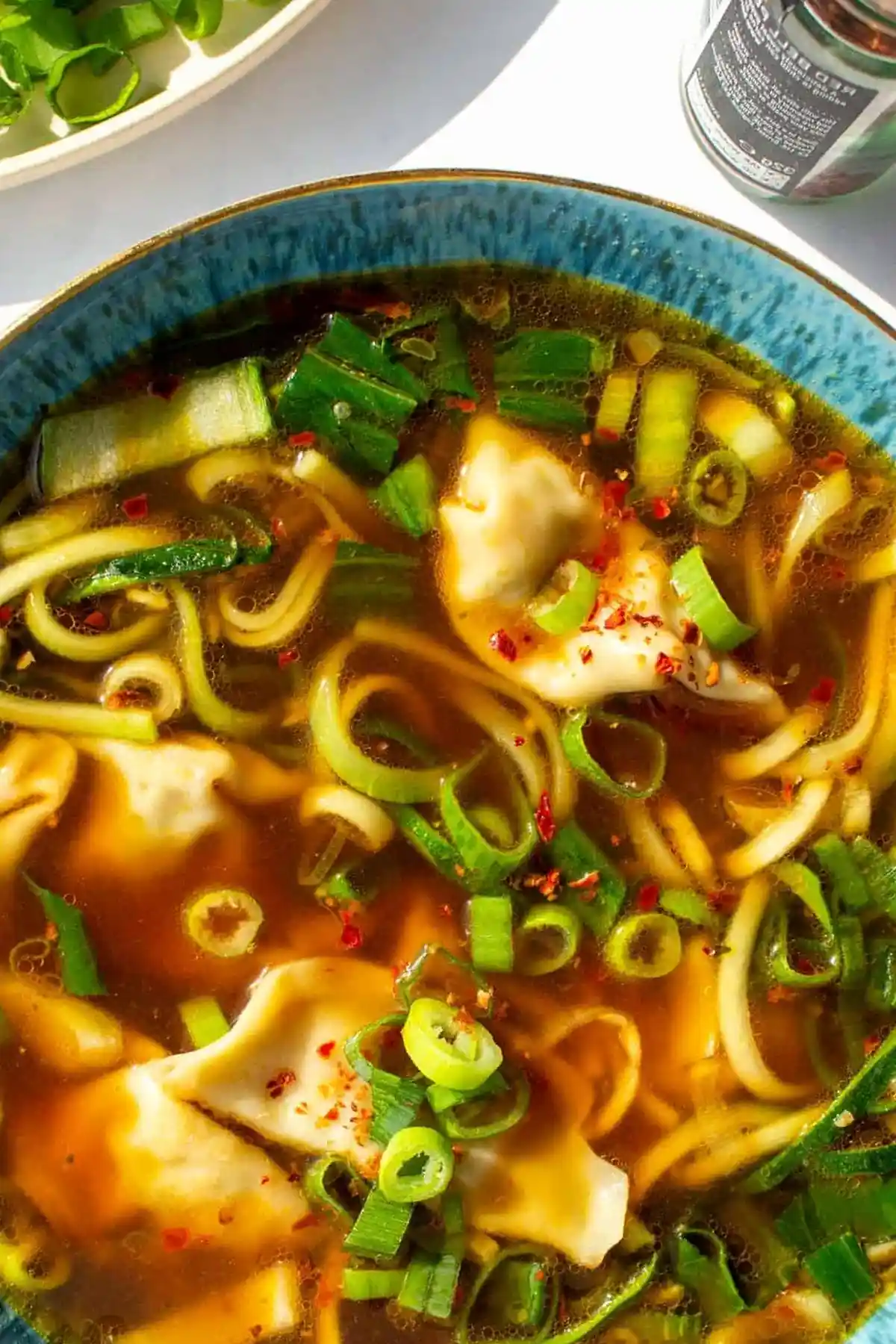
This quick gyoza soup is an ideal solution for a fast lunch or dinner. It combines savory dumplings with nutrient-dense vegetables in a flavorful, aromatic broth.
List of ingredients
- 5 vegetable gyozas – frozen dumplings filled with vegetables and tofu.
- 2 spring onions, thinly sliced – divided into white and green parts.
- ½ – 1 bulb pack choi, sliced into chunks – for fresh, leafy greens.
- 20 g ginger, finely grated – adds a zesty, warm flavor.
- 1 clove garlic, minced – provides a pungent aromatic base.
- ½ courgette, spiralised – creates healthy vegetable noodles.
- 500 ml vegetable stock – the savory liquid base.
- 1 tbsp soy sauce – for a salty, umami punch.
- 1 tbsp chilli oil – adds heat and richness.
- Salt & pepper – to taste for final seasoning.
step-by-step instructions
- Sauté aromatics: Add the chilli oil into a medium sized saucepan on a low heat. Add half of the thinly sliced spring onion (specifically the whiter end) into the pan and season with salt, then fry for a couple of minutes.
- Add ginger and garlic: Incorporate the minced garlic and grated ginger into the pan and fry for one minute until fragrant.
- Combine ingredients: Add the frozen gyozas, sliced pak choi, spiralised courgette, vegetable stock, and soy sauce to the saucepan.
- Simmer: Stir all the ingredients to combine and place a lid on the saucepan. Allow the soup to simmer for approximately 7 minutes.
- Final touch: Serve the soup in bowls and finish with a sprinkle of the remaining green spring onion and some chilli flakes.
Broth Customization and Flavor Profiles
Enhancing Umami with Miso Paste
To add a deeper, fermented saltiness to your broth, stir in one tablespoon of white or red miso paste. It is best to whisk the miso with a small amount of warm broth before adding it to the pot to avoid clumps. Do not boil the miso for too long, as high heat can destroy its delicate probiotic properties.
Adjusting Saltiness with Different Soy Sauces
While regular soy sauce works well, you can use Tamari for a richer, gluten-free alternative. For a darker, slightly sweeter profile, a splash of dark soy sauce adds a beautiful mahogany color to the liquid. Always taste the broth before adding extra salt, as soy sauce and stock are already sodium-rich.
Adding Toasted Sesame Oil for Nutty Depth
Drizzling a teaspoon of toasted sesame oil over the finished soup adds a professional, nutty aroma. This oil is best used as a garnish rather than a cooking base to preserve its volatile aromatic compounds. It complements the ginger and garlic perfectly, rounding out the sharpness of the broth.
Incorporating Rice Vinegar for Brightness
If the broth feels too heavy or savory, a teaspoon of rice vinegar can provide a necessary acidic balance. The subtle tang cuts through the richness of the chilli oil and lifts the overall flavor profile. Add this at the very end of the cooking process to keep the flavor fresh.
Using Mushroom Powder for Earthiness
Adding a pinch of dried mushroom powder or a small amount of dashi powder increases the earthiness of the soup. This creates a more complex flavor that mimics traditional Japanese restaurant broths. It enhances the natural taste of the vegetable dumplings and pak choi.
Protein Pairings and Substitutions
Poaching Tender Chicken Breast
For a heartier meal, add thinly sliced chicken breast to the broth during the simmering stage. The gentle heat poaches the meat, keeping it tender and juicy without needing to sear it separately. Ensure the chicken is sliced very thin so it cooks through within the seven-minute simmer time.
Adding Cubed Firm Tofu
To keep the dish plant-based while increasing protein, add cubes of firm or extra-firm tofu. You can add them straight from the package for a soft texture or pan-fry them separately for a golden crust. Tofu absorbs the flavors of the soy and ginger broth exceptionally well.
Using Edamame for Plant-Based Protein
Shelled edamame beans are a great addition for both texture and nutritional value. Stir them in during the last two minutes of cooking so they remain bright green and slightly firm. They add a pleasant pop of sweetness that contrasts with the savory soy base.
Adding Soft Boiled Eggs
A marinated soft-boiled egg, known as Ajitsuke Tamago, is a classic topping for Japanese soups. Boil an egg for six and a half minutes, cool it in an ice bath, and peel it. Slice the egg in half and place it on top of the gyoza just before serving.
Vegetable Add-ins for More Nutrition
Sautéing Sliced Shiitake Mushrooms
Shiitake mushrooms add a meaty texture and a rich, savory flavor to the soup. Sauté the sliced mushrooms along with the garlic and ginger to brown them slightly before adding the stock. This step caramelizes the sugars in the mushroom, deepening the overall taste.
Adding Shredded Carrots for Color
Julienned or shredded carrots provide a vibrant orange color and a subtle natural sweetness. Add them at the same time as the courgette to ensure they soften while retaining a slight bite. Carrots are an affordable way to bulk up the nutritional content of the meal.
Using Baby Spinach for a Fresh Finish
Fresh baby spinach is a quick way to add more greens without changing the flavor of the broth. Stir the spinach leaves in during the final 30 seconds of cooking until they just begin to wilt. This keeps the leaves vibrant and preserves their vitamin content.
Incorporating Frozen Sweetcorn
Adding a handful of sweetcorn kernels introduces a burst of sweetness and a different textural element. Frozen corn can be added directly to the simmering pot along with the gyozas. It pairs exceptionally well with the spicy notes of the chilli oil.
Adding Sliced Bamboo Shoots
Canned bamboo shoots offer a distinct crunch and a mild, earthy flavor typical of East Asian cuisine. Slice them thinly and add them during the simmering process. They provide a structural contrast to the soft dumplings and tender courgette.
Using Mange Tout for Crunch
Mange tout or snow peas add a crisp, fresh element to the soup. To avoid overcooking them, add the peas in the final minute of simmering. This ensures they stay bright green and provide a satisfying snap when eaten.
The Best Noodle Options
Using Wheat-Based Ramen Noodles
Fresh or dried ramen noodles turn this light soup into a filling main course. Boil the noodles separately or add them to the pot if they have a short cooking time. They provide a chewy texture that complements the soft wrappers of the gyoza.
Opting for Rice Noodles for Gluten-Free Needs
Rice sticks or thin rice vermicelli are excellent gluten-free alternatives for those avoiding wheat. Soak the noodles in warm water before adding them to the broth for a few seconds. They are light and slippery, absorbing the savory flavors of the stock.
Incorporating Soba Buckwheat Noodles
Soba noodles offer a nutty, earthy flavor and a higher protein content than standard white noodles. Because soba can release starch and thicken the broth, it is often best to cook them separately and rinse them. Place them in the bowl before pouring the hot soup over them.
Using Glass Noodles for a Light Texture
Glass noodles, made from mung bean or potato starch, are almost translucent and very light. They are ideal for those who want a filling meal without the heaviness of wheat noodles. They slide easily between the vegetables and dumplings, creating a cohesive dish.
Professional Cooking Techniques
Managing the Sauté Process for Aromatics
When frying garlic and ginger, keep the heat on a low to medium setting to prevent burning. Burnt garlic becomes bitter and can ruin the delicate balance of the broth. Stir constantly and move quickly to the next step as soon as the aromatics smell fragrant.
Handling Frozen Gyoza Correctly
Do not thaw the gyozas before adding them to the soup, as this can make the wrappers sticky and prone to tearing. Adding them frozen ensures they maintain their shape and a better texture during the boiling process. The broth will return to a simmer quickly after the initial temperature drop.
Perfecting the Courgette Spiralization
Use a spiralizer or a julienne peeler to create consistent ribbons of courgette. This ensures that all the vegetable noodles cook evenly and at the same rate as the other ingredients. Avoid overcooking the courgette to prevent it from becoming mushy.
Balancing Heat and Simmer Times
Use a lid while simmering to trap heat and steam, which cooks the frozen dumplings more efficiently. A gentle simmer is preferable to a rolling boil, as it prevents the dumplings from breaking apart. Seven minutes is typically the sweet spot for perfectly cooked gyoza.
Storage, Reheating, and Meal Prep
Optimal Storage Methods in the Fridge
If you have leftovers, store the soup in an airtight glass container in the refrigerator for up to 24 hours. Keep the fresh garnishes, like spring onions and chilli flakes, in a separate container. This prevents the greens from wilting or losing their color in the fridge.
Best Practices for Reheating Soup
Reheat the soup gently on a stovetop over medium-low heat rather than using a microwave. High microwave heat can cause the dumpling wrappers to become rubbery or burst. Stir gently while heating to avoid damaging the cooked vegetables and gyozas.
Meal Prepping Components Separately
For a faster weeknight meal, prep your vegetables and aromatics in advance. Slice the spring onions, grate the ginger, and spiralize the courgette, storing them in separate containers. When ready to eat, you can assemble the soup in under ten minutes.
Avoiding Dumpling Sogginess
To prevent dumplings from becoming too soft during storage, you can cook the broth and vegetables first and store them separately from the gyozas. When reheating, simply drop the frozen dumplings into the boiling broth. This ensures the wrappers stay intact and the texture remains optimal.
Troubleshooting and FAQs
Why are my dumplings falling apart?
Dumplings usually break if the broth is boiling too violently or if they were stirred too vigorously. Keep the soup at a gentle simmer and avoid over-stirring once the gyoza are in the pot. Using a lid helps maintain a steady temperature without needing a high boil.
How to make the broth thicker?
If you prefer a thicker consistency, you can create a small slurry of cornstarch and water. Stir one teaspoon of this mixture into the simmering broth and cook for another minute. This will give the soup a silky, slightly thickened texture typical of some dumpling soups.
Can I use different types of dumplings?
Yes, you can use any type of frozen dumpling, such as wontons or potstickers. Just be mindful of the filling; ensure they are vegetable or chicken-based to fit your dietary preferences. Adjust the simmering time based on the size of the dumplings used.
What if I don’t have a spiralizer?
If you lack a spiralizer, you can use a standard vegetable peeler to create long, thin ribbons of courgette. Alternatively, you can simply slice the courgette into thin half-moons. Both methods work well and provide the same nutritional benefits.
Print
Fast Japanese Vegetable Gyoza Soup
- Total Time: 10 minutes
- Yield: 1 serving 1x
- Diet: Vegetarian
Description
This 10 minute gyoza soup is the perfect speedy lunch/dinner. Similar to a Japanese dumpling soup, it’s packed with veg.
Ingredients
- 5 vegetable gyozas
- 2 spring onions, thinly sliced
- ½ – 1 bulb pack choi, sliced into chunks
- 20 g ginger, finely grated
- 1 clove garlic, minced
- ½ courgette, spiralised
- 500 ml vegetable stock
- 1 tbsp soy sauce
- 1 tbsp chilli oil
- Salt & pepper
Instructions
- Sauté Aromatics: Start by adding the chilli oil into a medium sized saucepan on a low heat. Add ½ of the thinly sliced spring onion (the whiter end) into the pan and season with salt. Fry for a couple of minutes.
- Simmer: Next, add the garlic and ginger to fry for a minute before throwing in all of the ingredients. That’s the gyozas, pak choi, courgette, stock and soy sauce.
- Cook: Stir to combine and pop a lid on top. Simmer for around 7 minutes.
- Garnish: Serve with a sprinkle of spring onion and chilli flakes. Enjoy!
Notes
To increase calories/portion size add ramen or rice noodles to the broth for additional carbohydrates. Increase protein by adding thinly sliced chicken or tofu to poach within the broth. For the vegetarian option, add tofu blocks to cook within the broth or crispy tofu for a vegan alternative. Extra vegetables such as sweetcorn, mange tout, green beans, mushrooms, spring greens, and cabbage can be added to enhance the soup’s flavour and nutritional value.
- Prep Time: 3 minutes
- Cook Time: 7 minutes
- Category: mains
- Method: simmering
- Cuisine: Japanese
Nutrition
- Serving Size: 1 serving
- Calories: 291 kcal
- Sugar: 4 g
- Sodium: 1150 mg
- Fat: 17 g
- Saturated Fat: 3 g
- Unsaturated Fat: 14 g
- Trans Fat: 0 g
- Carbohydrates: 26 g
- Fiber: 5 g
- Protein: 9 g
- Cholesterol: 0 mg
Keywords: gyoza soup, japanese dumpling soup, quick dinner, vegetable gyoza, Japanese cuisine