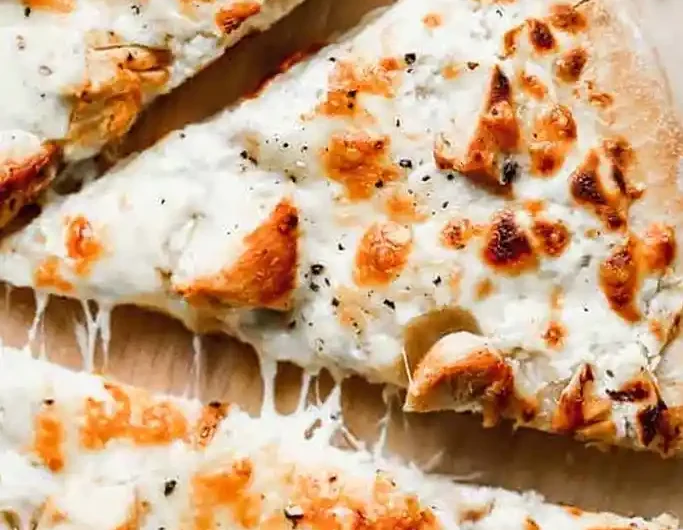
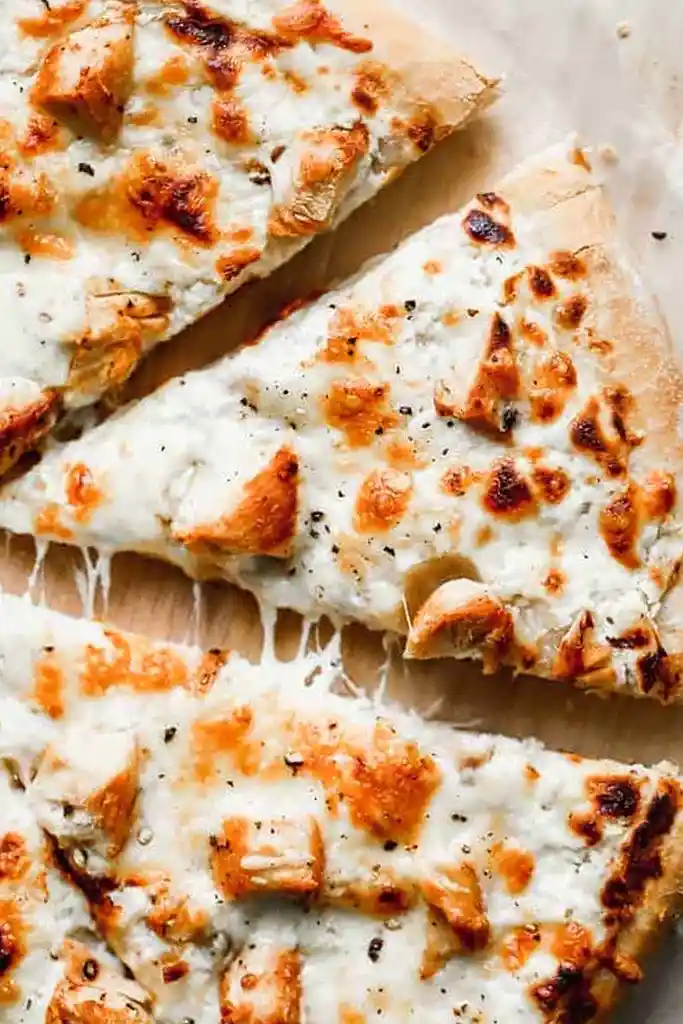
Create a restaurant-quality white pizza at home with this rich and savory chicken alfredo recipe. It features a velvety parmesan sauce and melted mozzarella on a crisp crust for a comforting meal.
List of ingredients
- 1 homemade pizza crust – the base for your pizza.
- 1 Tablespoon unsalted butter – used to sauté the garlic.
- 1 clove garlic, minced – adds a pungent, aromatic depth to the sauce.
- 2 ounces cream cheese, softened and cut into small pieces – provides the creamy thickness.
- 1/2 cup milk – used to thin the sauce to a spreadable consistency.
- 1/3 cup freshly grated parmesan cheese, plus a little extra for topping – adds a salty, nutty flavor.
- 1/4 teaspoon salt – enhances the savory elements.
- 1/4 teaspoon freshly ground black pepper – provides a subtle heat.
- 1 cup cooked chicken, chopped – the primary protein topping.
- 1 cup shredded mozzarella cheese – creates the classic melted cheese layer.
step-by-step instructions
- Make the sauce: Melt butter in a saucepan over medium heat. Add garlic and cook for 30 seconds. Add cream cheese and mix until smooth. Gradually add the milk, stirring until smooth. Stir in parmesan cheese, salt and pepper, then set aside.
- Prepare the pizza crust: Roll or stretch the pizza dough into a large circle. Pre-bake the crust for 4-5 minutes at 425 degrees F on a pizza stone or baking sheet. Skip the pre-bake if you are using a very thin crust.
- Assemble the pizza: Spoon the prepared alfredo sauce evenly over the crust. Add a thin layer of mozzarella, then the chopped chicken, followed by more mozzarella, and a final sprinkle of extra parmesan cheese.
- Bake the pizza: Place the pizza in the oven at 425 degrees F. Bake for 8-12 minutes until the cheese is melted and bubbly.
Mastering the Alfredo Sauce Base
Softening Cream Cheese for Smoothness
Ensure your cream cheese is completely softened to room temperature before adding it to the pan. This prevents the sauce from becoming lumpy and ensures a velvety texture. If you are in a hurry, microwave the cream cheese in short bursts.
Using Freshly Grated Parmesan
Grate your own parmesan cheese from a block rather than using pre-shredded versions. Fresh cheese melts more smoothly and provides a more intense flavor. Pre-shredded cheeses often contain cornstarch or cellulose that can make the sauce grainy.
Achieving the Right Sauce Consistency
If the sauce seems too thick after adding the milk, whisk in an extra tablespoon of milk at a time. The goal is a consistency that is thick enough to stay on the pizza but thin enough to spread easily. Avoid over-thinning, as this can lead to a soggy crust.
Preventing Garlic from Burning
Only sauté the garlic for about 30 seconds before adding the cream cheese. Garlic burns quickly at medium heat, which can introduce a bitter taste to the sauce. The cream cheese immediately lowers the temperature and stops the browning process.
Balancing the Salt Levels
Taste the sauce before adding it to the pizza, but remember that parmesan and mozzarella are naturally salty. Start with the recommended 1/4 teaspoon of salt and adjust only if needed. Over-salting the sauce can overpower the flavor of the chicken.
Optimizing Your Pizza Crust
The Benefit of Pre-Baking
Pre-baking the crust for 4-5 minutes creates a structural barrier that prevents the sauce from soaking into the dough. This ensures the center of the pizza remains crisp rather than gummy. This step is essential for thicker doughs or high-moisture toppings.
Proper Dough Stretching Techniques
Stretch the dough gently from the center outward to maintain a consistent thickness. Avoid over-working the dough, as this can develop too much gluten and make the crust chewy. Using your fingers instead of a rolling pin helps keep air bubbles in the crust.
Using a Pizza Stone for Heat
A pizza stone absorbs and distributes heat more evenly than a standard baking sheet. Preheat the stone in the oven for at least 30 minutes before sliding the pizza on. This results in a professional, charred bottom and a faster bake time.
Flouring the Work Surface
Use a light dusting of flour or cornmeal on your counter and baking sheet. This prevents the dough from sticking and allows you to slide the pizza into the oven easily. Cornmeal specifically adds a traditional crunch to the underside of the crust.
Choosing the Right Oven Rack
Place your oven rack in the lower third of the oven to ensure the crust gets direct heat. This helps the bottom cook through at the same rate as the cheese on top. If the top browns too quickly, move the rack slightly lower.
Protein and Topping Enhancements
Preparing the Chicken Correctly
Use chicken that has been grilled, roasted, or poached to ensure it is fully cooked before going on the pizza. Sautéing the chicken with a bit of garlic or Italian seasoning adds an extra layer of flavor. Cut the chicken into small, uniform cubes for even distribution.
Using Rotisserie Chicken for Speed
Store-bought rotisserie chicken is an excellent time-saver for this recipe. Simply shred or chop the breast meat and ensure it is dried of excess moisture. This prevents the sauce from becoming watery during the baking process.
Adding Sautéed Spinach
Fresh spinach pairs well with alfredo sauce but must be sautéed first. Squeeze out all excess water after wilting the spinach to avoid a soggy pizza. Layer the spinach beneath the chicken for the best structural support.
Incorporating Mushrooms
Sauté sliced mushrooms in a pan until they release their moisture and turn golden brown. Adding raw mushrooms to the pizza can release too much water during baking. Browned mushrooms add an earthy depth that complements the creamy sauce.
Using Different Cheese Blends
While mozzarella is the standard, you can mix in a small amount of provolone or fontina. These cheeses melt beautifully and add a sharper flavor profile to the pizza. Keep the total amount of cheese balanced to prevent the toppings from sliding off.
Advanced Baking and Temperature Control
Preheating for Consistent Results
Allow your oven to reach a full 425 degrees F before putting the pizza inside. Using an oven thermometer can help you verify that the internal temperature is accurate. Putting a pizza into a cold oven leads to a pale crust and unmelted cheese.
Managing Oven Hot Spots
Most ovens have areas that are hotter than others, which can cause one side of the pizza to burn. Rotate the baking sheet 180 degrees halfway through the baking time. This ensures an even golden-brown color across the entire crust.
Identifying the Perfect Doneness
Look for the cheese to be bubbly and slightly browned in small spots. The edges of the crust should be a light golden brown and feel firm to the touch. Avoid over-baking, as this can dry out the chicken and make the sauce greasy.
Using the Broiler for a Finished Look
If the crust is cooked but the cheese isn’t browned enough, turn on the broiler for 1-2 minutes. Watch the pizza very closely during this time to prevent the cheese from burning. This adds a professional, toasted finish to the parmesan topping.
Resting the Pizza Before Slicing
Let the pizza rest on the baking sheet or a wire rack for 2-3 minutes before cutting. This allows the cheese to set slightly and prevents the toppings from sliding. It also makes the slicing process much cleaner and easier.
Storage and Preservation Tips
Refrigerating Leftover Pizza
Store unused slices in an airtight container or wrap them tightly in foil. Keep them in the refrigerator for up to 3-4 days. Ensure the pizza has cooled completely before sealing to prevent condensation from making the crust soggy.
Freezing Unbaked Pizza Dough
If you make extra dough, wrap it tightly in plastic wrap and store it in a freezer-safe bag. Thaw the dough in the refrigerator overnight before using it for a future pizza. This preserves the yeast activity and dough texture.
Storing Extra Alfredo Sauce
Leftover sauce can be kept in a sealed jar in the refrigerator for 1-2 days. Gently reheat it on the stove over low heat, adding a splash of milk to loosen the consistency. Do not boil the sauce, as it may separate.
Freezing Assembled Pizzas
You can freeze the pizza after assembly but before baking. Wrap the pizza tightly in plastic wrap and then a layer of aluminum foil. Bake directly from frozen, adding 5-10 minutes to the original cook time.
Air-Tight Packaging Methods
Using vacuum-seal bags for frozen dough or pre-cooked chicken prevents freezer burn. This keeps the ingredients tasting fresh for several weeks. Always label your bags with the date of preparation.
Reheating Methods for Quality
Oven Reheating for Maximum Crispiness
Place leftover slices on a baking sheet and heat at 350 degrees F for 5-10 minutes. This is the best method for restoring the crispness of the crust. Avoid using high heat, which can dry out the chicken.
Using a Toaster Oven
A toaster oven is ideal for reheating a single slice without heating up the entire kitchen. Set it to a medium heat and toast until the cheese is bubbly. This provides a similar result to a full-sized oven.
Microwave Reheating Tips
If using a microwave, place a small glass of water next to the pizza slice. This creates steam that prevents the crust from becoming too hard or chewy. Heat in 30-second intervals to avoid overcooking the toppings.
Air Fryer Reheating
Air fryers are excellent for restoring the crunch of a pizza crust. Heat slices at 350 degrees F for 3-4 minutes. Be careful not to overcrowd the basket to allow air to circulate evenly.
Troubleshooting Common Issues
Fixing a Runny Sauce
If your alfredo sauce is too thin, simmer it on low heat for a few extra minutes to reduce the liquid. You can also stir in a small amount of extra grated parmesan to thicken it. Ensure the heat remains low to avoid curdling the dairy.
Preventing a Soggy Crust
A soggy crust is usually caused by too much sauce or high-moisture toppings. Always pre-bake the crust and pat your chicken dry with paper towels. Use a wire rack to cool the pizza instead of leaving it on the pan.
Managing Cheese That Won’t Melt
If the cheese isn’t melting, your oven may not be reaching the target temperature. Ensure you are using shredded mozzarella rather than a low-moisture block that hasn’t been grated. A quick blast under the broiler usually solves this problem.
Avoiding Overcooked Toppings
Since the chicken is already cooked, it only needs to be heated through. If the chicken is drying out, try placing it under a layer of mozzarella cheese. This protects the meat from the direct heat of the oven.
Frequently Asked Questions
Can I use pre-cooked chicken?
Yes, you can use any pre-cooked chicken, including grilled breasts or rotisserie chicken. Just ensure it is chopped into small pieces and patted dry before adding it to the pizza.
Which milk is best for the sauce?
Whole milk is recommended for the creamiest result. You can substitute with heavy cream for a richer sauce or 2% milk for a slightly lighter version.
How do I store the leftover sauce?
Store leftover sauce in an airtight container in the refrigerator for up to two days. Reheat it slowly on the stove with a small amount of milk to restore the texture.
Can I use frozen pizza crust?
Yes, you can use a store-bought frozen crust. Follow the package instructions for pre-baking before adding the alfredo sauce and toppings.
What is the best chicken cut for pizza?
Chicken breast is the most common choice for its lean texture and mild flavor. However, chicken thighs are also excellent as they stay juicier during the baking process.
Print
Creamy Chicken Alfredo Pizza
- Total Time: 30 minutes
- Yield: 8 servings 1x
- Diet: General
Description
Creamy homemade alfredo sauce topped with grilled chicken and mozzarella makes a perfect homemade Chicken Alfredo Pizza.
Ingredients
- 1 homemade pizza crust
- 1 Tablespoon unsalted butter
- 1 clove garlic, minced
- 2 ounces cream cheese, softened, cut into small pieces
- 1/2 cup milk
- 1/3 cup freshly grated parmesan cheese, plus a little extra for topping
- 1/4 teaspoon salt
- 1/4 teaspoon freshly ground black pepper
- 1 cup cooked chicken, chopped
- 1 cup shredded mozzarella cheese
Instructions
- Make the sauce: Melt butter in a saucepan over medium heat. Add garlic and cook for 30 seconds. Add cream cheese and mix until smooth. Gradually add the milk, stirring until smooth. Stir in parmesan cheese, salt and pepper. Set aside.
- Prepare Pizza crust: Roll/stretch the pizza dough into a large circle. Pre-bake crust for 4-5 minutes at 425 degrees F. Don’t pre-bake if it’s a thin crust pizza.
- Assemble: Spoon alfredo sauce over the crust. Add a thin layer of mozzarella, then chopped chicken, more mozzarella, and then a sprinkle of extra parmesan cheese.
- Bake: Bake at 425 degrees F for 8-12 minutes, until cheese is melted and bubbly.
Notes
To make ahead: Make the pizza dough several hours ahead of time and allow to rise in the refrigerator, or prep the alfredo sauce ahead of time and store it in the refrigerator for 1-2 days. For freezing: Freeze baked or unbaked pizza dough, allow to thaw on the counter, then top with sauce and toppings.
- Prep Time: 10 minutes
- Cook Time: 20 minutes
- Category: Main Course
- Method: Baking
- Cuisine: American
Nutrition
- Serving Size: 1 slice
- Calories: 447 kcal
- Sugar: 2 g
- Sodium: 500 mg
- Fat: 31 g
- Saturated Fat: 10 g
- Unsaturated Fat: 21 g
- Trans Fat: 0 g
- Carbohydrates: 29 g
- Fiber: 2 g
- Protein: 13 g
- Cholesterol: 67 mg
Keywords: chicken alfredo pizza, homemade pizza, creamy alfredo sauce, chicken pizza