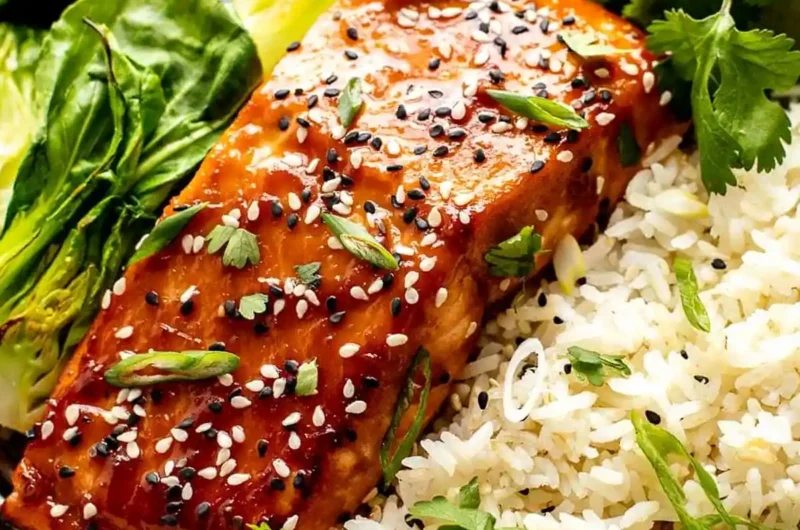
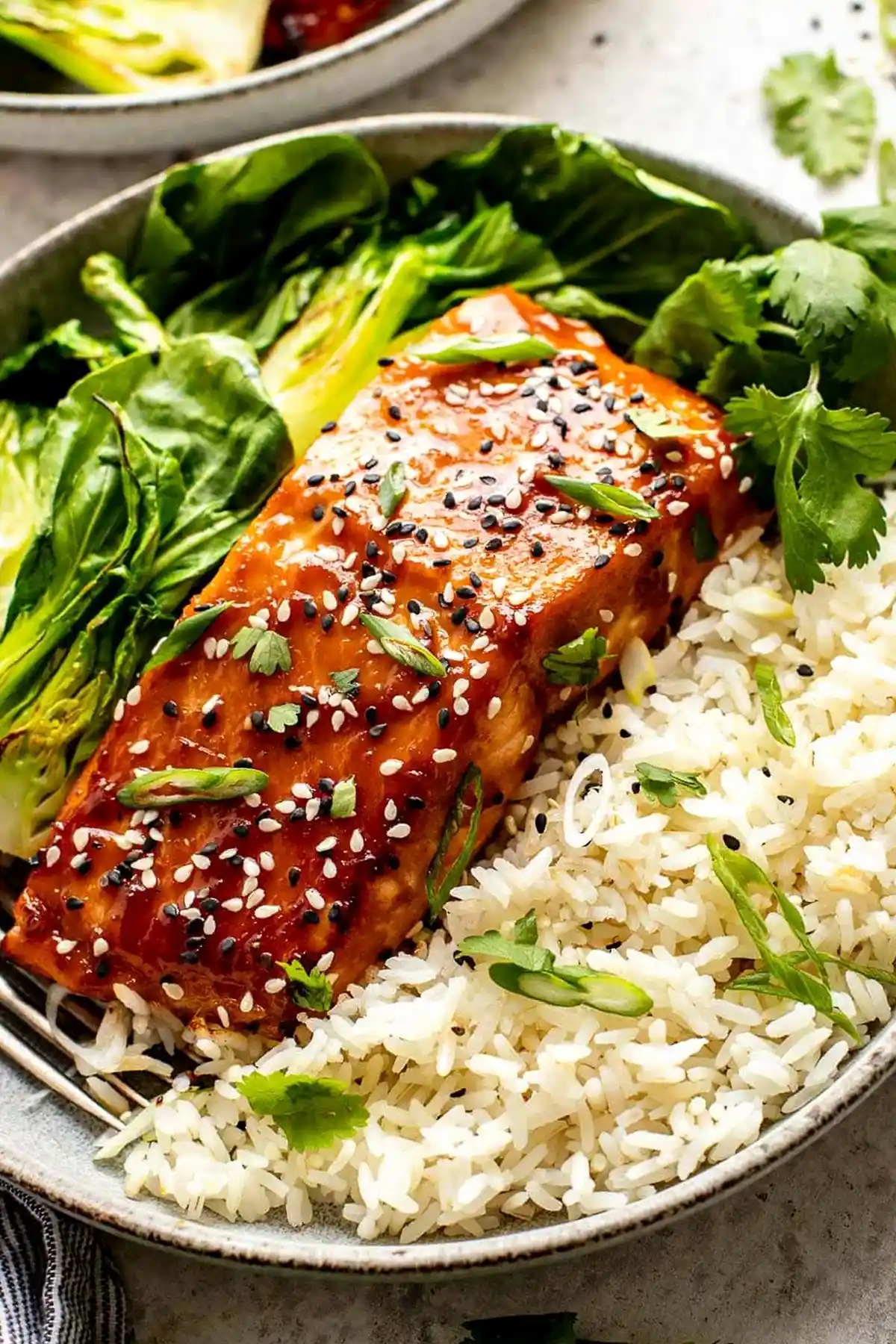
This savory and sweet miso-glazed salmon is a fast-cooking meal that delivers deep umami flavor in minutes. It is an ideal choice for healthy weeknight dinners that require minimal effort but produce restaurant-quality results.
List of ingredients
- 1/4 cup (60g) white miso paste – provides a mild, salty, and fermented base.
- 1/4 cup (50g) granulated sugar – balances the saltiness (can be swapped for honey or maple syrup).
- 1/4 cup (60ml) non-alcoholic mirin substitute – a mix of rice vinegar and a pinch of sugar for sweetness and acidity.
- 2 Tbsp (35ml) low-sodium soy sauce – adds depth (use tamari for a gluten-free option).
- 1 Tbsp (15ml) sesame oil – adds a rich, toasted nutty aroma.
- 2 tsp ginger paste – provides a fresh, pungent heat (freshly grated ginger also works).
- 4 (6 oz) salmon fillets – skin on or off, depending on your preference.
- Thinly sliced scallions, black and white sesame seeds, and fresh cilantro – used for final garnishing.
step-by-step instructions
- Whisk the marinade: Combine the white miso paste, granulated sugar, non-alcoholic mirin substitute, soy sauce, sesame oil, and ginger paste in a mixing bowl. Whisk thoroughly until the sugar is dissolved and the mixture is smooth.
- Marinate the fish: Place your salmon fillets in a large airtight container or a Ziplock bag. Reserve 2 tablespoons of the prepared marinade for later, then pour the remaining sauce over the salmon. Seal the container and marinate for 30 minutes, up to a maximum of 2 hours.
- Prepare the oven: Preheat your broiler to the high setting. Line a baking sheet with parchment paper or aluminum foil and coat the surface with nonstick cooking spray.
- Arrange the fillets: Place the marinated salmon fillets on the pan skin side down. Allow excess marinade to drip off and rub away any thick clumps of paste with your hands to prevent the sugars from burning.
- Broil the salmon: Place the pan under the broiler for 6-8 minutes. Rotate the pan once halfway through the cooking time to ensure an even char. Cook until the internal temperature reaches 125°F (52°C).
- Finish and serve: Brush the reserved 2 tablespoons of marinade over the top of the cooked fillets. Garnish immediately with sliced scallions, sesame seeds, and fresh cilantro.
Expert Tips for Perfect Broiling
Bring Salmon to Room Temperature
Remove the salmon fillets from the refrigerator about 15-20 minutes before cooking. This allows the fish to reach a more uniform temperature, which prevents the outside from overcooking before the center is done.
Adjust Broiler Rack Position
Most broilers are positioned 3 to 5 inches from the heating element. If your rack is closer, reduce the cooking time slightly to avoid charring the miso glaze too quickly.
Use a Digital Meat Thermometer
The most reliable way to ensure the salmon is tender and flaky is to check the internal temperature. Pull the fish from the oven at 125°F (52°C) as carryover cooking will raise the temperature slightly while resting.
Ensure Parchment Paper Stays Flat
Parchment paper can ignite if it curls up and touches the broiler element. Ensure the paper is pressed firmly against the baking sheet and does not extend too far up the sides of the pan.
Ingredient Substitutions and Variations
Choosing Different Miso Pastes
White miso (shiro miso) is the mildest and sweetest option, making it ideal for this recipe. Yellow miso offers a stronger fermented taste, while red miso is the saltiest and most intense; if using red miso, reduce the soy sauce slightly.
Alternative Sweeteners
You can replace granulated sugar with honey or maple syrup for a different flavor profile. Note that liquid sweeteners may make the marinade thinner, so you may need to rub more of it off before broiling.
Gluten-Free Modifications
To make this recipe gluten-free, replace the low-sodium soy sauce with tamari. Ensure your miso paste is certified gluten-free, as some brands contain barley or other grains.
Fresh Ginger vs. Ginger Paste
Ginger paste is convenient and blends smoothly into the marinade. If using fresh ginger, grate it finely to avoid large chunks of ginger burning on the surface of the fish.
Serving Ideas and Side Dishes
Perfect Rice Pairings
Serve this salmon over a bed of steamed short-grain white rice or brown rice. The rice absorbs the excess miso glaze and balances the intensity of the seasonings.
Blistered Shishito Peppers
Sauté shishito peppers in a hot pan with oil until the skins blister and char. Toss them with a splash of soy sauce and minced garlic for a traditional Japanese-inspired side.
Roasted Broccoli or Edamame
Broil broccoli florets on a separate tray with olive oil and salt until the edges are crisp. Alternatively, steam frozen edamame and drizzle them with a touch of sesame oil and sea salt.
Noodle Accompaniments
This dish pairs well with soba, udon, or ramen noodles. Simply toss the cooked noodles in a small amount of sesame oil and soy sauce to complement the glazed salmon.
Storage and Reheating Guidelines
Refrigerating Leftovers
Store cooked salmon in an airtight container in the refrigerator for up to 4 to 5 days. Keep the fish separated with parchment paper if storing multiple fillets to prevent them from sticking.
Gentle Microwave Reheating
To reheat, place a fillet on a microwave-safe plate and cover it with a damp paper towel. Heat on medium power for about 60 seconds to avoid drying out the fish.
Freezing Cooked Salmon
Freeze cooked fillets in a single layer on a baking sheet until solid, then transfer them to a vacuum-sealed bag. Store for up to 3 months for long-term preservation.
Proper Thawing Process
Thaw frozen salmon fillets slowly in the refrigerator overnight. This preserves the texture of the fish better than rapid thawing methods.
Troubleshooting and Common Issues
Preventing the Glaze from Burning
Miso and sugar both burn quickly under high heat. To prevent black charred spots, wipe off thick clumps of marinade from the fillets before placing them under the broiler.
Handling Overcooked Salmon
Overcooked salmon becomes dry and chalky. If you miss the 125°F mark, serve the fish with an extra dollop of the reserved marinade or a squeeze of lemon to add moisture.
Dealing with Sticky Pans
Ensure you use a generous amount of nonstick cooking spray on your foil or parchment. If the fish sticks, let it rest for two minutes before attempting to lift it with a spatula.
Fixing Uneven Cooking
Unevenly thick fillets will cook at different rates. If your salmon has a significant slope, rotate the pan more frequently or slightly adjust the position of thinner pieces away from the heat center.
Frequently Asked Questions
Can I marinate the salmon overnight?
It is not recommended to marinate beyond 2 hours. Because miso is high in salt, over-marinating can draw too much moisture out of the fish, resulting in a toughened texture.
Is it better to keep the skin on?
Keeping the skin on helps protect the fillet from the direct heat of the broiler, often resulting in a juicier piece of fish. It also provides a nice textural contrast.
How do I know when the salmon is medium?
Use a digital thermometer to hit 125°F (52°C). Visually, the fish should be opaque on the outside but still slightly translucent in the very center of the thickest part.
Can I use this marinade on other fish?
Yes, this glaze works well with other firm fish like cod, halibut, or arctic char. Be aware that thinner fish will cook significantly faster than salmon, so check the temperature earlier.
What if I don’t have a broiler?
You can bake the salmon at 400°F (200°C) for 10-12 minutes. However, you will lose the characteristic charred finish that the broiler provides.
Print
Quick Broiled Miso-Glazed Salmon
- Total Time: 43 minutes
- Yield: 4 servings 1x
- Diet: Gluten-free
Description
This Miso Salmon recipe is sweet and savory, but perfectly balanced, and best served with white rice and blistered veggies. Broil fresh salmon fillets after a quick marinade for an easy weeknight meal that is special enough to impress friends and family.
Ingredients
- 1/4 cup (60g) white miso paste
- 1/4 cup (50g) granulated sugar
- 1/4 cup (60ml) apple juice or white grape juice
- 2 Tbsp (35ml) low-sodium soy sauce or tamari
- 1 Tbsp (15ml) sesame oil
- 2 tsp ginger paste or fresh chopped ginger
- 4 (6 oz) salmon fillets
- Thinly sliced scallions, black and white sesame seeds, and cilantro for garnish
Instructions
- Make the marinade: Whisk together white miso paste, granulated sugar, apple juice, soy sauce, sesame oil, and ginger paste in a mixing bowl.
- Marinate the salmon: Place salmon fillets in a large container or Ziplock bag, reserve 2 Tbsp of marinade, pour the rest over the fish, and marinate for 30 minutes to 2 hours.
- Cook the salmon: Preheat the broiler to high, line a sheet pan with greased parchment or aluminum foil, place fillets skin side down, and broil for 6-8 minutes, rotating the pan halfway through, until the internal temperature reaches 125°F (52°C).
- Finish and serve: Brush the fillets with the remaining reserved marinade and garnish with scallions, sesame seeds, and fresh cilantro.
Notes
Parchment paper is flammable—use caution when broiling and keep it flat. Use low-sodium soy sauce to control salt. Refrigerate leftovers airtight for 4–5 days. Reheat gently in the microwave.
- Prep Time: 5 minutes
- Cook Time: 8 minutes
- Category: Dinner
- Method: Broiling
- Cuisine: Japanese
Nutrition
- Serving Size: 1 fillet
- Calories: 383 kcal
- Sugar: 17 g
- Sodium: 1118 mg
- Fat: 15 g
- Saturated Fat: 2 g
- Unsaturated Fat: 11 g
- Trans Fat: 0 g
- Carbohydrates: 23 g
- Fiber: 1 g
- Protein: 37 g
- Cholesterol: 94 mg
Keywords: broiled salmon recipe, chef-tested dinner, elevated salmon recipe, miso glazed salmon, miso marinade, restaurant-worthy dinner