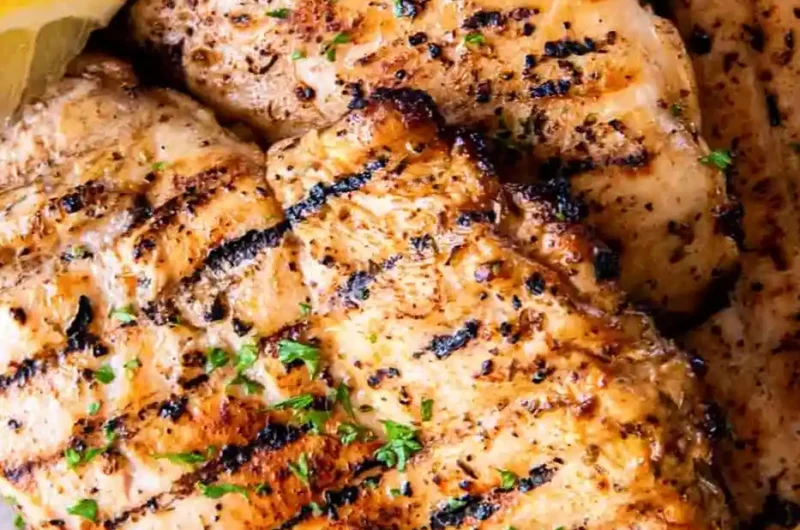
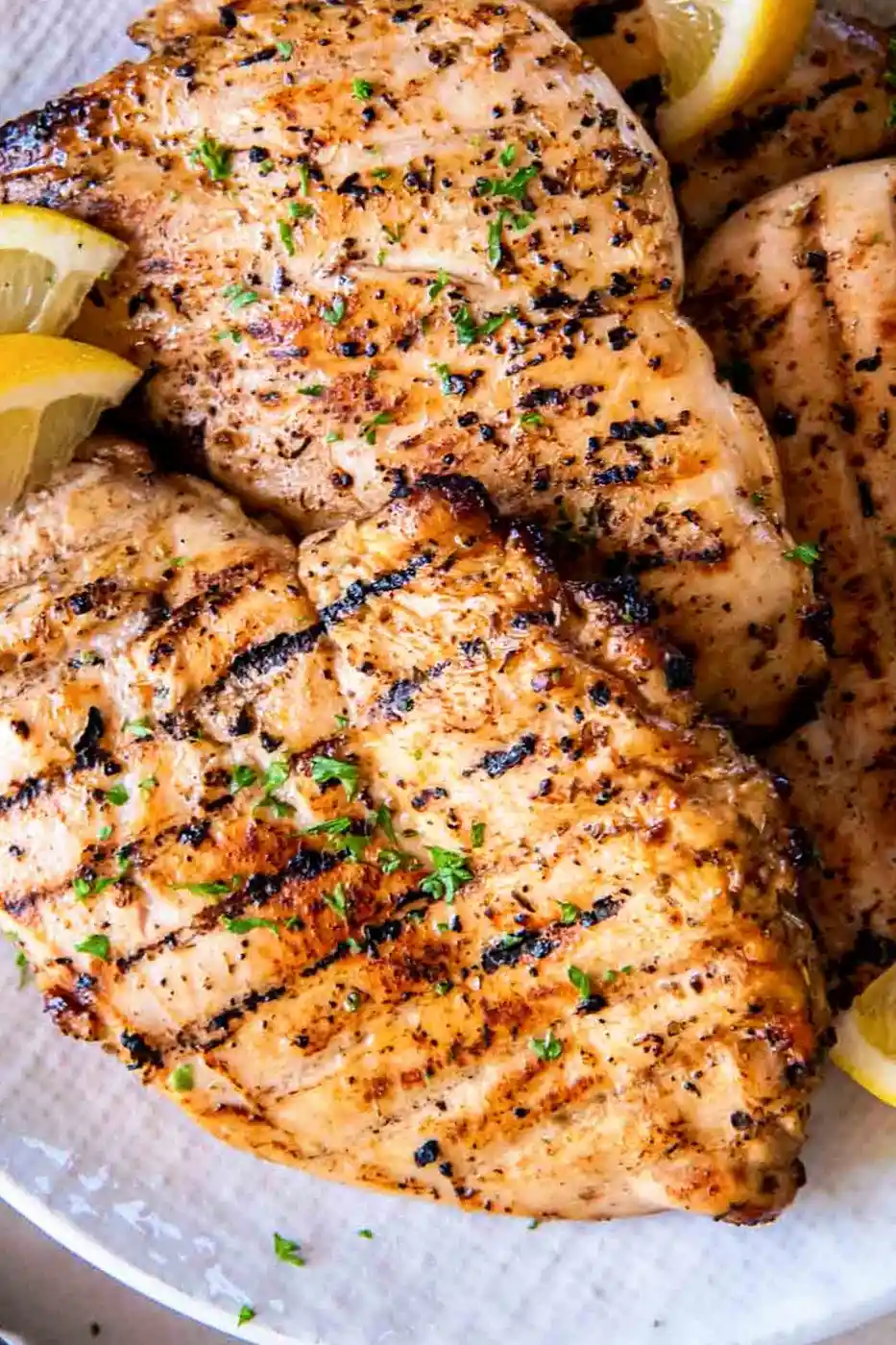
This method produces tender, flavorful grilled chicken breasts that stay juicy every time. By combining a balanced acid-based marinade with a few key grilling techniques, you can avoid the common problem of dry meat.
List of ingredients
- ¼ cup olive oil – provides moisture and prevents sticking.
- ¼ cup fresh lemon juice – tenderizes the meat and adds brightness.
- 3 cloves garlic, minced – adds a pungent, savory depth.
- 1 teaspoon dried oregano – provides an earthy, aromatic herb flavor.
- ¼ teaspoon chili powder – adds a hint of warmth without being spicy.
- ½ teaspoon salt – enhances all other flavors.
- ½ teaspoon pepper – adds a subtle spicy bite.
- 4 boneless, skinless chicken breasts, about 2 pounds – the main protein source.
step-by-step instructions
- Prepare the marinade: Combine the olive oil, lemon juice, garlic, oregano, chili powder, salt, and pepper in a small bowl. Whisk the mixture until all ingredients are well combined.
- Even out the meat: Place the chicken breasts in a zip-top plastic bag. Use a meat mallet or rolling pin to pound them to an even thickness of about ½-inch.
- Marinate the chicken: Pour the prepared marinade into the bag with the chicken and seal it tightly. Place the bag in a baking dish to catch any leaks, turn the bag to coat all surfaces, and refrigerate for 30 minutes to 2 hours.
- Prepare the grill: Clean the grates of your gas or charcoal grill or prepare an indoor grill pan. Oil the grates and heat the grill to medium-high heat, between 375-450 degrees F.
- Grill the chicken: Remove the chicken from the marinade and discard any leftover liquid. Grill for 5-8 minutes per side until the internal temperature reaches 165 degrees F. Start on a hotter part of the grill for sear marks, then move to lower heat to finish cooking.
- Rest the meat: Remove the chicken from the grill and let it rest on a clean plate for 5 minutes before slicing or serving.
Optimal Grilling Techniques
Achieving Even Thickness with Pounding
Most chicken breasts are teardrop-shaped, meaning one end is much thicker than the other. Pounding the meat to a uniform ½-inch thickness ensures that the thin end does not overcook and dry out while the thick end is still raw. Use the flat side of a meat mallet to gently flatten the meat without tearing the fibers.
Monitoring Internal Temperature
Using an instant-read thermometer is the only way to guarantee the chicken is safe but not overcooked. Pull the meat off the grill exactly when it hits 165 degrees F. Overcooking by even a few degrees can lead to a tough, rubbery texture that is difficult to enjoy.
The Importance of Resting Meat
Resting the chicken for 5 minutes allows the muscle fibers to relax and the juices to redistribute throughout the breast. If you slice the meat immediately, the accumulated juices will run out onto the cutting board, leaving the meat dry. This short wait preserves the internal moisture and improves the overall texture.
Managing Grill Heat Zones
Creating two heating zones on your grill helps achieve a professional sear without burning the outside. Begin by placing the chicken over direct high heat for 2-3 minutes per side to create charred grill marks. Then, move the pieces to a medium-heat zone to finish cooking through slowly.
Understanding the Marinade Components
The Role of Fresh Lemon Juice
Lemon juice contains citric acid, which breaks down the tough proteins in the chicken breast to make it more tender. However, because it is a powerful acid, marinating for longer than 2 hours can actually make the meat mushy or tough. Sticking to the 30-minute to 2-hour window provides the best balance of flavor and texture.
Importance of Olive Oil
Olive oil serves as a carrier for the fat-soluble flavors of the garlic and oregano, helping them penetrate the meat. It also creates a protective barrier on the surface of the chicken, which prevents the meat from sticking to the grill grates. The oil balances the acidity of the lemon juice, resulting in a smoother mouthfeel.
Enhancing Flavor with Garlic and Herbs
Freshly minced garlic provides a sharp, aromatic quality that dried garlic powder cannot replicate. Dried oregano adds a classic Mediterranean profile that pairs naturally with lemon. For a different twist, you can substitute the oregano with an Italian seasoning blend or fresh thyme.
The Effect of Chili Powder
The addition of a small amount of chili powder provides a subtle depth and a rich color to the finished chicken. It does not make the dish spicy, but it adds a complex undercurrent of flavor that complements the lemon. It helps the chicken look more golden-brown once it hits the high heat of the grill.
Managing Marination Time
A minimum of 30 minutes is required for the salt and acid to begin penetrating the meat fibers. For the deepest flavor, 2 hours is ideal, but avoid overnight marinating with this specific recipe. The lemon juice is too acidic for long-term soaking and may negatively alter the protein structure.
Versatile Serving Suggestions
Pairing with Summer Vegetable Salads
This chicken pairs perfectly with a chilled cucumber tomato salad dressed in a light vinaigrette. The coolness of the vegetables balances the charred flavor of the grilled meat. You can also serve it alongside a classic pasta salad with rotini, bell peppers, and olives.
Integrating into Pasta Dishes
Slice the grilled chicken into strips and toss it into a bowl of pesto pasta or a creamy Alfredo. The lemon notes in the chicken cut through the richness of cheese-based sauces. It also works well in a Caprese-style pasta with fresh mozzarella, cherry tomatoes, and basil.
Creating Grilled Chicken Sandwiches
Place a whole chicken breast on a toasted brioche or burger bun with crisp lettuce and sliced red onion. To add creaminess, spread a layer of guacamole or a garlic aioli on the bun. The acidity of the marinade prevents the sandwich from tasting too heavy.
Building Healthy Burrito Bowls
Dice the grilled chicken into small cubes and place them over a base of cilantro lime rice and black beans. Add corn, diced avocado, and a scoop of fresh salsa for a complete meal. This is an excellent way to use the chicken in a high-protein, nutrient-dense format.
Using as a Meal Prep Protein
Cook several extra breasts during your initial grilling session to save time during the week. Store them in airtight containers and use them in wraps, salads, or grain bowls. Reheating them gently ensures they remain a convenient and healthy lunch option.
Storage and Reheating Guidelines
Proper Refrigeration Practices
Once the chicken has cooled to room temperature, place it in a clean, airtight container. Store it in the coldest part of your refrigerator, away from the door. When stored correctly, grilled chicken breasts will remain fresh and safe to eat for up to 3 days.
Recommended Storage Containers
Glass containers with locking lids are the best choice for storing grilled chicken because they do not absorb odors. If using plastic, ensure it is BPA-free and provides a tight seal to prevent the meat from drying out. Avoid stacking the chicken too deeply to prevent the bottom pieces from being crushed.
Best Methods for Reheating
To keep the chicken juicy, avoid the microwave if possible, as it often toughens the meat. Instead, place the chicken in a skillet over medium-low heat with a tablespoon of water or chicken broth. Cover the pan with a lid to create a steam effect that re-hydrates the fibers.
Freezing for Long Term Use
If you cannot eat the chicken within 3 days, you can freeze it for up to 2 months. Wrap the chicken tightly in plastic wrap and then place it in a heavy-duty freezer bag to prevent freezer burn. Thaw the chicken in the refrigerator overnight before reheating in a pan.
Troubleshooting Common Grilling Issues
Preventing Tough or Dry Meat
Toughness is usually a result of two things: uneven thickness or overcooking. Ensure you have pounded the chicken to a consistent ½-inch thickness before marinating. Always use a thermometer to pull the meat at 165 degrees F to avoid the dry texture associated with overcooking.
Managing Exterior Charring
If the outside of the chicken is blackening but the inside is still raw, your grill temperature is too high. Reduce the heat and move the chicken to a cooler area of the grate. Using a small amount of oil on the grates also helps the meat slide easily, preventing it from sticking and burning.
Correcting Overcooked Chicken
If you accidentally overcook the chicken, do not serve it plain. Add a moisture-rich topping such as a dollop of pesto, a spoonful of BBQ sauce, or a drizzle of honey mustard. These sauces add the necessary moisture back into the dish and mask the dryness.
Improving Grill Mark Definition
For those professional-looking crosshatch marks, make sure your grill is fully preheated before adding the meat. Place the chicken down and leave it undisturbed for 3-4 minutes to allow the sear to set. Rotate the chicken 45 degrees halfway through the first side’s cooking time to create the diamond pattern.
Frequently Asked Questions
How long can I marinate the chicken?
The ideal time is between 30 minutes and 2 hours. Because the marinade contains fresh lemon juice, marinating for longer than 2 hours can break down the meat too much, resulting in a mealy or tough texture.
Can I use a grill pan indoors?
Yes, a cast-iron grill pan works excellently for this recipe. Heat the pan over medium-high heat on your stove, oil the ridges, and follow the same cooking times as you would on an outdoor grill.
What is the safest internal temperature?
The USDA recommends an internal temperature of 165 degrees F for poultry. Ensure you insert the thermometer into the thickest part of the breast to confirm it has reached this safety threshold.
Can I use frozen chicken breasts?
You must fully thaw frozen chicken breasts in the refrigerator before marinating. Marinating frozen meat is ineffective because the marinade cannot penetrate the frozen fibers, and cooking frozen meat leads to uneven results.
Print
Juicy Grilled Chicken Breast with Lemon Garlic Marinade
- Total Time: 55 minutes
- Yield: 6 servings 1x
- Diet: Gluten Free, Dairy Free
Description
A delicious marinade and easy tips for grilling make this grilled chicken recipe the very best! It’s perfect for serving with summer side dishes, adding to main dish salads, or pasta.
Ingredients
- ¼ cup olive oil
- ¼ cup fresh lemon juice
- 3 cloves garlic, minced
- 1 teaspoon dried oregano
- ¼ teaspoon chili powder
- ½ teaspoon salt
- ½ teaspoon pepper
- 4 boneless, skinless chicken breasts (about 2 pounds)
Instructions
- Step 1: Combine the olive oil, lemon juice, garlic, oregano, chili powder, salt and pepper in a small bowl. Whisk until well combined.
- Step 2: Place the chicken breasts in a zip-top plastic bag and pound them using a meat mallet or rolling pin until they are an even thickness, about ½-inch thick.
- Step 3: Pour the marinade into the bag with the chicken, seal the bag, and place it in a baking dish (in case of leaks). Turn the bag to coat all parts of the chicken. Place chicken in the refrigerator for 30 minutes to 2 hours.
- Step 4: Clean the grates of a gas or charcoal grill (or use an indoor grill pan). Oil the grill grates and heat the grill to medium high (375-450 degrees F).
- Step 5: Remove the chicken from the marinade and discard extra marinade. Grill chicken for 5-8 minutes per side, until cooked through. The internal temperature of the chicken should reach 165 degrees F.
- Step 6: Let chicken rest for 5 minutes before serving.
Notes
Serve chicken right away or refrigerate to use for lunches, salads, pasta dishes, sandwiches, etc. throughout the week. Cooked chicken can be stored for up to 3 days in the refrigerator.
- Prep Time: 10 minutes
- Cook Time: 15 minutes
- Category: Main Course
- Method: Grilling
- Cuisine: American
Nutrition
- Serving Size: 1 portion
- Calories: 258 kcal
- Sugar: 0.3 g
- Sodium: 371 mg
- Fat: 13 g
- Saturated Fat: 2 g
- Unsaturated Fat: 10 g
- Trans Fat: 0 g
- Carbohydrates: 2 g
- Fiber: 0.3 g
- Protein: 32 g
- Cholesterol: 97 mg
Keywords: grilled chicken, chicken breast, lemon garlic marinade, summer grilling, healthy dinner