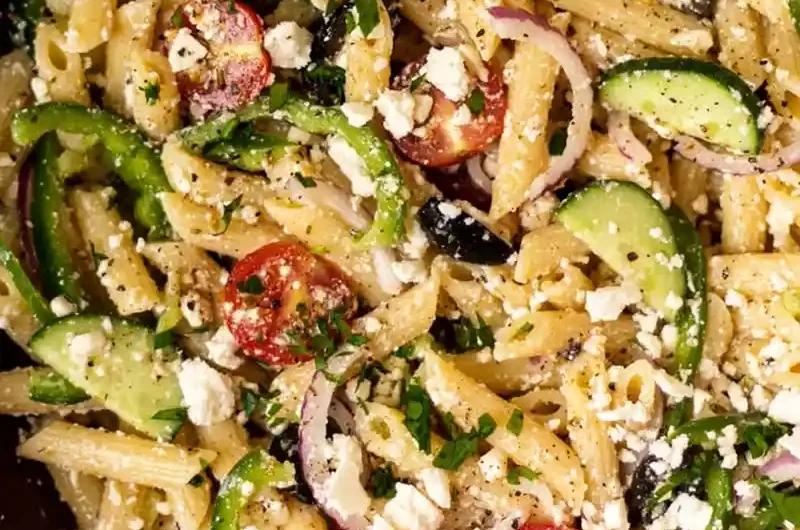
This refreshing pasta salad combines crisp vegetables, tangy feta cheese, and a zesty homemade dressing. It is a practical option for meal prepping or serving as a side dish for large gatherings.
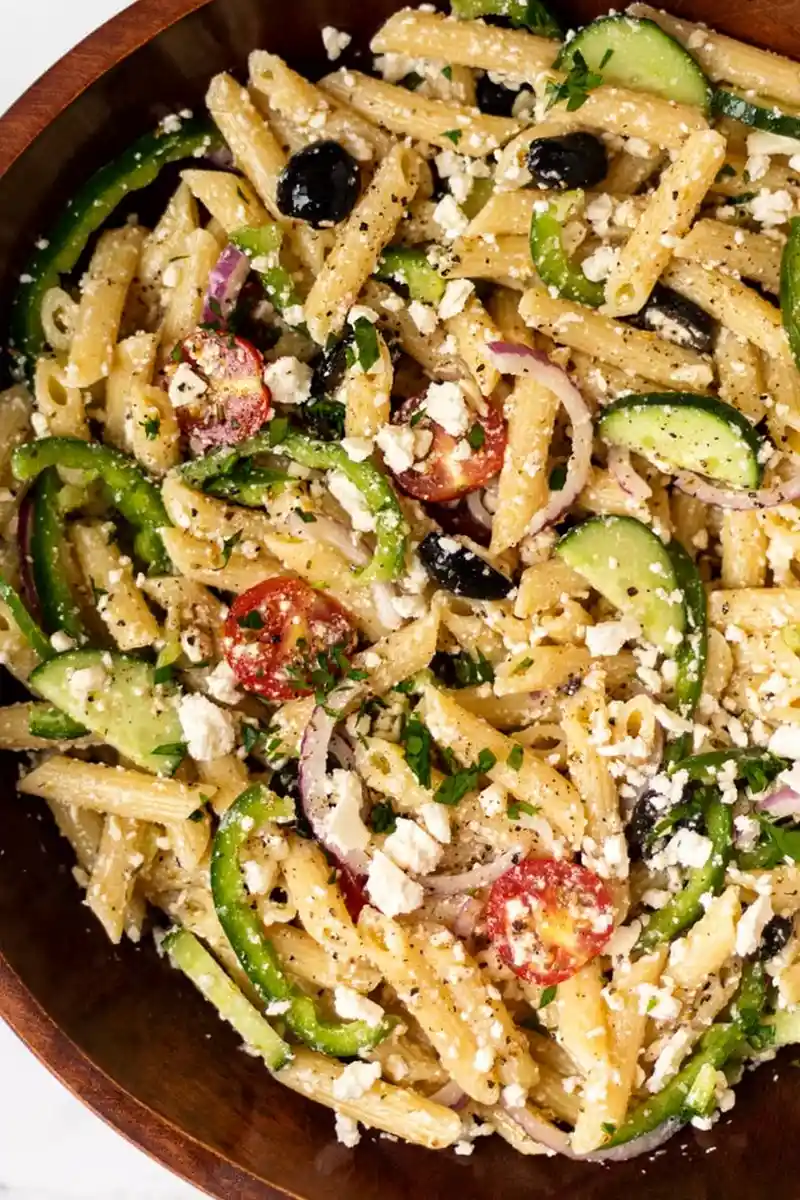
List of ingredients
- 1 pound penne (or other short pasta) – provides a hearty base.
- 3⁄4 cup crumbled feta cheese – adds a salty, creamy element.
- 1⁄2 cucumber (halved and sliced) – adds crunch and freshness.
- 1 green pepper (quartered and sliced) – provides a mild, earthy flavor.
- 3⁄4 pint cherry tomatoes (halved) – offers juicy, sweet bursts.
- 1⁄2 red onion (sliced) – introduces a sharp, savory note.
- 1⁄2 cup black olives (sliced) – gives a classic briny taste.
- 1⁄2 cup olive oil – the base for the dressing.
- 1.5 Tablespoons lemon juice – adds bright acidity.
- 3 Tablespoons apple cider vinegar – provides a tangy depth.
- 1 clove garlic (crushed) – adds a pungent aroma.
- 3⁄4 Tablespoon dried oregano – gives a traditional Greek flavor.
- 3⁄4 teaspoon fine sea salt – enhances all other flavors.
- 1⁄2 teaspoon fresh ground pepper – adds a subtle spicy kick.
step-by-step instructions
- Cook the pasta: Prepare the pasta according to the package directions, then drain and cool under cold running water to stop the cooking process.
- Combine ingredients: Place the cooled pasta in a large mixing bowl and add the cucumber, green pepper, tomatoes, red onion, black olives, and feta.
- Prepare the dressing: Add the olive oil, vinegar, lemon juice, garlic, oregano, sea salt, and pepper to a mason jar with a lid and shake vigorously to mix.
- Finish and serve: Pour the dressing over the salad, toss everything well to ensure even coating, and serve.
Pasta Selection Guide
Penne for Texture
Penne is an excellent choice because its tubular shape and ridges help hold the dressing and small bits of feta. The structure remains firm even after sitting in the fridge, preventing the salad from becoming mushy.
Farfalle for Aesthetics
Bow-tie pasta provides a visually appealing shape that works well for party platters. The folds in the pasta catch the vinaigrette effectively, ensuring every bite is seasoned.
Fusilli for Sauce Grip
The spiral shape of fusilli or rotini creates more surface area for the dressing to adhere to. This is a great option if you prefer a more intensely flavored salad.
Preparing the Fresh Produce
Removing Cucumber Seeds
To prevent the salad from becoming watery, slice the cucumber lengthwise and scoop out the seeds with a spoon before slicing. This keeps the vegetables crisp and the dressing concentrated.
Slicing Red Onions Thinly
Slice the red onion into very thin half-moons to ensure the flavor is distributed evenly. This prevents any single bite from being overpowered by the raw onion taste.
Halving Cherry Tomatoes
Halving cherry tomatoes instead of dicing them helps keep the juices inside the fruit. This prevents the salad from leaking excess liquid at the bottom of the bowl.
Slicing Green Peppers Uniformly
Quarter the green pepper and slice it into strips that match the size of the cucumber pieces. Uniform cutting ensures a consistent texture and makes the salad easier to eat.
Mastering the Homemade Dressing
Using a Mason Jar for Emulsification
Shaking the dressing in a sealed mason jar is more effective than stirring with a fork. The mechanical action forces the oil and vinegar to emulsify, resulting in a smooth, consistent texture.
Balancing Acidity
The combination of lemon juice and apple cider vinegar provides two different types of acidity. The lemon offers a bright, citrusy top note, while the vinegar provides a deeper tang.
Preparing the Garlic
Crushing the garlic clove releases more allicin than slicing it, which creates a stronger flavor. Ensure the garlic is finely crushed so you do not encounter large raw pieces in the salad.
Adding Dried Oregano
Dried oregano is a staple of Greek cuisine and provides a concentrated herbal flavor. Rub the dried herbs between your palms before adding them to the jar to release the essential oils.
Ingredient Substitutions
Replacing Feta Cheese
If you prefer a different flavor, you can use a microbial-rennet goat cheese or a firm tofu alternative. Ensure the substitute is salty to maintain the balance of the dish.
Using Different Olives
Kalamata olives can be used instead of black olives for a more traditional Greek profile. Kalamata olives are typically saltier and have a more robust, fruity flavor.
Swapping Bell Peppers
Red or yellow bell peppers can replace green peppers for a sweeter taste and brighter color. This variation is particularly visually appealing for summer events.
Alternative Vinegars
Red wine vinegar is a traditional substitute for apple cider vinegar. It offers a sharper, more wine-like acidity that pairs perfectly with olive oil and oregano.
Customizing Your Salad
Adding Lean Proteins
To turn this side dish into a main meal, add grilled chicken breast or chickpeas. Both options provide protein while complementing the fresh flavors of the vegetables.
Incorporating Extra Greens
Adding a handful of baby spinach or arugula can increase the nutritional value. Fold the greens in just before serving to prevent them from wilting in the acidic dressing.
Using Whole Grain Pasta
Whole wheat penne or chickpea pasta can be used for a higher fiber and protein content. Note that whole grain pasta may require slightly more dressing as it absorbs more liquid.
Optimal Serving Methods
Pairing with Grilled Meats
This salad pairs exceptionally well with grilled chicken skewers or baked fish. The acidity of the dressing cuts through the richness of grilled meats.
Presentation for Parties
For a professional look, arrange the salad on a wide platter and garnish with fresh parsley. This makes the colors of the tomatoes and olives pop.
Serving Temperature
While it can be eaten immediately, chilling the salad for one hour in the refrigerator allows the flavors to meld. Serve it cold or at a cool room temperature for the best experience.
Storage and Preservation
Choosing the Right Container
Store the salad in a glass airtight container rather than plastic. Glass does not absorb odors and better preserves the acidity of the dressing without leaching chemicals.
Maximum Refrigeration Time
The salad stays fresh for up to four days in the refrigerator. After this point, the cucumbers may lose their crunch and the pasta may become overly soft.
Preventing Pasta Sogginess
To avoid sogginess, ensure the pasta is completely cooled before adding the vegetables and dressing. Adding hot pasta to fresh vegetables will cause them to wilt rapidly.
Reviving Leftover Salad
Adding Fresh Dressing
Pasta absorbs dressing over time, which can leave the salad tasting dry on the second or third day. Whisk together a small amount of olive oil and lemon juice to refresh the dish.
Adjusting Seasoning
Cold temperatures can mute the perception of salt. Taste the leftovers before serving and add a pinch of sea salt or a squeeze of lemon to brighten the flavors.
Troubleshooting Common Problems
Managing Excess Moisture
If the salad becomes too watery, it is often due to the cucumbers or tomatoes. Drain the vegetables in a colander for ten minutes before mixing them with the pasta.
Correcting Bland Flavor
If the salad tastes bland, increase the acidity rather than the salt. A small addition of apple cider vinegar can wake up the other ingredients.
Fixing Overcooked Pasta
If the pasta is too soft, it will break during tossing. In the future, cook the pasta al dente (firm to the bite) since it will soften slightly as it absorbs the dressing.
Frequently Asked Questions
Can I make this without onions?
Yes, you can omit the red onion entirely or replace it with chopped chives for a milder onion flavor.
Is this salad gluten-free?
The salad is not gluten-free as written, but you can easily make it so by using a certified gluten-free pasta alternative.
Which feta is best for this recipe?
Feta sold in blocks and stored in brine generally has a better texture and more authentic salty flavor than pre-crumbled varieties.
Can I use frozen vegetables?
It is not recommended to use frozen cucumbers or peppers, as they lose their structural integrity and become mushy when thawed.
Print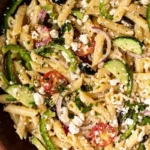
Greek Pasta Salad with Homemade Dressing
- Total Time: 15 minutes
- Yield: 8 servings 1x
- Diet: Vegetarian
Description
Pasta salad with cucumber, green peppers, tomato, feta and olives and a homemade Greek dressing
Ingredients
- 1 pound penne
- 3⁄4 cup crumbled feta cheese
- 1⁄2 cucumber, halved and sliced
- 1 green pepper, quartered and sliced
- 3⁄4 pint cherry tomatoes, halved
- 1⁄2 red onion, sliced
- 1⁄2 cup black olives, sliced
- 1⁄2 cup olive oil
- 1.5 Tablespoons lemon juice
- 3 Tablespoons apple cider vinegar
- 1 clove garlic, crushed
- 3⁄4 Tablespoon dried oregano
- 3⁄4 teaspoon fine sea salt
- 1⁄2 teaspoon fresh ground pepper
Instructions
- Step 1: Cook the pasta according to the package directions then drain and cool under cold running water.
- Step 2: Place the pasta in a large mixing bowl and add the cucumber, green pepper, tomatoes, red onion, black olives and feta.
- Step 3: Add the olive oil, vinegar, lemon juice, garlic, oregano, and sea salt and pepper to a mason jar with a lid and give it a shake to mix.
- Step 4: Pour the dressing over the salad, toss well and serve.
Notes
Any kind of pasta can be used for this recipe, but short pasta such as penne or farfalle work best. For storage, store in an airtight container in the refrigerator for up to 4 days.
- Prep Time: 15 minutes
- Cook Time: 0 minutes
- Category: Salad, Side Dish
- Method: Mixing
- Cuisine: Greek
Nutrition
- Serving Size: 1 serving
- Calories: 361 kcal
- Sugar: 4 g
- Sodium: 359 mg
- Fat: 16 g
- Saturated Fat: 2 g
- Unsaturated Fat: 14 g
- Trans Fat: 0 g
- Carbohydrates: 47 g
- Fiber: 3 g
- Protein: 8 g
- Cholesterol: 15 mg
Keywords: greek pasta salad, pasta salad, mediterranean, side dish, summer salad