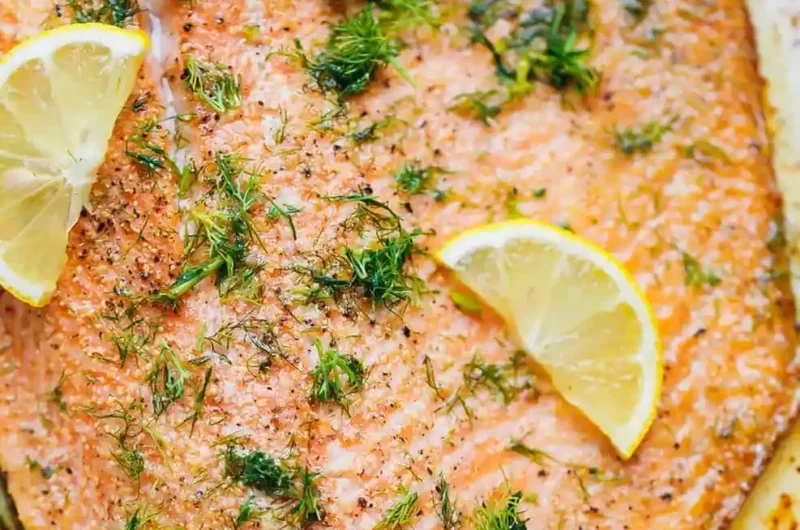
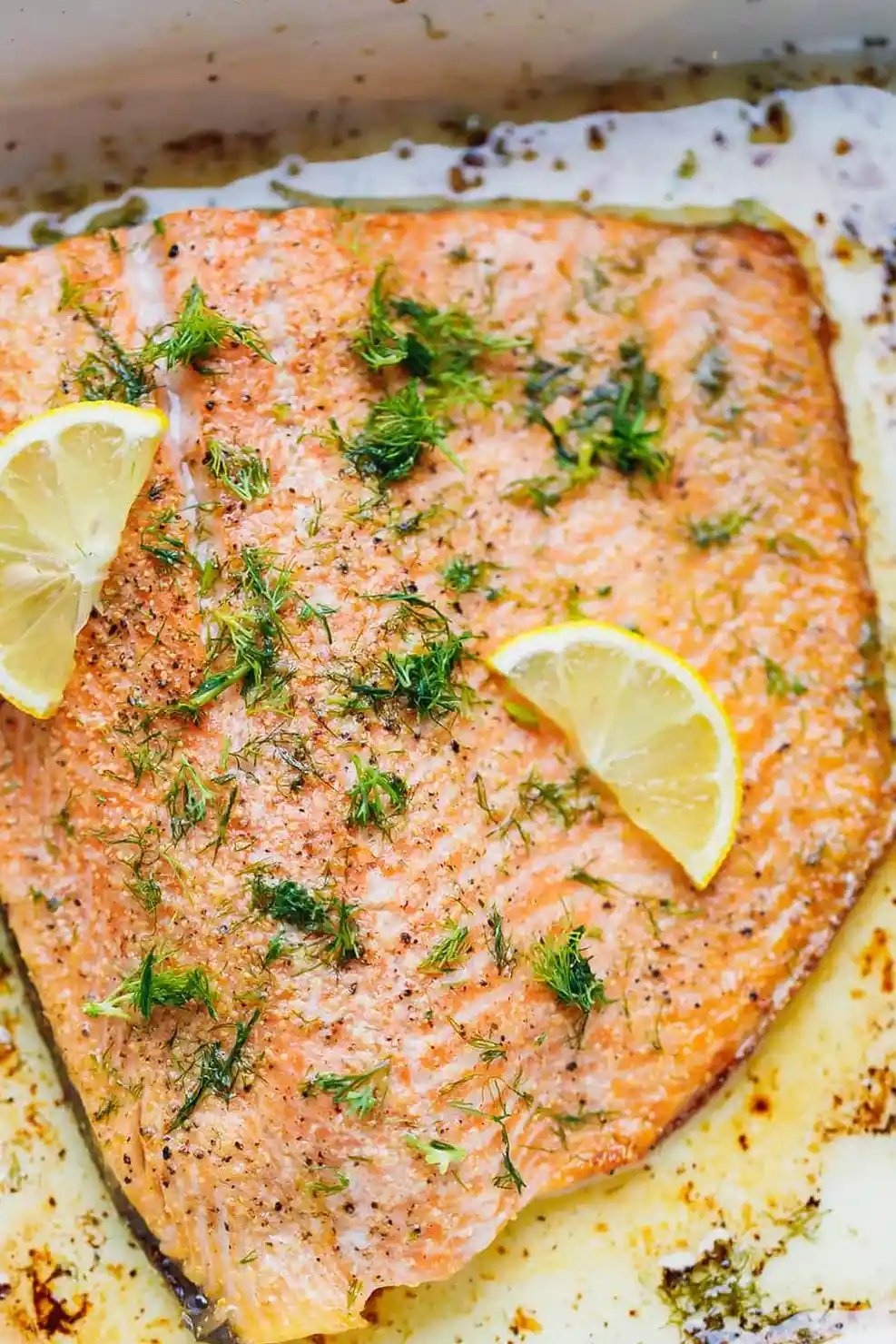
This one-pan salmon dinner is ready in under 30 minutes using seven simple staple ingredients. It provides a nutritious, low-carb meal that is perfect for busy weeknights.
List of ingredients
- 1 1/4 lb Salmon (King, Sockeye or Coho salmon) – skin on for best moisture retention.
- 1/2 tsp salt – adjusted to taste.
- 1/4 tsp black pepper – preferably freshly ground.
- 3 cloves garlic, minced (or 1 tsp garlic powder) – for aromatic flavor.
- 1 tbsp fresh chopped dill – adds a fresh, herbal note.
- 2 tbsp olive oil – used for both greasing and the marinade.
- 1 tbsp lemon juice – provides a bright, zesty acidity.
step-by-step instructions
- Prepare Oven and Pan: Preheat your oven to 350F. Grease a sheet pan or a porcelain baking dish with a small amount of olive oil to prevent sticking.
- Season the Fish: Pat the salmon fillets dry with paper towels. Season both sides of the fish evenly with salt and black pepper.
- Create the Marinade: In a small mixing bowl, combine the remaining olive oil, minced garlic (or garlic powder), chopped dill, and lemon juice.
- Arrange Salmon: Place the salmon fillets in the prepared baking dish with the skin side facing down.
- Apply Topping: Pour the garlic-dill mixture over the salmon and spread it evenly across the top of each fillet.
- Bake: Bake for 15-20 minutes, or until the fish is no longer opaque on top.
- Optional Broiling: If you prefer a golden-brown top, broil the fish at 425F for approximately 1 minute, keeping a close eye on it to avoid drying it out.
- Check Temperature: Use a meat thermometer inserted into the thickest part of the fillet to ensure it has reached an internal temperature of 145F.
- Garnish and Serve: Garnish the finished fillets with fresh dill sprigs and lemon slices before serving.
Choosing the Right Salmon Variety
Coho Salmon Characteristics
Coho salmon, also known as silver salmon, is characterized by its bright red flesh and delicate texture. It typically cooks faster than larger varieties, making it ideal for quick sheet pan recipes. This variety offers a balanced flavor that pairs well with citrus.
King Salmon Texture
King salmon is known for having a higher fat content, which results in a richer, more buttery taste. Because of this fat, it is more forgiving during the baking process and less likely to dry out. It provides a meaty texture that feels more substantial on the plate.
Sockeye Salmon Intensity
Sockeye salmon has the deepest red color of all salmon types and a bolder, more robust flavor. It is leaner than King salmon, so it requires careful monitoring to ensure it stays juicy. Its intense flavor stands up well to strong aromatics like garlic and dill.
Optimizing Oven Temperatures
Benefits of Baking at 350 Degrees
Baking at a lower temperature of 350F allows the salmon to cook more gently. This method ensures the fish stays moist and prevents the edges from curling or toughening. It is the preferred temperature for those who like a tender, buttery consistency.
Using 400 Degrees for Faster Results
If you are short on time, you can increase the oven temperature to 400F. At this heat, the salmon will typically be done in 12-15 minutes. Note that higher heat increases the risk of overcooking the center if the fillets vary in thickness.
Precision Broiling for Color
Broiling at 425F for a short burst creates a caramelized, golden crust on the top of the fish. This step should only be done at the very end of the cooking process. Because broilers use intense direct heat, you must watch the fish constantly to prevent burning.
Selecting the Right Baking Pan
Metal Sheet Pan Efficiency
Metal pans are excellent conductors of heat, which helps the salmon cook evenly and quickly. They are ideal for achieving a slightly more seared bottom if the pan is preheated. Metal is generally the fastest option for sheet pan dinners.
Porcelain and Ceramic Dishes
Ceramic or porcelain baking dishes hold heat longer but take more time to warm up. You may find that salmon takes a few extra minutes to cook in these dishes compared to metal. They are excellent for keeping the fish warm while serving.
Pyrex Glass Bakeware
Glass dishes provide a clear view of the cooking process, allowing you to monitor the sides of the fish. They distribute heat evenly, though they are more prone to thermal shock if moved too quickly from the oven to a cold surface. Always use oven mitts and place them on a wooden trivet.
Ingredient Alternatives
Using Dried Dill Instead of Fresh
If fresh dill is unavailable, you can use dried dill as a substitute. Use a ratio of one teaspoon of dried dill for every tablespoon of fresh dill. While the flavor is more concentrated, it lacks the bright, grassy notes of fresh herbs.
Garlic Powder Substitution
Garlic powder is a convenient alternative to fresh minced garlic. It distributes more evenly throughout the oil mixture and is less likely to burn during the broiling phase. Use one teaspoon of powder to replace three cloves of fresh garlic.
Alternative Oil Options
While olive oil is standard, you can use avocado oil for a neutral taste and a higher smoke point. For a richer flavor, melted unsalted butter can be used in the marinade. This addition creates a more decadent sauce that complements the lemon juice.
Citrus Variations
Fresh lime juice can be used instead of lemon juice for a slightly different zesty profile. Lime adds a tropical note that works particularly well with Sockeye salmon. You can also add a pinch of lemon zest to the marinade for extra aromatic intensity.
Side Dish Pairings
Fresh Garden Salads
A crisp green salad with a light vinaigrette balances the richness of the fatty salmon. Cucumber and red onion salads are particularly effective as they mirror the freshness of the dill. Keep the dressing simple to let the salmon remain the star of the meal.
Roasted Vegetable Pairings
Since you are already using the oven, you can roast asparagus, broccoli, or carrots on the same sheet pan. Place the vegetables around the salmon fillets, ensuring they have enough space for air circulation. Toss them in olive oil and salt before baking.
Low-Carb Grain Substitutes
For those following a keto or low-carb diet, cauliflower rice is an excellent accompaniment. Sautéed spinach or grilled zucchini also pair well with the lemon-garlic flavors. These options provide necessary nutrients without adding significant carbohydrates.
Storing and Preserving Leftovers
Proper Refrigeration
Store leftover salmon in an airtight container in the refrigerator for up to three to four days. To prevent the fish from drying out, ensure the container is completely sealed. Keep it away from strong-smelling foods to avoid flavor transfer.
Best Reheating Methods
To reheat salmon without overcooking it, use a low-temperature oven (about 275F) for a few minutes. Alternatively, use a microwave on medium power and cover the fish with a damp paper towel. This helps steam the fish and retain moisture.
Freezing Cooked Salmon
Cooked salmon can be frozen for up to two months if wrapped tightly in plastic wrap and foil. Thaw it slowly in the refrigerator overnight before reheating. Note that the texture may change slightly after freezing and thawing.
Common Cooking Troubleshooting
Preventing Dry Salmon
The most common issue is overcooking, which leads to a dry, chalky texture. Always use a meat thermometer to pull the fish out exactly at 145F. Remember that carry-over cooking will raise the temperature by a few degrees after it leaves the oven.
Managing Garlic Burning
Minced garlic can burn and become bitter if exposed to too much direct heat. To prevent this, ensure the garlic is well-incorporated into the oil and lemon juice mixture. If broiling, keep the time very short to protect the garlic bits.
Dealing with Sticking Skin
If the salmon skin sticks to the pan, try letting the fish rest for two minutes before lifting. Using a fish spatula allows you to slide under the skin more effectively. Ensuring the pan is well-greased with olive oil is the best prevention method.
Frequently Asked Questions
How do I know when salmon is done?
Salmon is cooked when the flesh changes from translucent to opaque and flakes easily with a fork. The most reliable method is using a thermometer to check for an internal temperature of 145F.
Can I bake salmon without the skin?
Yes, you can bake skinless fillets using the same method. However, the skin acts as a protective barrier that keeps the bottom of the fish moist during baking. Be extra cautious not to overcook skinless fillets.
Is it necessary to pat the fish dry?
Yes, patting the salmon dry removes excess surface moisture. This ensures that the oil and seasoning adhere better to the fish and prevents the salmon from steaming instead of roasting.
Can I use frozen salmon for this recipe?
You can use frozen salmon, but it must be completely thawed in the refrigerator before cooking. Baking frozen fillets directly can lead to uneven cooking and an excess of water in the pan.
Print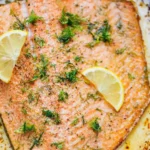
Garlic Dill and Lemon Sheet Pan Salmon
- Total Time: 25 minutes
- Yield: 4 servings 1x
- Diet: Keto
Description
Easy One Pan Garlic Dill Lemon Baked Salmon Recipe – ready in under 30 minutes, simple and delicious sheet pan dinner that could be paired with a salad or roasted veggies for the perfect effortless nutritious meal.
Ingredients
- 1 1/4 lb Salmon (King, Sockeye or Coho salmon)
- 1/2 tsp salt
- 1/4 tsp black pepper
- 3 cloves garlic, minced (or 1 tsp garlic powder)
- 1 tbsp fresh chopped dill
- 2 tbsp olive oil
- 1 tbsp lemon juice
Instructions
- Step 1: Preheat oven to 350F. Grease a sheet pan or porcelain baking dish with olive oil. Season salmon on both sides with salt and pepper.
- Step 2: In a small bowl combine the remaining olive oil, garlic, dill, and lemon juice.
- Step 3: Place salmon skin side down in the baking dish. Pour the mixture over the salmon and spread on top.
- Step 4: Bake for 15-20 minutes, until the fish is no longer opaque on top. For a golden top, broil at 425F for 1 minute. Internal temperature should read 145F.
- Step 5: Garnish with fresh dill and lemon slices. Serve.
Notes
This recipe is great for low-carb and keto diets. Pairs well with green salads, cucumber salads, grilled zucchini, or green beans.
- Prep Time: 5 minutes
- Cook Time: 20 minutes
- Category: Main
- Method: Baking
- Cuisine: American
Nutrition
- Serving Size: 1 serving
- Calories: 267 kcal
- Sugar: 1 g
- Sodium: 353 mg
- Fat: 16 g
- Saturated Fat: 2 g
- Unsaturated Fat: 14 g
- Trans Fat: 0 g
- Carbohydrates: 1 g
- Fiber: 0 g
- Protein: 28 g
- Cholesterol: 77 mg
Keywords: baked salmon, garlic dill lemon salmon, one pan salmon, keto dinner, low carb salmon