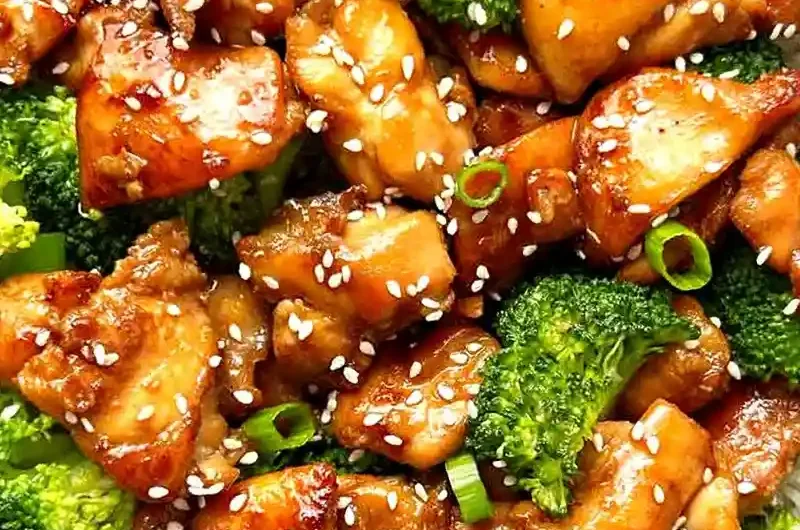
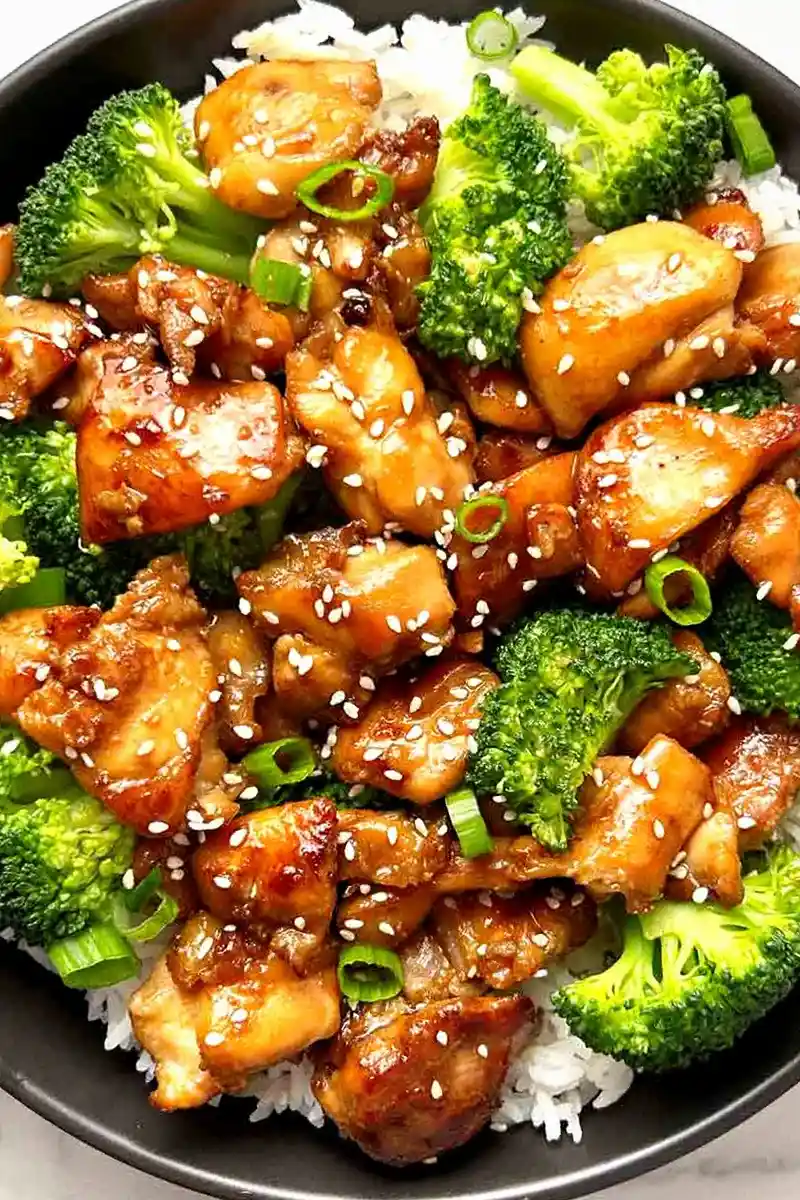
This teriyaki chicken rice bowl is a balanced meal combining sweet glazed protein with steamed vegetables and fluffy rice. It is a quick dinner option that takes about 40 minutes from start to finish.
List of ingredients
- 1/4 cup soy sauce – provides the salty and savory base for the glaze.
- 3 tablespoons brown sugar – adds sweetness and helps create a sticky texture.
- 1 teaspoon minced garlic – adds aromatic depth to the marinade.
- 1 teaspoon minced ginger – provides a fresh, spicy undertone.
- 1 pound boneless skinless chicken thighs – cut into cubes for faster cooking (breasts can be used for a leaner option).
- 2 tablespoons oil – divided for searing the chicken in the skillet.
- 4 cups cooked jasmine rice – serves as the hearty base of the bowl.
- 2 cups steamed broccoli – adds color and essential nutrients.
- Green onions – sliced for a fresh garnish.
- Sesame seeds – toasted for added texture and nutty flavor.
step-by-step instructions
- Prepare the marinade: In a small bowl, combine the soy sauce, brown sugar, minced garlic, and minced ginger until the sugar is mostly dissolved.
- Marinate the chicken: Place the cubed chicken into a sealable bag or bowl and pour the marinade over it. Seal the bag, mix well, and refrigerate for at least 15 minutes to allow flavors to penetrate the meat.
- Sear the chicken: Heat 1 tablespoon of oil in a large skillet over medium-high heat. Add half of the chicken and cook for 4-5 minutes until fully cooked through and caramelized. Remove the first batch to a plate and repeat the process with the remaining chicken using the second tablespoon of oil.
- Assemble the bowls: Divide the cooked jasmine rice evenly between bowls. Top with the seared teriyaki chicken and steamed broccoli. Garnish with sliced green onions and sesame seeds before serving.
Optimization Tips for Teriyaki Chicken
Selecting Chicken Thighs for Maximum Juiciness
Boneless skinless chicken thighs are the preferred choice because they have a higher fat content than breasts. This prevents the meat from drying out during the high-heat searing process. Thighs remain tender and succulent even if cooked slightly longer.
Using Chicken Breasts for a Leaner Option
If you prefer a lower-calorie version, chicken breasts work well but require more precision. Cut them into uniform cubes to ensure they cook evenly. Be careful not to overcook them, as breasts can become tough and dry very quickly.
Maximizing Marinade Absorption with Cubing
Cutting the chicken into small cubes before marinating increases the surface area in contact with the sauce. This allows the soy and ginger flavors to penetrate deeper into the meat in a shorter amount of time. It also ensures the glaze coats every piece evenly during frying.
Managing Marinating Times for Optimal Flavor
While 15 minutes is the minimum requirement, marinating for 2 to 4 hours in the refrigerator significantly enhances the depth of flavor. Avoid marinating for more than 24 hours, as the salt in the soy sauce can begin to break down the muscle fibers too much, affecting the texture.
Sauce Customization and Flavor Balancing
Substituting Brown Sugar with Honey or Maple Syrup
Brown sugar provides a classic molasses-like depth, but honey or maple syrup are excellent alternatives. Honey creates a thicker, stickier glaze that clings well to the chicken. Maple syrup adds a distinct woody sweetness that complements the ginger.
Adjusting Saltiness with Low-Sodium Soy Sauce
For those monitoring their salt intake, replacing regular soy sauce with a low-sodium version is highly effective. You may need to add a pinch of salt or a dash of fish sauce to maintain the savory balance. This allows you to control the sodium levels without sacrificing the teriyaki profile.
Adding Fresh Ginger for a Zesty Profile
Using freshly grated ginger is superior to using ginger powder. Fresh ginger provides a bright, sharp heat that cuts through the sweetness of the brown sugar. Always peel the ginger root with a spoon before grating to get the cleanest flavor.
Thickening the Sauce for a Glaze Consistency
If you prefer a thicker sauce, you can whisk a small amount of cornstarch into the marinade before cooking. Once the chicken is almost done, the cornstarch will activate and create a glossy, thick coating. This ensures the sauce sticks to the meat rather than pooling at the bottom of the bowl.
Vegetable Preparation and Variations
Steaming Broccoli to Maintain Texture and Color
Steam broccoli for about 5 minutes until it is tender-crisp and bright green. Oversteaming leads to mushy florets and a dull color. To stop the cooking process immediately, shock the broccoli in an ice bath after steaming.
Incorporating Stir-Fried Mixed Vegetables
Instead of steaming, you can stir-fry carrots, snap peas, and bell peppers in the same skillet used for the chicken. This allows the vegetables to pick up the leftover teriyaki glaze from the pan. Cook them on high heat for 3-4 minutes to keep them crunchy.
Using Frozen Vegetables for Convenience
Frozen broccoli or mixed vegetable blends are a great time-saver. Steam them directly in the microwave or sauté them in a pan until heated through. Ensure you drain any excess water to prevent the rice bowls from becoming soggy.
Adding Fresh Crunch with Raw Slaw
For a contrast in temperature and texture, add a handful of shredded raw carrots or cabbage. A quick slaw dressed with rice vinegar and a drop of sesame oil adds a refreshing element. This balances the richness of the glazed chicken.
Rice Selection and Cooking Methods
Preparing Perfectly Fluffy Jasmine Rice
Rinse jasmine rice under cold water until the water runs clear to remove excess surface starch. This prevents the rice from becoming gummy or sticking together. Use a 1:1.5 rice-to-water ratio for a light, fluffy texture.
Using Brown Rice for Added Fiber
Brown rice is a nutrient-dense alternative that adds a nutty flavor to the bowl. Note that brown rice requires more water and a longer simmering time than white rice. It provides a heartier chew that stands up well to the bold teriyaki sauce.
Making Low-Carb Cauliflower Rice
Substitute grain rice with pulsed cauliflower for a low-carb or keto-friendly option. Sauté the cauliflower rice in a pan with a little oil for 5-7 minutes. Avoid adding water to the cauliflower to prevent it from becoming mushy.
Preventing Rice from Clumping During Storage
When storing cooked rice, allow it to cool slightly before placing it in an airtight container. If the rice clumps together, add a teaspoon of water before reheating. This creates steam that separates the grains and restores the original texture.
Assembly and Serving Ideas
Balancing the Bowl with Fresh Garnishes
Toppings are essential for adding visual appeal and fresh flavors. Use thinly sliced scallions for a mild onion bite and toasted sesame seeds for a nutty finish. These small additions transform a simple meal into a restaurant-quality dish.
Pairing with Spicy Mayo or Sriracha
If you enjoy heat, drizzle the bowl with a mixture of mayonnaise and sriracha. The creamy, spicy sauce complements the sweet teriyaki glaze perfectly. Alternatively, a few drops of toasted sesame oil can enhance the overall aroma.
Creating Bento-Style Lunch Boxes
This recipe is ideal for meal prep. Arrange the rice, chicken, and broccoli in separate compartments of a container to prevent the rice from absorbing all the sauce. This keeps the ingredients distinct and the broccoli crisp until lunchtime.
Serving Suggestions for Dinner Parties
Present the bowls in wide, shallow ceramic bowls for an elegant look. Arrange the chicken and broccoli in neat sections over the rice rather than mixing them. Garnish with a wedge of lime for a hit of acidity that brightens the dish.
Storage and Food Safety
Proper Cooling and Refrigeration Techniques
Cool the cooked chicken and rice to room temperature before sealing them in containers. Putting hot food directly into the fridge can raise the internal temperature of the refrigerator, potentially risking other perishables. Use airtight glass containers for the best freshness.
Determining the Shelf Life of Cooked Chicken
Cooked teriyaki chicken remains safe to eat for 3 to 4 days when stored at 40 degrees Fahrenheit or below. Ensure the container is sealed tightly to prevent the meat from absorbing other odors from the fridge.
Freezing Guidelines for Long-Term Storage
You can freeze the cooked chicken and rice for up to two months. Freeze them in separate portions to make reheating easier. Note that broccoli does not freeze well after steaming and is best added fresh or frozen-then-steamed after reheating the base.
Safe Thawing Methods for Frozen Rice Bowls
The safest way to thaw a frozen bowl is to move it from the freezer to the refrigerator 24 hours before you plan to eat it. Avoid thawing on the counter at room temperature to prevent bacterial growth. Once thawed, heat thoroughly to an internal temperature of 165 degrees Fahrenheit.
Reheating Best Practices
Using a Microwave for Quick Reheating
Place the rice bowl in a microwave-safe dish and cover it with a damp paper towel. The moisture from the towel prevents the rice from drying out and keeps the chicken tender. Heat in 1-minute intervals, stirring in between.
Stovetop Methods for Restoring the Glaze
For the best texture, reheat the chicken in a skillet over medium heat with a splash of water or extra soy sauce. This reactivates the sugars in the glaze, making the chicken sticky and glossy again. Heat the rice separately in a pot with a bit of water.
Reheating in an Oven to Maintain Crispness
Spread the chicken and broccoli on a baking sheet and cover with foil to retain moisture. Heat at 350 degrees Fahrenheit for 10-15 minutes. This method is slower but prevents the chicken from becoming rubbery.
Adding Moisture to Dry Rice During Heating
Rice naturally loses moisture during refrigeration. Add one to two tablespoons of water or chicken broth to the rice before reheating. This creates steam that re-hydrates the starch granules, making the rice fluffy again.
Troubleshooting Common Cooking Issues
Fixing a Sauce That Is Too Thin
If the sauce is too watery after cooking, simmer it in the pan for a few extra minutes without the chicken. The reduction process evaporates excess water and concentrates the sugars. You can also whisk in a tiny amount of cornstarch slurry.
Preventing Chicken from Overcooking
Use a meat thermometer to check the internal temperature of the chicken. Remove the meat from the pan as soon as it reaches 165 degrees Fahrenheit. Allowing the meat to rest for a few minutes ensures the juices redistribute.
Managing Pan Crowding for Better Browning
Cooking the chicken in two batches is critical. Overcrowding the pan lowers the temperature of the oil, causing the chicken to steam in its own juices rather than sear. This results in a pale color and a lack of caramelization.
Correcting Over-Salted Sauce
If the teriyaki sauce tastes too salty, add a teaspoon of brown sugar or a splash of water. A squeeze of fresh lime juice or a teaspoon of rice vinegar can also balance the saltiness with acidity. These additions neutralize the harshness of the soy sauce.
Frequently Asked Questions
Can I make this recipe in a slow cooker?
Yes, you can place the chicken and marinade in a slow cooker on low for 4-6 hours. However, you will lose the seared caramelization. For the best results, quickly sear the slow-cooked chicken in a hot pan before serving.
Is the leftover marinade safe to use as a sauce?
No, the marinade that has touched raw chicken should not be used as a sauce unless it is boiled first. To avoid waste, set aside a portion of the sauce before adding the chicken to the marinade bag for use as a finishing glaze.
How long can the chicken be marinated in the fridge?
The chicken can be marinated for up to 24 hours. Beyond this point, the acids and salts in the soy sauce may break down the meat’s texture, making it too soft or mushy. For the best balance, stick to 4-8 hours.
Which type of oil is best for frying the chicken?
Use an oil with a high smoke point, such as canola, vegetable, or grapeseed oil. Avoid extra virgin olive oil for this step, as the high heat required for caramelization can cause olive oil to smoke and develop a bitter taste.
Print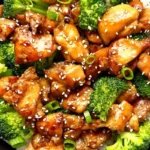
Teriyaki Chicken Rice Bowls
- Total Time: 40 minutes
- Yield: 4 servings 1x
- Diet: General
Description
Teriyaki Chicken Rice Bowls are one of the most wholesome dishes to make at home. It’s incredibly easy and can be done in 40 minutes.
Ingredients
- 1/4 cup soy sauce
- 3 tablespoons brown sugar
- 1 teaspoon minced garlic
- 1 teaspoon minced ginger
- 1 pound boneless skinless chicken thighs (or breasts; cubed)
- 2 tablespoons oil
- 4 cups cooked jasmine rice
- 2 cups steamed broccoli
- green onions
- sesame seeds
Instructions
- Step 1: In a small bowl, combine the soy sauce, brown sugar, garlic, and ginger.
- Step 2: Add the chicken to a bag and pour the marinade all over. Seal and refrigerate for at least 15 minutes.
- Step 3: Heat 1 tablespoon of oil in a large skillet over medium-high heat. Add half the chicken and cook for 4-5 minutes until cooked through. Remove to a plate and repeat with the remaining chicken.
- Step 4: Divide the rice, chicken, and steamed broccoli between bowls. Season with sesame seeds and green onions, and enjoy!
Notes
This dish is excellent for meal prep. When reheating, add a small amount of water to the rice to maintain moisture.
- Prep Time: 15 minutes
- Cook Time: 10 minutes
- Category: Main Course
- Method: Stir-frying
- Cuisine: Japanese-American
Nutrition
- Serving Size: 1 bowl
- Calories: 610 kcal
- Sugar: 18 g
- Sodium: 920 mg
- Fat: 16 g
- Saturated Fat: 4 g
- Unsaturated Fat: 12 g
- Trans Fat: 0 g
- Carbohydrates: 64 g
- Fiber: 5 g
- Protein: 32 g
- Cholesterol: 85 mg
Keywords: teriyaki chicken, rice bowl, easy dinner, meal prep, healthy bowls